Good morning, Huddler! This past week, I celebrated my birthday and realized that this was my third birthday celebrated with Healthcare Huddle. I’ve been writing this newsletter since I was 24! I’m starting to feel old…
Anyway, last week I recapped all the content I covered in the third quarter of the year. You can read it here. Huddle up: - Digital health funding slowed to a halt in Q3.
- FDA grants Eli Lilly’s promising obesity drug fast-track designation.
|
Was this email forwarded to you? |
|
|
Digital Health Funding in Q3 Comes to a Halt |
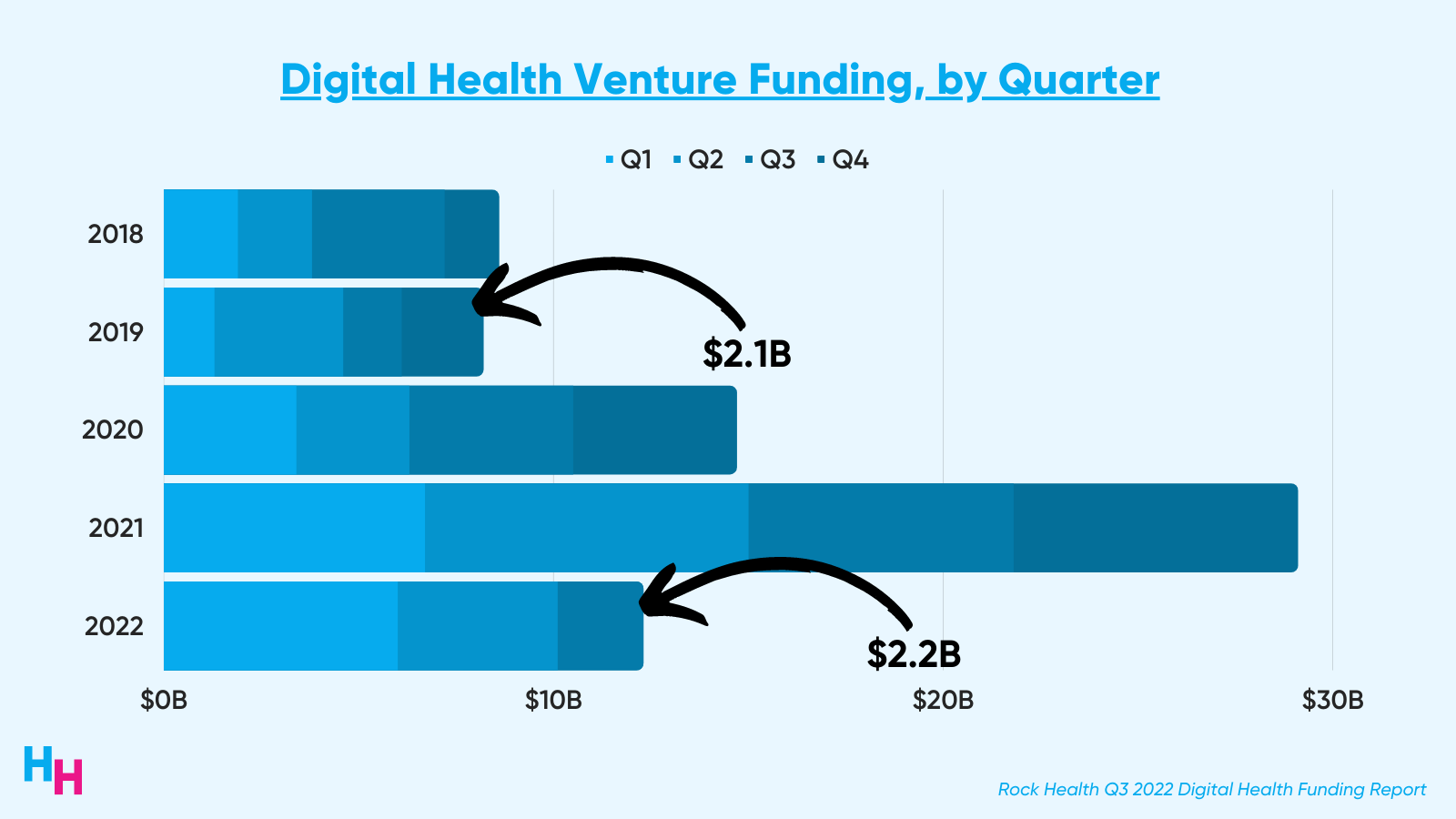
Digital health funding reached a relative halt in the third quarter of 2022 with only $2.2 billion in funding raised across 125 deals. This is the lowest funding for digital health since the fourth quarter of 2019. If this funding trajectory continues into Q4, 2022 funding may barely reach half of 2021’s total funding.
|
The Deets
Overall, digital health funding has slowed significantly in 2022 compared to 2021’s digital health explosion. Fundraising in each subsequent quarter this year has only slowed. However, while total Q3 funding decreased by 50% from Q2, the total number of deals made only decreased by 15%.
The majority of the 125 deals made were for early-stage funding. Late-stage funding was nearly absent, with only six funding raises for Series C or higher. For some perspective, there was an average of 22 deals for Series C or higher throughout each quarter of 2021. Why was funding so slow in Q3? The authors of the Rock Health report give three reasons: -
Companies accelerated their 2022 funding rounds by raising towards the end of 2021 while the funding was hot. Perhaps “hot” is an understatement to describe the amount of funding raised in 2021, which is why I say funding was exploding.
-
“Missing rounds” may account for underreporting of funding. Companies may have gone after extension rounds behind closed doors to prevent publicizing cash needs, which may be perceived as a bad look.
-
Companies may have just forgone fundraising and instead leaned-up operations, as evidenced by the massive layoffs throughout the past two quarters.
Given the year’s choppy venture waters and public market correction, investors are holding back from the market, waiting to strike once things stabilize. — Rock Health |
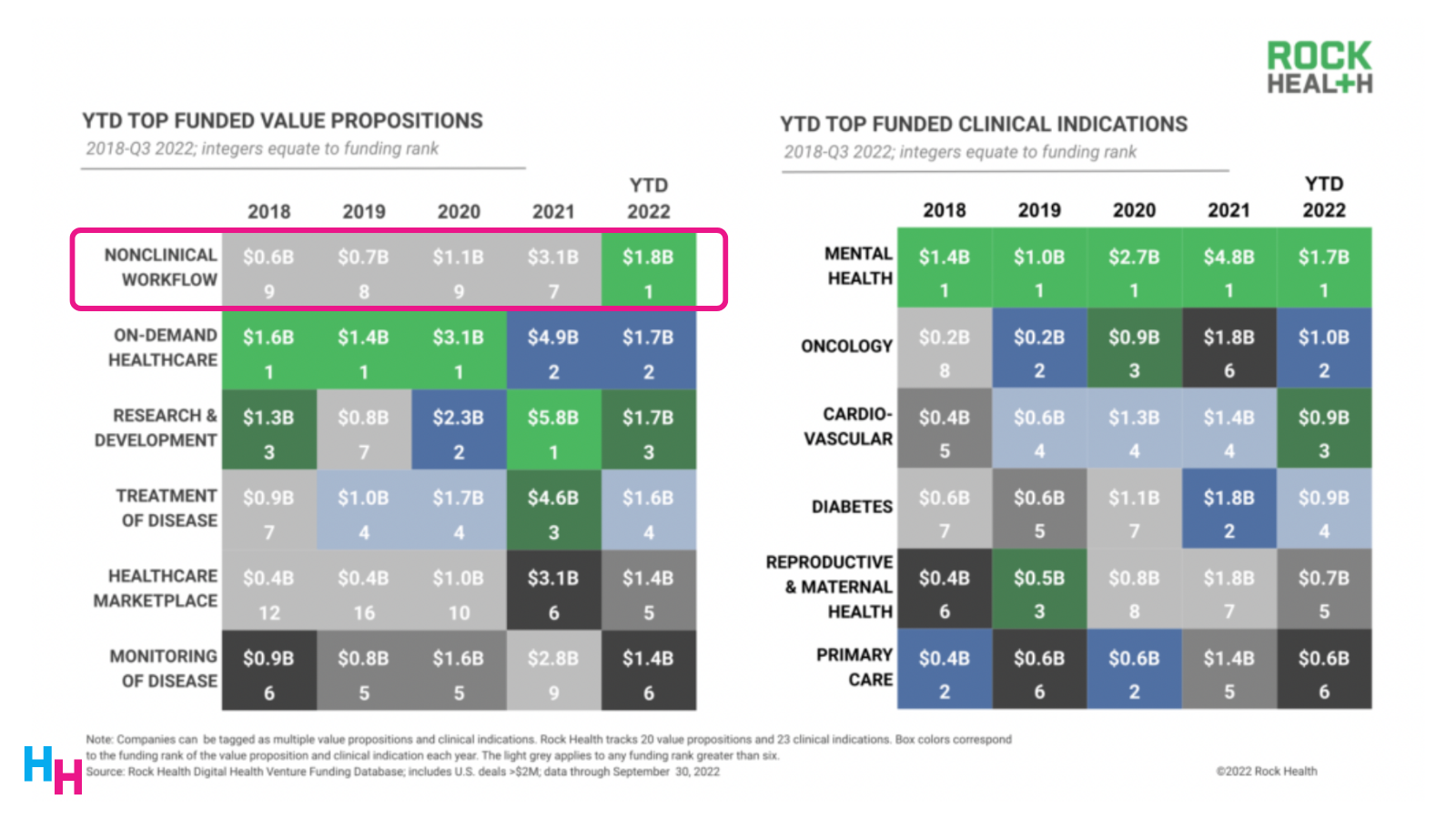
Funding for nonclinical workflow was the most funded value proposition, totaling $1.8 billion in Q3. Nonclinical workflow funding jumped from 7th place to 1st place in just one quarter, demonstrating that investors may be shifting focus to streamlining workflows to prevent healthcare workforce burnout. Companies within this workflow category include Alma (raised a massive $130 million), Grow Therapy ($75 million) and Tebra ($72 million). Workflow companies were essentially unheard of in 2021, and now they’re trending, something I’ve covered here and here.
Mental health remains the number one spot for top-funded clinical indications, with $1.7 billion raised in Q3. On the rise, however, is oncology funding, which jumped from 6th place to 2nd place, with $1.0 billion in funding. |
Dash's Dissection
I’m a workflow fanboy, whether it be clinical or nonclinical. Recall, compared to peer nations, the U.S. ranks dead last in administrative efficiency, which refers to health systems’ ability to reduce bureaucratic paperwork patients and clinicians encounter. Bureaucracy is a significant contributor to healthcare workforce burnout and is the one thing I dread most about becoming a practicing physician in the U.S. In my last discussion on quarterly digital health funding, I predicted that clinical and nonclinical workflow companies would start being the top-funded value propositions.
|
I guess I was right, except it didn’t take a decade for the workflow value proposition to reach a top funding spot. It took only one quarter.
Clinical and nonclinical workflow companies are perhaps more scalable than, let’s say, mental health companies. The main reason is digital mental health companies require mental health providers to provide their services through the companies’ tech-enabled services. Mental health providers are a hot commodity since there are not many of them. Workflow companies, however, don’t require providers as a means to deliver their services. Therefore, workflow companies can quickly establish their technology in private practices or health systems, improve workflows, and scale from there.
Overall, I’ll double down on my stance that the workflow value proposition area will continue to become a heavily-invested area.
Dive Deeper - 2021 digital health funding explosion (link)
-
What’s next for digital health? (link)
- H1 digital health funding breakdown (link)
-
How to make outpatient scheduling more efficient (link)
|
|
|
Eli Lilly’s To-Be Blockbuster Anti-Obesity Drug Receives Fast-Track Designation |
The FDA granted Eli Lilly’s revolutionary anti-obesity drug called tirzepatide fast-track designation, expediting the drug’s arrival to market. This is big news for Eli Lilly and the medical community, given clinical trial data shows the drug is extraordinarily effective for weight loss and improvement in cardiometabolic health. I’ve been covering tirzepatide throughout the year (here and here) and truly believe tirzepatide will be the next blockbuster drug.
|
The Deets
The FDA granted tirzepatide fast-track designation based on promising results from its recent Phase III clinical trial called SURMOUNT-1. The fast-track pathway aims to expedite the development and review of novel drugs to treat serious conditions (e.g., Alzheimer’s and ALS) and fill an unmet medical need.
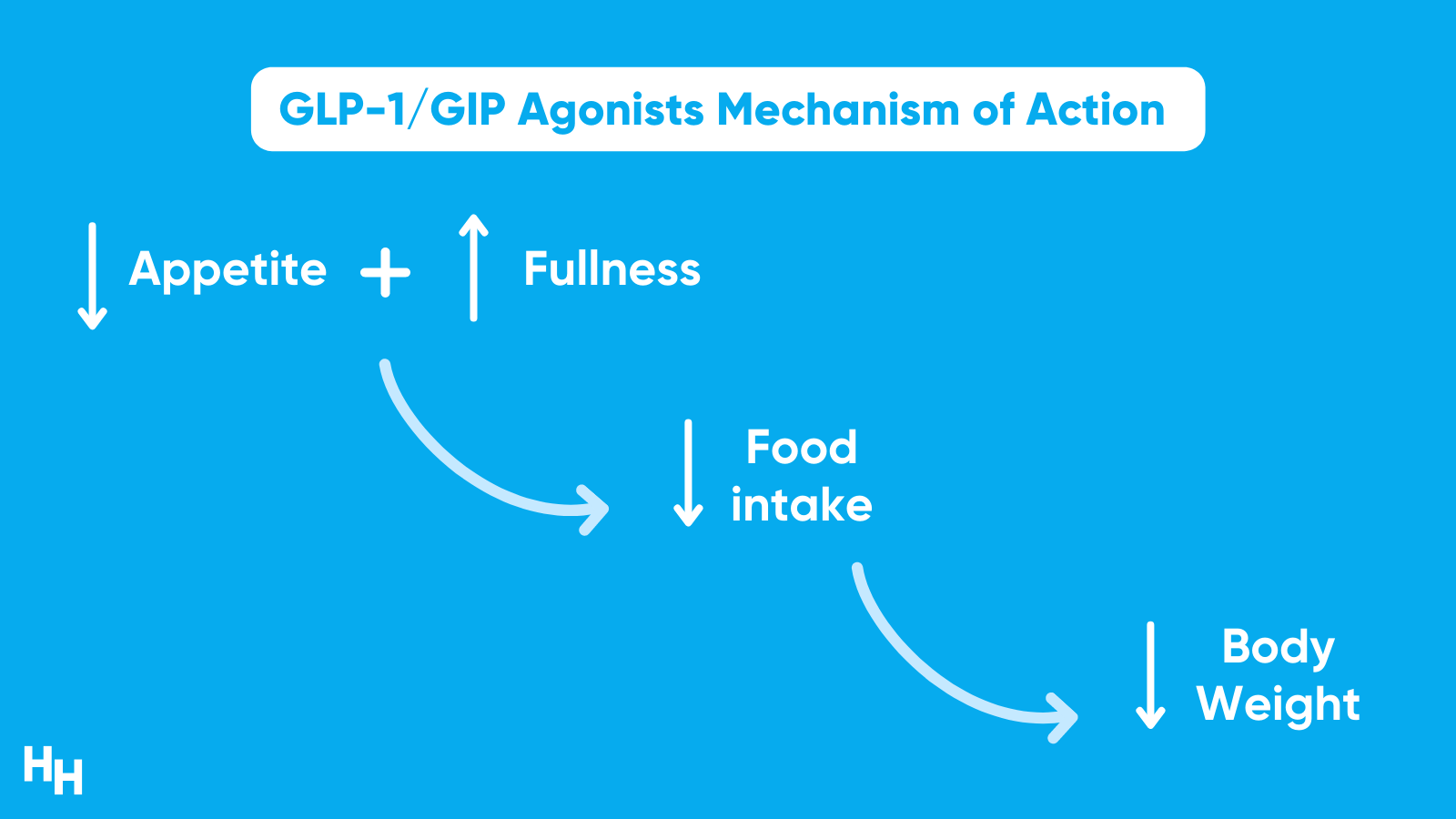
Tirzepatide is a GLP-1 and GIP receptor agonist that reduces appetite, slows food release from the stomach, increases insulin response and inhibits glucagon. |
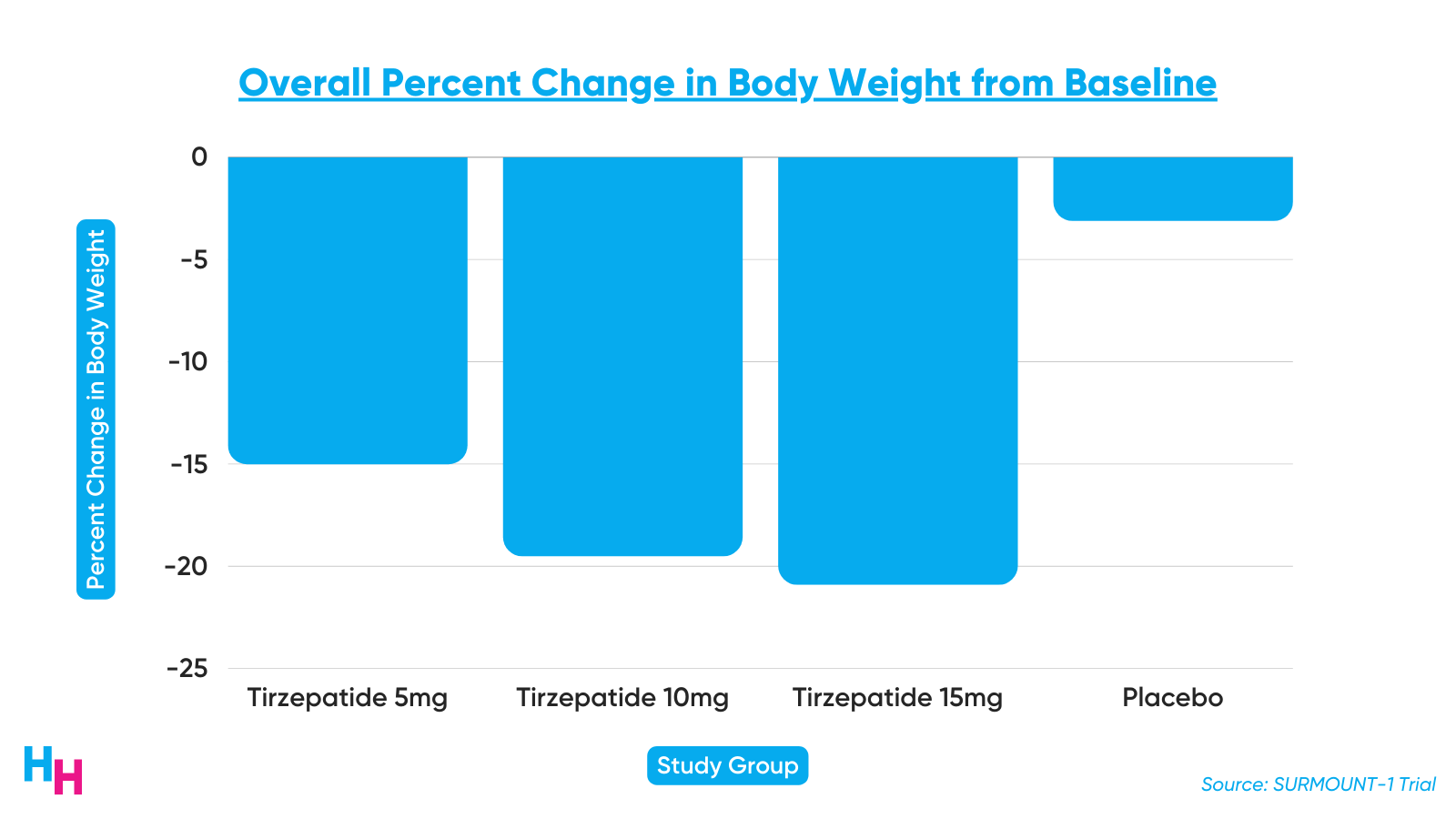
Results from the SURMOUNT-1 clinical trial are promising. SURMOUNT-1 was a 72-week-long Phase III, double-blind, randomized control trial, including 2,500 participants with a BMI over 30, or 27 with more than one weight-related comorbidity that’s not type 2 diabetes. At the end of the 72-week study period, participants’ body weight decreased on average by 16% in the low-dose group, 21% in the medium-dose group and 23% in the high-dose group. Those in the placebo group only lost 2% of their body weight.
|
Additionally, metabolic health indicators improved in the tirzepatide groups. For example, participants receiving the drug saw a 20% decrease in triglycerides, a 7.5% decrease in non-HDL lipids, and a 39% decrease in fasting insulin (this drug is also an anti-diabetic drug). Also, HDL levels improved by 9% in the tirzepatide groups. Eli Lilly must complete their SURMOUNT-2 clinical trial before the FDA grants them accelerated approval of tirzepatide. SURMOUNT-2 includes patients with type 2 diabetes (SURMOUNT-1 excluded this population) and will end in the spring of 2023. |
The Competition
Tirzepatide’s competition is Novo Nordisk’s FDA-approved anti-obesity medication called semaglutide, a GLP-1 analogue. Semaglutide is efficacious, just like tirzepatide, and has been on the market since the summer of last year. The drug raked in $161 million in this year’s second quarter.
|
Dash's Dissection
Tirzepatide will be the next blockbuster drug. First, the drug is remarkably effective at inducing weight loss and improving cardiometabolic health with minimal side effects. Second, couple the drug’s superior efficacy with its vast total addressable market (in the U.S., two out of five adults have obesity), and you have yourself a blockbuster drug.
The next decade of anti-obesity treatment will mirror what anti-hypertension treatment was back in the 90s, which became a $30 billion market. Semaglutide and tirzepatide are on track to tap into a global obesity market predicted to be worth more than $50 billion by the end of the decade.
Once tirzepatide is FDA-approved, both tirzepatide and semaglutide will transform metabolic health in modern medicine. The hope is that the medication is distributed equitably across income brackets, races and ethnicities. The fear is that the medications become “privileged” drugs, where only those with private insurance have access to the effective medications while those with public insurance are neglected. |
|
|
1) How Covid-19 Has Evaded the Immune System
A recent study out of the University of Pennsylvania gives us a new explanation as to how the SARS-CoV-2 virus evades the human immune system. DNA in our cells wraps around proteins called histones, which make it more compact, preventing cells from transcribing those DNA segments into mRNA and, therefore, preventing translation into protein. The researchers found that SARS-Cov-2 contains a protein called Orf8 that prevents cells from removing these histones, thus preventing our immune system from reading and responding to the viral DNA. Check out a summary version of the study here (paywall) if you want a more detailed explanation, or take my word that we now have a deeper understanding of how the virus has evolved.
2) FDA Approves Amylyx’s ALS Drug, Priced at $158,000 per Year
The FDA approved Amylyx’s ALS drug, which is the first treatment to significantly slow disease progression and functional decline. The drug’s list price will be $158,000 annually, although patients won’t pay that amount. Last month, I wrote about FDA advisors voting in favor of approving Amylyx’s AMX0035, an ALS drug with modest benefits for a disease with severely limited treatment options. They had previously voted against approval but changed their minds after seeing more anecdotes, analyses and a promise to withdraw the drug if the ongoing larger clinical trial were to fail. In some ways, this story is similar to the controversial Aduhelm approval, but AMX0035 reportedly has a much lower risk of harm to patients than Aduhelm did. If the ongoing trial shows success, this will be a much-needed glimmer of hope for those affected by such a devastating disease, but a lot is riding on that success.
3) Mark Cuban’s Cost Plus Drugs on Track for Profitable 2023
Cost Plus Drugs, which is less than a year old, is now on track to be profitable by 2023. While it’s rare for new companies—especially those in healthcare—to turn a profit so quickly, I’m not surprised about Cost Plus Drugs, given its 10% week-over-week growth. The company also plans to open its manufacturing plant next month. Mark Cuban’s disruptive online pharmacy is successfully removing the middlemen (insurance plans and pharmacy benefit managers) from the equation to lower the cost of drugs. For some, those savings can reach upwards of 99% compared to traditional pharmacies. Overall, the road ahead looks quite bright for Mark Cuban’s pharmacy, and I hope they can expand their offerings to help even more patients in the coming years. I’ve already referred some patients I took care of in the hospital to Cost Plus Drugs.
4) Hundreds of Research Investigations Join Astronauts on SpaceX Rocket
SpaceX launched its 8th crewed mission and 5th commercial flight, aptly named Crew-5. The astronauts on this mission are carrying hundreds of experiments to the International Space Station to test the safety of space travel since space travel is anticipated to become much more common as civilian and private astronaut spaceflight grows. In particular, this mission includes a study from the Los Alamos national lab looking at how the gut microbiome changes in space. Good news for those of us stuck down here on earth. Some studies might benefit us too, such as one from LambdaVision looking at constructing artificial retinas in microgravity to treat degenerative eye diseases. The space station has always played host to tons of scientific research, and SpaceX’s increased access to the ISS will likely speed up progress.
5) Biohaven Officially Launches as New Pfizer Spinout Company
Biohaven officially launched as an independent company under Pfizer following Pfizer’s $11.6 billion acquisition, which finally closed. Biohaven focuses on neurological and neuropsychiatric diseases like migraines and has several anti-migraine drugs in the pipeline as well as already FDA-approved anti-migraine drugs. The company’s most popular anti-migraine drug is Rimegepant (Nurtec), a calcitonin gene-related peptide (CGRP)-targeting migraine medications. I covered Pfizer’s acquisition of Biohaven and its valuable anti-migraine medications here.
|
|
|
Here are some jobs that I’m curating for the healthcare industry. Use this link to submit your role to be featured if you’re looking to hire.
ACO REACH Clinical Case Manager – LCSW, CVS Health
CVS Health is looking for a clinical case manager for hybrid work in Chicago. As case manager, you’ll be a primary care manager for a selected member population and also act as an SME to collaborate with RN CMs to assist with psychosocial issues and community resources.
Collaborating Psychiatrist, Mindbloom
Mindbloom is a company providing unconventional depression therapy, such as ketamine therapy, for anxiety and depression. As a fully-remote Collaborating Psychiatrist, you'll work with Mindbloom's psychiatric clinicians and their Medical Director to ensure that clinicians follow their proprietary ketamine therapy protocols. Supervising Physician, DispatchHealth
DispatchHealth is a provider and operator of tech-enabled in-home health care. They’re looking for an emergency medicine physician to supervise advanced practice providers (APP) in their mobile acute care model. |
|
|
SHARE HEALTHCARE HUDDLE, GET EXCLUSIVE CONTENT |
If you share Healthcare Huddle with just 2 friends, I'll personally send you my Healthcare 101 Guide. From the guide, you'll have all the info you need like "what is insurance?" or "how do doctors make money?" allowing you to have thoughtful discussions about U.S. healthcare. |
Once you share Healthcare Huddle with 2 others and they subscribe, you'll get immediate access to my guide!
You can copy and share your link here: {{profile.vars.rh_reflink_5}} Or share via: |
P.S. You have referred {{profile.vars.rh_totref_5}} people so far! |
|
|
🍽️ Dinner in NYC: I celebrated my birthday at Leyla on the Upper West Side. Delicious Turkish food. I ordered the lamb shank, and the meat literally slipped off with gravity.
🩺 Gastric Sleeve Endoscopy: I just finished a two-week gastroenterology elective and had no idea GI docs are now performing gastric sleeves endoscopically instead of surgery. The endoscopic procedure is still in its early days, but wow!
📖 What I’m Reading: Blake wrote a BEAST of an article recapping the top 19 healthcare stories from the third quarter.
🥂 Alcohol is Bad: We already know alcohol is bad. However, this guy on Twitter found WHOOP data demonstrating the effects of alcohol on certain vitals, like heart rate variability and resting heart rate. Check it out here.
|
|
|
Thanks for reading! Hope you have a great week 🙂 Keeping it simple, Jared |
|
|
Want your message in front of 14,900 doctors, nurses and healthcare decision-makers? |
Workweek Media Inc.
2952 Higgins Street
Austin, TX 78722 Want to ruin my day? Unsubscribe. |
|
|
|