| ||||||||
| | ||||||||
 Hey Marketing Bestie, Before we start, can I ask: do you know if your Marketing House is Haunted? On the 27th, I want to help you hunt the ghosts. Save your spot. Okay, back to your regularly-scheduled parade for the greatest marketing campaigns in memory: Marketing Classics 411. In place of hieroglyphs, expect to decipher the campaigns of yesteryear. Professor Millennial teaches every Tuesday (remotely), via electronic mail. Class is now in session. Was this email forwarded to you? Sponsored by impact.com 1st thing: you should download the Field Guide to B2B Partnerships. IT'S BOOK FAIR WEEK! How the Scholastic Book Fair Turned the School Gym Into a $576M Nostalgia MachineQ4 is wishlist season. Every brand is fighting tooth & nail for a spot on that list before the holidays. But Scholastic cracked the formula decades ago, with a catalog, an order form, and a library full of possibilities. This is the story of… the Scholastic Book Fair. .png?sig=1eb63842ec6b47ea7c543da3de27fa04eb4e6bf9a25e787ae68377d21e527876&size=email-body&dpr=2) It’s a Tuesday morning in October, 1996, and the library smells like a brand-new paperback.You already have a marked-up catalog and a permission slip in your backpack, next to an envelope with cold hard CASH. Yesterday, your class got to peep the goods. Last night, you were basically in a hostage negotiation with your parents about your wish list budget. The library looks transformed. New Goosebumps on 1 side. The Baby-Sitters Club on the other. A spinner rack of bookmarks. A whole table of posters you'd trade your little brother for. And next to the register, a bin of erasers shaped like tiny hamburgers. Ah, memories. But there’s something your elementary school self didn’t clock: you just ran through a full sales funnel. 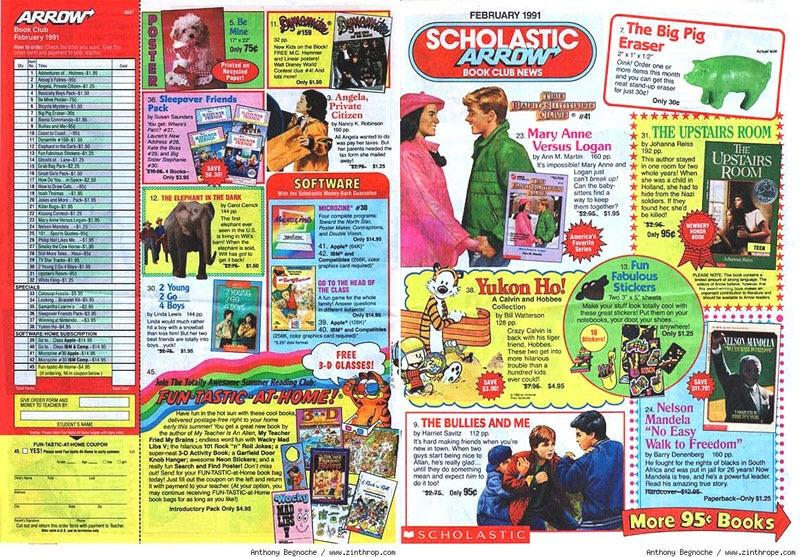 Early budgeting lessons were TOUGH. Preview, consideration, wishlist, comparing, pitch to the decision-maker(s), purchase. All in about 72 hours, mostly inside a building you were legally required to be in, LOL. Now, as we coast back into book fair season, let’s take another look at that sales funnel. Because in case you haven’t checked lately, it’s still growing - even while the business around it isn’t. The Flyer Before the FairTo understand the book fair, you have to meet its older sibling: the book club. By 1948, Scholastic had already been making classroom magazines for 28 years. Now with paperbacks available, they teamed up with Pocket Books to launch the Teen Age Book Club (T.A.B.), selling affordable paperbacks to teens in school. The model was simple. Fliers went out in class. Kids picked their books. Orders went through the teacher. 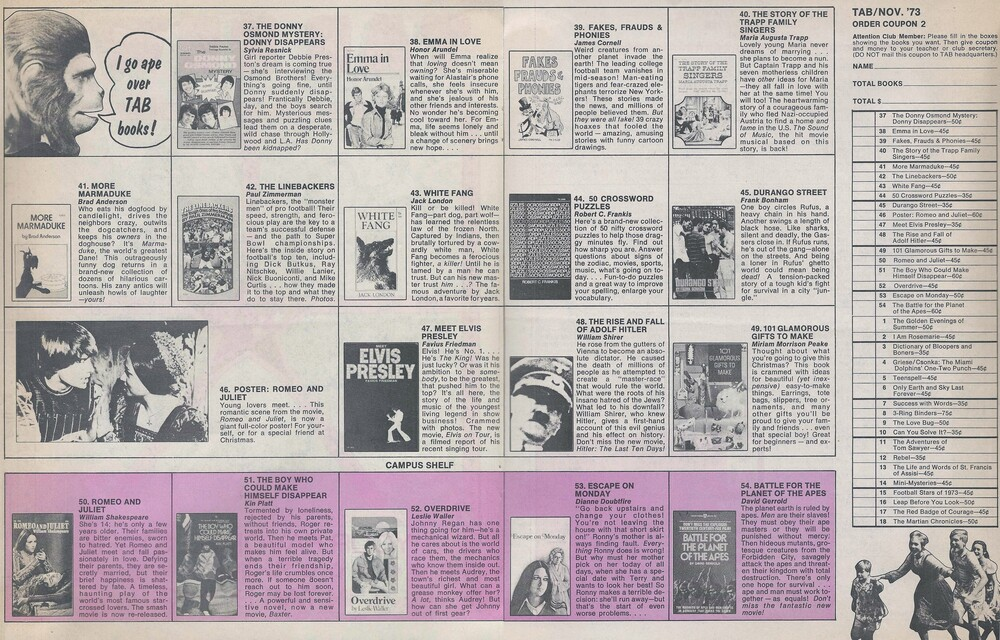 Tab News, November 1973. Look familiar? Ask a Boomer in your life. And it WORKED. So well that in 1957, Scholastic rolled out Arrow Book Club for 4th-6th graders, followed by Campus Book Club for high schoolers in ‘58, Lucky Book Club for 2nd & 3rd graders in ‘61, and finally See-Saw Book Club for kindergarten & 1st grade in ‘66. And it worked. In 2009, Scholastic estimated that more than 75% of elementary school teachers used its book clubs, which were bringing in nearly $337M a year. (Millennials remember TAB’s descendants: thin newsprint flyers.) 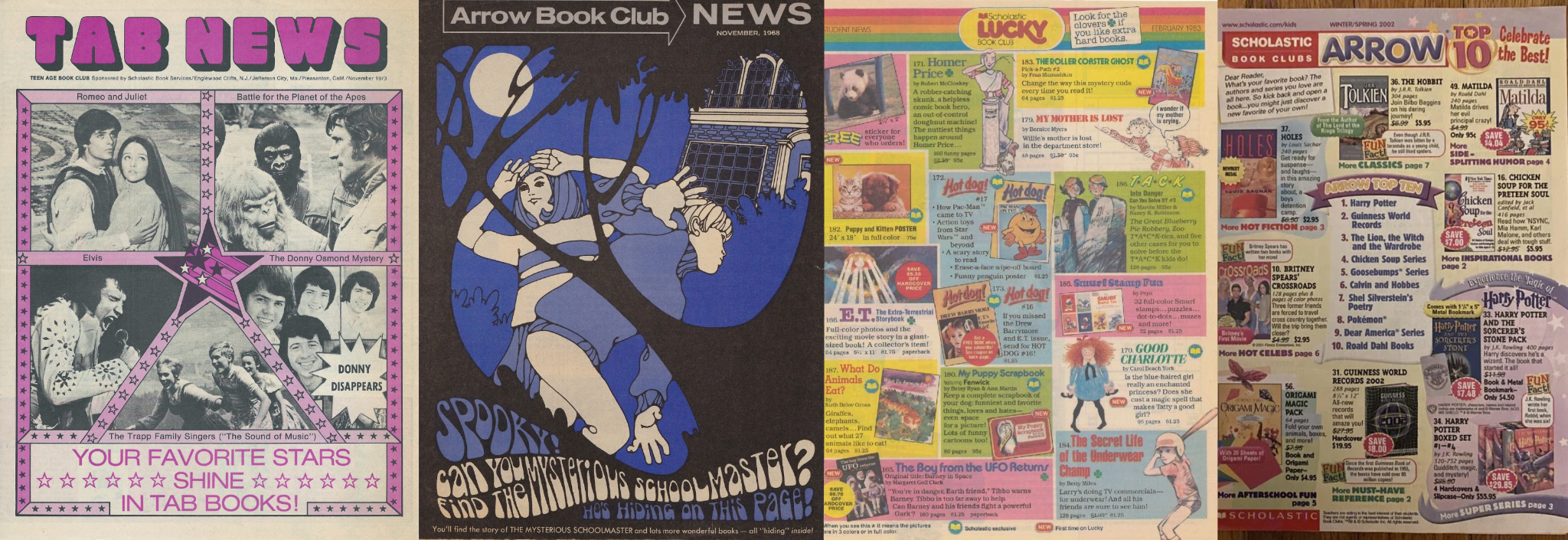 Those 60s covers were so cool?? But...a flyer only gets you so far. It lives at the bottom of a backpack, fighting for attention with homework, picture day forms, and permission slips to get to the decision-maker at home. And the little pictures don’t give a great idea about what you’re buying. So, in 1981, Scholastic bought a regional promoter called California School Book Fairs and got into the event business. A Store That Fits on a TruckScholastic’s plan was to bring the books TO their customers, true. But that’s not the only Marketing lever they pulled. The 1 that makes the whole machine run? The school does the selling. According to Scholastic, around 70% of their fairs are organized by the school librarian. Parent/guardian volunteers help staff it. The flyer goes home early so kids can 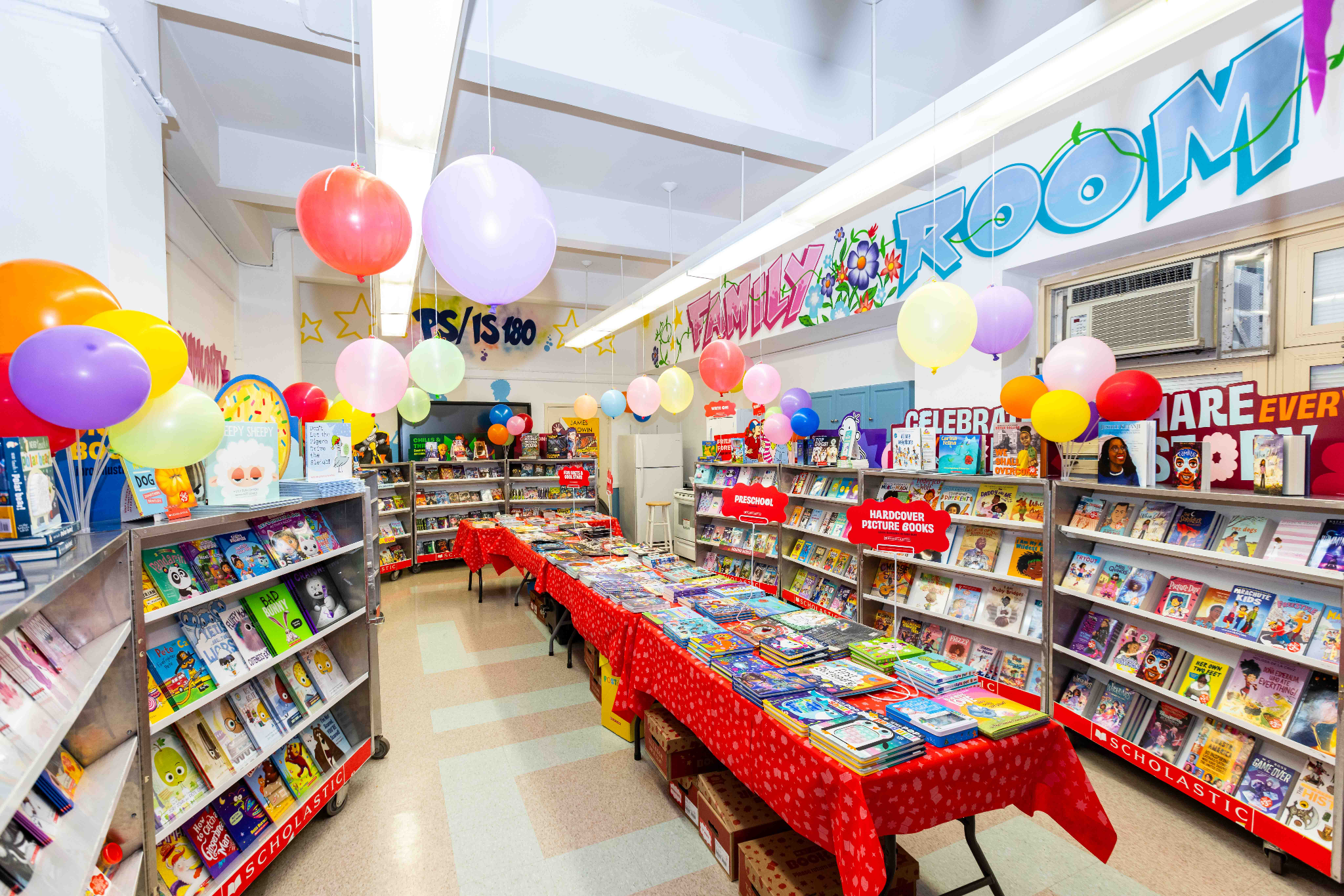 See all the books facing out? Bookstore core. Gotta be able to spot Goosebumps from across the room. Why does the school do the selling? Because they get a cut. In 2023, a Scholastic exec told Education Week the average fair brings in about $6,000. The school’s share: $1,500 in cash….or 3,000 Scholastic Dollars to spend on books and classroom supplies. So a lot of that money circles back to them in a win-win merry-go-round. Scholastic says schools raise more than $240M a year through its book fairs, and more than $2B over the last decade. 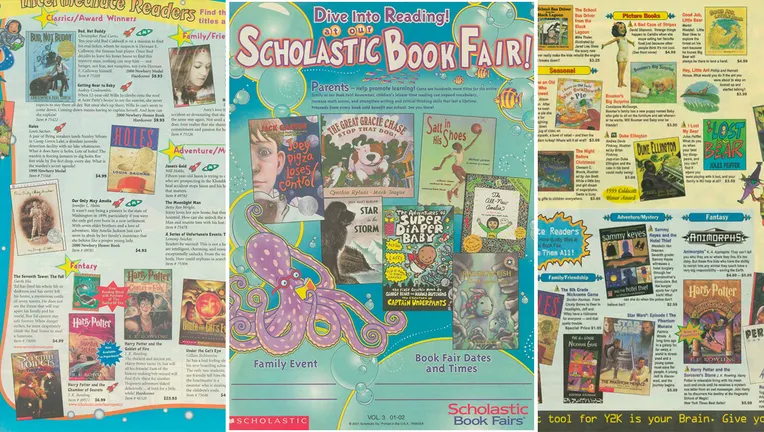 Book flyers from 1999, 2000 and 2001. (Scholastic) A flyer asked you to imagine a book or a poster. The fair put the book in your hands, paired it with urgency, scarcity, and the anticipation of every kid in your class, with your mom’s $10 burning a hole in your pocket. The Franchise FactoryThe book fair also became Scholastic’s launchpad. When a whole grade walks through the same fair in the same week, a series can catch on all at once. You probably remember. The Baby-Sitters Club launched in 1986. It now has more than 176M books in print. I SPY, Animorphs, Captain Underpants, and Harry Potter all rode the same shelves. Scholastic says many of its series became household names partly because kids found them and shared them at book fairs. The book fair was also the rare event where kids got to choose for themselves, often shopping on their own with money from home. 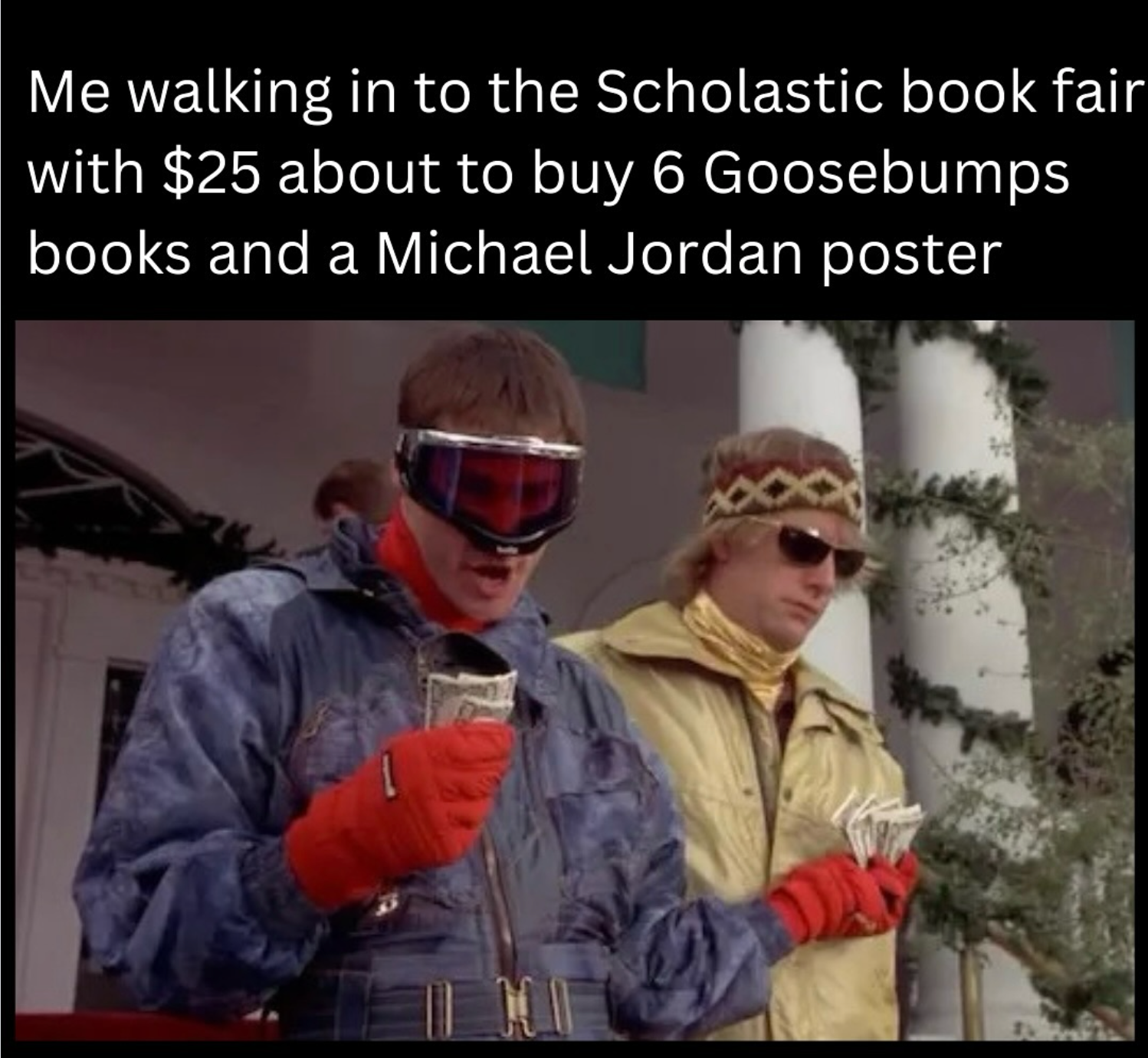 Flush with book bux. PUT IT IN PRACTICEScholastic brought the store to the kid and let the school do the selling. Your customers are also somewhere every single day, and someone in that place already has their trust. Here’s your homework: 1️⃣. Find your school library/gym. 2️⃣. Run a preview day. 3️⃣. Give your host a cut. 4️⃣. Put a clock on it. About Those ErasersWe can be honest with each other, right? A lot of us went straight for the posters and the gel pens and maybe found a book on the way out. Teachers & parents noticed, and the debate still goes on. From Scholastic’s point of view, the toys and trinkets are a way to keep the kids engaged, even if the items are only...book-adjacent. Both sides have a point. That hamburger eraser got some kids through the door. It also made the book fair feel more like a toy store than some parents wanted. (Were you a book kid or a toy kid?) 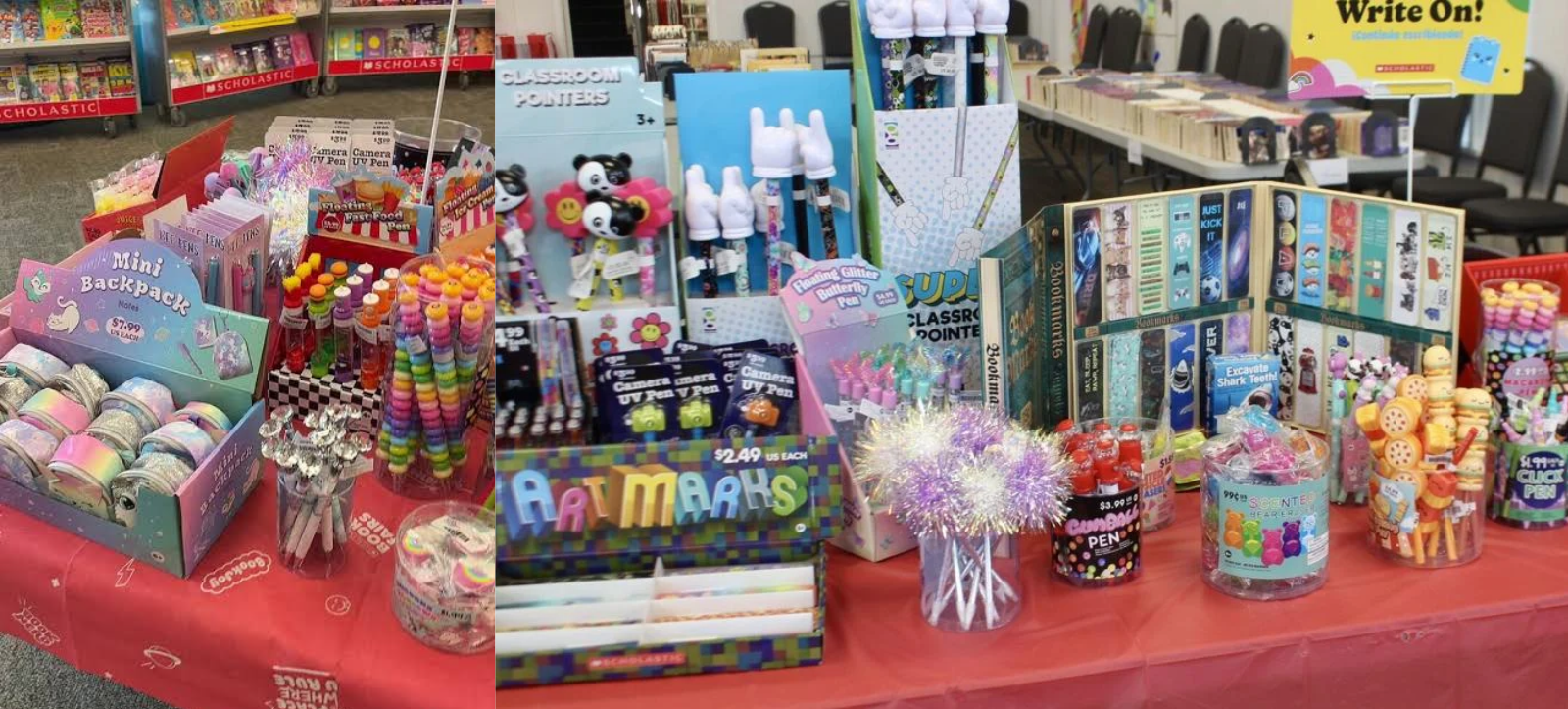 Educational? Debatable. But def essential. The Event Beat the FlyersFast forward to 2026. 📕. Scholastic's book fair revenue GREW 5% to $576M The catalog that started it all is shrinking…but the demand for the fair keeps growing. Even the crumpled bills got an upgrade. Lots of schools now push Scholastic’s eWallet, where parents can load money ahead off time. When Box Tops moved to an app, the clipping ritual took the hit. But Scholastic digitized the wallet and left the event exactly where it was. Preview day is still there. So are the wish list and the displays. 45 years after they started, the book fair model is still compounding. The Grown-Ups Want Back InDid this make you a little nostalgic?? You’re not alone. Even grown-ups miss the book fair. Libraries and book clubs all over host book fair nights with snacks & drinks. Scholastic’s own site has a “Nostalgic Titles & Series” section absolutely LASER targeted at Millennials. (Don’t say I didn’t warn you!) Penguin Random House even threw a 21+ book fair for grown-ups in New York, complete with snap bracelets and an awkward school photo booth. Yes, we could buy books anywhere. But the events brings the magic. So, my question to the class: what would YOUR brand’s “book fair week” look like? 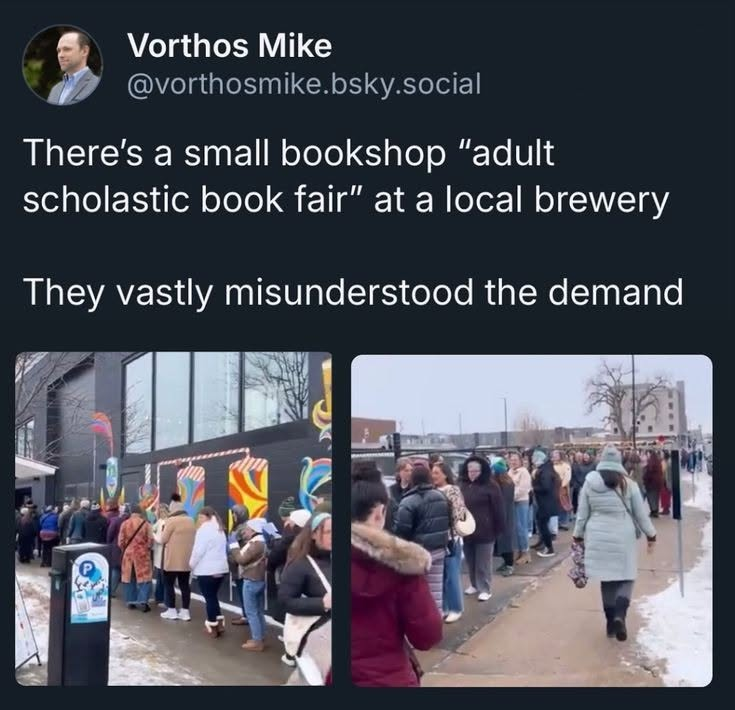 MARKETING CHEAT SHEET (WHAT TO LEARN FROM THIS STORY): 1️⃣. Show up where they already are. Scholastic moved the store into the school and stopped waiting for kids to find a bookstore or send in an order form. Your best channel might be a place your customer already spends their day. 2️⃣. Scarcity makes an event. A few days a year turned shopping into the best week of school. A short window gives people a reason to show up now. 3️⃣. Partners sell harder when they share your upside. Schools raise millions a year from book fairs, so they host and promote every one. 4️⃣. Events outlast catalogs. In the same quarter, book fairs grew 5% while book clubs fell 14%. A flyer gets skimmed. A week in the gym gets remembered for 30 years. 5️⃣. Automate the hassle, protect the ritual. Scholastic swapped crumpled bills for an eWallet, but kept the tradition. Before you modernize something people love, figure out which parts ARE the experience. Sponsored by Roku Hey 👋 Making sure you didn't miss this new study: Exact same creative. 20 point difference. IN A MEME  Ahh, the bell has rung. Please be sure to do the reading (follow The Marketing Millennials on LinkedIn and me, Professor Millennial, on X). Off you go, passing period is only 11 minutes and there’s already a line at the vending machine that takes Scholastic Bucks. Got my eye on a novelty eraser. Until next time, Professor Millennial | ||||||||
|