| ||||||||
| | ||||||||
 Hey Marketing Bestie, Us marketers sure can learn a lot from our Marketing fore-fathers and fore-mothers. Consider this a parade for the greatest marketing campaigns in memory. Welcome to Marketing Classics 411, a new kind of ancient history. In place of hieroglyphs, expect to decipher the campaigns of yesteryear. Professor Millennial teaches every Tuesday (remotely), via electronic mail. Class is now in session. Was this email forwarded to you? Sponsored by Roku Today's lesson is about how 1 guy figured out how to make an entire city stop and stare. Data for your strategy, from Roku's 2026 Holiday Streaming Playbook: This is your month-by-month map, whether you're doing October awareness or Q5 clearance. COME 1, COME ALL! How P.T. Barnum Mastered The Attention Economy & Invented Modern MarketingThis time of year, Marketing can be a 3-ring circus. We’re stepping right up into peak season. Fighting for attention and $$$ in a crowded, chaotic market. All while trying to figure out our next act. So who better to study today than The Greatest Show The entrepreneur who said, “There’s no such thing as bad publicity.” And then…kinda proved it? With innovation, outrageous hoaxes, and shocking publicity stunts, he revolutionized entertainment, media, and Marketing as we know it today. This is the story of… P.T. Barnum. 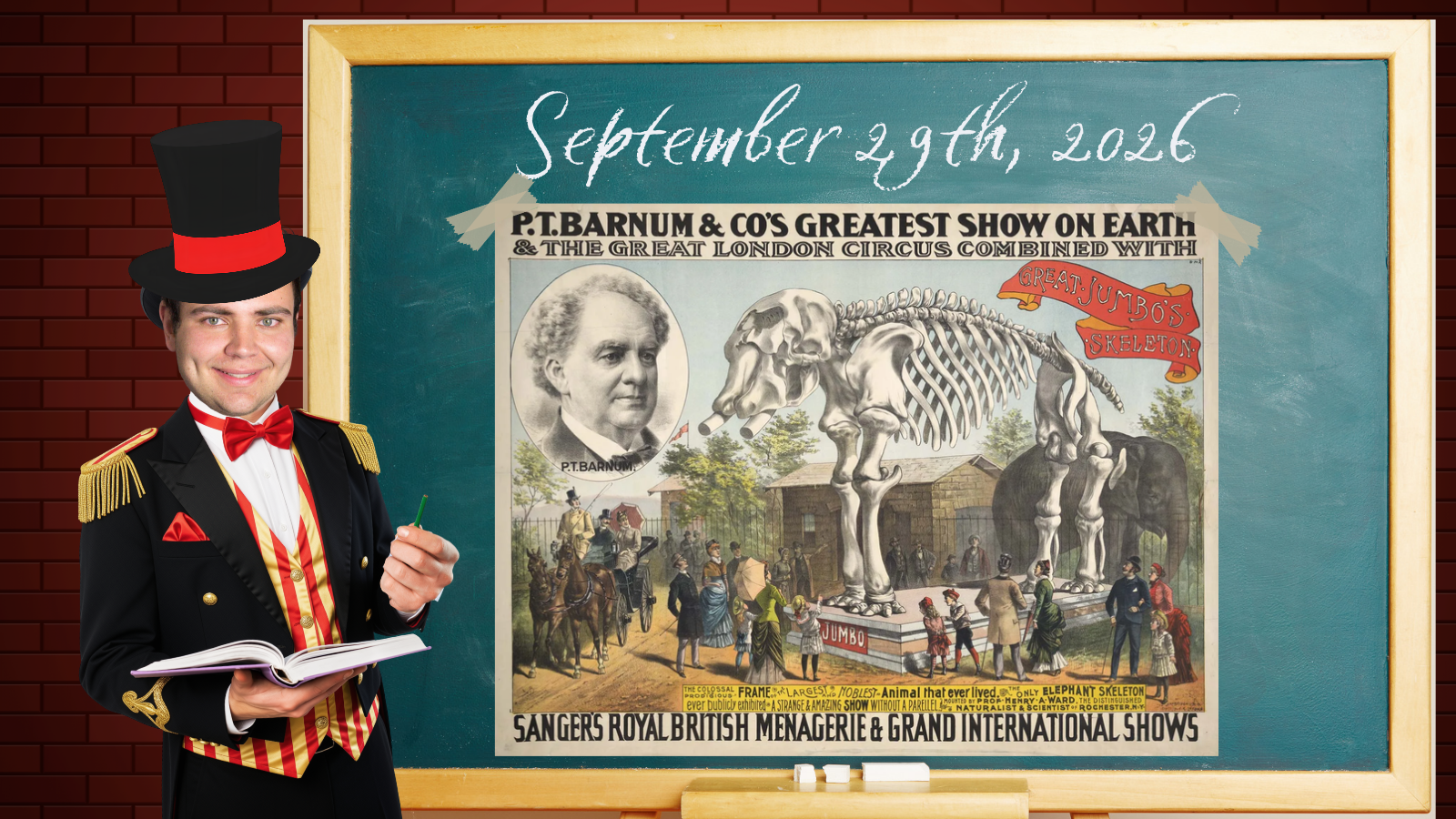 Phineas Taylor (P.T.) Barnum described his life as a “rags-to-riches” story. No surprise, that was an exaggeration. He was born in 1810 to a working-middle-class family of entrepreneurs in Connecticut. His father was a multi-hyphenate: a tailor, livery stable owner, tavern keeper, and farmer. From a young age, Barnum had math skills and hustle. At 12, he ditched farm chores to sell snacks and rum to soldiers. When his father died 3 years later, he left school. In his early 20s, Barnum started a weekly newspaper. It gained notoriety for fiery editorials against local church leaders. P.T. Barnum’s 1st stunt: running his newspaper out of a jail cell while serving 2 months for libel. 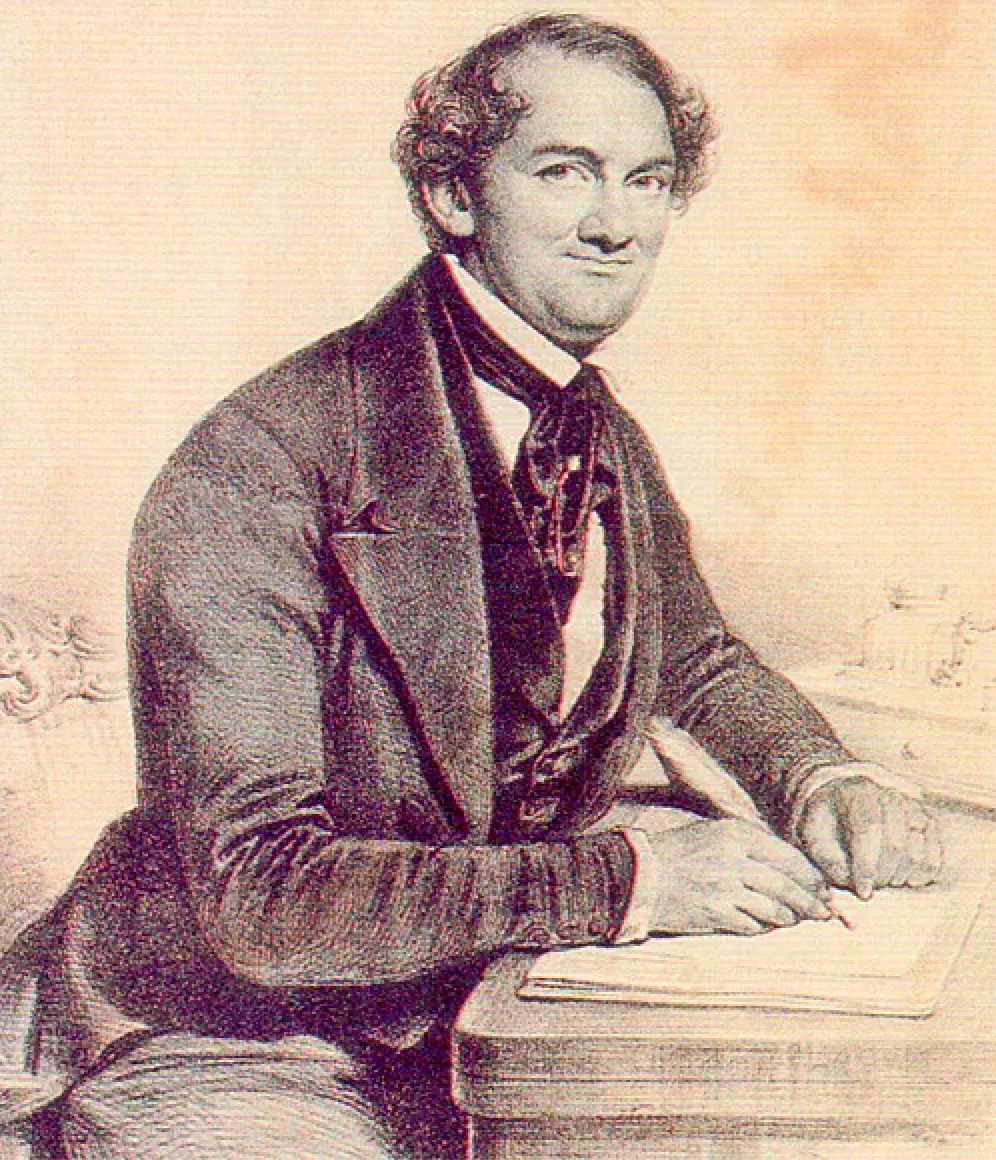 P.T. Barnum B.C. (Before Circus). He was making a name for himself, but craved a larger stage. Barnum moved to New York City to go into entertainment. MUSEUM + FREAK SHOW + THEATERFast forward to 1841. His variety troupe, Barnum’s Grand Scientific and Musical Theater, wasn’t the hit he’d hoped for. It was also pretty gruesome. When Scudder’s American Museum went up for sale in the Financial District, Barnum decided to put down roots. Barnum’s American Museum kept the taxidermy, paintings, and nature dioramas of its predecessor. Then added: 🧞♀️: The “Feejee Mermaid” (a taxidermied monkey and fish sewn together and presented as an actual mermaid) 👯: People he called “human curiosities,” like the Bearded Lady and the Siamese Twins. 🐋: A menagerie of live animals, including a beluga whale and a tiger 🎭: Operas and plays in the “Moral Lecture Room” 🪂: Rooftop hot air balloon rides 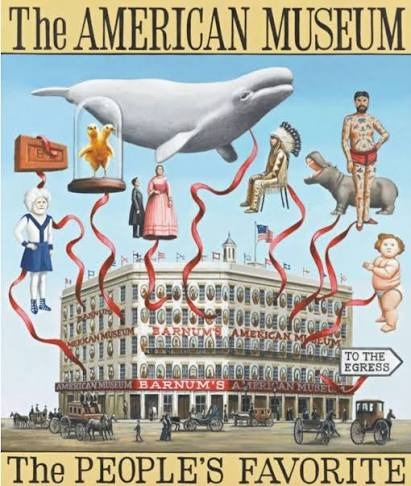 Everything to see here, folks! It was an unusual mix of high-brow natural history/culture and low-brow spectacle. Aka, something for everybody. The museum even had the 1st public aquarium in the U.S., predating the Bronx Zoo by 58 years. Calling the theater the Moral Lecture Room and introducing matinee shows signaled that it was family-friendly and theoretically respectable, unlike most playhouses. Exhibits revolved, so visitors would keep coming back. 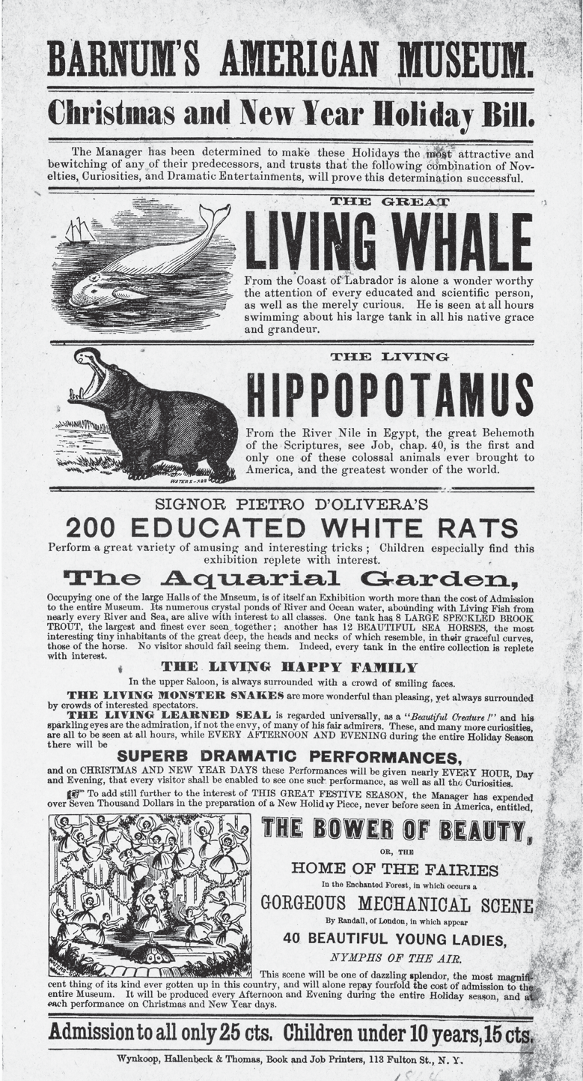 200 Educated White Rats. (In case you’re not into living whales.) Admission was 25¢ per person, 15¢ for children under 10. That’d be around $9.63 today. It sounds inexpensive by today’s standards. But most Americans made no more than $1 per day. How would Barnum make his museum a must-visit destination? By making it impossible to resist. NYC’S #1 ATTRACTIONBarnum turned the whole building facade into an ad, with bright lights and large paintings of attractions. Then he started controversies in the press by submitting anonymous articles claiming certain exhibits were fake. 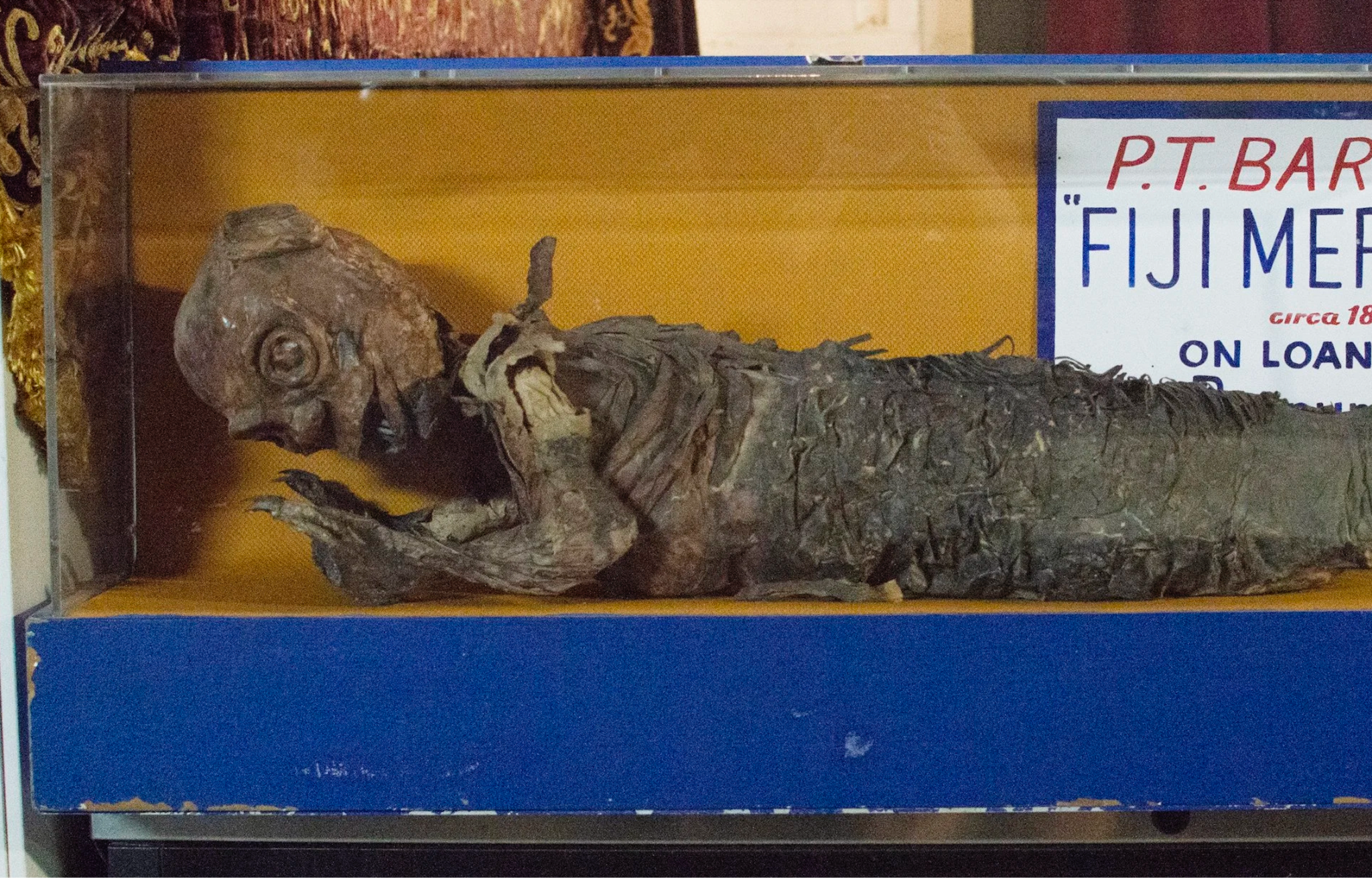 You mean to tell me this isn’t a real mermaid?!? If crowds weren’t already enticed by the museum’s lurid windows, now they wanted to judge exhibits for themselves! There was a lot to see on the museum’s 5 floors. People weren’t leaving the building fast enough. Crowd control became an issue. 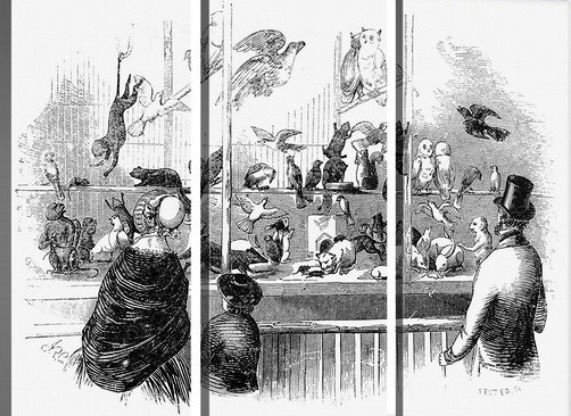 “The Happy Family”: 60+ animals who were mortal enemies all living in peace. Um, okay. 1 sneaky trick Barnum pulled: posting signs throughout the museum that read “☞ THIS WAY TO THE EGRESS." Most visitors didn’t realize “egress” meant “exit,” so they’d follow the signs expecting another unbelievable exhibit and end up outside. Want back in? That’ll be another 25¢. It was an early dark pattern. Barnum got away with it, because consumer protection laws didn’t exist. Plus, it could easily be blamed on visitors’ ignorance. Barnum’s American Museum was open 15 hours a day, 6 days a week. To maintain a steady flow of visitors, Barnum once hired a man to slowly walk a circuit outside the museum and lay bricks on the sidewalk. The man didn’t respond to questions, so curious passersby followed him. When he went into the museum, they paid 25¢ to keep up. Until he went outside and did the same stunt again. 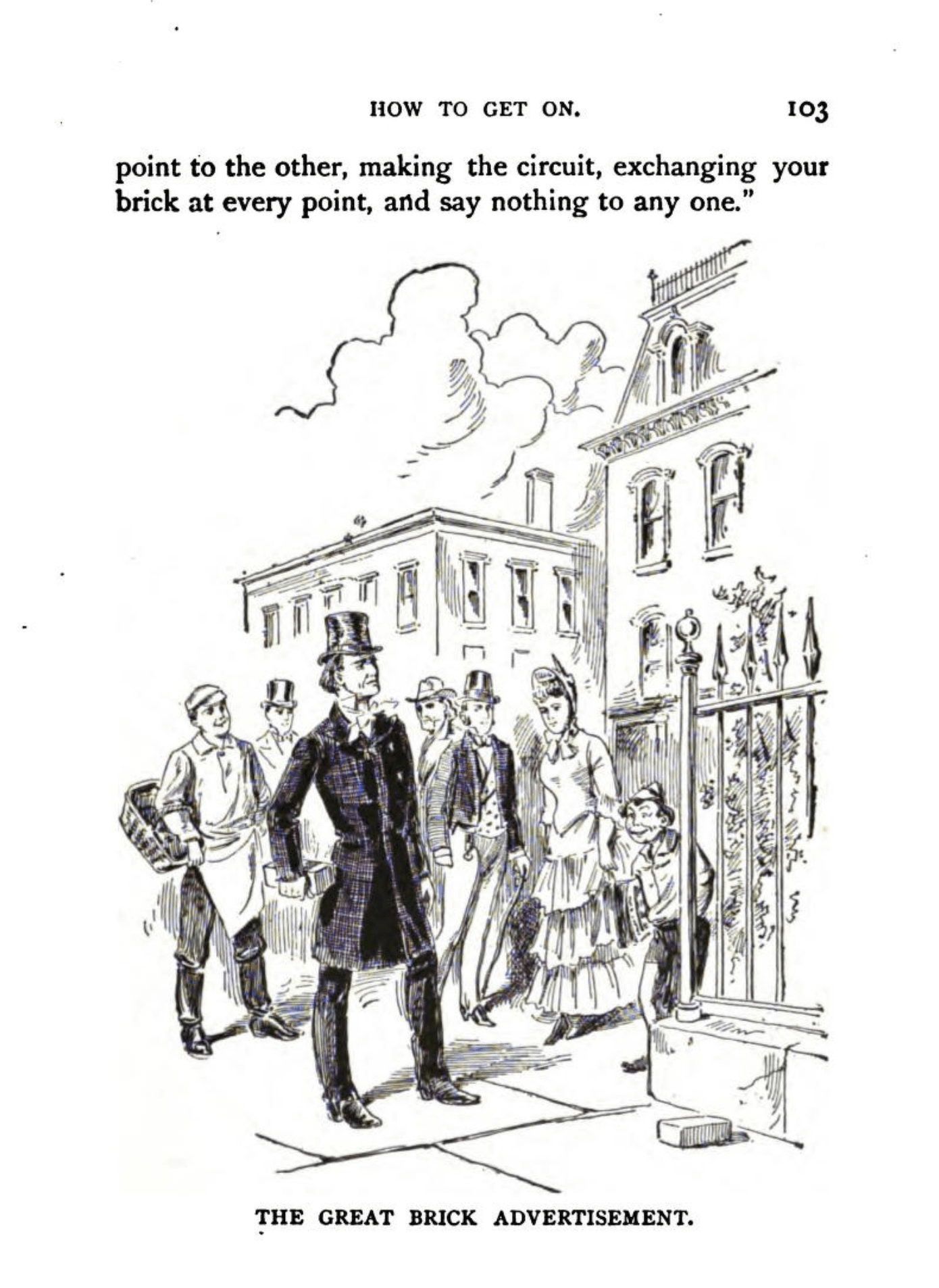 Barnum proudly wrote about the “brick man” stunt in multiple books. The museum became NYC’s #1 attraction, with 1K visitors per HOUR. King Edward VII visited from England. Walt Whitman and Henry David Thoreau stopped by regularly. Presidential nominee Abraham Lincoln declined, but sent his family. 38M visitors came from around the world. (That’s 6M more than the USA’s population at the time!) Until Barnum’s American Museum burnt down in 1865. A new, smaller location opened, but it wasn’t the same. Then IT burnt down in 1868. Barnum decided to take the museum’s most popular attractions on the road with P. T. Barnum's Grand Traveling Museum, Menagerie, Caravan & Hippodrome. In 1881, he partnered with James Bailey and James Hutchinson to form the Barnum & Bailey Circus. Jumbo the Elephant was purchased from the London Zoo a year later. 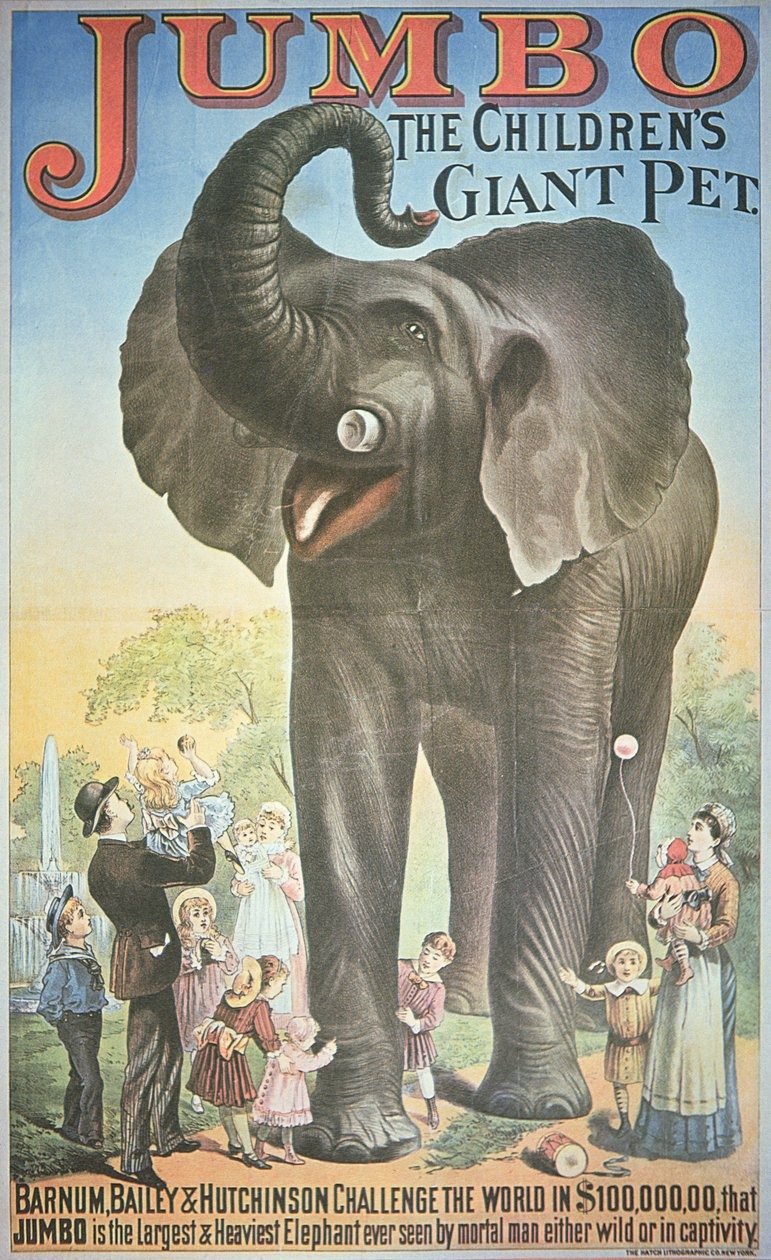 Fun fact: Jumbo the Elephant came before “jumbo” the adjective. The 3-ring circus was born. PUT IT IN PRACTICEP.T. Barnum knew it’s better to be talked about than not noticed at all. Public skepticism can generate as much awareness and traffic as good PR (as long as your brand keeps control of the narrative). Here’s your homework: 1️⃣. Pick 1 thing about a product that could spark debate. Like design, a quirky ingredient, a claim that sounds too good to be true, or the price. 2️⃣. Let customers or reviewers publicly doubt it. Don’t suppress reviews. At least customers are talking about you! P.T. Barnum had to fake that part at 1st. 3️⃣. Respond in a way that keeps the debate alive. 4️⃣. Track whether engagement or traffic moves. A MEDIA CIRCUSBailey had the day-to-day circus covered, so Barnum focused more on operations than Marketing. Or even better, operations AS Marketing, like the famous circus train that made transport more efficient and served as OOH advertising. 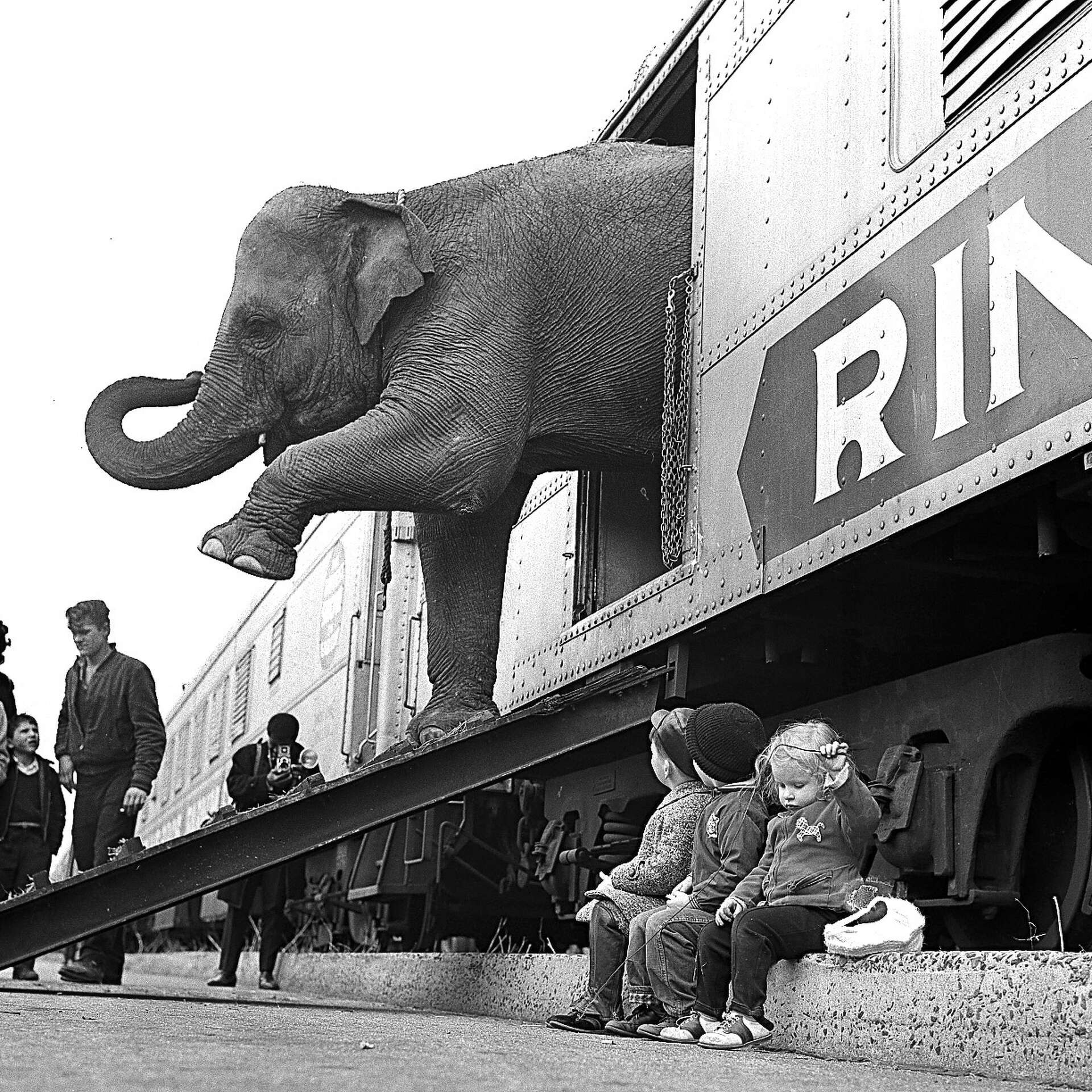 All aboard! Barnum dabbled in politics during his second act, with everything from a losing Congress run, a mayorship, and becoming the founding president of a hospital. But despite his wide-ranging resume, spectacle was still his true love.. His best one ever came in 1883, when the Brooklyn Bridge opened. It was the world’s longest suspension bridge and the 1st to use steel cables. Barnum pitched a grand opening parade of Jumbo and other circus animals to prove the bridge’s safety… and capitalize on the publicity. His idea was rejected. But just 6 days later, pedestrians panicked at a false rumor that the bridge was collapsing after a woman tripped and fell. Even though the bridge was completely safe, 12 died in the resulting stampede. New Yorkers were spooked. Enter Barnum, again pitching his idea, but this time to solve a PR crisis. On May 17, 1884, 17 camels and 21 elephants (including the famous Jumbo) marched across the bridge from Manhattan to Brooklyn: 🐫: The reputation of the Brooklyn Bridge was saved. 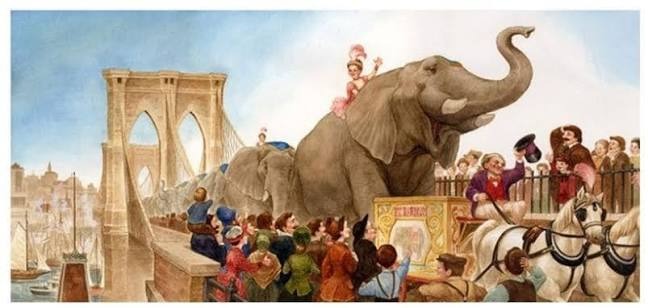 Not what it actually looked like, but close enough. It sounds like a Marketing tall tale. It was written up in the New York Times, but there aren’t photos, because it happened at night. But the story’s 100% true, which is more than you can say about the Feejee Mermaid. P.T. Barnum wasn’t always ethical, factual, or brand-safe in the modern sense. But he was arguably the 1st great advertising genius to master the attention economy, before it even had a name. Spreading the Barnum name and lore through word-of-mouth, press, hoaxes, and stunts we’re still talking about. If you work in Marketing, you owe a debt of gratitude (and your best tactics) to P.T. Barnum. Everybody to the circus! MARKETING CHEAT SHEET (WHAT TO LEARN FROM THIS STORY): 1️⃣. Attention is credibility. Who do you trust more: a marketing expert with 100 followers or 100K followers? Would you be more curious about a packed or empty restaurant? A crowd outside makes people want in. 2️⃣. Innovation beats complexity. Barnum’s American Museum wasn’t going for exclusive or elevated. It made spectacle accessible by offering something for everyone in 1 destination. 3️⃣. Hated beats ignored. Controversy can be a risk, but it’s also a distribution channel. Barnum knew negative coverage was just as hypnotic as good press. 4️⃣. Borrow other people's crises/seasonal moments. The Brooklyn Bridge panic wasn’t Barnum’s problem. But he knew his spectacle could repair its reputation. “Not my circus, Sponsored by Roku Barnum turned curiosity into foot traffic. Blu Dot did the same thing with nothing but a TV remote. Bookmark this before you go: they scaled a tiny CTV test into a 2,308% ROAS campaign on Roku, no complicated setup required (Shopify handled the checkout). Extra impressive to me because this is a high-consideration item (furniture is $$$$). Purchase conversions went from 9 a day to 50.  IN A MEME  Ahh, the bell has rung. Please be sure to do the reading (follow The Marketing Millennials on LinkedIn and me, Professor Millennial, on X). Off you go, passing period is only 11 minutes and there’s already a line at the vending machine that sells Barnum’s animal crackers. Until next time, Professor Millennial | ||||||||
|