| |||||||||
| | |||||||||
 Hey Marketing Bestie, Got my son a new Bearcats jersey for the season. He wears it well and is learning the fight song. If you're a Bearcat fan, please reply to me. I love to befriend others with excellent taste. Was this email forwarded to you? Sponsored by Postscript Did you see Sean Frank turned down an all-cash offer to buy Ridge? 7 Marketing Changes Coming With Meta MuseMeta just launched Muse. And the biggest Marketing shift isn’t that AI can make ads. It’s that Marketers may soon need to Market to 2 audiences at once: The human buying the product. 1st, a quick map, because "Muse" is now 3 different things: The Muse agent: a personal AI agent for consumers. The Muse agent can research products, compare options, browse websites and even make purchases on your behalf. It's US-only for now, and it asks for approval before it buys. But the bigger deal is this: AI isn’t just becoming the marketer. Muse is a personal AI agent that can research products, compare options, browse websites and even make purchases on your behalf. And if you’re already using Meta ads (I'm sure you are), there’s another important advantage: You'll be able to talk directly with the chatbot about your campaigns. Instead of relying only on dashboards and reports, marketers can ask questions in plain language: Which creatives are performing best? That could make campaign analysis faster and more accessible. But it also changes what marketers need to understand. Because Marketing now has 2 jobs:
This is my read on early launch coverage. Details about Muse, and how Meta's ad tools connect to it, may change quickly. Here are 7 things to think about... 1️⃣. Creative production is about to get WILD1 product image could become 20, 50 or 100 different creative executions. Different settings. Meta is building this into Advantage+ through Muse Image, and it's rolling out gradually. Check what's live in your own account. The bottleneck won’t be making the creative anymore. It’ll be coming up with ideas worth making. AKA TASTE. And making sure those ideas still communicate something a real human actually cares about. Also: review what actually runs, not just what you upload. Some AI enhancements are on by default. 2️⃣. Marketers stop building ads and start directing themInstead of manually building every ad, marketers will increasingly give AI: The insight. Then AI creates the variations. Meta's tools work this way: they build variations from the assets and brand signals you provide. So the quality of your brief shapes the output. Your job becomes deciding: What should we say? Not spending all day figuring out how to make it. And someone still has to approve what goes live. Directing means owning the review, not just the brief. 3️⃣. Creative is the new targeting (this has been true for a WHILE now)We’ve spent years obsessing over audience targeting. But now the pendulum is shifting. AI allows platforms to figure out which creative variation resonates with each person. Same product. Different message. The creative itself starts doing more of the targeting. As Meta automates more of targeting, bidding and placement, creative is becoming the lever advertisers control most. Marketers will need build creative systems that adapt to different customer needs without losing the core brand idea. That means 1 clear brand idea, then variations that flex around it. Without that anchor, more variations just means more noise. 4️⃣. The funnel just got a LOT shorterToday’s funnel: Ad ➡️ landing page ➡️ product page ➡️ comparison ➡️ cart ➡️checkout. Tomorrow, for some purchases: Customer asks Muse what to buy ➡️ Muse researches ➡️ Muse recommends ➡️ customer approves ➡️ Muse purchases. That’s a completely different customer journey. The ad may create awareness. But the agent could handle the research, comparison and recommendation. And if you’re running Meta ads, you may also be able to use the chatbot as a campaign assistant along the way. You could ask it to help interpret performance, identify creative patterns and suggest new tests without manually digging through every report. So Marketers will need to think beyond the click. They’ll need to make sure the product survives the agent’s evaluation. 5️⃣. Brands are about to market to robotsImagine someone tells Muse: “Find me the best running shoes under $150 for someone with wide feet that are size 15.” Muse doesn’t care that your campaign had a clever tagline. It wants to understand: What the product does. That doesn’t mean human-facing marketing becomes irrelevant. It means marketers now need 2 layers of communication: Emotional communication for people. 6️⃣. Product info is a BIGGER part of marketingProduct feeds. All the “boring” stuff. It could become incredibly important when an AI agent is evaluating your brand on behalf of the customer. SEO taught us to optimize for search engines. Now we may need to optimize for AI buyers. That means making your product information accurate, complete, current and easy for agents to interpret. A beautiful campaign can create demand. But incomplete product data can still lose the sale. One open question to watch: there are no ads in Muse today, and Meta is exploring commerce-related monetization but hasn't settled on a model. How agent visibility gets paid for is still unknown. 7️⃣. Marketing intelligence gets MORE valuable, not lessIf everyone can generate 100 ads, generating 100 ads isn’t the advantage. Knowing the customer better is. Knowing the insight nobody else noticed. And knowing how to ask better questions about your campaign data. If Meta AI can help marketers analyze performance, the advantage won’t come from simply having access to the tool. It will come from knowing what to ask. And from remembering where the advice comes from: a platform that benefits when you spend more with it. Treat its suggestions as hypotheses to test. Not instructions. AI can surface patterns. But marketers still need to decide whether those patterns matter, what action to take and which test is worth running next. AI makes execution cheaper. Which makes taste, strategy, and customer understanding more valuable. That’s why I think the biggest marketing skill in the AI era isn’t prompting. It’s marketing intelligence. You need to understand the human customer well enough to create desire. You need to understand the AI agent well enough to make your product easy to evaluate. And you need to understand your campaign data well enough to have a useful conversation with the tools managing and analyzing it. AI can create the ad. AI can optimize the campaign. AI can help you interpret the results. AI might even become the customer’s buying assistant. But someone still has to understand why people buy. And make sure both the person and the agent can see why your product is the right choice. MEME OF THE WEEK 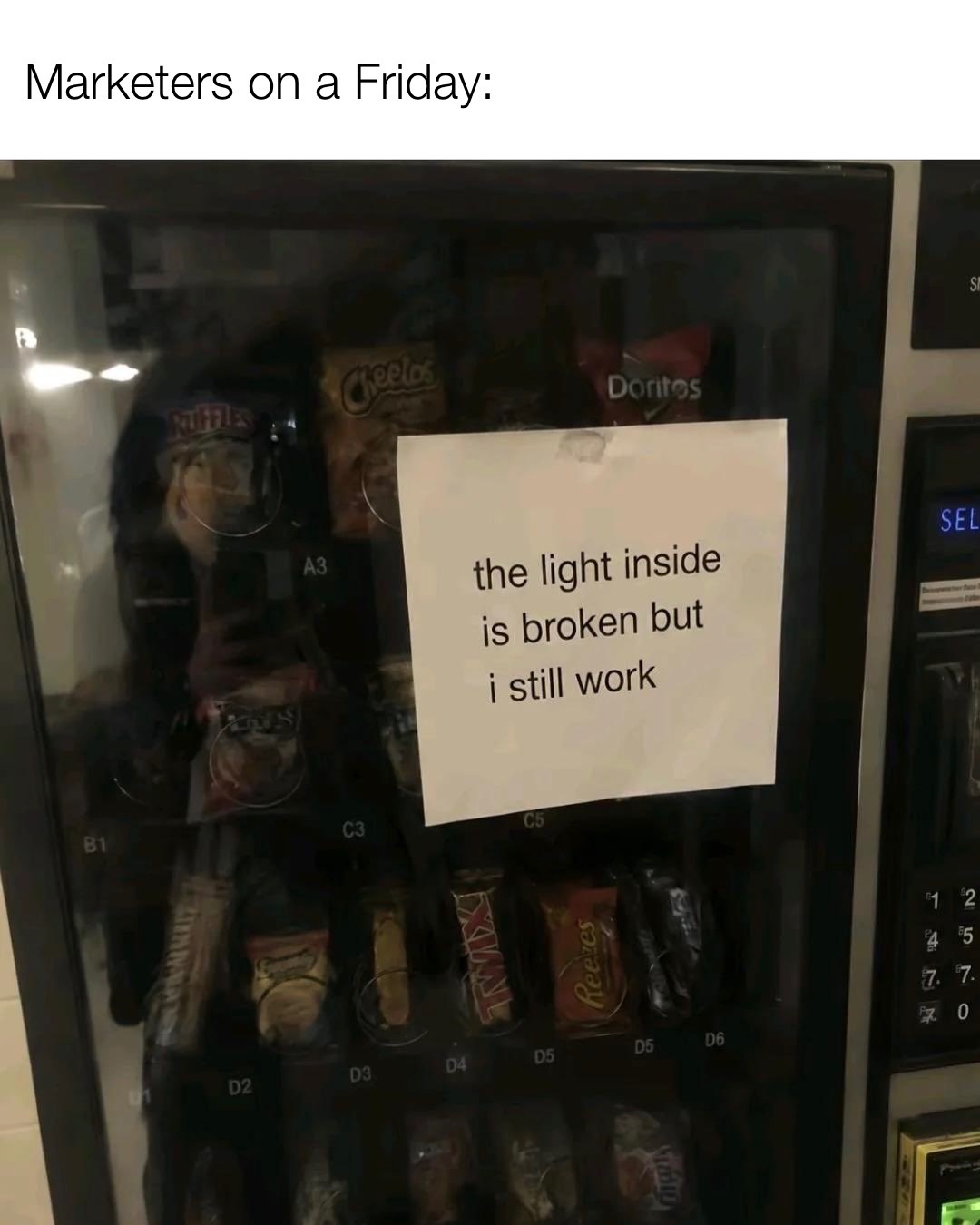 Sponsored by 6Sense B2B buyers only spend 17% of their journey talking to vendors. You can't win a buyer you can't see. 🎙 TUNE IN Podcast to listen to this week: Why Marketing Automation Isn't Marketing Intellengence What you will learn: JUST FOR FUN 🤩: Brand of the week: Hubspot Happy Birthday to my sister Your friend, | |||||||||
|