| |||||||||
| | |||||||||
| Hey Marketing Bestie, Us marketers sure can learn a lot from our Marketing fore-fathers and fore-mothers. The greatest marketing campaigns in history deserve to be etched in HTML stone. Welcome to Marketing Classics 411, a new kind of ancient history. In place of hieroglyphs, expect to decipher the campaigns of yesteryear. Professor Millennial teaches every Tuesday (remotely), via electronic mail. Class is now in session. Was this email forwarded to you? 🎁 MARK YOUR CALENDAR Q4 is a month away. Which means your small team is about to start doing the work of...a much bigger 1. JOIN ME on 9/23 to get ahead of the holidays. We'll talk tactics to start now, like batching content, building lists, AI workflows, & a 30-day plan to keep it all moving. Register Now to Get Ahead of Q4 LOW AND SLOW How Grilling Became America’s Manliest, Meatiest Cooking TraditionFiring up the grill this Labor Day weekend? Cookouts are a charred and cherished summer tradition. And, in many households, they are also…a guy’s domain. You might THINK it goes back to the days of cavemen grunting and cooking the day’s hunt over an open fire. Wrong! In the U.S., the tools and traditions of the backyard BBQ are much more modern. The original pit masters were actually… Marketers. Gather round for a lesson in carving out a new market, seasoning an untapped demographic, and searing a manufactured occasion into permanent popular culture. This is the story of…how Marketing created a new category...and made grilling what it is today. .png?sig=fef884ae6de84d67c4388565311daaffbc885c17b2503dc9bd6a87cb8a1518db&size=email-body&dpr=2) Talking about American BBQ can get heated. Every region has different approaches to protein, technique, fuel, and sauce. It all goes back to the Caribbean, where the indigenous Taíno people placed meat on a wooden frame and slow-cooked it over smoke. In the 1500s, the Spanish discovered the practice (fun fact, “barbacoa” has roots in a Taíno word) and brought it to Mexico, the American Southeast, California, Texas…right alongside domestic livestock. From there, BBQ took on a life of its own: underground, in earthen ovens, in open pits, and in walled smokehouses. Something's CookingThe first backyard grilling set-ups in 1930s California were inspired by the open braziers of cattle ranches. Wealthy homeowners cooked meat in large outdoor fireplaces made of stone and cement. They became a status symbol of the relaxed California lifestyle. (We get it, your weather is good.) 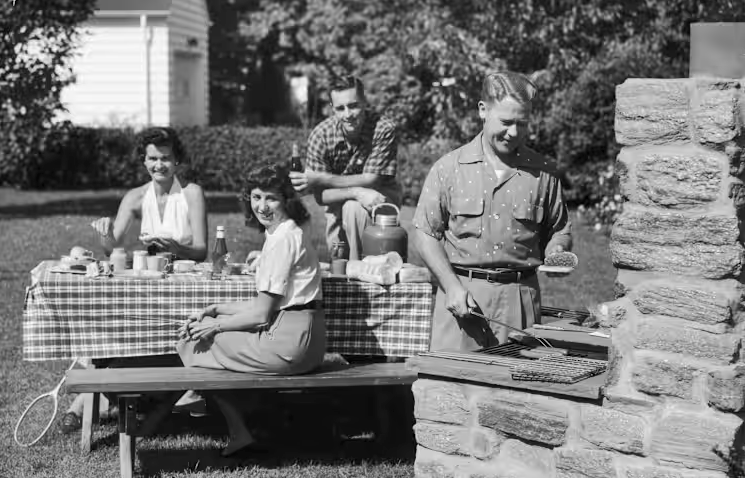 Look kids, no apron! Early grilling required firewood. But charcoal briquets, popularized by Henry Ford in 1924 (and made of wood scraps from Ford assembly plants), burned cleaner and hotter, at a more consistent temperature. Ford originally sold briquets to commercial smokehouses, but his supply was way more than they could absorb. To solve this demand problem, charcoal needed a new buyer…and a new occasion. In the mid-1930s, Ford dealerships marketed Picnic Kits with briquets and portable grills to consumers. 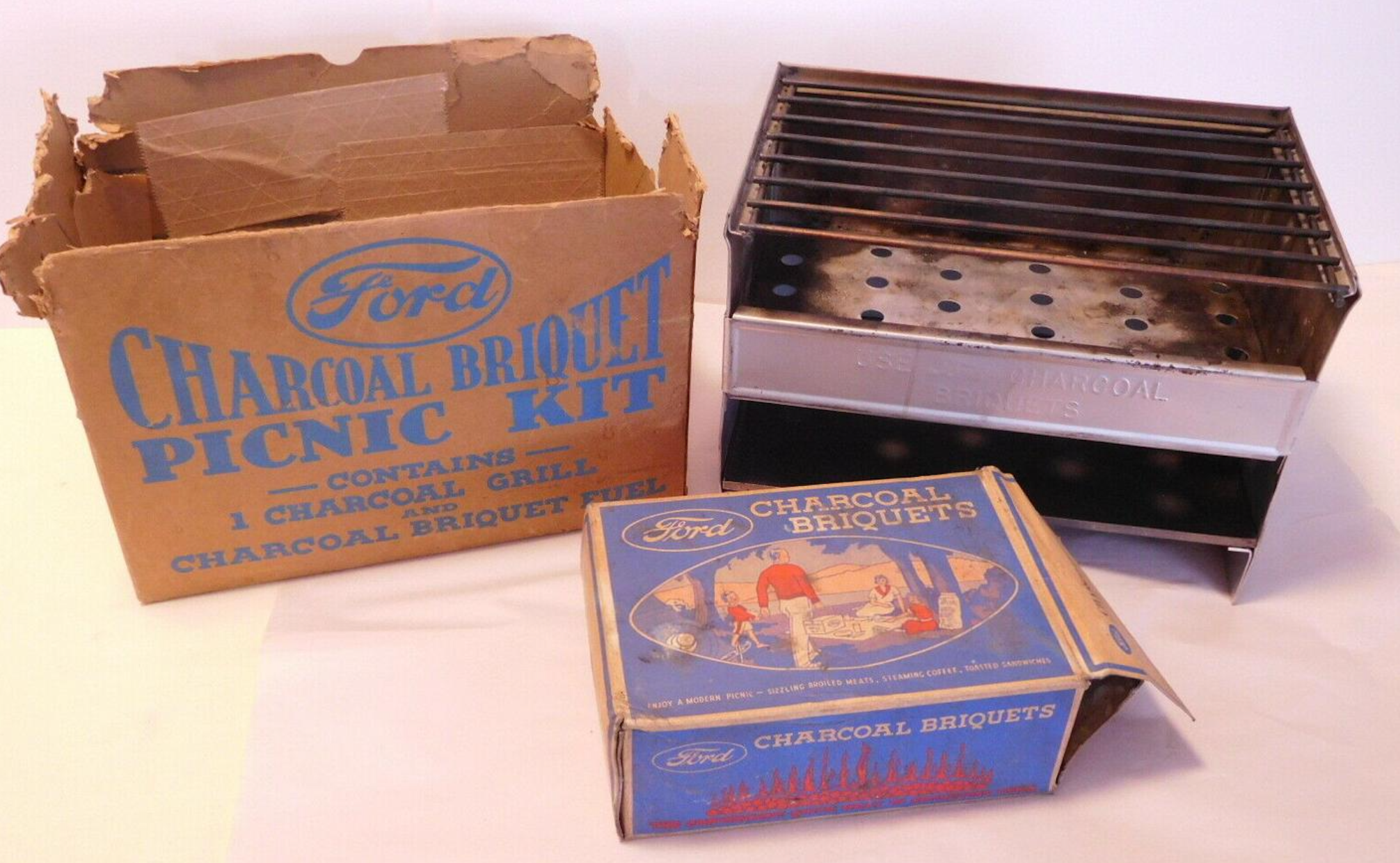 This is some sizzling brand swag. The legendary chef James Beard published Cook It Outdoors, a cookbook with instructions for building an outdoor home grill, in 1941. The cookout trend coincided with World War II food rationing. Starting in 1943, families could only purchase limited amounts of meat. Ground beef and sausage cost fewer ration points than steak, so hamburgers and hot dogs became new staples. Just 1 problem: Many Americans didn’t have outdoor space for cooking. Millions lived in dense, urban neighborhoods in apartment buildings and tenements. The rest lived in rural areas. There wasn’t much in-between. But in 1945, when World War II ended and the Baby Boomers’ parents got busy, all the postwar prosperity fueled suburban expansion. By the 1950s, the American Dream of the single-family home, white picket fence, and 2.5 kids was taking shape. And soon, a BBQ grill in the backyard would be added to the picture. ♨️ Fired UpIn 1951, Ford’s charcoal division was renamed Kingsford, after the cousin-by-marriage who developed it with Henry Ford. It’s still America’s top-selling charcoal briquet, BTW. And it was in GREAT demand after George Stephen, a welder at Weber Brother Metal Works, came up with a new use for all the metal buoys he’d been assembling for the Coast Guard. Stephen cut a buoy in half, added a lid, air vents, and legs, and invented the Weber kettle grill in 1952. .png?sig=0386591108a35718ab3e4c4efad7b06e3d000da95c379ef9eb3599b25924e70d&size=email-body&dpr=2) A new food frontier This was the 1st mass-manufactured grill to put food under cover, which protected it from the elements and sealed in flavor. The grill was so successful that Stephen launched Weber’s grilling division. In 1958, he bought the entire company and decided to focus exclusively on grills. Today Weber, Inc. manufactures charcoal, electric, and gas grills and accessories, owns Weber Grill restaurants in the Midwest, and publishes cookbooks. But how’d the attract a new market for this new category? Cooking Marketing had always targeted women. According to the ads, if they wanted to grill meat, they could use the oven. So, the outdoor cooking market focused on a new buyer: suburban men. Dad-vertisements featured imagery of men in chef’s toques impressing their wives, kids, and random male peers with mouthwatering grilled meats. 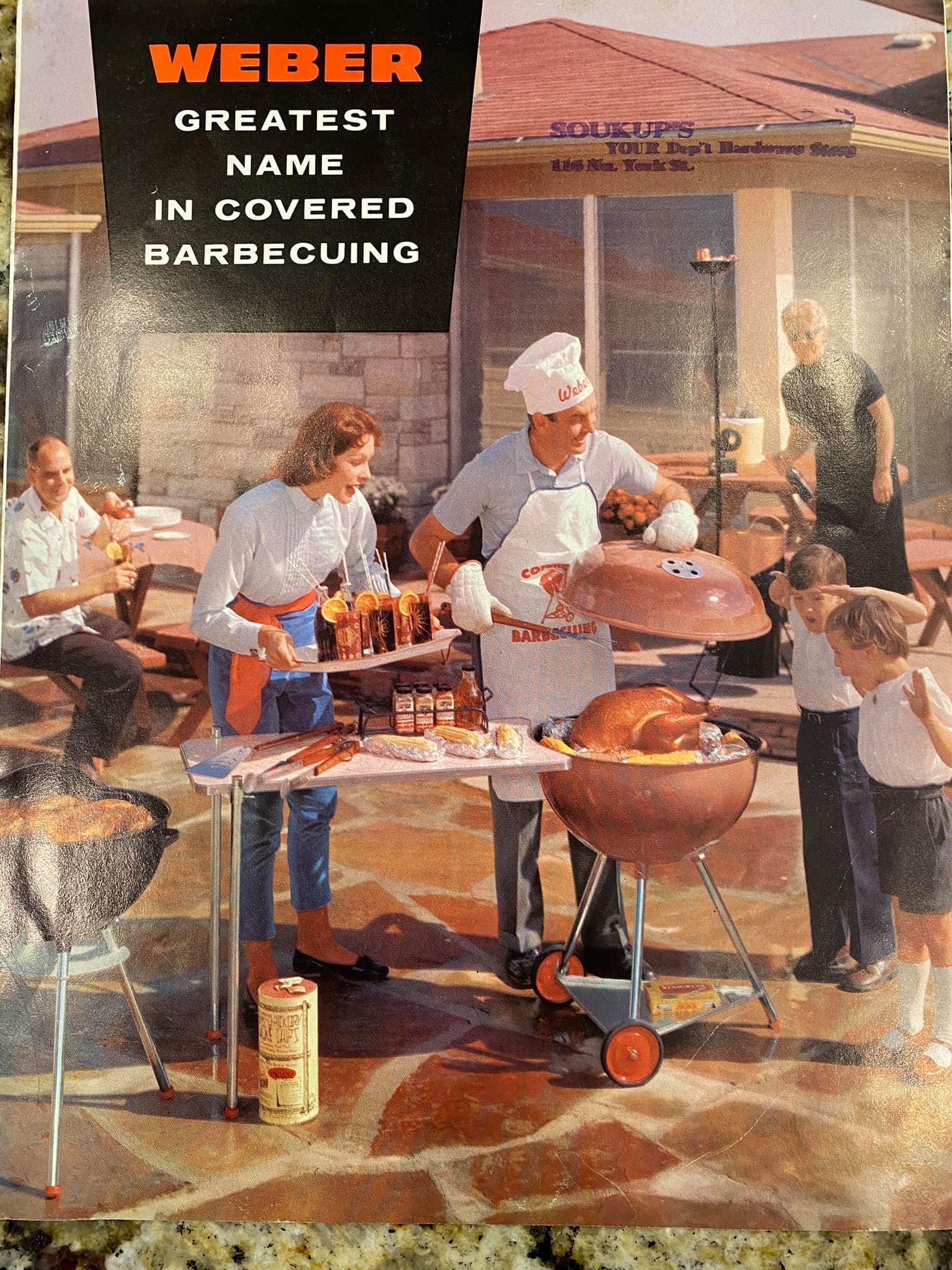 An entire chicken in the kettle grill? Such a dad move. Ad copy highlighted grill features that controlled smoke, fire, temperature, and other dangerous BBQ conditions. 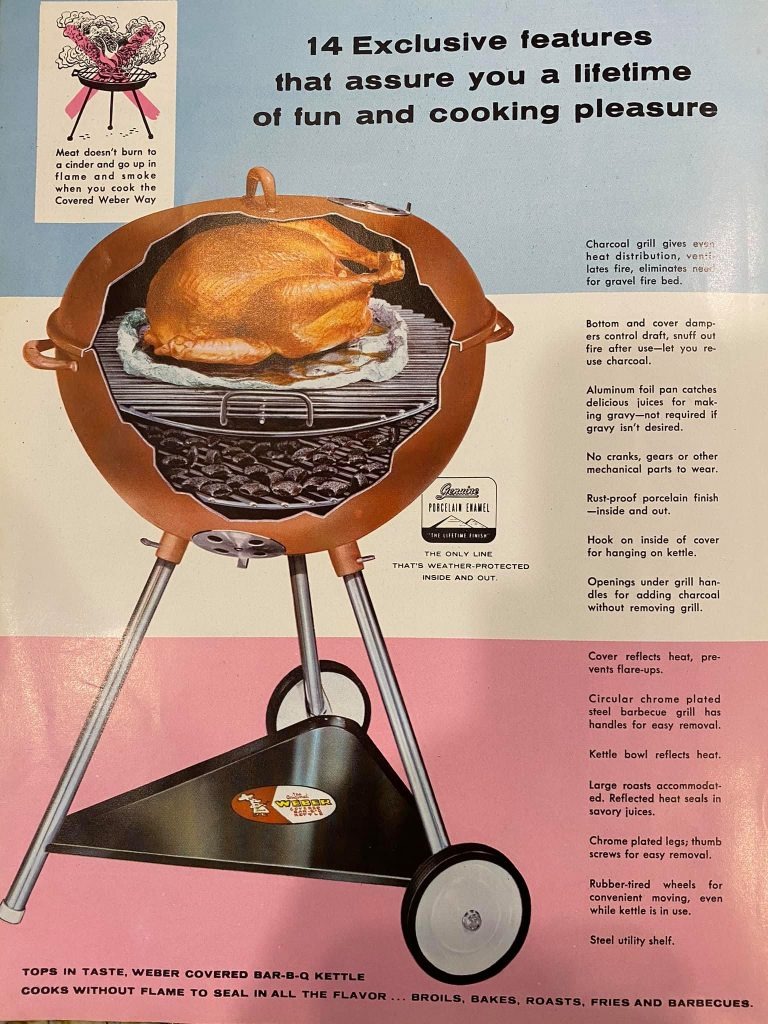 Again with the entire chicken. Soon a variety of masculine grilling aprons, utensils, and cleaning supplies were marketed to men. These were positioned as heavy duty tools and gear, not your typical cooking accessories. Grilling was featured in men’s magazines, from Esquire and GQ to Popular Mechanics, as a summer weekend pastime. Not to mention every Father’s Day gift roundup from then until forever. 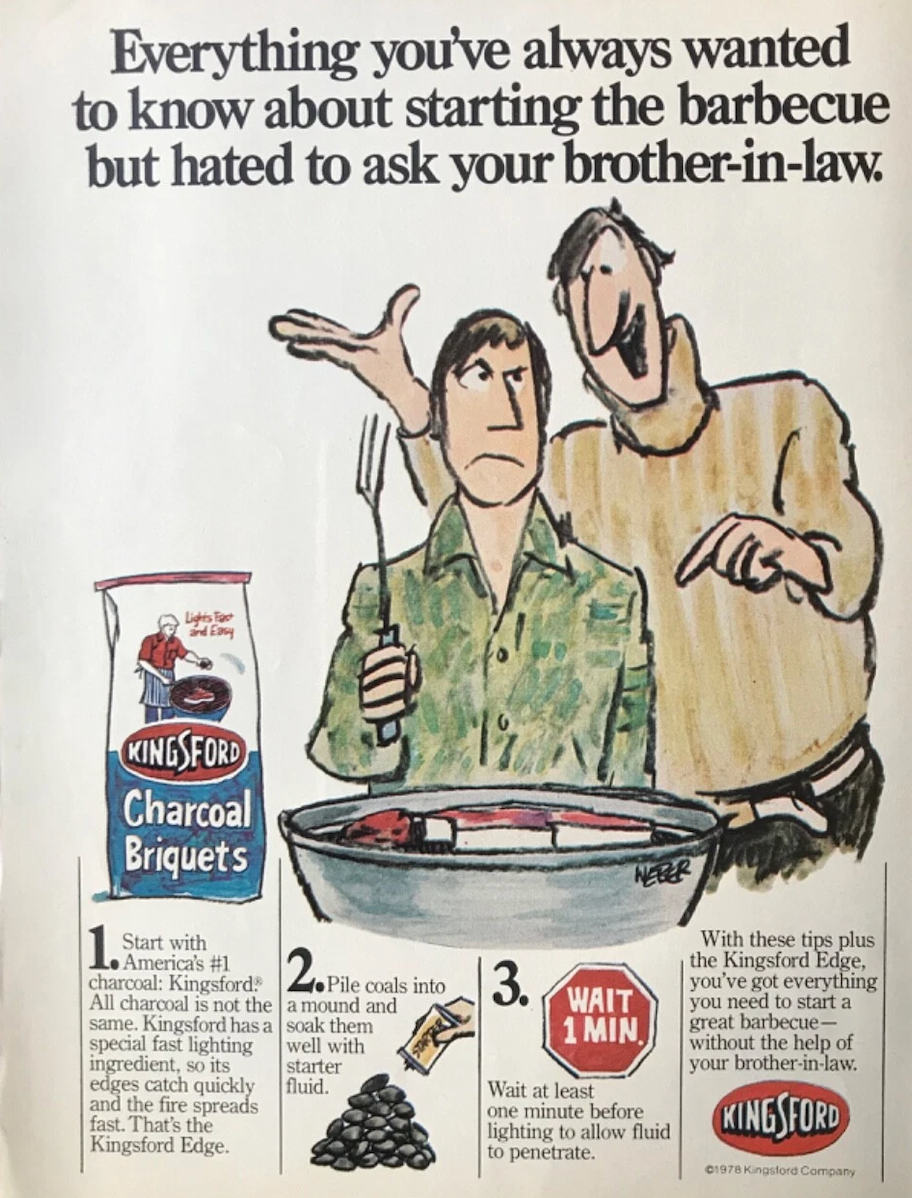 A suburban male rite of passage. In less than 15 years, grilling became a massive new market. In 1962, the Washington Evening Star projected Americans would eat 2 BILLION outdoor meals and spend $360M on outdoor cooking gear that summer. This success wasn’t because Americans NEEDED a new way to prepare food, but because they had an occasion for it - 1 that Marketers capitalized on: 🏡: outdoor space The outdoor cookout was no longer a luxury or a novelty. It was a repeatable American ritual, seared into the popular imagination. Bring together food as sustenance and celebration, family & friends gathering, AND a chance for men to bro out at the same time, and you’ve got a tradition on your hands. The positioning was so successful, other brands tried to ride the BBQ mania - and make themselves part of the new ritual. 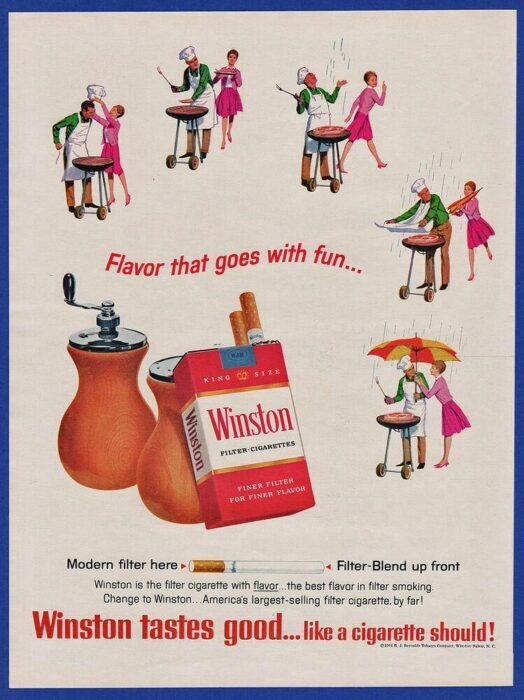 And by other brands, I mean… PUT IT IN PRACTICEGrilling was sold as a new occasion to a new buyer, twice. 1st, by Ford when it marketed charcoal briquets in Picnic Kits to consumers. Then, by Weber when it marketed backyard grills to men. Find your untapped market, and start cooking. Here’s your homework: 1️⃣. Name the barrier. 2️⃣. Built the occasion. 3️⃣. Re-cast the hero. 4️⃣. Own distribution + the repeat. Where There's Smoke...Today, grilling’s a $5.5B global market. It thrived during the pandemic, when people were stuck at home cooking. But sales have dropped since 2021. Around 80% of homeowners already have a grill, and they’re built to last for years. (The same problem Marketers with marketing ovens to women in the ‘50s) Plus, grilling comes with a much higher price tag these days. A new Weber grill costs between $100 and $1,650, on average. 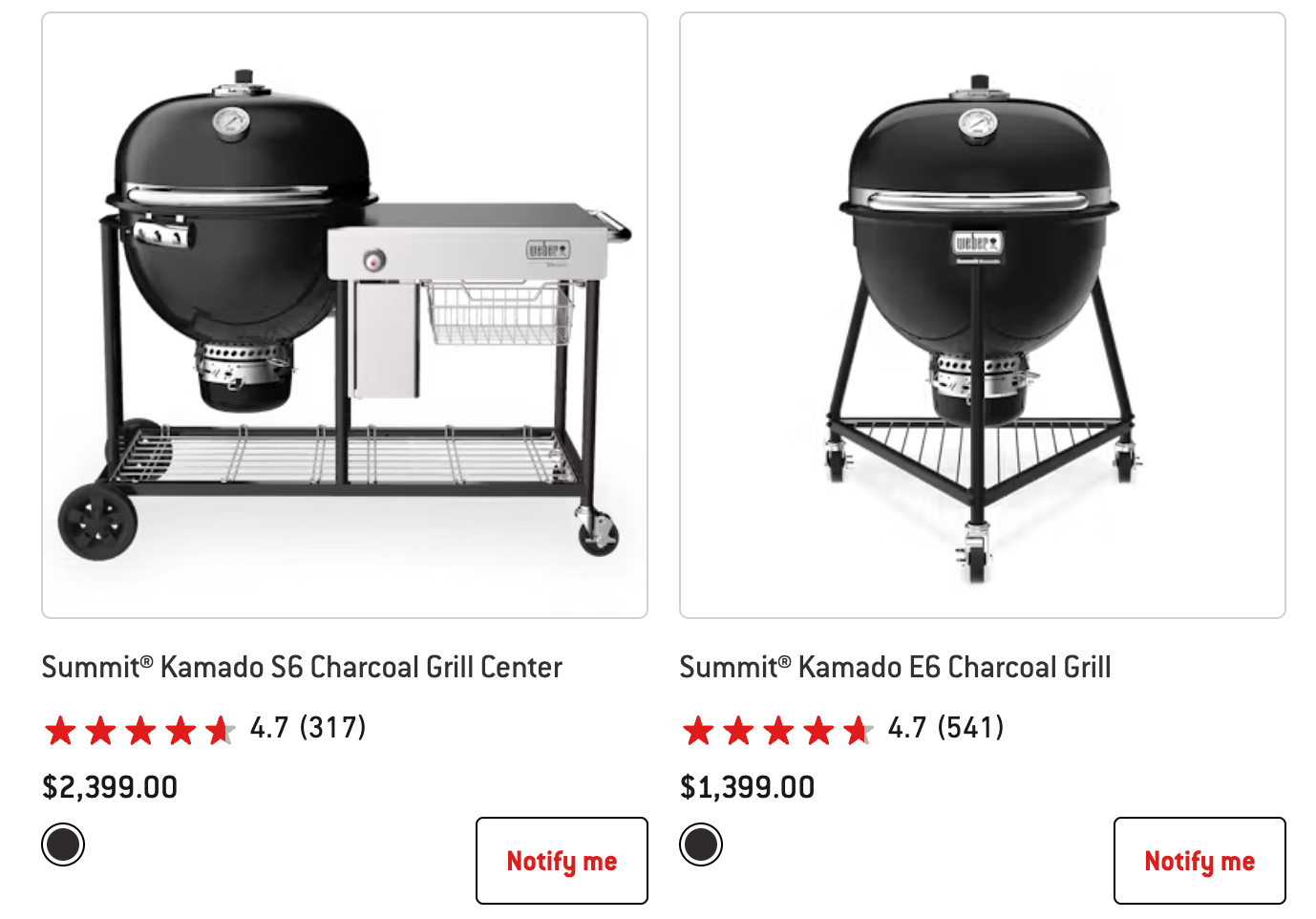 This better include a free toque and novelty apron. Fuel & meat (not to mention home ownership) are also not exactly cheap. And now, the “grilling’s just for dads” positioning that created the market so successfully, might now be limiting it. Does the vertical need a new Marketing recipe? Fortunately, it’s got some tailwinds. For example: not sure if you noticed, but we’re pretty protein-obsessed these days. We also crave more downtime hanging with friends, and know we don’t spend enough time And even if “grilling conditions” aren’t as cheap as they once were, cooking at home is still cheaper than eating out (bonus: comes with bragging rights). So: if you find yourself grilling this weekend, think about what the next evolution in BBQ might be. Renter-friendly grills? More portable, electric-powered grills? Some sort of grill-dehydrator-protein-powder-maker-AI-enabled-calorie-reader gadget combo?? I’m ready to dig in. MARKETING CHEAT SHEET (WHAT TO LEARN FROM THIS STORY): 1️⃣. Creating a product isn’t enough. You need an occasion - and distribution. 2️⃣. Turn the occasion into a ritual/tradition. 3️⃣. Grow into the audience that thinks you're not for them. 4️⃣. Good products still need a cultural wave. Sponsored by DOJO AI Did you ever get that AI visibility dashboard set up?  IN A MEME .png?sig=b2d4ccbd4f19284929d9d8dec7236a16c6047ea15a1047cad194009ea99b5762&size=email-body&dpr=2) Ahh, the bell has rung. Please be sure to do the reading (follow The Marketing Millennials on LinkedIn and me, Professor Millennial, on X). Off you go, passing period is only 11 minutes and there’s already a line at the vending machine that sells perfectly charred hot dogs. Until next time, Professor Millennial. | |||||||||
|