 | |||||||||
| | |||||||||
| As someone who lives in Nashville, I was grieved to hear that Tennessee’s most famous and popular resident, Dolly Parton, died last week. I am not a country music aficionado and am only familiar with her most famous works. But it wasn’t a question that when I moved to Nashville, I would pick the Dolly Parton vanity license plate (vanity plates are not cheap AND you only get one plate). 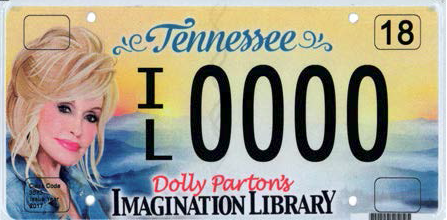 The Dolly plate supports Imagination Library, which has sent millions of books to young children and their families. In 2024, the Dollywood Foundation partnered with the Nashville Public Library Foundation to fund a new early literacy program called Begin Bright, making the largest gift in NPLF’s history. Banking is often about a community — a group of customers who share an affinity, a geography or, sometimes, a set of problems or challenges. The problems and challenges that Dolly’s community encountered were close to her. From illiteracy to economic development to a whole damn vaccine that helped end a pandemic, she saw her community’s pains and problems and asked herself how she might address them. May her soul soar. Was this email forwarded to you? MORE ACCOUNT ≠ MORE GROWTH Your institution has invested in online account opening. But are those accounts actually funded, active and sticking around? Is is an actual relationship, or wasted marketing and tech spend? I'm talking with Jorge Garcia, CEO of Linker Finance, about why banks keep solving the wrong problem: account opening isn't growth. Save your spot to hear what it actually takes to turn your digital front door into deposits that stay. WTF is a Tokenized DepositThe latest wave of cryptocurrency and digital asset enthusiasm has introduced a concept that may finally resonate with traditional financial institutions. Banks have eyed cryptocurrency and its ilk with a range of emotions spanning curiosity, skepticism, fear or outright hostility since the inception of bitcoins in 2008. In the mid-2010s, blockchain technology was going to revolutionize ledgering at financial institutions. So many companies made blockchain announcements — maybe because they were genuinely serious but maybe also because they wanted a boost to their stock price — that Matt Levine created an occasional section in his newsletter called “Blockchain Blockchain Blockchain” in 2017. Digital asset technology has grown and waned in popularity with companies and holders since 2008, but it’s arguably at a high point now. Thanks to the second Presidency of Donald Trump, Congress has passed the Genius Act and is working on its accompanying legislation, the Clarity Act. Bank regulators have gone from requesting that banks obtain prior approval before engaging in digital assets and never giving their answer to allowing institutions to engage in permissible activities without needing approval. As a result, there have been discussions about stablecoins and national trust bank charter applications, maybe a new payment account at the Federal Reserve — and tokenized deposits. Only: WTF is a tokenized deposit? By the Same TokenA tokenized deposit is a digital representation, or a token, of a bank deposit that’s on a blockchain ledger. That’s it for this week’s newsletter, thanks for reading everyone! Kidding. I’m writing this newsletter because that explanation sort of confuses me, and maybe you’re like me. So today, let’s try to dumb that down, break it apart, compare it to other forms of money and explore why banks are exploring the technology. To help me with this, I reached out to Fernando Castellanos, global head of digital currency and sponsor banks at Prove, which helps firms authenticate identities, to explain this stuff to me like I’m “a young child or a golden retriever.” Currently, when money is deposited into my bank account, that information is put onto a ledger. The ledgers banks use today have their benefits, but being fast is not one of them. “One of the issues why real-time money movement continues to be a challenge is that you have a deposit that’s on a ledger, and to move that deposit to another bank, there are all these batch processes that need to happen, which prevent it from being real time,” Fernando said. Once a deposit token exists, a bank can give it cryptographic programmability, which requires a key to unlock and can make the deposit more secure, Fernando said. The token can move to other wallets on the blockchain faster than an intra- or interbank transfer. It’s a more structured, secure and faster way to move money or other assets, he said. While the technology sounds complicated, Fernando said it comes down to speed, security and financial cost. This could be especially valuable for cross-border payments, but there are other potential future applications. It could also lay the groundwork for institutions to tokenize other real-world assets; Fernando specifically cited deeds tied to real estate. And, of course, tokenized deposits are a way for banks to offer customers product innovation while holding onto customer funds and fending off the threat of stablecoins. You’d be forgiven for wondering how tokenized deposits differ from stablecoins, given the similarities in technology. Stablecoins are cryptocurrencies whose value is pegged to a financial asset, usually cash or Treasurys. The payer uses dollars to purchase stablecoins from an issuer, which mints one stablecoin for every dollar transferred and puts these in a wallet that either it hosts or is hosted somewhere else. To use stablecoins, the payer sends them from its wallet to another wallet, also on a blockchain. Holders of stablecoins can then cash out their stablecoins back to dollars. If dollars back the stablecoin, the issuer can deposit them in a bank account or purchase government securities. Token GesturesIf you’re a bank, stablecoins might be a threat to your deposit base or maybe an opportunity to gain deposits by providing banking services to stablecoin issuers. In contrast, tokenized deposits seem to be a way for banks to offer better service to customers — who doesn’t want faster, safer money movement while retaining deposit insurance? — while also fending off competition from nonbank stablecoin issuers. Which means there are several efforts currently underway to deploy or expand tokenized deposit networks or offerings. A May article from McKinsey & Co. found tokenized deposit flows are estimated at more than $4 trillion annually (although a reporter quibble: the underlying article linked into that stat said absolutely nothing about tokenized deposits and did not contain the word “deposits," so do with that what you will). JPMorgan Chase & Co. offers JPM Coin through Kinexys, its enterprise-grade blockchain and digital assets business unit. According to the company, Kinexys averages $7 billion in transactions daily and has processed over $4 trillion in transactions since launching in November 2025. Other banks are piling in. Here is a best-efforts compilation:
How to Tokenize a DepositNo customers of San Antonio-based Vantage Bank specifically asked for a tokenized deposit product. But in customer interviews, they shared pain points that occurred during cross-border payments and were looking for solutions that could both automate payments and disburse payments faster. “They love the vision. They want to see how we make it happen, because today it's a complex process with all the different fraud tools and money movement options,” Shawn Main, EVP and chief business architect at the $5.1 billion bank, told me during a 2025 episode of Bank Nerd Corner. “What they're really looking for is a better way to operate their business at a more efficient scale. This technology enables that.” Those conversations came as Vantage Bank executives were five years into researching digital asset and crypto companies to better understand the ecosystem and explore where traditional commercial banks could fit, he said. The bank homed in on stablecoins, trying to understand the use cases and potential impacts to the banking space, and decided to experiment with tokenized deposits. Banks that offer tokenized deposits need to build rails on their selected blockchain and create wallets for their customers' funds, Fernando said. He said they will also need to consider the technology and infrastructure partners, and thoroughly test the technology with transactions. “[Banks] first and foremost need to make sure compliance is on top of it — fully up to speed with all the regulations and challenges that come with it,” he said. “This represents one more line of business to stay on top of, to make sure they don't run afoul of regulators or fall into sanctions or anything like that.” Vantage has taken the time to teach and upskill employees in areas like wallet screening, an updated risk framework and reconciliation and liquidity considerations associated with faster settlement capabilities. It was able to tap some of its existing technology partners for some capabilities it needed for reserve management, ledgering and wallet screening, sparing the bank from undertaking a new partner search or adding additional technology layers. Vantage Bank has also spent time educating regulators and familiarizing them with the tokenized deposit concept and its underlying technology. They’ve emphasized how the bank will monitor transactions and make sure funds are clean, as well as conditions associated with scaling transaction volume, such as liquidity risk. But Shawn emphasized that many of these are the same risks associated with other novel technologies like instant payments that banks will need to address. After ensuring accounts comply with anti-money laundering and know your customer regulations, banks creates wallets for their customers to send tokenized funds to other wallet holders. The tokenized deposit travels over the protocols that the bank has connected to, and the recipient receives the money faster than the batch protocols that transfer most money today. Vantage’s experimentation and building a tokenized deposit product paid off in a May 2025 proof of concept, when logistics company DX Xpress made cross-border payments between Mexico and the United States. Vantage converted customer funds to Avits, a programmable U.S. dollar payment; the customer transferred them to another customer and back within seconds and for pennies. Shawn said the test took a little longer than anticipated — about a minute and a half — because one of the customers sent a penny as part of their own check, and the penny was flagged by the Vantage system. He added that over traditional payment systems, a transaction like that could take between one and three days, depending on how many banks are involved in the transaction. Vantage decided to launch a consortium to share the technology and capabilities with other community banks that struggle to find the capacity to train employees or resources for additional technology. Vantage also didn’t want the monetary layer to be controlled by big banks and big tech companies. It now offers a turnkey software platform with full lifecycle management of stablecoins and tokenized deposits, including on- and off-ramps. But a bank could also pair its own wallet infrastructure with the token and the consortium smart contract layer. “Why not use our knowledge, expertise, and capabilities to give something back to the industry so [banks] have what they need to compete? We feel a very competitive environment is coming — more entrants, more competitors entering the space,” Shawn told me. “We wanted to give the industry the tools to start experimenting and understanding this technology, because it is a heavy lift.” Are Tokens the Future of Money?Shawn said he thinks the world is headed toward a tokenized future, which could include real-world and monetary assets, like securities and real estate. He said it will figure into agentic payments to support automation and transparency. And while tokenization might be confusing to some people now (hi!), he also said he sees it as necessary to removing complexity from today’s financial system and achieving real efficiency. Sure, maybe! Who knows when my retail consumer account will get access to tokenized deposit technology, if ever. Maybe I won’t even know or notice — maybe my money will just start moving faster, or I’ll have the ability to program it somehow. I don’t know what the future looks like. Even if tokenized deposits aren’t the bank deposit of the future, or if the consortiums or the tokens I listed don’t make it, I keep thinking about what will likely be true about the future. Timing is such a feature of money movement; so much legacy payment technology assumes a period of time that is greater than a few seconds. In the future, it seems likely that more money will move faster than it does now. There is a subset of banks today that are thinking about what that looks like, and they are working together with other institutions to ideate and interact with each other. These banks are thinking about the technology and infrastructure layers they'll need to accomplish this, and what controls to put in place to do it safety. What they experiment with and decide today may indicate the direction of where banking technology will go — and it may give them a head start in getting there. FROM THE VAULT What’s on my mind and filling my time: 👩🏻💻 Join me!: Last week, Workweek announced newsletter tooling for members of its communities, including Finity. That means verified members can launch their own newsletter tooling, and it’s easy for community members to subscribe. Alex wrote more about this last Friday (as well as some excellent, measured thoughts on AI in writing). 🌭 Big praise for a small dog: I had a Dachshund growing up that I absolutely loved, and so I very much support Dachshunds becoming the fifth most popular breed in the U.S., according to this Bloomberg News article citing the American Kennel Club. Adopt, don’t shop! Or get your Dachshund from some kids walking around in the neighborhood with a wagon full of puppies, like my family did. 🎙️On Bank Nerd Corner: I chat with Rodrigo Suarez, head of partner banking at Valley National Bank, about why regional banks should think about offering embedded banking and the skills and technology needed to do it. 🛫 Catch Me At: FDATA’s 2026 Summit on Sept. 17 (and the coworking day the day before!) in Toronto. CBA Committee Summit on Sept. 23 in McLean, Virginia. Money2020, Oct. 18-21, in Vegas baby! Make sure to sign up for Fintech Takes the Court on Oct. 18 and either play or spectate/commentate with me. Thanks for reading! I'm headed this weekend to my alma mater, the University of Nebraska, for the student newspaper's 125th anniversary and my first ever college football game. Newspapers are important and I'm a proud financial supporter of the DN's endowment so it's around for another 125 years. I will also maybe stop by Runza, but probably won't get a runza sandwich because they're actually too long and I get sick of eating them, but enjoy this reel of British guys discovering this Nebraskan mainstay. - Kiah | |||||||||
|