 | |||||||||
| | |||||||||
 Happy Friday, Fintech Takers! I hope you’ve had a good week. My time in Austin ends today. It was wonderful to see a bunch of my fintech friends and Workweek colleagues in person this week. And, more importantly, it was wonderful eating BBQ with y’all (Hanna — I apologize for psyching you out on this front!) I got some lovely replies to Wednesday’s newsletter, regarding the death of Dolly Parton. I appreciated these tremendously. From the reactions I’ve seen online and in my inbox, she seems to have had a 100% approval rating among her fellow humans, which is a feat that may never be equaled. - Alex Was this email forwarded to you? Sponsored by Middesk A business registration is a birth certificate; useful for proving something was born, but useless for telling you how it's living. The real questions sit beyond the filing. Does the web presence match what the business claims to do? What do its connections look like, and do they carry risk of their own? Static data can't answer any of that, so teams end up choosing: let hidden risk get through, or slow down the business to compensate. Middesk brings verified identity, web presence, risk signals, business connections, and ongoing monitoring into one decision workflow, automatically fast-tracking good businesses while flagging those that require a closer look. Their new guide covers the risk trends emerging in real time. DEEP DIVE Slop vs. SamenessToday’s newsletter is a bit different. I wanted to write about writing, because Stanley Druckenmiller, a former hedge fund manager and mentor to Treasury Secretary Scott Bessent, published an op-ed in the Wall Street Journal criticizing Secretary Bessent’s planned intervention in the bond market. It turns out that the op-ed in question was written with the help of AI:
“I’m not embarrassed by it.” That’s a refreshingly different sentiment than what we have, so far, seen from folks when they are accused (often with “evidence” provided by Pangram) of using AI in their writing: 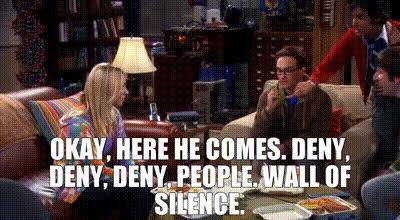 Interestingly, the Wall Street Journal’s editorial page editor Paul Gigot doubled down on Druckenmiller’s opinion:
But that is not an opinion that is shared by all publishers:
You can practically hear the FT editorial page editor screaming, “THIS WASN’T ME! I DON’T USE AI! PLEASE DON’T JUDGE ME, FELLOW LIT MAJORS!” This attitude is understandable, but I suspect that it will become less common over time, as AI-assisted writing becomes more common. And, as someone who makes a living by writing words, I’d love to share my opinion about what this shift will mean for the future of my profession. Two Theories of WritingThe first theory is the most useful writing wins. The purpose of writing is to convey important ideas clearly and persuasively. That is its utility, and as long as that utility is preserved, it doesn’t really matter how, precisely, the writing itself is produced. You’re doing research for a newsletter or a blog or a book or a screenplay. Do you interview human experts? Do you read the original, foundational books and academic studies relevant to your topic? Do you just Google around a bit? Do you ask an AI chatbot questions? Which approach, or combination of approaches, is the “right” way to do it? Which will produce the most useful writing? What about the actual writing process itself? Are you an outline-first type of person? Or, do you have the intestinal fortitude to face down the existential dread of a completely blank page and a blinking cursor? Is one approach more noble than another? Is it the coward’s way out to use AI to write your entire first draft? What about just one or two sections of your draft? What about just one sentence? Just to get unstuck after being horrifically struck by writer’s block? Is that OK? Or does it compromise the usefulness of your writing? And editing! Editing is very hard! All the sentences that you (or your AI) produced are your babies. How do you go about the process of decimating your own beautiful composition? Do you write drunk, and edit sober? Or, in my version, write late at night and edit early in the morning? Do you have a human editor who you trust to brutalize your work, like sending your kid off to the world’s meanest AAU coach? Do you use Microsoft Word spell checker? Do you use Grammarly? Do you use ChatGPT or Claude? And if so, what are you promoting them to do? Are you asking them to make your writing “sound better” or “sound smarter”? Do you ask it to fact check you? And, if so, do you fact check its fact check? WHAT IS A CONSCIENTIOUS WRITER SUPPOSED TO DO?!? These are difficult questions, but under the most useful writing wins theory, the individual answers don’t really matter. There is no one right way to write, and as long as the way you choose to write produces writing that is useful — important ideas, clearly and persuasively conveyed — we shouldn’t care how it is done. I put a lot of stock in this theory. Humans can get a little too precious about the tools we are accustomed to using, when new (and undeniably useful) tools come along. Mahatma Gandhi was famously opposed to typewriters, but he was also a user of typewriters:
Did the invention and adoption of the typewriter make writing, on the whole, worse? I think it would be very difficult to make the case that it did. A typewriter is a tool. What matters is how you use the tool. In a modern context, we often refer to any obvious AI writing as slop. I think that’s a mistake. Slop should only be called slop when it’s sloppy. Sloppiness isn’t a function of using tools. It’s a function of using tools badly. You don’t have to use tools badly. You can use them well. Despite his personal feelings about the technology, Gandhi almost certainly used typewriters well. We can do the same with AI. We can use AI to assist us in crafting extremely useful writing. After Druckenmiller confirmed that he used AI to help write his op-ed, multiple people rightly pointed out that prominent individuals have been using human ghostwriters to author op-eds and autobiographies for years. “Isn’t this the exact same thing?” these commenters asked. Well, yes. And also no. When used to help draft a Wall Street Journal op-ed, AI is functionally very similar to a human ghostwriter. However, economically, the two are very different from each other. Human ghostwriters are very expensive. And because of that, they have only been an option for rich ex-hedge fund managers who switched their majors from English to Econ, and others in their same stratum. AI-assisted writing is accessible to pretty much everyone, which is great for them and bad for most human ghostwriters. We now all have access to the same good-but-not-great on-demand ghostwriter! Yay! The key phrase there is “the same.” What distinguishes AI as a writing tool, versus every other writing tool in human history (chisels, paper, ink, typewriters, word processors, etc.) is the scope of what it can do. It truly is a ghostwriter in your pocket. It can do everything, from research and outlining to writing and editing. And if humans use it to do all of those things (or a large percentage of them), it’s likely that the resulting writing will start to look and feel very similar. That’s the long-term problem that I believe people are really gesturing at when they misuse the word slop. It’s a concern about the Borg-like uniformity of writing that will result from humans’ writing processes being entirely assimilated by AI. We will add your biological and technological distinctiveness to our own. Your culture will adapt to service us. Resistance is futile. The concern isn’t slop. It’s sameness. And that brings me to my second theory: The most human writing wins. The purpose of writing might be to convey important ideas clearly and persuasively, but the value of writing — in a world where most people overuse AI to write and, thus, produce a deluge of content that sounds the same — is uniqueness. When a broadly accessible technology makes it possible for anyone to produce something of an objectively high-ish quality, quality itself stops being something that we choose to assign a premium value to. The what still matters (no one wants to read bland, boring, slipshod writing … there is still a minimum acceptable level of quality), but the how and the who start to matter more. How will we value writing in the age of AI?What will this look like? What attributes will signal that a piece of writing is unique, and, therefore, something to value highly? I don’t think anyone knows yet, but we can make a few educated guesses:
What’s interesting about these attributes is that they generally can’t be fully quantified and verified. Pangram uses a probabilistic model (a transformer-based neural network classifier, to be precise) to estimate the percentage of a given piece of writing that was written by a different type of probabilistic model. That proposition has a lot of uncertainty built into it, and yet, as Freddie deBoer astutely points out, Pangram has a suspicious tendency to estimate that writing is either 100% AI-written or 100% human-written, and, even worse, the human users of Pangram seem intent on misinterpreting those results to be confidence levels (I am 100% confident that this was written by AI) rather than estimates of the portion of the text that was written by AI. Humans crave certainty! But writing is a fundamentally messy, multi-stage process and LLMs (and the tools used to detect their use) are probabilistic technologies. We can’t know, for certain, how much of a writer’s overall effort was aided by AI. And solutions like watermarking, which are beginning to be mandated by regulators, won’t be the silver bullet some are hoping for. It is very easy, for example, to use AI to write and then to simply rewrite the LLM’s watermarked output in your own slightly different words. So, if we won’t ever be able to verify that someone used AI to help them write nor quantify exactly how reliant they were on the AI they may have used, but we will increasingly choose to value unique writing that is produced primarily through human effort and ingenuity, how will we square that circle? Trust. We will have to trust that the writers we like, the ones whose work we choose to value, have used all of the tools at their disposal (including AI) judiciously, and in the service of creating something that is both useful and unique. And trust is a function of reputation. Building a ReputationThis final portion of this essay is not about Stanley Druckenmiller. And it’s not for Stanley Druckenmiller either. Stanley Druckenmiller will be fine. His writing can be written primarily by AI because his writing doesn’t need to be valuable. His value as a market commentator is derived from the reputation he built over the decades he spent managing a hedge fund and working next to people like Scott Bessent. Writing is a purely utilitarian exercise for him. It’s not for me. My value in this industry is derived, primarily, from my reputation as a fintech analyst and newsletter writer. My professional experiences in financial services, prior to starting the newsletter, certainly inform my analysis and writing and (I believe) make them much stronger and more credible. But the fundamental reason to trust my writing is not my pre-Fintech Takes career. It’s the writing itself. And the value it provides. That’s why I never rush to be the first to post 🚨 breaking news 🚨 updates to Twitter or LinkedIn, but instead take the time to have the most thoughtful (and hopefully original) take on the story. It’s why I don’t shy away from letting my personal sense of humor (and outrage) shine through my analysis and why I routinely compare fintech companies to professional basketball players. It’s why I take the risk to venture my opinion (even when doing so occasionally provokes anger from the companies and individuals I cover) and why I try to hold myself publicly accountable when I make mistakes or (gasp!) change my mind. And it’s why I spend as much time as I can researching, writing, and editing my content, even at the expense of being able to pursue other professional opportunities. These choices for how I put my content together — which I have been making since well before ChatGPT came on the scene — compound over time into a perception of who I am, as a writer and analyst. If you read this newsletter for long enough, you should come to feel like you recognize my work and trust the craftsmanship that goes into it. Over the last couple of years, that craftsmanship has been augmented by AI, but it will never be defined by AI, which should hopefully mean that my work never feels like everyone else’s. The Finity Newsletter PlatformI wanted to share this perspective on writing and AI with you because I think it’s important that you understand my philosophy when it comes to these questions and how that philosophy will shape the newsletter that you have signed up to receive in your inbox. However, I also wanted to share it because I’m guessing that some of you are intrigued by the idea of writing your own newsletters! This is something I would strongly encourage you to do. Not for the commercial opportunities it can lead to (though these can be attractive), but simply because it’s tremendously fun. Writing (even when judiciously augmented by AI) forces you to think. It creates opportunities to learn. And it leads to new and very rewarding professional and personal relationships. It’s difficult and it will always be difficult. I still routinely slam my head into my desk and curse my dumb brain and clumsy fingers, seven years after I started writing Fintech Takes. However, Finity — our network for fintech and banking professionals — just launched a new tool that will make it easier, especially for those just getting started:  The Finity Newsletter Platform! We have taken the platform that my employer (Workweek) built for newsletter creation, distribution, growth, and monetization and fused it together with our community of more than 8,000 vetted fintech and banking professionals. It’s free for any Finity member to use. Create a newsletter (or port an existing newsletter over from a different platform like Substack or Beehiiv) and start publishing! Our team will help you get started (logo, content strategy, etc.) and our network will supercharge your growth, audience insights, and monetization. You own your subscriber list, brand, and IP. We already have some absolutely outstanding fintech and banking operators like Tim Bates (eternally insightful credit risk executive) and Kristen Anderson (skeptically optimistic fintech product builder) publishing newsletters in Finity (SMASH THAT SUBSCRIBE BUTTON!) and we have many more coming online soon. If you’d like to join in the fun, you can apply to become a Finity member here and you can learn more about starting a newsletter on Finity here. And if you have any questions or concerns, please hit reply to this email and let me know. I’d be delighted to talk with you about it! MORE QUESTIONS TO PONDER TOGETHER Big news for the endlessly curious (yes, you): I’m collecting your fintech questions on a rolling basis. What’s keeping you up at night? What great mysteries in financial services beg to be unraveled? Think of it this way, if a stranger is a friend you just haven't met yet, your question is a Fintech Takes conversation waiting to happen. One that could headline a Friday newsletter or be answered in an upcoming Fintech Office Hours event. Drop your question here, whenever inspiration strikes! WHERE I'LL BE September is almost upon us! Get ready for the fun (and exhaustion!) ✈️ FinovateFall | September 9-11 | New York CityMy can't miss fall conference! September in New York is glorious and the fintech conversations will be too. ✈️ Cash Flow Intelligence Summit | September 10 | New York CityNova Credit has rebranded this from the "Cash Flow Underwriting Summit" to the "Cash Flow Intelligence Summit." Come find out why. ✈️ FDATA Global Open Finance Summit | September 17 | TorontoThis will be my first time at an FDATA event and my first time back to Toronto in a long time. If you work in open banking in Canada and want to yell at me for my bad takes in the past, this is your chance! ✈️ AI-Native Banking & Fintech Conference | September 29 | Salt Lake CityThe name of this event is a mouthful, but the content and networking are both A+. Thanks for the read! Let me know what you thought by replying back to this email. — Alex | |||||||||
|