 | ||||||||
| | ||||||||
| Happy Wednesday, Fintech Listeners. Dolly Parton died yesterday, at the age of 80. And I can’t really express in words how sad that makes me. I’m a massive fan of her music (scroll to the bottom for more on this part of her legacy), but, more importantly, I really admired her as a human being. She was married to her husband for 59 years. She launched the Imagination Library — her literacy program for children — in 1995, offering one free book per month to children for the first five years of their lives (my kids have all been delighted recipients of this program … which has given out a total of more than 300 million books). And, in addition to literacy, she donated extensively to disaster relief efforts, provided critical seed funding for the development of the COVID19 vaccine, and helped stimulate the local economy of her home state of Tennessee, where businesses like her Dollywood theme park created tens of thousands of jobs. In 2020, when she was asked why she changed the name of her Dixie Stampede dinner theater, she replied that she removed the word “Dixie” because of its offensive ties to the Confederacy, saying, “As soon as you realize that [something] is a problem, you should fix it. Don't be a dumbass. That's where my heart is. I would never dream of hurting anybody on purpose.” Don’t hurt anybody on purpose. And when you realize something is a problem, fix it. Don’t be a dumbass. Simple. Beautiful. Hilarious. Dolly Parton. — Alex P.S. — Fintech Takes The Court is back. We're doing a 3x3 pickup basketball tournament in Vegas on Sunday, October 18, right before Money 20/20 kicks off. Doesn't matter if you've got a jump shot or you're there for vibes. Sign up to play or come be a spectator and heckle (or network) from the sidelines. Grab a spot here. Was this email forwarded to you? 3 BIG IDEAS FROM THE PODCAST 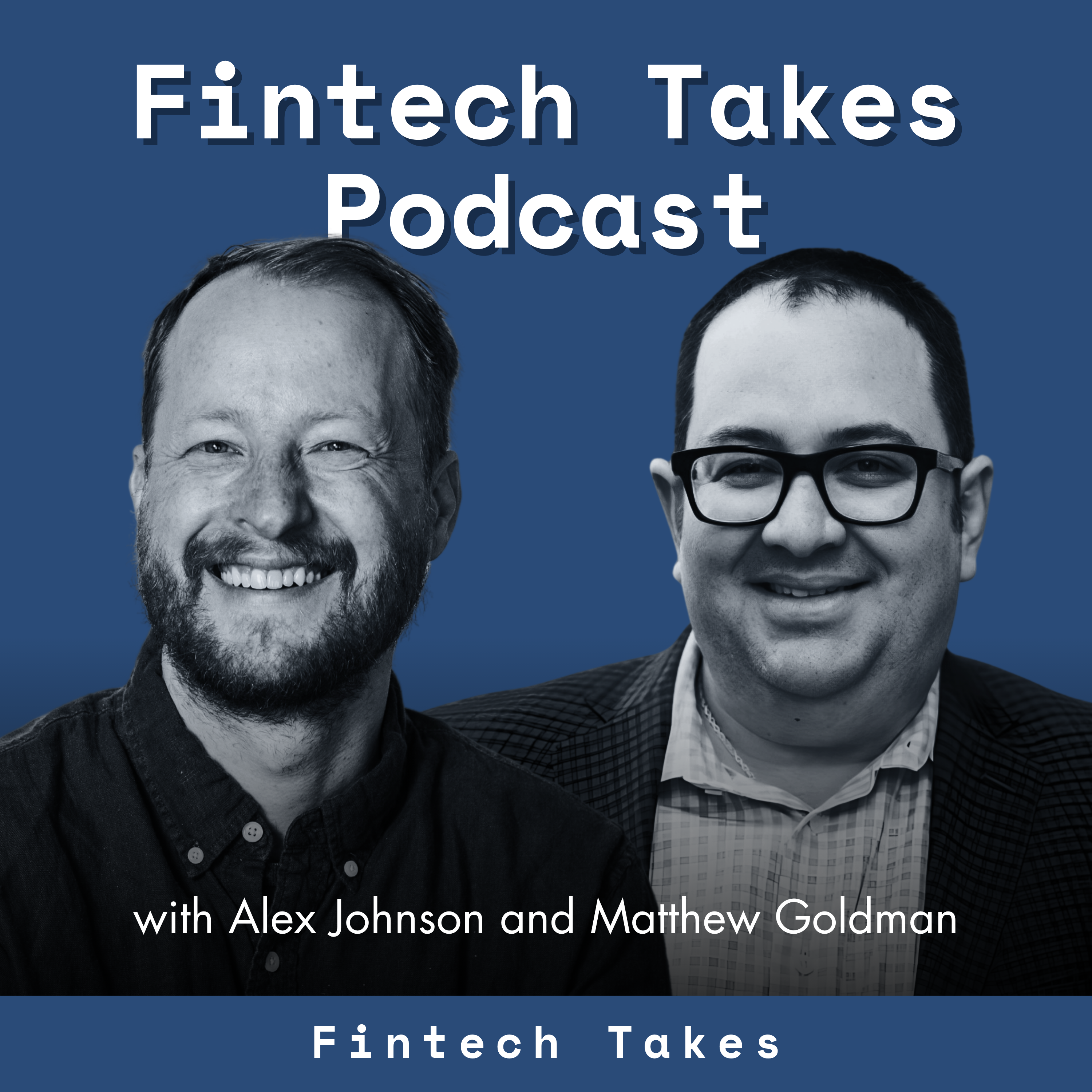 On this week's episode of the Fintech Takes podcast, I’m delighted to be joined once again by fellow fintech creator Matthew Goldman, author of one of my favorite newsletters on cards and payments, Cards FTW. Credit cards have been getting a little weird, so naturally I wanted to talk to Matthew about it. You could say that I had to have this talk with him. We get into why the industry can't seem to quit chasing the same wealthy customer, why no one should ever think they can out math Chase, and why issuing a card has somehow gotten more expensive in an era when everything else in fintech has gotten cheaper. Tune in for the full conversation here And read below for my three big ideas... #1: The Lower RichAlthough research from Flagship Advisory Partners suggests premium cards aren't especially profitable as a standalone product, the industry keeps chasing the same wealthy customer. Why is that? Matthew absolutely agreed it’s a trend, and pointed to A. Mechele Dickerson’s book The Middle-Class New Deal. As he put it: "I love her phrasing of the lower rich and kind of the bifurcation of the economy versus we talk about upper middle class, and she's like, No, that's that's lower rich, and they have a lot more money." If your household income is greater than $250,000/year, the annual fee for your premium card is truly a drop in the bucket. As Matthew says, people will seemingly do anything for an airport lounge, even though paying for a single visit isn’t prohibitively expensive. No one redeeming their lounge reward is doing the actual math of that redemption. They're paying for the feeling. That could be a satisfying explanation for why premium cards keep getting built for the same wealthy customer, but it turns out to be incomplete on its own. Flagship Advisory Partners' own conclusion, in their own words is: "The card isn't the product — it's the hook." A hook, that is, for the relationship that follows; the mortgage, the deposits, the brokerage account a bank would make its real money on. By Flagship's own estimate, an issuer that cross-sells even one product to an affluent cardholder can generate 25 – 50x the annual contribution of the card itself. #2: The Only Advantage That Might Survive AutomationCard economics eventually force you to compete on what can't be reduced to numbers. "You're not gonna out math Chase," Matthew told me. "You just can't. They're way too good at it." So you have to go somewhere Chase won’t. Chase isn’t going to build a card for every small airline, retailer, or professional group. But a program for TAP Portugal can be really valuable if you’re Portuguese or regularly going to Portugal. Ann Taylor Loft and Torrid run outsized credit card portfolios because their shoppers are true superfans, "the credit card as extension of an existing brand," in Matthew's words, the same affinity logic MBNA leveraged so successfully decades ago. None of it is "just the rewards," Matthew said. It's trust: People value Amex's protection over its rewards, because (as he says) you're more likely to lose $500 on a dispute than to make $500 in rewards in a year. People are more risk averse about that asymmetry than pure rewards math would predict. That risk aversion is one kind of math a spreadsheet can't fully capture. Matthew found an even purer version of it building a credit card for wine afficenados. The program sourced bottles customers couldn't get anywhere else and sold them only for points. A customer could know one point on this card was worth less than two points somewhere else, and still say, "I need your points." The missing variable, in Matthew's words, isn't economic utility but personal utility; a decision that only maybe makes sense to the person making it. Ask someone to hand over $1,000 cash for a Harlan Estate bottle and they'll hesitate. Ask them to burn 100,000 points and the answer is instant: "Heck yeah." Cash back dissolves into a utility bill the moment it lands. A currency built around one specific, badly wanted thing doesn't dissolve. It sticks. That stickiness is poised to become even more meaningful, not less. AI agents are coming for the spreadsheet part of every financial decision. Once an agent can tell me X, Y, or Z is optimally correct, the only thing left to compete on is whether I make the irrational choice anyway, the same choice Matthew's wine card customers made at 100,000 points a bottle. #3: Capital > CodeA point that Matthew and I discussed towards the end of the podcast is the cost of setting up a new credit card product. While there is a huge amount of untapped opportunity to build credit cards for different customer segments (especially those outside the premium market), and, in general, the costs of building fintech solutions has gone down (and will continue to go down thanks to AI coding), the costs of standing up a new credit card program remain stubbornly high. The basic reality is that, for banks, credit card programs are expensive and carry a lot of risks. When they fail (and we have seen some high profile failures recently) it makes sponsor banks that much more wary. The result, in Matthew's framing, is that you generally need about $5 million in the bank, just to be considered a viable partner. And if your product involves lending (as most credit cards do), you also need a debt facility of some type, of a sufficient size so that it can scale as your number of accounts and transaction volume grow. That capital requirement also explains a pattern Matthew pointed out; why some companies eventually choose to own their entire stack, bank charter included, while others don’t. His framework is simple: The credit card is either the primary product or an ancillary one. Chime, where the card and the underlying account are the whole business, has real incentive to someday own a bank charter and as much of its tech stack as possible. Coinbase, where the card is a small piece next to a much larger crypto exchange business, has much less reason to take on that same burden (especially when a lighter burden, like a trust bank charter, is also available). WHAT I'M LISTENING TO I’ll only be listening to Dolly Parton for the foreseeable future. Some facts about her ridiculously productive and successful musical career:
And my favorite fact: She wrote the following two songs on the same fucking day. #1: Jolene 🎧In my opinion, the greatest song ever written. It’s perfection. Parton stated that it was based on a true story. A red-headed bank clerk used to flirt with her husband at his local bank branch when they were newly married. The bank clerk wasn’t named Jolene, however. The name came from a young fan who came on stage for Parton’s autograph. Parton sang "Jolene, Jolene, Jolene, Jolene" to remember the name, which is how it became the chorus. Because the song is perfect and because Parton was a legend, it has been covered numerous times and the covers are all amazing. Some of my favorites:
#2: I Will Always Love You 🎧This one was written as a farewell to her business partner and mentor Porter Wagoner, expressing Parton's gratitude and also her decision to pursue a solo career. Elvis famously tried to record a version of the song, but his manager insisted that she sign over half of the publishing rights, which was standard at the time for any song Elvis recorded. Parton refused because, as she explained, “I said, 'I can't do that. Something in my heart says, 'Don't do that. And I just didn't do it.” This turned out to be a great decision because, 18 years later, Whitney Houston recorded a version of the song, which ended up spending 14 weeks at the top of the US Billboard Hot 100, which at the time was a record. Parton earned more than $10 million in royalties in the 1990s alone, enough, as she famously joked, “to buy Graceland.” However, instead of buying Graceland, Parton used some of the money to quietly purchase a commercial complex in 1997 located in Sevier Park, a historically Black neighborhood in Nashville. At the time, other commercial developers were ignoring the area, but Parton wanted to invest in the area to honor Houston, calling the property, “The house that Whitney built.” Thanks for the read! Let me know what you thought by replying back to this email. — Alex | ||||||||
|