| ||||||||
| | ||||||||
| Hey Marketing Bestie, Us marketers sure can learn a lot from our Marketing fore-fathers and fore-mothers. The greatest marketing campaigns in history deserve to be etched in HTML stone. Welcome to Marketing Classics 411, a new kind of ancient history. In place of hieroglyphs, expect to decipher the campaigns of yesteryear. Professor Millennial teaches every Tuesday (remotely), via electronic mail. Class is now in session. Was this email forwarded to you? Last time was so fun, we're doing a sequel. September 23rd: I'm reuniting with Thryv & other special Marketer guests to break down 6 holiday tactics to start now, so you can out-maneuver the brands you can't out-spend. Content. List-building. AI automations. A practical checklist for Q4. L'ORIGINE DE L'TOUR The Newspaper War Responsible for The Tour de FranceEvery July, the rider leading the Tour de France pulls on a yellow jersey. It's the single most recognizable thing in cycling. A bank pays a reported 12M dollars a year just to put its name on it. The jersey is yellow because, 120 years ago, a nearly-bankrupt newspaper needed to look different from the much-more-successful newspaper sitting next to it on the shelf. That's the whole story, really. A dying paper, the color yellow, and the bike race they cooked up to survive. So let's back up to France, 1900. .png?sig=4c8371c60531c8603f8427c571c5a56c3200505e3af39be901bc0ee25d9af961&size=email-body&dpr=2) It Started With a GrudgeBoom, France 1900. There are a few prominent newspapers, but none hold the status of Le Vélo (“the bike” or “the bicycle”), France's premier sports and politics daily. They have all the best writers, and they move 80,000 copies every DAY, functionally owning the sports market. But then, things got messy. France was tearing itself apart over the Dreyfus Affair, a soldier wrongly convicted of treason, and the whole country was split into 2 camps. Le Vélo’s editor Pierre Giffard was on 1 side, and said so loudly in print. Vive la free speech! Mais….a little problem. 1 of Le Vélo’s biggest advertisers (a car magnate named Comte de Dion, who is NOT a cheese) was on the other side. De Dion got so fed up he yanked all his ad money, and decided he wasn’t JUST going to ditch Le Vélo…he was going to build a rival paper and bury them with it. He rounded up a few other deep-pocketed industrialists (including a Michelin brother) and installed a former champ cyclist turned journalist, Henri Desgrange, as the editor. 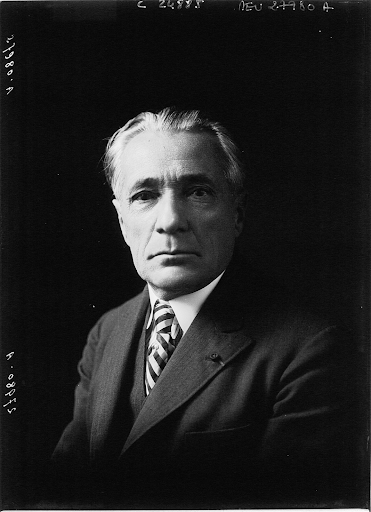 Bonjour, Henri They named it L'Auto-Vélo, (rude LOL), and dropped their first issue on October 16th, 1900. Enter L'Auto (Broke and Yellow)L'Auto-Vélo purposefully ran counter to Le Vélo: sports only, no politics. This was differentiation, but also a not-so-subtle jab at Giffard. (You’re petty, but are you start a newspaper petty?) (Side note: Le Vélo later sued over the name, and in 1903 L'Auto-Velo became just L'Auto. Point to Giffard.) But the “no politics” differentiation wasn’t enough. Le Vélo had the readers, the reputation, and a massive head start. L'Auto-Vélo was struggling, and the money men were getting nervous. So, the paper went hunting for edges anywhere it could find them, no matter how tiny. Le Vélo printed on green paper, so L'Auto printed on bright yellow paper, purely to stand out on a crowded newsstand. But they still needed something bigger than a new color to start taking market share from Le Vélo. A Sporting Chance L’Auto’s competitors were already sponsoring their own sporting events. It was great for content: they ran exclusive interviews, and covered the results. 1-day cycling races were popular for this reason. Logistics were easy, the races ran on public roads, and they pulled in basically every kind of sports fan. Exactly the eyeballs a newspaper wanted. 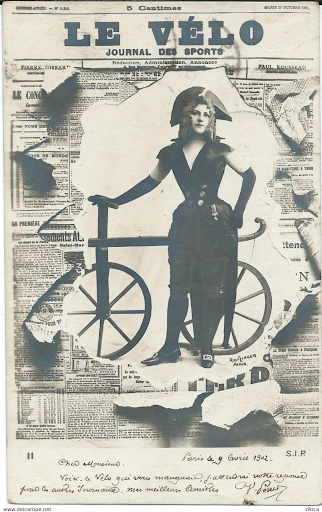 Should they bring back this look next year? That's when Geo Lefevre, a 25-year-old writer who covered rugby and cycling, spoke up at a crisis lunch. (Desgrange had poached Geo from Le Velo, by the way.) His idea: what if L'Auto sponsored its own race, but took it to the next level? Forget a 1-day race. What about a race that looped the entire country? You might even call it a...Tour de France. Le Tour is BornThe idea sounded insane, but…touring the country was already baked into French culture (in part due to the Marketing efforts of the Michelins, but that’s a story for another day). Kings toured their distant lands to check on allies, craftsmen left home to see how other regions built cathedrals. But a lap of the whole of France as a bike race? That had never been done. And Desgrange wasn't quite sold. So, he ran it past the guy holding the purse strings, L'Auto's money man Victor Goddet. (Put some respect on the CFO.) 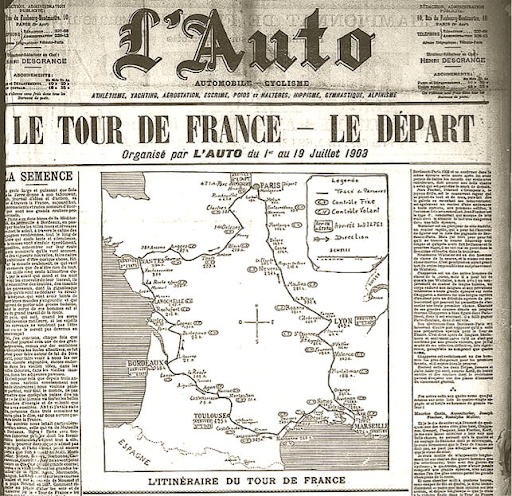 To Desgrange's surprise, Goddet was ALL in on the idea, convinced this was exactly the big BIG swing L'Auto needed. With that green light, the first ever Tour de France rolled out on French public roads in 1903. 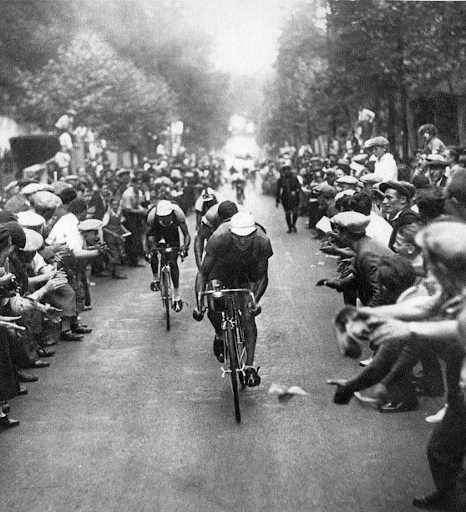 Amateurs, professionals, adventurers, and a fair few unemployed dudes all lined up to compete. The race looped through the country's biggest cities: Lyon, Marseille, Toulouse, Bordeaux, and back to Paris. Maurice Garin won it, BTW. .png?sig=a087a28436094bf87d1228d8c99b513f1da704a7632825160f53eff6b13a7f57&size=email-body&dpr=2) Look at that stache. The game face. Nobody was beating this guy. How massive? During the race, L'Auto's circulation jumped from about 25,000 to 65,000, nearly tripling its readership before the finish. Within a year, L'Auto had buried its arch-rival. Le Vélo folded in 1904. PUT IT IN PRACTICEInstead of trying to out-spend or out-talent Le Vélo, L’Auto out-differentiated it, starting with the color if its paper and finishing with the biggest swing they could come up with. Here's your homework: 1️⃣. Do the swap test. Yep, gonna make you do this again. Pull up your top competitor's homepage (or main social feed) right next to yours. Squint. If you swapped the logos, could anyone tell you apart? Write down every place you look identical. 2️⃣. Pick 1 ownable cue. Choose 1 thing you can own that they can't easily copy: a color, a format, a recurring segment, a visual signature, a point of view. L'Auto picked a paper color. The cue can be THAT simple. 3️⃣. Commit past the point of boredom. Put your cue everywhere, the same way, for longer than feels comfortable. Differentiation only compounds if you don't blink and swap it out every quarter. 4️⃣. Weld the cue to a moment people already show up for. L'Auto had 2 shots at this: it invented the race, then 16 years later clipped its yellow onto the jersey once the whole country was already watching. Most of us won't invent the Tour de France, so steal the second half. Find the moment your audience already cares about, and plant your flag in it. En FlambéLe Tour de France went on to become one of France's most prized cultural events. And that’s an understatement: the 2026 Tour pulled over 1 billion cumulative viewers (150M just in Europe), and was broadcast in 190+ countries. It also generated more than $170M dollars for its organizers. That famous yellow jersey entered the race in 1919, and has been the unform of the overall leader ever since. Chosen, obv, to match L’Auto’s pages. L'Auto rode the success for decades, until 1944, when it was shut down along with many others that had passed into the hands of the Nazis during their occupation. In its place came L'Equipe in 1946, run by Jacques Goddet (Victor's son), which is still publishing today. 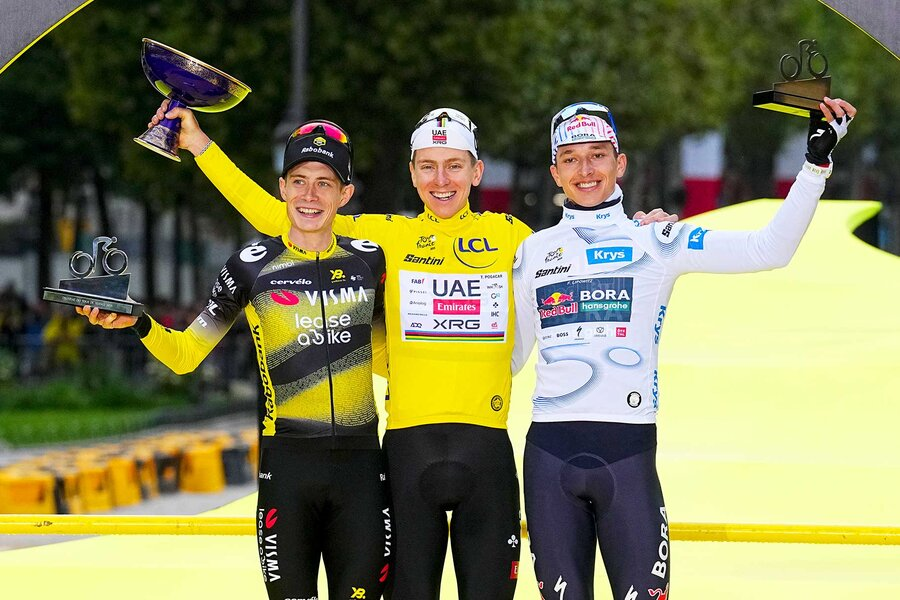 Jonas Vingegaard, Tadej Pogačar, and Florian Lipowitz celebrating on the last podium in 2025. I probably could have gotten 4th, right? L'Auto's actual playbook, build the audience by owning the spectacle, never went out of style. Netflix did the same thing with Tour de France: Unchained, turning the race into a bingeable show to hook a whole new generation (and more Americans), the exact way Drive to Survive did for F1. (Same production company btw.) Red Bull, a media company that happens to sell a drink, keeps buying deeper into cycling (men's and women's) for the same reason. The tools change. The play doesn't. L’Auto’s differentiation WAS the business. Their entire empire grew out of a broke little paper that just needed to look different from the one literally sitting next to it. MARKETING CHEAT SHEET (WHAT TO LEARN FROM THIS STORY): 1️⃣. Differentiate or Die. L'Auto's tiny call to print on yellow paper outlived the paper, the rivalry, and everyone who ever worked there. Find the 1 thing you can own, and then own it really loudly. 2️⃣. Own the Spectacle, Don't Rent Attention. L'Auto stopped buying its way around other people's events and built the event everyone else had to cover. Netflix and Red Bull are running that same play right now. Ask what your brand could create that others would have no choice but to talk about. 3️⃣. The Best Ideas Rarely Come From the Corner Office. The race that saved the company came out of a 25-year-old reporter's mouth at a lunch nobody had high hopes for. Build a room where your junior people can talk without fear, then listen when they do. 4️⃣. Small Bets Compound. A paper color became a jersey. A jersey became a 12M-dollar-a-year sponsorship. The wins that last usually start tiny and boring. Pick the small ownable thing, then refuse to give up on it. Sponsored by DOJO AI Remember the AEO/GEO audit last week? Informative. See all your citation gaps in 1 place. Then, start getting mentioned.  IN A MEME 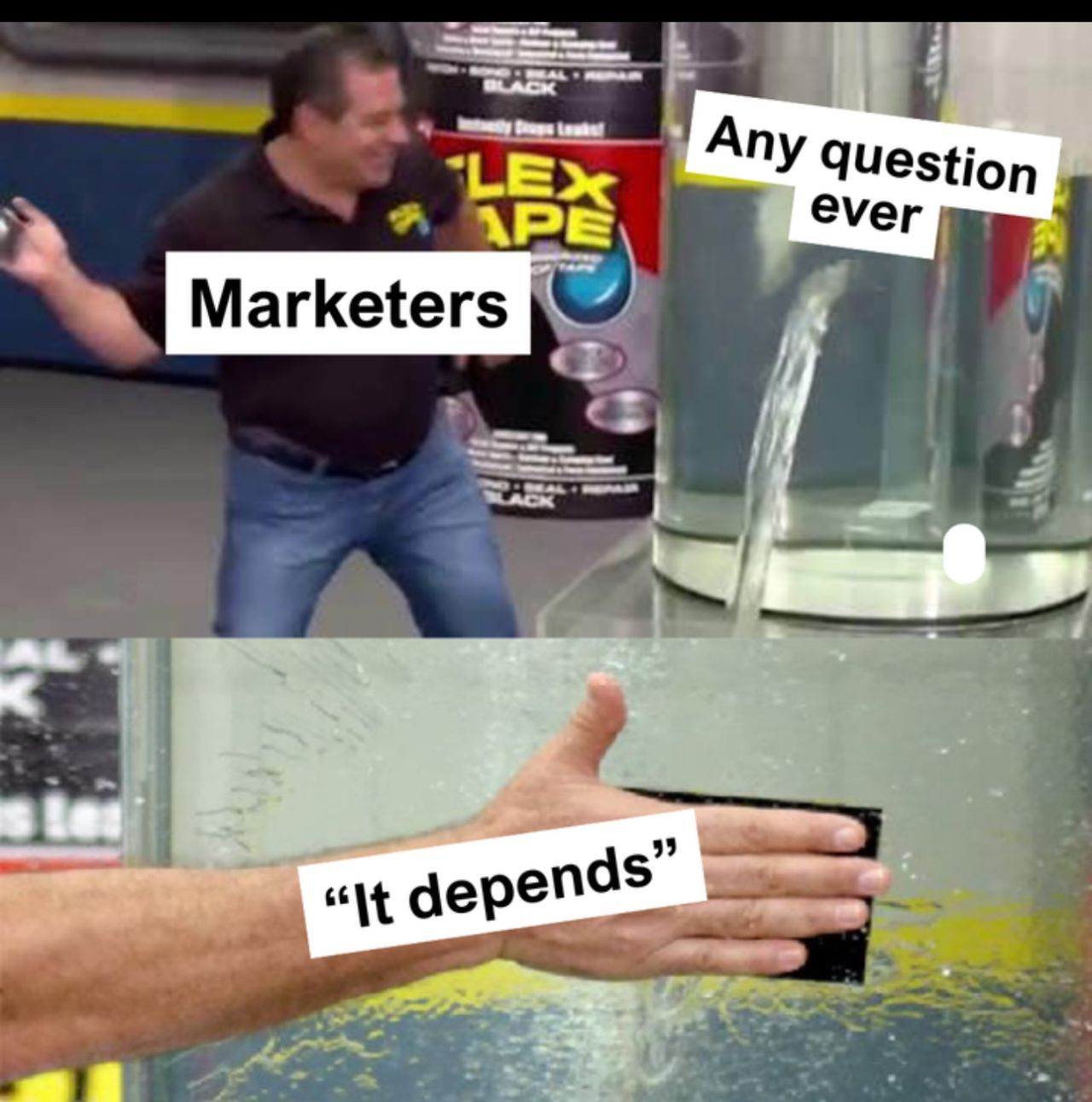 Ahh, the bell has rung. Please be sure to do the reading (follow The Marketing Millennials on LinkedIn and me, Professor Millennial, on X). Off you go. Passing period is only 11 minutes, and there’s a line at the vending machine selling croissants and yellow spandex. Until next time, | ||||||||
|