| ||||||||
| | ||||||||
 Hey Marketing Bestie, Salutations from 36,000 feet. We’ve all eaten many snacks to cope, and we are officially the criers on the plane. Our 1-year old son is cute but loud. If it sounds like I’m blushing, I am. Even Miss Vale on YouTube can’t save us. Was this email forwarded to you? Sponsored by Vibe.co 🚨 FRESH data just dropped: what's winning on streaming, right this second. 📺 The AI Email Playbook: What to Automate, What to Keep HumanEvery email platform out there slapped "AI-powered" on their homepage in the last 2 years. Some of that is real. A lot of it is vibes. Here's what I would actually turn on, what to actually avoid, and how to set it up, regardless of which tool you're using. Turn this on:1. Subject line testing Don't ask AI to write your subject line from scratch. Ask it to generate a batch of variants off a line you already wrote, then test them against each other before the full send. How to set it up:
2. Send-time optimization Turn on send-time AI once your list is large enough to give the model something to learn from. On a small list, there isn't enough data per send hour for it to find a real pattern, so it's just guessing with extra steps. Check-in cadence: review it on a recurring schedule, not after every single campaign. It needs volume over time to recalibrate, not a reaction to 1 send. 3. Resend-to-non-openers Let AI handle the subject line and timing on a resend to people who didn't open the first send. Don't let it touch the offer or the core message, that part should already be decided. How to set it up:
4. First-draft cleanup Use AI for the unglamorous stuff: turning a product spec into a first-pass email skeleton, summarizing a long internal doc into a few bullet benefits, drafting the plain-text version of an HTML email. Budget real editing time per draft, not a skim. If you're not spending a few minutes actually reading and adjusting it, you're not really checking it. 5. Subject lines in the voice of a specific copywriter Instead of asking for "a good subject line," ask for one written the way a specific copywriter would write it: Ogilvy's directness, Sugarman's curiosity gap, whoever fits the email. Naming a real style gives the model something concrete to aim for instead of a vague "punchy and engaging," which is where the generic output comes from in the first place. How to set it up:
Turn this off:1. Full brand-voice generation Don't let AI write end-to-end copy in "your voice" without a locked reference doc. If you're going to do this at all:
2. High-stakes or emotional sends Never send an AI 1st draft unedited for: price increase notices, apology or "we messed up" emails, layoff or shutdown announcements, cancellation confirmations. Build a mandatory human-review step into your process for these categories specifically, whether that's an approval workflow built into your tool or just a rule that no 1 hits send without a 2nd set of eyes. 3. Fake personalization Merge tags like {first_name} or {last_category} aren't personalization anymore, they're table stakes. Before you ship a "personalized" send, ask: does this change based on real behavior (what they clicked, what they bought, when they last opened), or does it just insert a variable into an identical template? If it's the 2nd one, skip the AI personalization layer and just write one good segment-specific version instead. 4. Unsupervised automated flows Any flow where AI is choosing subject lines, send times, and content variants together, without a human checking in, needs a standing review. Set a recurring calendar hold, weekly for anything customer-facing at scale, monthly for smaller lists, and actually open the reporting dashboard. Look specifically at unsubscribe rate and spam complaints by flow, not just open rate. AI will happily trade a chunk of your list's goodwill for a small click-through bump if that's the metric it's optimizing against.' Reminder:Hand AI the parts of email that are math or raw material: timing, subject line testing, resends, first-draft cleanup, style-specific subject lines, remixing old content into new angles. Keep a human on the parts that are feelings: brand voice, apologies, anything high-stakes, anything that should feel written for one specific person. Set a recurring audit on anything automated. AI drift is real, and it shows up in your unsubscribe rate before it shows up anywhere else. MEME OF THE WEEK 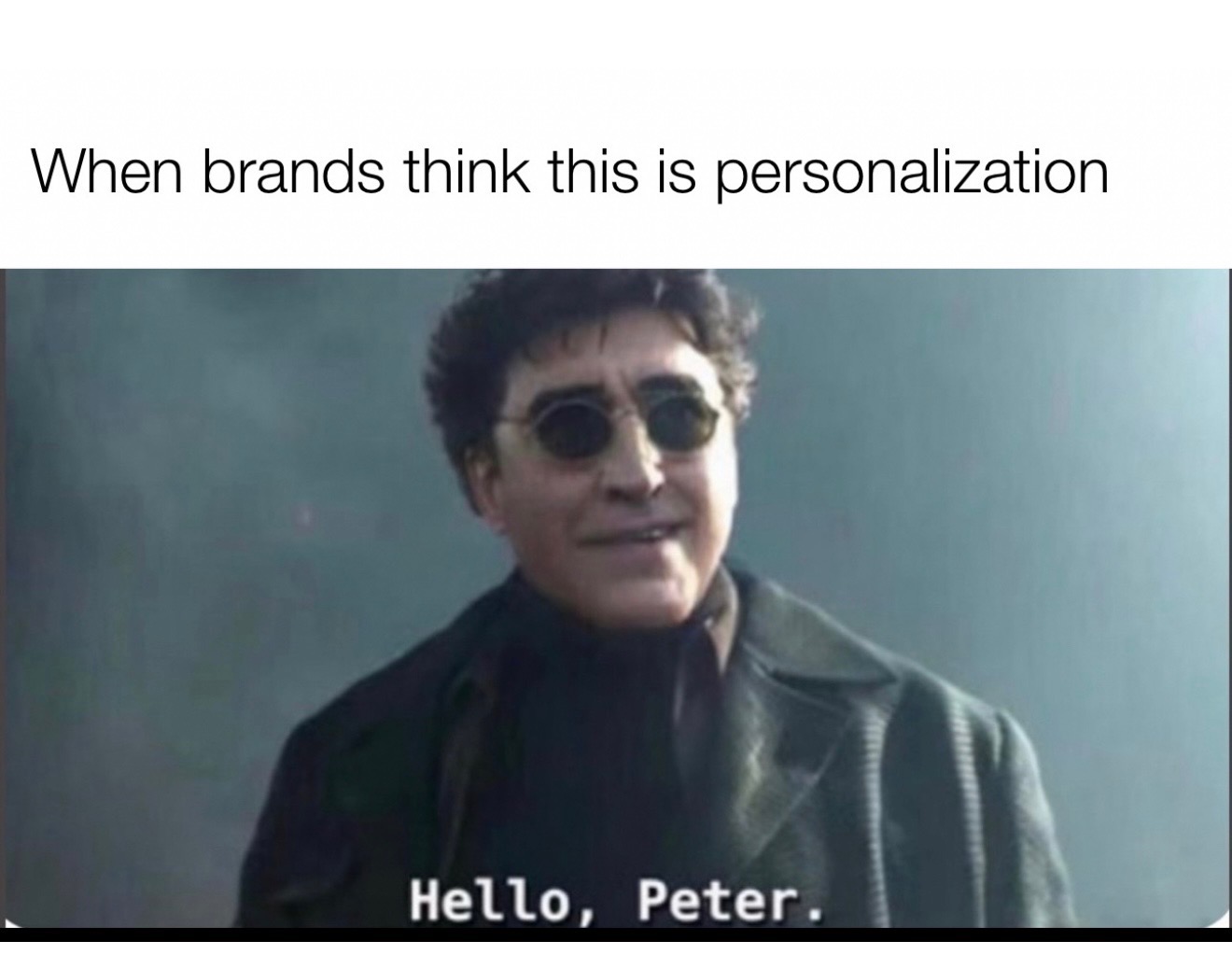 🎙 TUNE IN Podcast to listen to this week: What's wrong with your homepage? What you will learn: 🎙: Why your positioning dies in a Google Doc JUST FOR FUN 🤩: Brand of the week: My favorite sunscreen. The texture doesn't bother me (for once). Happy Birthday Eve to Grancy (my mother-in-law). I love you and am powered by your support of The Marketing Millennials and the toys you sent us on the plane with for your grandson. They are helping, but not enough. Your friend, | ||||||||
|