{beacon}
 | |||||||||||
| | |||||||||||
 Hi ya party people, Another week survived, another out-of-the-blue crisis hopefully averted! 🎉 Mentally, I’m still wearing sunglasses near a body of water, but a week OOO has me feeling refreshed and ready to fight another day in the beautiful hellscape we call work. And before the weekend, best believe we still have time for some premium corporate chaos. 😏 Today, both questions are focused on what happens when a company buyout feels being in a speeding car without brakes. Basically, the wrong people are getting promoted, and leadership keeps making decisions with the confidence of people who will never personally experience the consequences. So, what can HR realistically do when disastrous decisions have left morale somewhere beneath the basement? Cue the circus music and let's discuss! And if you have questions of your own and want a chance to be featured, please submit them here! ⬅️ Sponsored by HiBob Every HR leader is being asked the same question right now: Come prepared to learn how to prepare your org for an AI-enabled future, and why you should keep people at the center of every decision. 😇 ASK AWAY ☕ buyouts & leadership ✍🏾 Been with my employer for 4 years; in the midst of a buyout for two people I do not respect or think are going to be good leaders. Manager is a nightmare and boss man has trust issues. How do I navigate this professionally but with caution? Context: Small biz under 10 people. New guys seeking funding. Promoted the wrong person for management. 📣 Anonymous Safe Space User: I've lived through enough leadership changes to know this: don't make permanent decisions based on temporary chaos. Stay professional, document everything important, keep building relationships outside your direct manager, and maybe even keep your resume up to date just in case. If the new leadership proves you wrong, great. If they don't, you'll be glad you prepared instead of panicking. 📣 Sondra Norris, Founder @ Strategic Culture Partners: You'll need to deal with your feelings about the whole thing so they don't rear up on you at an inopportune moment. And when I say deal with them, I mean acknowledge them and shift them, NOT put them aside. Your safety is threatened - activated. People you don't respect are in charge - activated. Whatever else there is. And then answer what you CAN do. You can lead with process. Helping everyone, in meetings, in conversations, know what they're talking about - what is the problem to solve? what are the obstacles? what's been done? what happens if we do nothing? what's the urgency? what's the expected, desired outcome? Facilitate and/or referee - make sure people get heard, in entirety - go back to people who were cut off. If you come into these situations with this frame and ask questions as things are unfolding, you're getting your own clarity, clarity for others, and demonstrating how this transition can be impacted with simple, good, intentional communication - pointed at retaining what trust is left, maybe even building more, and keeping things focused on the what, why, and how. Safe Space members can join this discussion here. Not a member yet? Apply to join here.  ✍🏾 I work for a company that was bought out and the leadership destroyed the company last year by making stupid decisions. The employees lost complete faith and trust in leadership including the management under the chiefs and PE company. We are losing majority of our sales staff to resignation and almost all our admin staff to downsizing. I'm trying to keep morale up and build the company back to what it used to be but getting my feet taken out from under me every time I make some progress. I'm not sure what I can do anymore. Any advice and suggestions would be great cause I could use any help or encouragement. Context: We went from having 400 sales staff to 55 actively selling and cut admins to 1 person per department. 📣 Mo McGinnis, Director of HR @ Havenly: I am feeling so much empathy for you here - that level of upheaval is extraordinary and it sounds like you're shouldering a lot of it. 1) First thing's first, take care of yourself! A friend once told me that I wasn't allowed to criticize myself if I hadn't been properly fed, watered, or rested. It seems silly but as soon as I start feeling overwhelmed at work (or life!) I remember this and almost always find that I'm missing one of those 3 key ingredients for stress reduction. Be very gentle with yourself, ask for help/support, and take breaks often. 2) This is a harsh truth but stick with me: The particular magic of your company that existed prior to the acquisition is gone and it's unlikely that you'd be able to get it back to it's former glory - at least by yourself! It is ok to be really heartbroken by this and to grieve the experience you and others had at the company prior to those changes. I have been there! Allow yourself to feel those feelings, encourage others to grieve if it feels appropriate, and have conversations about what it was specifically that you loved about it. If you can get really specific about those components of the workplace/interactions and how/when they showed up, you can start to inflect them back into the culture in meaningful ways; ideally from the top. 3) Remember that you can't solve everything for everyone. All that you and your colleagues are going through is data and you get to make the decision about what you do with that data. Maybe you ingest the data and see that there are opportunities to jump in and fix - and maybe those activities are the kind that you personally love tackling. Or maybe you ingest the data and realize that the situation isn't serving you anymore - it sounds like some of your colleagues have come to that conclusion. Something I always encourage people to do when interviewing is to really dig into the dysfunction that exists at the company to ensure that it's the kind of dysfunction that energizes you. Without a doubt, many other HR professionals would be miserable in my job, but it is incredibly fulfilling for me. And that's ok! Staying connected with communities like this is exactly how I've gotten through similar situations in the past. Vent, rest, repeat for as long as you need. 📣 Tracy Vebber, Director @ Lightfoot, Franklin & White, LLC: This sounds like such a disappointing situation but I also believe your value is becoming clearer every day. You are using your best HR and people operations skills to steady morale, care for people, and help the organization weather an incredibly difficult time. Your Sales Team will need leadership and a sense of purpose and you can use your voice of experience to help leadership do better! My encouragement to you is to stay present, trust what you know, and take care of yourself along the way. Give them your best work daily and then allow yourself to walk away knowing you did everything that was yours to do. You cannot fix the mistakes leadership has made, and you should not carry that burden home with you. DON"T DO IT! Protect your peace, health, time, your life! I believe you will still be standing after many others have moved on, and people will remember the steadiness, judgment, and care you brought during this season. And none of this work is wasted! It makes you stronger and more credible. Keep track of your work and your stories because you can use every experience as more to share in my next job interview for that dream job! 📣 Cheryl Hooker, VP, People & Culture @ Skilken Gold Real Estate Development: This is a hard situation and it's easy to feel the burden on your shoulders to bring the culture back to life. In the end, it's always about taking care of the people who remain. Can you reach out to the 55 salespeople remaining and understand how they are managing? Their risk? What are they needing to be successful? Same with the remaining admins in each dept. Again, you can't solve everyone's problems but you can present a case with real data on how people are doing and the risk to the business if certain things aren't managed well. (turnover, market reputation, etc.) Finally, with all the changes, is the business failing? Has the RIF and turnover hurt the bottom line? If it hasn't, it's harder to make a case for change. Again, I would focus on those who choose to be there (for whatever reason) and see how you can create a space where they are feeling valued. This is a lot to manage and as others have shared, take care of yourself. Your job is not to fix this. And maybe, in the end, it's no longer the place that you want to be and it might be time to move on. Safe Space members can join this discussion here. Not a member yet? Apply to join here. Sponsored by Gem Too many recruiters are paying for five tools that barely talk to each other and scrolling hundreds and hundreds of profiles by hand. Gem is here to help! Its AI Sourcing Agent works 24/7 (unlike your ATS, RIP), matching top talent to your roles and pulling accurate contact info, so you can clearly understand your ideal candidates and connect with them accordingly. 1,200+ orgs (Wayfair, Dropbox, UnitedHealth) already got the memo. 😏 🚨 ON YOUR RADAR 🎧 At the end of the day, your culture is the behaviors your policies reward every single day. Dani Herrera and I got into why HR has way more influence over culture than we give ourselves credit for, and why AI is about to amplify every decision we've already made…good and bad. Check it out on Spotify or Apple Podcasts! 🧠 Motivation is broken right now, and it's not just you...it's the entire playbook! For this month’s HR Therapy, I'm sitting down with Dr. Anthony from Predictive Index to break down the behavioral science behind why nobody's feeling it right now, and what managers can do instead of just throwing perks at the problem. 🚨 Safe Space has a new home: safespace.com. So much easier, right?! This is just the first piece of something bigger we're announcing in a few weeks, so leave your email here and get first dibs on the news the second we can share it. 🎙️ Ever promote someone because they crushed their current job, only to watch them absolutely tank as a leader? My new podcast episode with Jackie Sahm, VP of Integrated Solutions at Hogan Assessments, gets into why the criteria for high-potential identification often has little to do with actual leadership ability.* 💰 Pay Transparency matters (but it's also difficult). That's why I created this course. Join the Safe Space community to access it, plus everything else you need to stay ahead of the curve. *This one is brought to you by one of my amazing brand partners 📝 RESOURCE OF THE WEEK Each week I feature a resource I love from the Safe Space library that I believe would be relatable to this week's newsletter topic. Today, we’re exploring invisible trauma. Check it out HERE ⬇️  FRIDAY FUN 👀 Work RN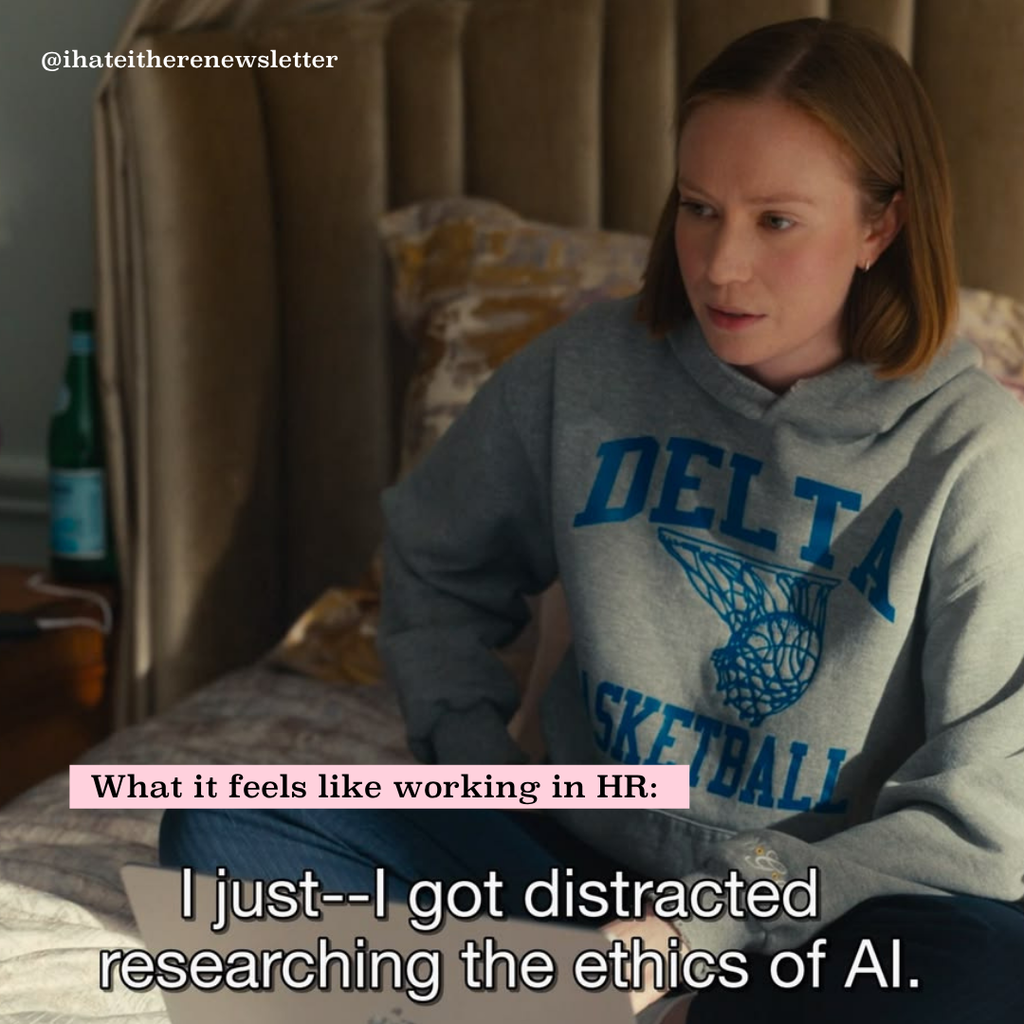 no joke, I go down this spiral WEEKLY at this rate. There's lots of info out there!!!! That's all for this week! I hope you enjoyed! If you have any thoughts, please let me know. I'm allll ears. Reminder: Today is FRIDAY. 🙏 | |||||||||||
|