{beacon}
 | ||||||||||
| | ||||||||||
| Hi Marketing Bestie, Ok big week over here... we're finally doing our first flight longer than 3 hours with the baby to California. Wish us luck lol. Ngl I'm nervous. He is SO active right now, I genuinely don't know how he's gonna do sitting still that long. So if you're a parent and you've survived a long flight + time change with a little one... please send me all your tips. Like all of them. I'll take anything at this point 😅 Was this email forwarded to you? SPARKNOTES FROM THE POD 5 WAYS TO MANAGE AI LIKE YOU MANAGE PEOPLEBrandon Metcalf launched Asymbl after founding Talent Rover (which was acquired in 2018) and Blueprint Advisory, a Salesforce consulting firm. Salesforce engaged Blueprint Advisory to advise on staffing and recruiting challenges, which led to the launch of Asymbl. Asymbl started as a staffing and recruiting platform on Salesforce. Then Brandon started experimenting with AI. He used ChatGPT and other tools to move faster. Got his leadership team involved. Started building digital workers inside Asymbl. And realized something: Managing AI agents is exactly like managing people. So he restructured the company. Now he has 150 humans and 200 digital workers. And he's generating $13 million in productivity impact this year. The difference: He stopped treating AI like a feature. He started treating it like employees that need job descriptions, coaching, and success metrics. His approach flipped everything. Entry-level humans got promoted to manager roles because they understood how to coach the AI. The AI took on the repetitive work. The humans got to do the strategic work. Listen to the full episode here where Brandon breaks down how to build digital workers that actually work, why you can't just slap an agent on any problem, and why T-shaped leadership matters for 1️⃣. Treat AI Agents Like Employees. Give Them Job Descriptions, Coaching, And Success Metrics.Brandon's Take: "What I'm trying to get this AI to deliver for us in a business context, is the same thing that I look for employees to deliver for us. Like there's a job I wanted to do. I know if I coach it, it gets better. I know if I stop coaching it, it kind of goes sideways, which is very similar to employees, right? If I really manage it, and then if I put clearly defined job scope, motivations for success, we talk about for that job. If I do all of those things. This AI, this agent, if you will, turns into an employee." This is the insight that changes everything. You don't train an AI once and let it run forever. You coach it. You give it feedback. You define what success looks like. You give it a job description. Brandon's team created Theodore (or "Teddy" when he's performing well). An SDR agent. Not just a prompt that writes emails. An actual role with responsibilities. With expectations. With performance reviews. When Theodore was doing well, they celebrated it. When Theodore was underperforming, they coached him. Just like a human. And it worked. Way better than just running prompts. Takeaway: Define a specific job for your AI agent. Write it down like you'd write a job description. Include: Core responsibilities. Success metrics. Decision-making authority. What escalates to a human. Then coach it weekly. Get feedback. Adjust. Treat it like an employee, not a tool. You'll get dramatically better results. 2️⃣. Not All AI Is A Digital Worker. Not All Problems Need An Agent.Brandon's Take: "You can't slap an agent on anything and think it's going to be successful. Like not all AI and not all agents need to be like full-on digital workers that you need to coach all the time. Like there are assistants that can do research and stuff for you. But if you're really trying to solve a role, a use of a business function, you've got to realize you have to manage it." This is the mistake. Slapping AI everywhere and hoping it works. Some jobs need a full digital worker. Others just need an assistant. Some need a specialist. Some need something that runs once and then stops. Brandon learned this through failure. He created Bradley as a catch-all agent for everything a CEO needs. Bradley was supposed to handle sales insights, financial reporting, client updates, strategic analysis. Bradley struggled. Because 1 agent can't go deep on everything. Just like one human can't. So Brandon created Stanley. A specialist agent just for sales. Stanley now reports to Bradley. Bradley reports to Brandon. Hierarchy. Specialization. Clear roles. Takeaway: Map your workflow before adding AI. Ask: Is this a single task or a full job? Does this need deep specialization or broad visibility? Do I need one agent or multiple specialists? Don't hire one AI to do ten jobs. Hire specialists. Use T-shaped agents: deep expertise in one area, visibility across the business. 3️⃣. When Humans Manage AI, They Get Promoted.Brandon's Take: "When we started to figure this out, and we started applying it to our recruiting products, we saw that even the entry-level employees become managers. We had a human SDR named Mitch, and Mitch's part of his job was managing Teddy. Mitch was already great when he started, but he eventually got promoted to an AE. And his first month as an AE, he closed like 11 deals. Because of the context and the understanding of what Teddy needed to do to be good at his job, Mitch was able to pick up all of that and apply it to his sales process." This is the untold story of AI adoption. When you bring in AI agents, you don't eliminate humans. You elevate them. The humans who manage the AI learn the role inside and out. They understand the workflows. They understand the coaching required. Mitch started as an SDR. His job included coaching Theodore. Through that process, Mitch learned exactly how to be exceptional at the role. Learned what made the difference. Learned how to think about the job strategically. So when he got promoted to AE, he had a PhD in how sales works. He closed 11 deals his first month. Takeaway: Don't use AI to eliminate roles. Use it to free humans up for higher-level work. Have your best performers manage the AI. The process of coaching AI teaches them the mastery level of their role. Then promote them based on that deep knowledge. You get better managers. You get better sales people. You accelerate growth. 4️⃣. AI Needs Weekly Coaching, Just Like Employees.Brandon's Take: "I still have to coach Bradley every single week. And I have to coach Stanley every single week. But the coaching gets easier and it's more management, if you will, of like keeping them on track. But again, twenty, thirty minutes with Stanley or Bradley a week for what I get that would take weeks doesn't even equate." This is the reality. AI agents need ongoing management. You can't set it and forget it. You have to check in. You have to validate the output. You have to correct course. Brandon spends 30 minutes to an hour per week coaching Bradley and Stanley. In return, he gets what would take weeks of human coordination. Real-time business insights. Deal pipeline visibility. Client context. Without the AI, he'd need 10 humans and weeks of meetings to get the same information. By then it's stale. With AI, he gets fresh data in 30 minutes. Takeaway: Schedule weekly coaching time for your AI agents (yes, actually schedule it). Review their output. Give feedback. Adjust expectations. This isn't extra work. This is the work. But it's 30 minutes vs weeks of waiting for reports. You'll move faster with real-time information. 5️⃣. Define Success Metrics For AI, Or The AI Will Define Them For You.Brandon's Take: "You have to be very, very clear in what is its job and what makes it successful. I think everyone misses that second piece. If you understand those tasks lead to a job that leads to the success I'm looking for, then you can actually get it right. Because if you don't define what the success is, they're gonna define what success is. Yeah. And that might not be what you want." This applies to AI and humans equally. If you don't define success, the AI will optimize for something else. It might optimize for throughput (processing lots of deals) instead of quality (closing high-value deals). It might optimize for speed (fast responses) instead of accuracy (correct analysis). Theodore the SDR agent could optimize for volume (sending lots of emails) instead of quality (warm prospects). Without clear success metrics, that's what it would do. So Brandon's team defined it: Success for Theodore is booking qualified meetings with sales-qualified leads. Not sending emails. Not response rates. Qualified meetings. Once that's defined, Theodore can be coached toward it. Takeaway: Define success metrics for any AI agent before deploying it. Not just "help with this task." But "success means X" where X is specific and measurable. Job titles should have success metrics. AI agents should too. Review those metrics weekly. Adjust if needed. That clarity is what turns an AI tool into an AI employee. 🏰 EVENT OF THE WEEK Going from 0 agents --> 1 agent is the hard part. Kris Rudeegraap from Sendoso will show how he DIYed his first agents. And Jessica Vose from Kana will talk about what that looks like at an enterprise scale. Risks, rewards, all of it. See both sides, live. IN A MEME 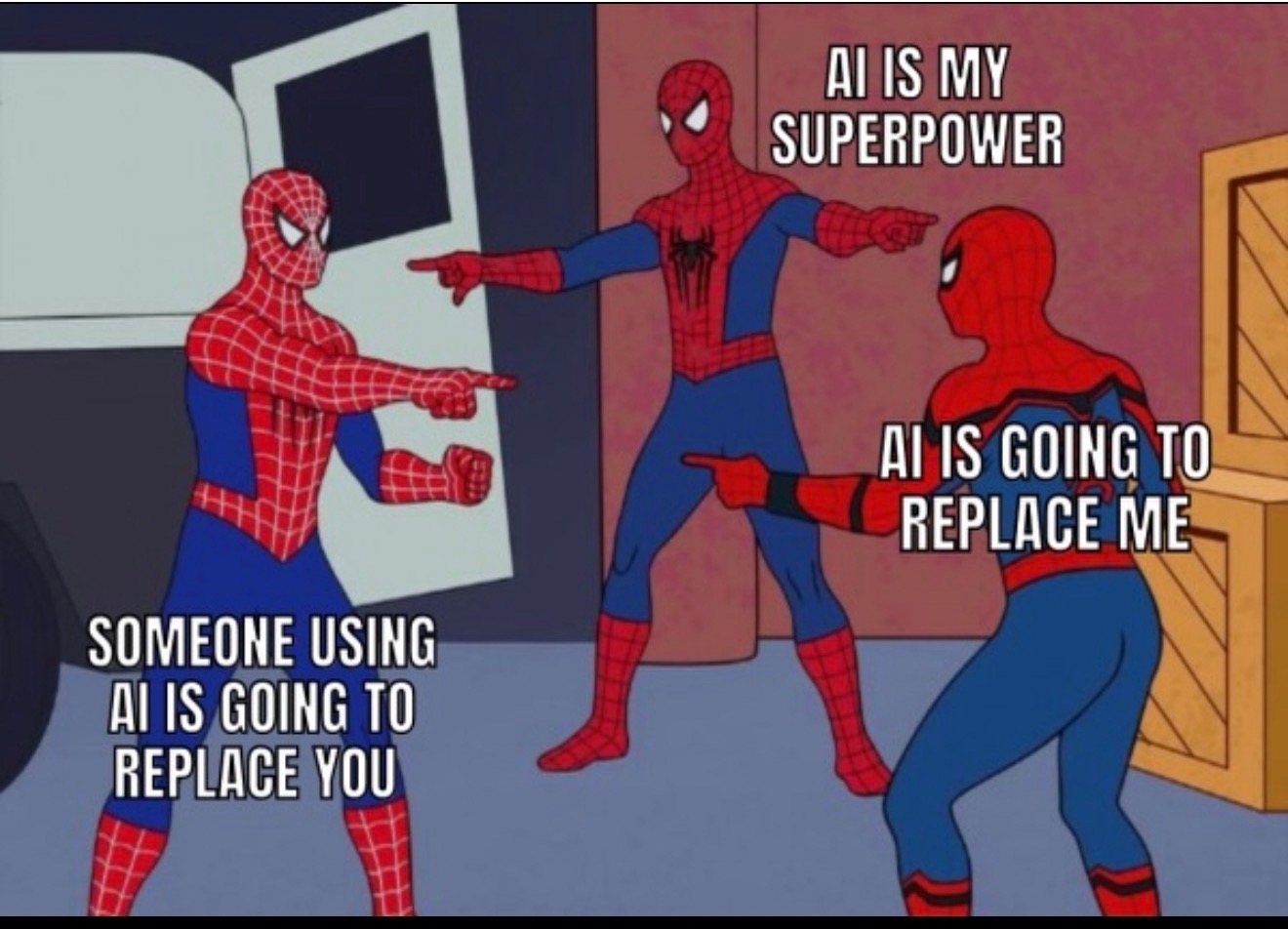 Also, I need things that I should pack that most people forget. Reply and let me know. Your friend, Daniel | ||||||||||
|