{beacon}
 | ||||||||||||
| | ||||||||||||
 Hi Marketing Bestie, I'm glad I have a legitimate excuse not to eat lettuce right now. What about you? Was this email forwarded to you? Sponsored by Kana "Marketing should own Agentic Marketing projects." SPARKNOTES FROM THE POD 5 WAYS TO BREAK THROUGH THE NOISE WITH AIThis was a panel I moderated at Salesforce Connections 2026. Debbie Millman founded the world's first master's program in branding at SVA. She's been hosting Design Matters podcast for 21 years. She knows what it takes to build something that lasts. Christina Bottis has been in B2B marketing for 20+ years across every stage and size of company. She's built brands at startups and enterprises. She knows the constraints marketers face. And they both agree on one thing: Breaking through the noise in 2026 requires a completely different approach than noise-making. It's not about shouting louder. It's about saying something worth listening to. Consistently. Listen to the full panel here where Debbie and Christina break down why A+ content matters more than B+ consistency, how to prove owned audience value to finance, and why strategy means behaving differently than your competitors. 1️⃣. Breaking Through Means Creating Something Original, Well-Crafted, And Meaningful.Debbie's Take: "Breaking through means creating something that is both original, well-crafted, and meaningful. Because you can scream from the tallest rooftop, but unless you're saying something that people are interested in hearing, there's too much cacophony out there. Nobody's going to pay attention or listen." You can produce content faster than ever before. AI makes it easy to generate ten pieces where you used to make one. But faster isn't better. Louder isn't winning. The noise is everywhere and only getting louder. So what actually breaks through that noise? Content that's original. Well-crafted. Meaningful. That means you can't just feed the algorithm with whatever you can churn out. You need a real reason to exist. A point of view your audience actually wants to hear. Execution that shows you genuinely care about what you're putting out. Debbie's been hosting Design Matters for 21 years. She didn't get there by publishing mediocre episodes consistently. She got there by publishing thoughtful episodes consistently. There's a difference. The temptation with AI is to produce more. The answer to breaking through is to produce better. One well-crafted piece beats ten pieces of slop. One original idea beats a thousand remixes of existing ideas. Takeaway: Before you publish anything, ask 3 questions: Is this original to our perspective? If you can't answer yes to all 3, don't ship it. Build a standard of A+ content and stick to it. Your brand gets measured by your worst piece, not your best. Make sure nothing you ship is less than you'd be proud of. 2️⃣. Strategy Isn't A Plan. It's Behaving Differently Than Your Competitors.Debbie's Take: "Strategy is actually behaving differently than your competitors and being able to offer something of value that is different to your competitors. It's not just having a smart plan. You have to behave differently than your competitors. And that is what is going to ultimately pique somebody's interest." Marketers confuse strategy with planning. A strategy could be a smart plan. But that's not unique. Your competitors also have smart plans. They probably have consultants. They've probably done strategic planning sessions. They have roadmaps. So a plan alone won't differentiate you. Real strategy is doing something fundamentally different. Not in positioning documents. In actual behavior. How you show up. What you stand for. What you prioritize. How you treat your audience. What you're willing to say no to. If your competitors race to produce content, you slow down and only produce A+ content. If they chase every trend, you build something permanent. If they're generic and safe, you take a stand. If they're always hustling, you focus on depth. That's strategy. It's not cleverness. It's consistency of choice. Takeaway: List how your 3 main competitors go to market. How they talk about their product. What they emphasize. What channels they use. What their tone is. Then ask: Where's our opening to behave differently? Not just in messaging, but in actual behavior. Maybe you align sales and marketing while they're siloed. Maybe you focus on depth while they hustle. Maybe you own one channel deeply while they scatter across 10. Pick 1 behavior that's distinctly yours. Then commit to it. That's strategy. 3️⃣. Own Your Audience, Not Just Rent Attention From Algorithms.Christina's Take: "What do we want to own? Who do we need to own it with? I've talked about what our point of view is more in this year alone than in many years at other companies. My goal is always to share insight around what we're good at. If I can help you do your job better, if I can help you feel more educated about a certain thing, then that starts a relationship between us." Renting attention from Meta or Google is expensive and unstable. You're bidding against every other advertiser. Costs go up. Algorithms change. Your ROI gets worse. And you're completely dependent on their platform working in your favor. Owning an audience is the long game. It's harder to build but impossible to take away. Owned channels: Newsletter. Podcast. Community. Blog. Social following you've built. Your customer reference program. Your annual event. These take time to build. Years, not months. The 1st year feels like you're shouting into the void. Year 2 you start seeing traction. Year 3 you have real momentum. But once they exist, you control the relationship. No algorithm change affects you. No platform policy shift destroys your channel overnight. Christina's approach: Know what you stand for. Share a point of view. Help your audience do their job better. Build trust through genuine value. Demonstrate passion around a certain topic. Be a partner, not a vendor. Then you have a channel that becomes an asset. An audience that trusts you. Takeaway: Identify 1 owned channel you're going to build: Newsletter, podcast, monthly webinar,, quarterly event, a community. Pick 1. Commit to it for 18 months minimum. Know your point of view on your industry. Share insights that help your audience do their job better. Track growth monthly but don't obsess over it. At 18 months, you'll have an asset. At 3 years, you'll have an audience that's yours to keep. 4️⃣. Go Deeper Than Function.Christina's Take: "B2B doesn't do nearly as well as B2C. We never get to the emotional component enough. We understand the functional thing that you're trying to get done with our product, but we don't go deeper. B2C nails this. If you ask them about your customer, they're like, we're talking to this mom and she's commuting and she feels this way, and here are the ups and the downs of her life cycle. You gotta get to that level of specificity." B2B marketers get stuck on the job someone needs to do. A marketer needs lead management software. A sales leader needs visibility into pipeline. A CFO needs ROI tracking. Those are functional needs. But B2C marketers understand how someone feels while solving that functional need. A mom buying coffee on her commute isn't just buying caffeine. She's buying a moment of peace. A break. An escape. A 5-minute reprieve before the chaos starts. That emotional understanding changes the entire marketing. In B2B, a marketer buying your tool isn't just trying to be more efficient. They're stressed about keeping up. Worried about being irrelevant. Frustrated by tools that don't work together. Anxious that their boss will think they're not doing enough. They want confidence. They want to look smart in their next meeting. That emotional component is usually invisible in B2B marketing. You focus on features and ROI. But the emotional need is driving 80% of the decision. Understanding that changes everything about how you position, what you emphasize, and how you speak to them. Takeaway: Do listening sessions with 10 customers. Ask about their day. What frustrates them? What gives them relief? What're they worried about? What does success feel like? What happens if they fail? Take notes on the emotional elements, not just the functional ones. Use that to rewrite your positioning. Not around what your product does, but how it makes them feel. Not around features, but around the confidence or relief they get from using you. 5️⃣. The Hardest Deadlines To Keep Are The Ones You Set For Yourself.Debbie's Take: "The hardest deadlines to keep are the ones to ourselves." That's the real problem with owned channels and brand building. You commit to a newsletter. No 1's holding you accountable except you. So when work gets busy, when inspiration runs dry, when it feels like too much effort, you skip sending it. Then you skip again. Before you know it, you haven't shipped in 3 months and your audience is gone. That's why you need to prove you can actually do it before you launch publicly. When you're building privately, there's no audience waiting. No 1s disappointed. You're just testing. Can you actually sustain this? Do you enjoy it or does it drain you? Then when you launch publicly, you've already proven you can keep the commitment. You've built the systems that work. You know what realistic frequency actually means for you. Debbie's been doing this for 21 years because she figured out early what pace she could keep. She didn't set unrealistic expectations. She committed to something sustainable. Then she delivered on it, year after year. The hardest deadlines are the ones you set for yourself with no external accountability. So test your commitment privately first. Prove you can do it before you promise it to an audience. Takeaway: Before you launch any new initiative publicly (newsletter, content series, community, event), build it privately first. See if you can actually keep the pace you're planning. See if you enjoy it or if it's draining you. See what realistic frequency works for your life and your energy. Then launch at that pace. You'll keep the promise because you've already proven you can keep it. Sponsored by Vibe.co 🫵 Honesty check: do you REALLY know if that ad campaign drove sales? IN A MEME 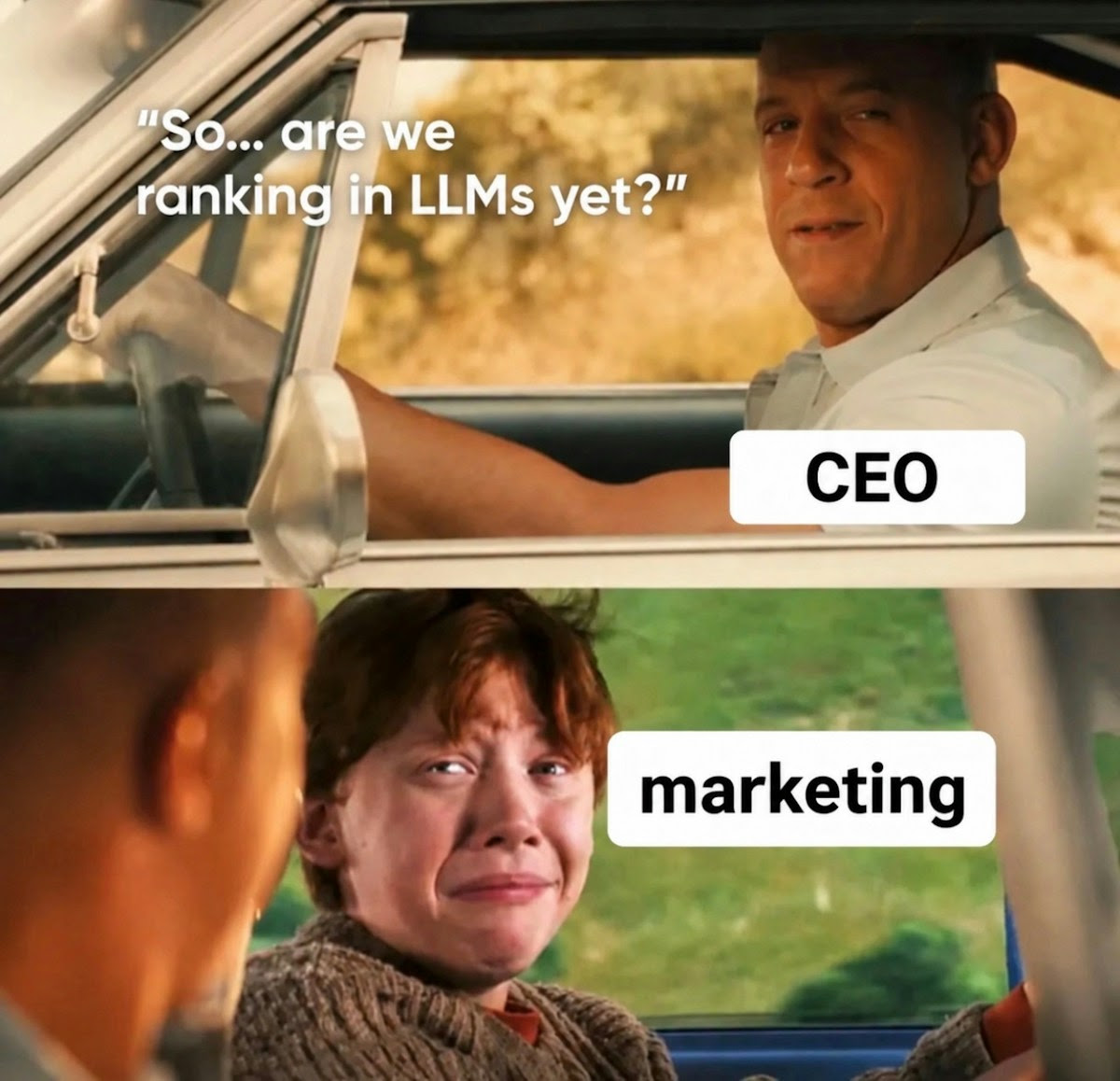 Do we think Taco Bell was the source of this 💩 bacteria? Reply and tell me your thoughts. Your friend, Daniel | ||||||||||||
|