{beacon}
 | ||||||||||||
| | ||||||||||||
 Hey Marketing Bestie, Stayed up way too late watching the World Cup. Woke up way too early and watched Jude Bellingham's reaction to Hey Jude over and over. Will miss this! Was this email forwarded to you? Sponsored by Cvent I'm not surprised Marketers are doubling down on events. The AI Tools I'd Actually Bet On Right NowHere's my honest take on where AI tools stand for Marketers right now. Not a ranking. Not "the top 12." Just the tools I'd actually put in the tech stack, organized by the job each 1 solves, with my reasoning for each. I really hope it's helpful! 12 tools. With my case for each. I have more. Let me know if you want them. NOT SPONSORED. AI Search Visibility: ProfoundThis is the one that made ME pay attention when I first looked into it. For 20 years, marketing has optimized for a blue link on a results page. That world is shifting fast. People are asking ChatGPT and Perplexity and Gemini for recommendations directly, and if your brand isn't showing up in those answers, it doesn't matter as much how well you rank on Google. Profound tracks whether AI models are actually citing, recommending, or ignoring your brand. Why it's on this list: this isn't a "nice to have" category to me. It's the category that determines whether your brand shows up in the next decade of search. GTM Intelligence: Common RoomThe real question every GTM team is chasing: who actually wants what you're selling, right now? Common Room answers it by looking past "who fits our ICP on paper" and toward "who's already showing buying intent in the wild": community activity, product signals, the digital body language that used to require a full-time analyst to catch. Why it's on this list: the best GTM teams aren't guessing at intent anymore, they're watching for it in real time. This is the tool that makes that possible without hiring an analyst. Presentations & Strategy Docs: GammaEvery Marketer has burned an entire afternoon formatting a deck that nobody remembers a week later. I used to say that you can be good at decks or good at Marketing, but you can't be good at both. 😉 Gamma turns a rough outline into a polished presentation, strategy doc, or 1-pager in minutes, not hours. It's not about making things look flashy for the sake of it, it's about spending your time on the actual thinking instead of dragging text boxes around in slides. Why it's on this list: the best strategy in the world doesn't matter if it there is no buy-in to your ideas. Gamma closes that gap. Content Operations: AirOpsContent used to be a person, a doc, and a deadline. Now it's a system. AirOps is built for marketers running content at a volume that would've been unthinkable 3 years ago: SEO content, programmatic pages, briefs that take no time. It's not "write my blog post for me." It's "build the pipeline so my team stops doing the same manual work 50 times a week." Why it's on this list: the Marketers who win the next 2 years aren't the 1s who write the best single piece of content. They're the 1s who build the best content system. AirOps is a bet on that future. Creative: Motion + HeyGenCreative is where AI gets the most side-eye from marketers, understandably. Nobody wants a brand that sounds like a robot. Motion isn't about generating creative from nothing. It's about testing creative at a speed humans physically can't match: dozens of variations, real performance data, less relying on gut instinct for ad decisions. HeyGen solves a problem every global brand has quietly been dealing with: localization. Turning 1 video into 10 languages used to mean 10 shoots, 10 budgets, 10 headaches. Now it's 1 input and a very good AI avatar doing the heavy lifting. Why they're on this list: creative testing and localization matters more than ever in a world where content is unlimited. Marketing Operations: WrikeEvery Marketer has that 1 workflow. The 1 that's 17 steps, lives across 5 different tools, and only 1 person on the team actually understands. Wrike is where that chaos gets a home, especially once you're running enterprise-scale marketing ops with multiple teams, approvals, and campaigns moving at once. It's not the flashiest tool on this list, but it's the one that keeps everything else from falling apart. Why it's on this list:: the most underrated marketing skill right now isn't prompting, it's knowing where your operational cracks actually are. Wrike is for the people who finally do something about it. Long-Form Writing: ClaudeEveryone's ChatGPT prompt library is full of first drafts that read like a first draft. Fine for a quick social caption. Not fine for the thought-leadership piece with your CEO's name on it. Claude is the 1 I reach for when the writing actually has to hold up: long-form content, nuanced positioning docs, anything that needs to sound like a person who's thought about it, not a model that's guessing at it. It's the difference between "AI helped me write this" and "you'd never know AI helped me write this." Why it's on this list: speed is table stakes now. The tools that win the next round are the ones that don't sacrifice voice to get there. Creative Review & Approvals: Markup.aiThe most painful part of any campaign isn't making the creative. It's the 17 rounds of Slack threads, email chains, and "can you just move the logo 2px left" comments that follow it. Markup.ai centralizes creative review and stakeholder feedback so approvals stop dying in someone's inbox. It's not glamorous. It won't go viral on LinkedIn. But ask any marketer how many hours a month get lost to approval chaos and you'll understand why this made the cut. Why it's on this list: the flashiest tools get the attention. The tools that fix your actual bottlenecks get the results. This is the second kind. Research Synthesis: Poppy AIPerplexity gets you the answer fast. But what happens to everything after that: the YouTube videos you meant to watch, the podcast you wanted to pull quotes from, the voice memo you recorded in the car and never listened to again? Poppy AI is a visual, whiteboard-style workspace where you drag in YouTube videos, podcasts, PDFs, voice notes, and images, then chat with AI across all of it in one place instead of bouncing between 5 browser tabs and a Notion doc that's basically a graveyard. Why it's on this list: finding information was never the hard part. Making sense of a pile of scattered research, fast enough to actually write from it, is. This is the tool for the part everyone skips. Research & Strategy: ChatGPT + PerplexityYes, ChatGPT is the obvious pick. That's not laziness, that's the point. ChatGPT has quietly become the operating system marketers think inside of. Not just for drafting copy (please stop using it just for that), but for structuring campaigns, stress-testing positioning, and being the sparring partner you don't have to schedule a meeting with. If your team doesn't have a shared prompt library by now, that's the actual gap, not the tool. Perplexity earns its spot because it does the one thing ChatGPT still isn't built for: fast, sourced, competitive research. Need to know what five competitors are saying about a category shift, with receipts, in under two minutes? That's Perplexity's whole job. Skip this step and go straight to "vibes-based strategy," and don't be shocked when a competitor beats you to the exact same idea. Why it's on this list:: research and strategy used to be the slowest part of the job. Now it's the fastest, if you're using the right tool for each half. MEME OF THE WEEK 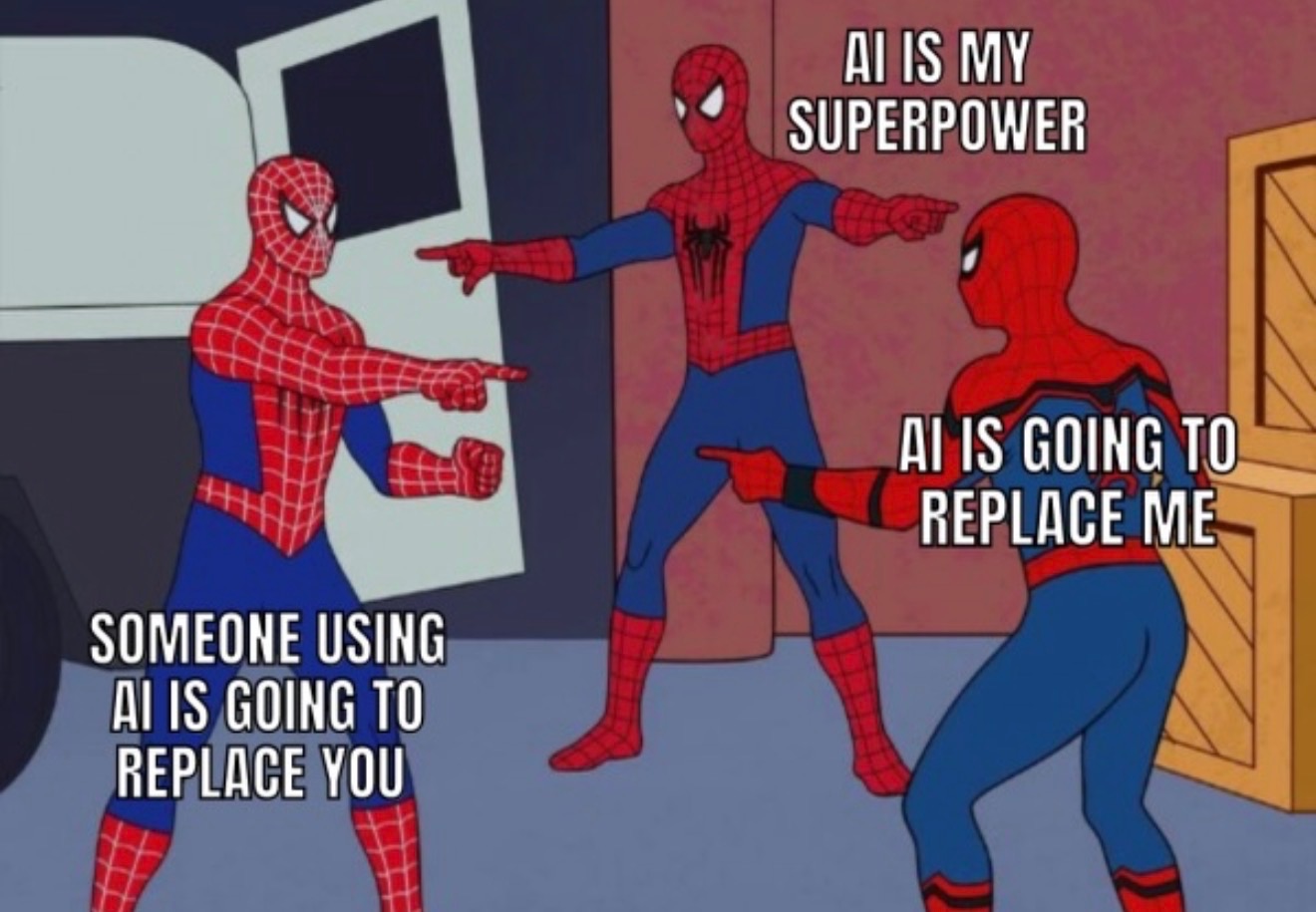 Source Uknown 🎙 TUNE IN Podcast to listen to this week: How Brands Can Break Through in The Age of AI What you will learn: 🎙: Why marketing doesn't end when someone becomes a customer JUST FOR FUN 🤩: Brand of the week: Wimbledon *from MarkupAI Why did they sub Erling out?!!! Your friend, | ||||||||||||
|