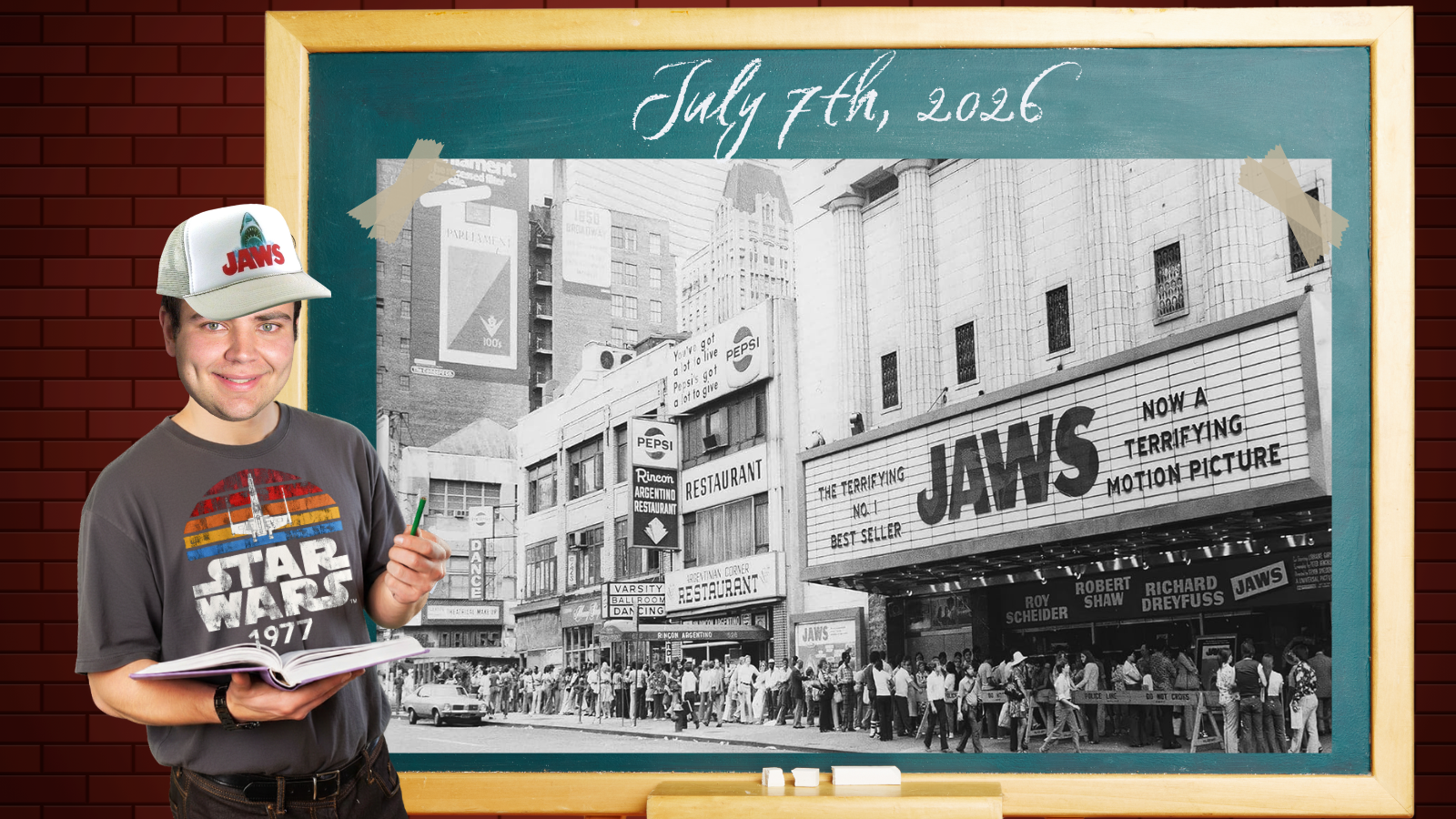
Hey Marketing Bestie, Us marketers sure can learn a lot from our Marketing fore-fathers and fore-mothers. Consider this a parade for the greatest marketing campaigns in memory. Welcome to Marketing Classics 411, a new kind of ancient history.
In place of hieroglyphs, expect to decipher the campaigns of yesteryear. Professor Millennial teaches every Tuesday (remotely), via electronic mail. Class is now in session. |
Was this email forwarded to you? |
|
|
|
{if contains(profile.lists, "TMM Test Group A")}
SPONSORED BY IMPACT.COM
Affiliate partnerships can drive up to 24% of conversions.
But a lot of brands miss out, because they can be a pain to run...IF you don't know how.
If you've lost hours manually wrangling your affiliates, download this guide to Partnership Automation & start automating. 🫵
Inside: strategies from brands like PUMA & Rosetta Stone, on increasing conversions while spending LESS time on their programs.
Don't skip:
--> A self-assessment to find where your program is breaking (p. 15)
--> Choose-your-own-adventure budgets & timeline recs based on your program size (p. 20)
--> Frameworks to prove attribution & ROI (pp 37-42)
If affiliate Marketing is anywhere in your stack, grab this 1 stat. |
|
|
|
{/if}{if !contains(profile.lists, "TMM Test Group A")}{/if}How Jaws Invented The Summer Blockbuster |
Star Wars: The Mandalorian & Grogu. Disclosure Day. Toy Story 5. The Odyssey. Spider-Man: Brand New Day.
From May to Labor Day, Hollywood turns up the heat (and the Marketing) with summer blockbusters.
It’s the movie industry’s most lucrative season…but it wasn’t always this way. Historically, studios reserved their big bets for the holidays. Prestigious movies had roadshow releases, opening in select theaters to build buzz before wider distribution.
Low-budget B-movies got wide releases in the summer, so studios could rake in profits before bad reviews hit. Then, on June 20th, 1975, a movie about a shark opened, and: 🎥: Turned Steven Spielberg into a household name. 🏊♂️: Forever changed Americans’ relationship with the ocean. 🍿: Created a Marketing playbook that’s been running over 50 years. This is the story of… the summer blockbuster. |
It’s 1974. An unknown 26-year-old director is chosen to lead a film adaptation of a new novel. He’d only done 1 other movie. The director? Steven Spielberg. The new novel? JAWS. Universal Pictures was committed to being true to the book, which made filming difficult, because… Most of the story takes place on the open water.
The antagonist is a 25-foot-long great white shark.
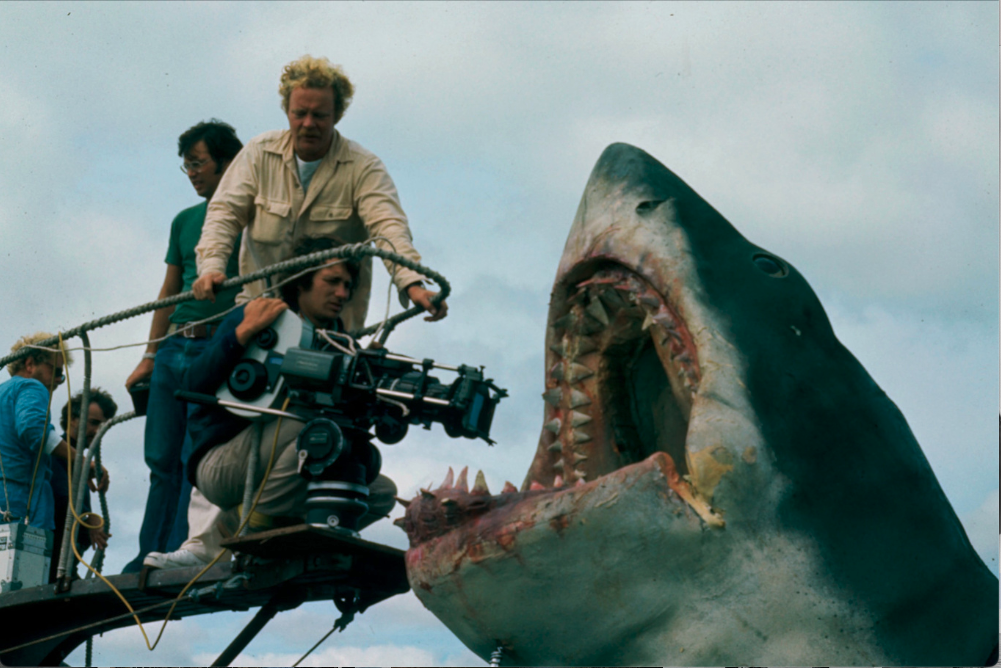
And, the studio wanted to release the movie ASAP. Jaws was supposed to be a 55-day shoot on a $3.5M budget. It ended up taking 159 days, the 1st major motion picture shot entirely on the Atlantic Ocean.
There were so many production issues the crew nicknamed it Flaws! 💀 |
“You’re gonna need a bigger budget.” |
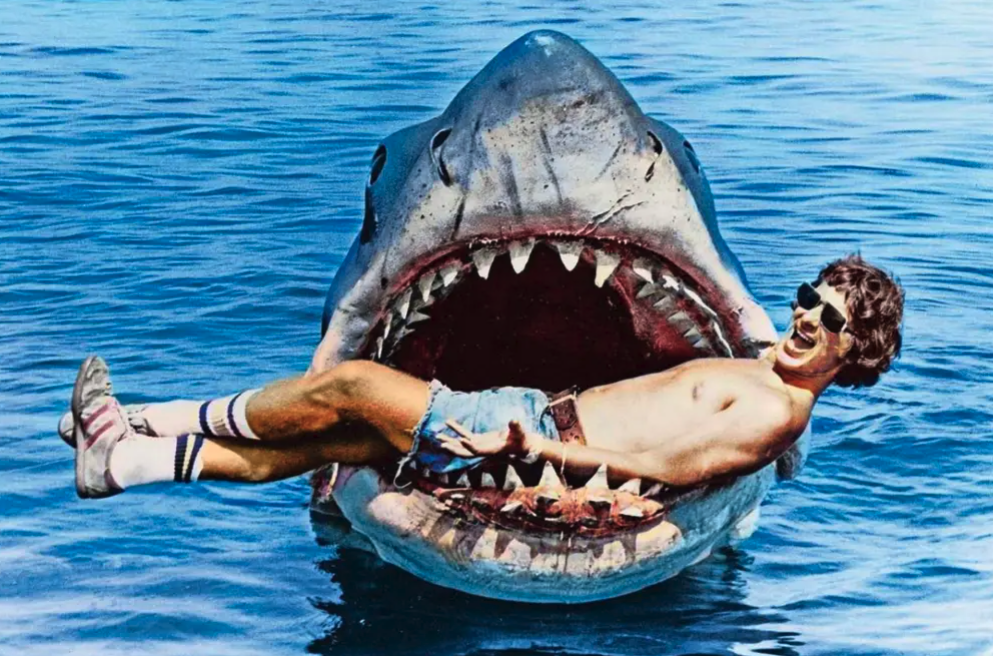
Mechanical shark malfunctions and other fiascoes drove the budget up to $9M. (That’d be $60.8M today. Still less than Disclosure Day's $115M.) |
Steven Spielberg and Bruce, the mechanical shark he named after his lawyer. |
Somehow, it all came together.
The shark looked rusty and fake in many shots, so editors got creative with cuts. Creative constraint ended up making scenes feel even scarier.
John Williams’ iconic score upped the terror.
In the spring of 1975, Jaws was ready for the big screen. |
Universal believed in Jaws from the very beginning and spent an unheard of $1.8M on Marketing alone.
They launched what you might call an OG influencer campaign, mailing copies of Jaws (the book) to a curated list of “opinion holders” (broadcasters, CEOs, restaurateurs, etc.) months before the movie release.
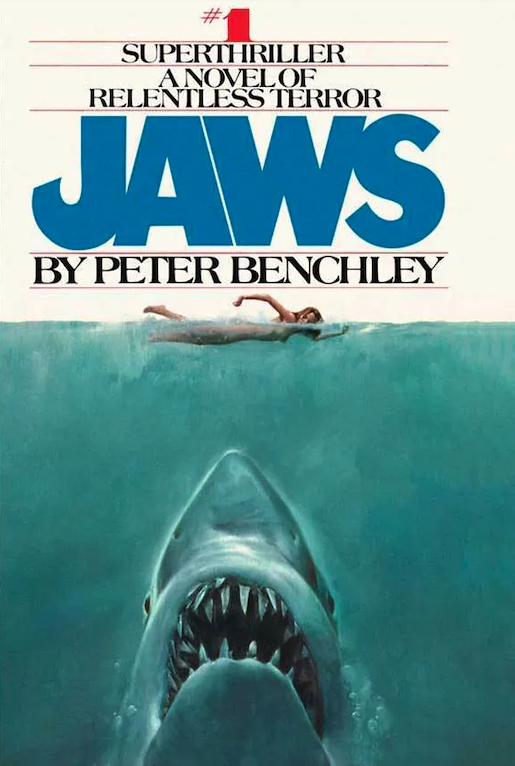
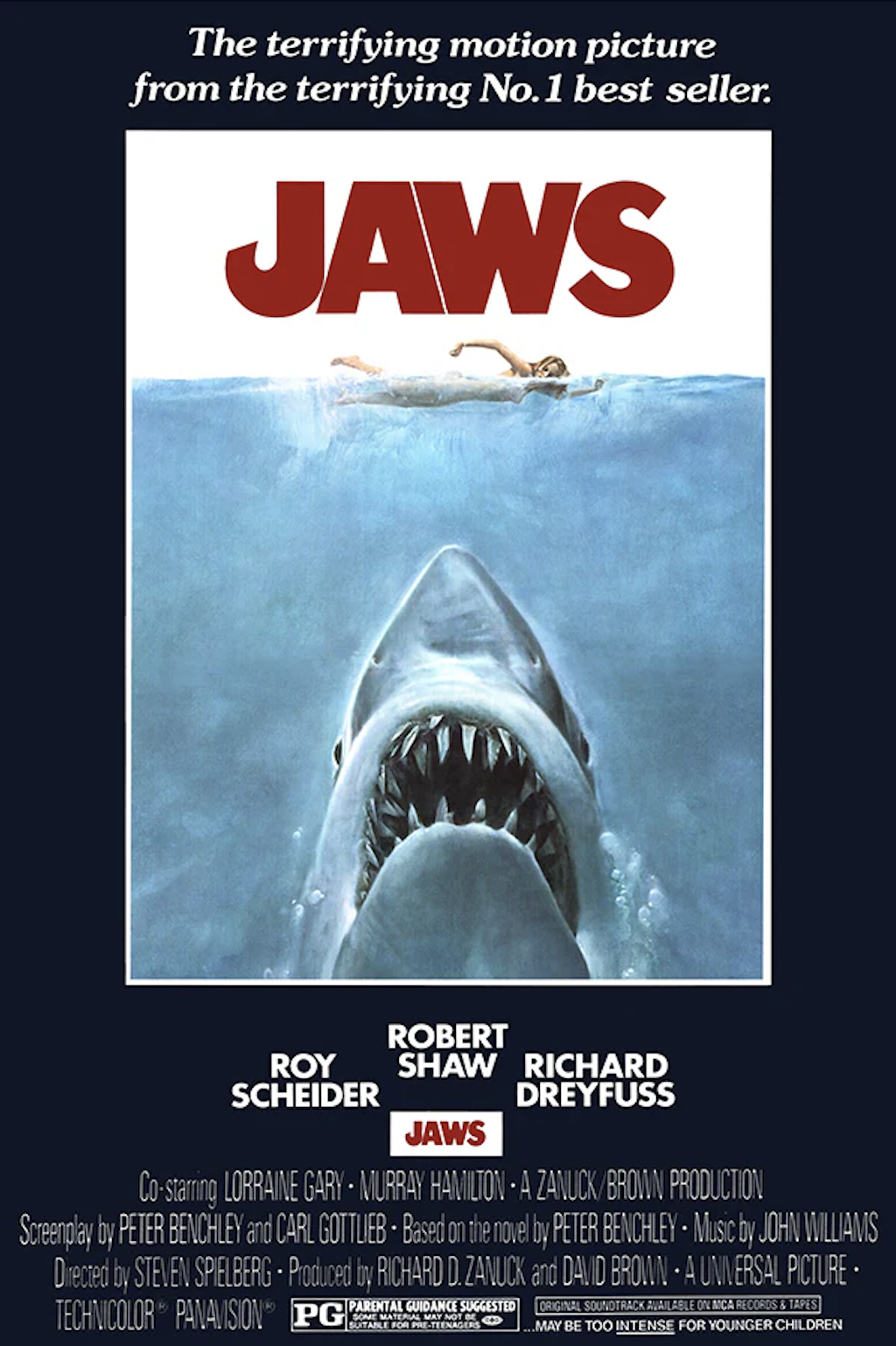
They knew a successful book was more likely to be a successful movie. Jaws spent 44 weeks on the bestsellers list. When it was released in paperback, Bantam Books redesigned the cover. Universal used the same swimmer + shark design, like a logo. It was on the poster, billboards, soundtrack, and more. |
Ferocious brand consistency. |
Then, instead of a roadshow release, the industry standard for “high caliber” films, Universal planned a wide release.
The strategy: 🦈 They capped prints of the film at 465 to create demand (theater owners wanted 600).
🦈 2 weeks before the premiere, Spielberg, author & co-screenwriter Benchley, and the producers went on an 11-city promotional tour for talk shows & media, like the cover of Time.
🦈 3 days before the premiere, Universal dropped $700K on 30-second TV spots, around 24 spots per night during prime time. The result: It all paid off. Jaws was the 1st film to gross more than $100M during its initial box office release. $476M worldwide, to be exact.
It created the summer blockbuster formula: great movie + wide release + heavy marketing. But Jaws didn’t hold on to its highest-grossing crown for long… |
When something happens once, it’s a fluke.
When it happens again, something deeper’s going on. 2 years after Jaws, another young director released the next summer blockbuster. In 1976, 31-year-old George Lucas finalized the script for an original space opera titled… Star Wars.
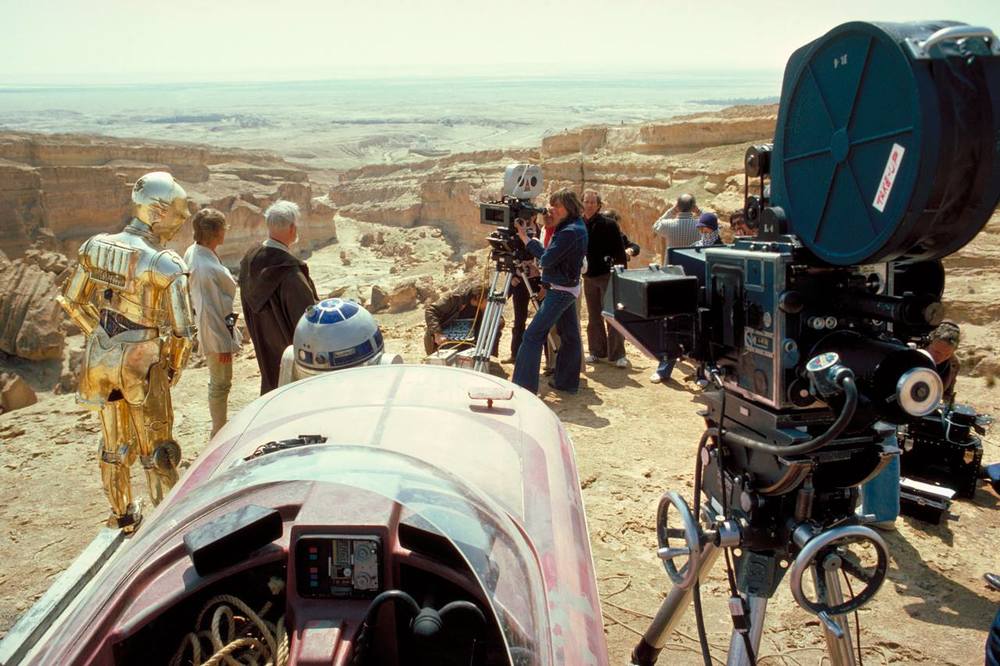
His company Lucasfilm Ltd. would produce the movie. 20th Century Fox would finance and distribute. Star Wars was considered a long shot. In a galaxy far, far away. |
On set in Tatooine, I mean, Tunisia. |
Lucas reduced his director’s fee from $500K to $150K in exchange for full sequel rights and licensing. The studio agreed. Sounds insane now, but they didn’t think much of toys & other merchandise. Plus they thought the movie was probably going to flop, anyway. |
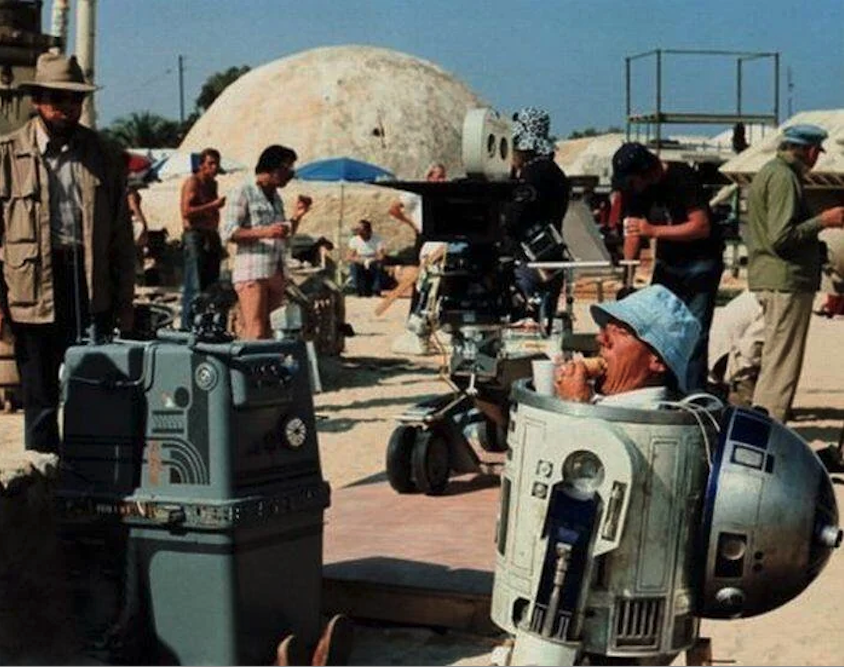
R2-D2 on a lunch break. I have so many questions. |
Stars Wars premiered on May 25, 1977 in just 32 theaters. It didn’t have the wide release and heavy marketing of Jaws when it opened.
It DID have an amazing story that generated critical acclaim and major word of mouth.
Star Wars opened in more theaters and became a hit, unleashing a tsunami of mass-merchandising and post-premiere marketing.
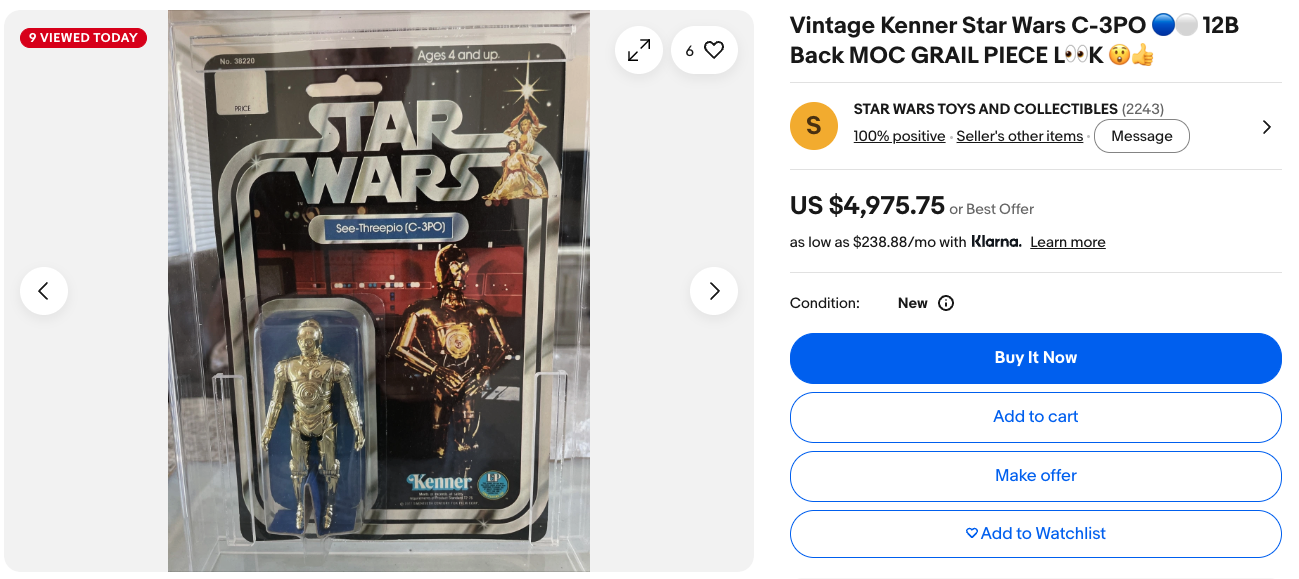
Kenner, part of Hasbro, licensed toy rights from Lucas for a $100K advance.
There was so much demand that the company literally issued mail-in IOUs during the holiday shopping season. |
Star Wars brought in $775M worldwide, replacing Jaws as Hollywood’s highest-grossing film of all time. (Spielberg stole the record back in 1983 with E.T.)
That little deal Lucas negotiated at the start gave him total creative control over the rest of the Star Wars franchise. Which has generated over $40B since.
Star Wars expanded the scope of summer blockbusters, from single releases to franchises and IP juggernauts. |
Back in the day, wide releases were reserved for B-movies. Heavy promotion was a sketchy gimmick, not a strategy. In 1975, Universal used both on a movie it believed in. It made Jaws a hit and changed the Hollywood playbook. Here’s your homework: 1️⃣. Pick 1 tactic your team runs on repeat. It might be a launch email cadence, a discount schedule, a paid channel mix, or a webinar format.
Write down when you started running it and what was true about your business or audience at the time that made you do it. 2️⃣. Now figure out if the tactic still delivers.
You might have a hunch, but check the numbers. Industries and audiences change. What got you here might not keep you here.
3️⃣. Before your next campaign, change 1 input.
Try a new offer, asset, product, hook, or audience segment.
Don’t rebuild the playbook. Just prove (or disprove) if the tactic still earns results when there’s something real behind it. |
From the 1980s to today, the summer blockbuster playbook has become a well-oiled machine. Wide releases of crowd-pleasers are the norm.
Marketing budgets are now equivalent to 50% or more of a film’s production budget.
To give you an idea of how much that is, the average summer blockbuster has a $150-200M production budget. (Avatar: Fire and Ash was ~$400M.)
The merch flywheel and franchise model invented by Star Wars is increasingly sophisticated.
In 2008, Iron Man became the 1st movie in the Marvel Cinematic Universe. The MCU’s 37 films have made $35.2B. And at least 8 more are in development. |
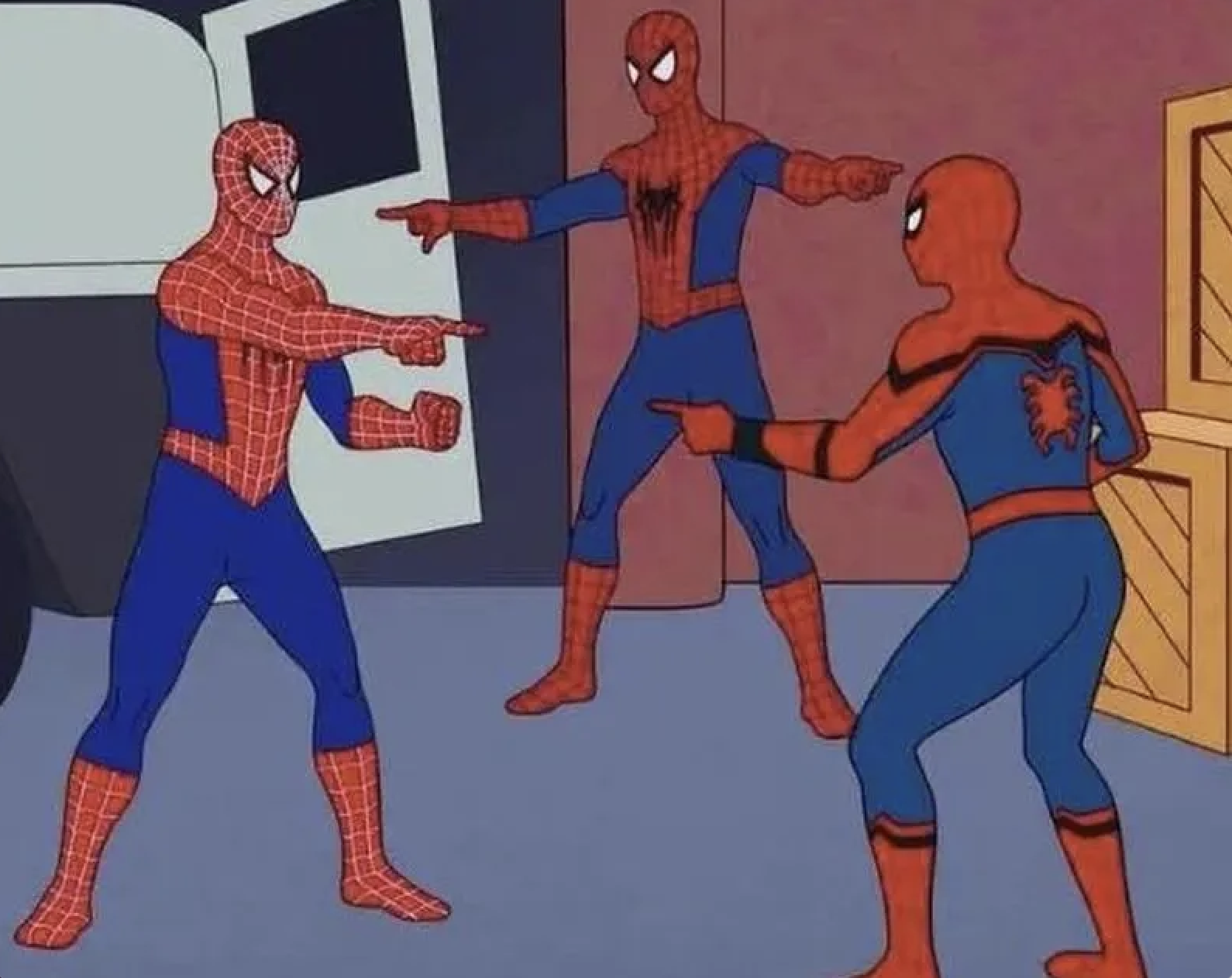
Spider-Man movies trying to decide who picks up the check. |
Like Jaws, Iron Man started out in print, as a 1963 comic book. Now Marvel works the other way around.
Blockbuster movies are the hero product. Comics exist as tie-ins, sequels, and adaptations. Opening weekend is Hollywood’s most important metric. The MCU and other blockbusters have consistently delivered. But trouble’s on the horizon… or maybe, it’s already here. |
If it kinda feels like all the big movies these days are sequels, prequels, or companion pieces, you’re not wrong. Studios have faced several challenges in recent years: 📺: The rise of streaming 🦠: The pandemic
🚫: The writer’s strike 💰: Consolidation and vertical integration
Movies are expensive to make, and Hollywood increasingly bets on existing IP that’s previously delivered. But franchise fatigue is real, especially for Gen Z. Blockbusters have started losing money, or at least not hitting expectations.
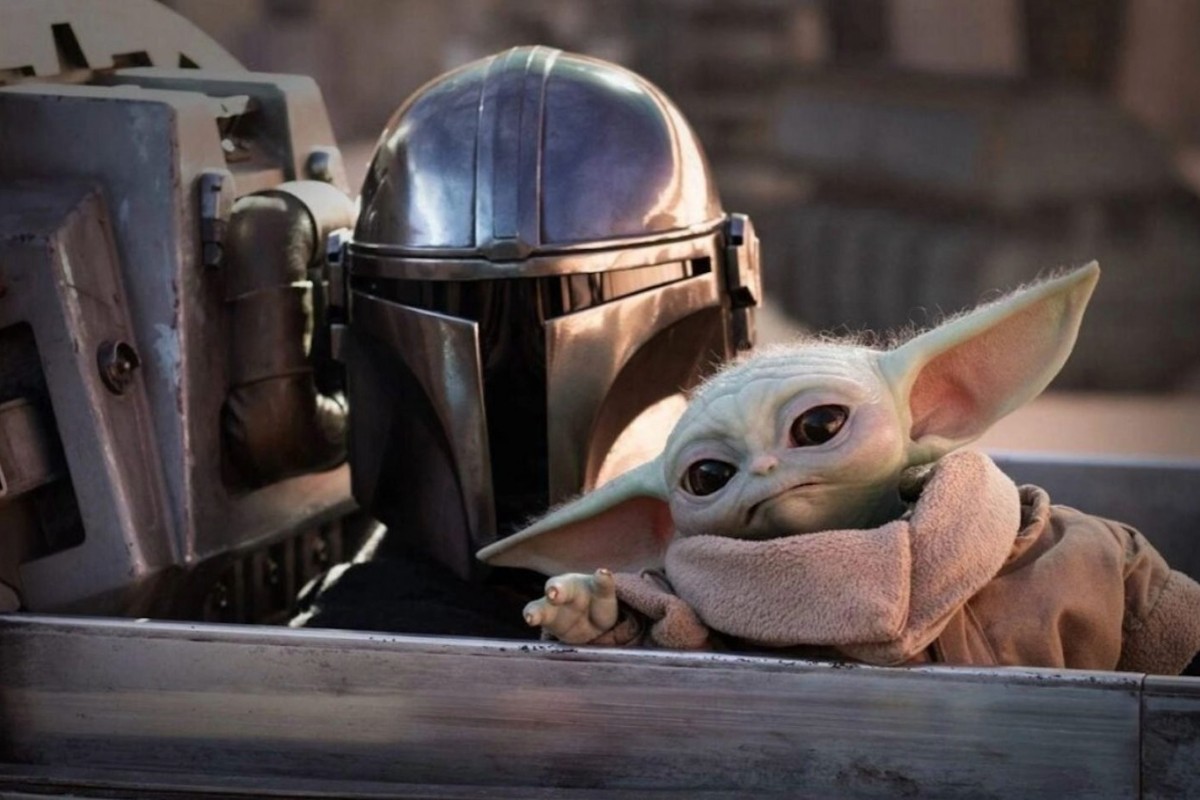
2025 summer box office earnings hit a 40-year low. The Mandalorian & Grogu opened at #1 this Memorial Day weekend, but ended with the lowest box office earnings in Star Wars franchise history. |
|
|
|
Sorry, Baby Yoda. Cute, you still are. |
Last summer, Jurassic Park Rebirth experienced the same thing. Disclosure Day opened at #1 in June, but dropped 62% in its 2nd weekend. It’s struggling to break even. |
Is the summer blockbuster’s dead? Not necessarily.
But as with so many things in Marketing, the tactics that built the moat might now be bringing down the castle. By the time anything becomes “best practice,” it’s often out of date. The film & story is what made Jaws and Star Wars so compelling way back when. It gave Marketing a great product to run with. And the investment paid off. Maybe The Odyssey and Spider-Man: Brand New Day will turn things around in July. We’ll just have to watch and see. |
|
|
|
MARKETING CHEAT SHEET (WHAT TO LEARN FROM THIS STORY): |
1️⃣. A tactic's meaning changes when you change the context.
A wide release + saturation ads used to signal a bad movie. Universal applied the same tactics to Jaws, a movie it knew was good, and flipped the signal. The lesson applies everywhere: aggressive promotion can look desperate OR generous. Retargeting can feel helpful OR creepy. It all depends on context.
2️⃣. Create scarcity INSIDE saturation.
Universal opted for a wide release of Jaws, with some rules. Theater owners wanted 600 prints to screen. Universal capped it at 465 to create demand. "Sold out" is a stronger demand signal than "widely available."
3️⃣. Never underestimate the power of 1 visual on every touchpoint.
The same image of the shark and swimmer appeared on the Jaws paperback, movie poster, billboards, and soundtracks. The average American recognized it before they'd even seen the movie. It’s still famous half a century later. Today, with 20x more channels and creative, consistency is MORE important, not less. 4️⃣. Every playbook eventually expires.
The Jaws formula built an industry, then hollowed it out. If you're years into running the same playbook and numbers are softening, that's not a signal to spend harder. Instead, investigate whether it’s your tactic or the substance behind it that’s stopped delivering. |
|
|
|
Ahh, the bell has rung. Please be sure to do the reading (follow The Marketing Millennials on LinkedIn and me, Professor Millennial, on X). Off you go, passing period is only 11 minutes and there’s already a line at the vending machine that the Trojan Horse novelty popcorn bucket.
Until next time,
Professor Millennial |
|
|
|
{if !profile.vars.marketingland_user_fitness && profile.vars.marketingland_user_fitness != false}Join 7,390 other marketing leaders in Marketingland |
|
|
|
{/if}{if profile.vars.marketingland_user_fitness == true}{/if}Workweek Media Inc.
1023 Springdale Road, STE 9E
Austin, TX 78721 Want to ruin my day? Unsubscribe. |
|
|
|
|