{beacon}
 | ||||||||||||
| | ||||||||||||
 Hey Marketing Bestie, This is a crazy Sunday of sports:
I am in sports heaven. Whats your favorite sport or favorite athlete? Was this email forwarded to you? Sponsored by Vibe.co Paid search and social don't capture every lead. I know this. You know this. 3 things inside: The Human-in-the-LoopLet's talk about the Marketing meeting that's happening in your Slack right now. You know the 1. Someone opens a doc with 15 AI-generated drafts. They skim. They nod. They hit approve, approve, approve, approve... Not because the content is GOOD. Because nothing in it is technically wrong. That's the bar now. The bar is unbelievably low. 🙁 And we've all convinced ourselves this counts as "human-in-the-loop." Here's the uncomfortable truth: your QA process was built to catch typos, not taste. Most review workflows check for exactly 3 things: 1️⃣. Is it factually accurate? Very responsible. Very safe. Also completely blind to the thing that's actually killing your content. Which is that it's competent, forgettable, and could've come from any brand in your category running the same prompt. That doesn't get flagged in review, because "generic" was never on the checklist. How do I flag something as BORING? There are 3 layers of QA. Most teams only built 1.Layer 1️⃣: compliance. Is it true, is it legal, did we spell the product name right. Easy. Automatable (is that a word?). Basically solved. Layer 2️⃣: voice. Does this sound like us, or does it sound like ChatGPT borrowing our logo for the day. Layer 3️⃣: judgment. Should this piece exist at all. Is this the right message, or just the easy 1. Plenty of teams build a whole process for layer 1, assume layer 3 happens automatically, and skip layer three entirely. That's the gap. That's why content feels off even when nothing's technically "wrong" with it. Try this: The 10 Competitors Test.Before you hit publish, ask 1 question. Could 10 other brands in your category have shipped this exact sentence, from the exact same prompt? If yes, it failed QA. Doesn't matter how accurate it is, how on-brand the colors are, how perfectly it followed the style guide. This is the diagnostic most review processes are missing. The check isn't just for errors anymore. It's for the absence of a fingerprint. Now this will sting a little. Human-in-the-loop was supposed to make editors sharper. It might be making a lot of them rustier. When AI writes the first draft every single time, the muscle that comes up with the ANGLE gets less reps. The unexpected take. The thing that makes a reader stop scrolling. Approve/reject is a different muscle than originate-a-point-of-view. And muscles that don't get used, weaken. That's true for a bicep and it's true for editorial instinct. The scary headline here isn't about AI replacing writers. It's that editors can get worse at editing by doing less real editing, 1 approved draft at a time. Here's the playbook.Move humans upstream, not just downstream. The highest-leverage moment isn't approving the final draft. It's writing the brief, the angle, the POV before AI touches anything. Review is damage control. The brief is where the real thinking happens. Build rubrics that score for distinctiveness, not just accuracy. "Is this true" is a yes or no question. Rotate reviewers regularly. A reviewer who's approved the same brand's content for 6 straight months develops pattern-blindness. The sameness stops registering because they're the 1who's been signing off on it the whole time. Make "kill it" a real, 0-penalty option. If the only outcomes in review are "approve" or "revise," the process is a rubber stamp with extra steps. Reviewers need room to say "this shouldn't exist" without it looking like a missed deadline. Here is how I think about itHuman-in-the-loop should mean a human still originates the thing worth saying, and AI executes it faster. A process that only catches typos and legal risk is a spellchecker with a fancier name. Build the version that catches sameness instead. That's the 1 worth having. NO BORING!! Same is boring. MEME OF THE WEEK 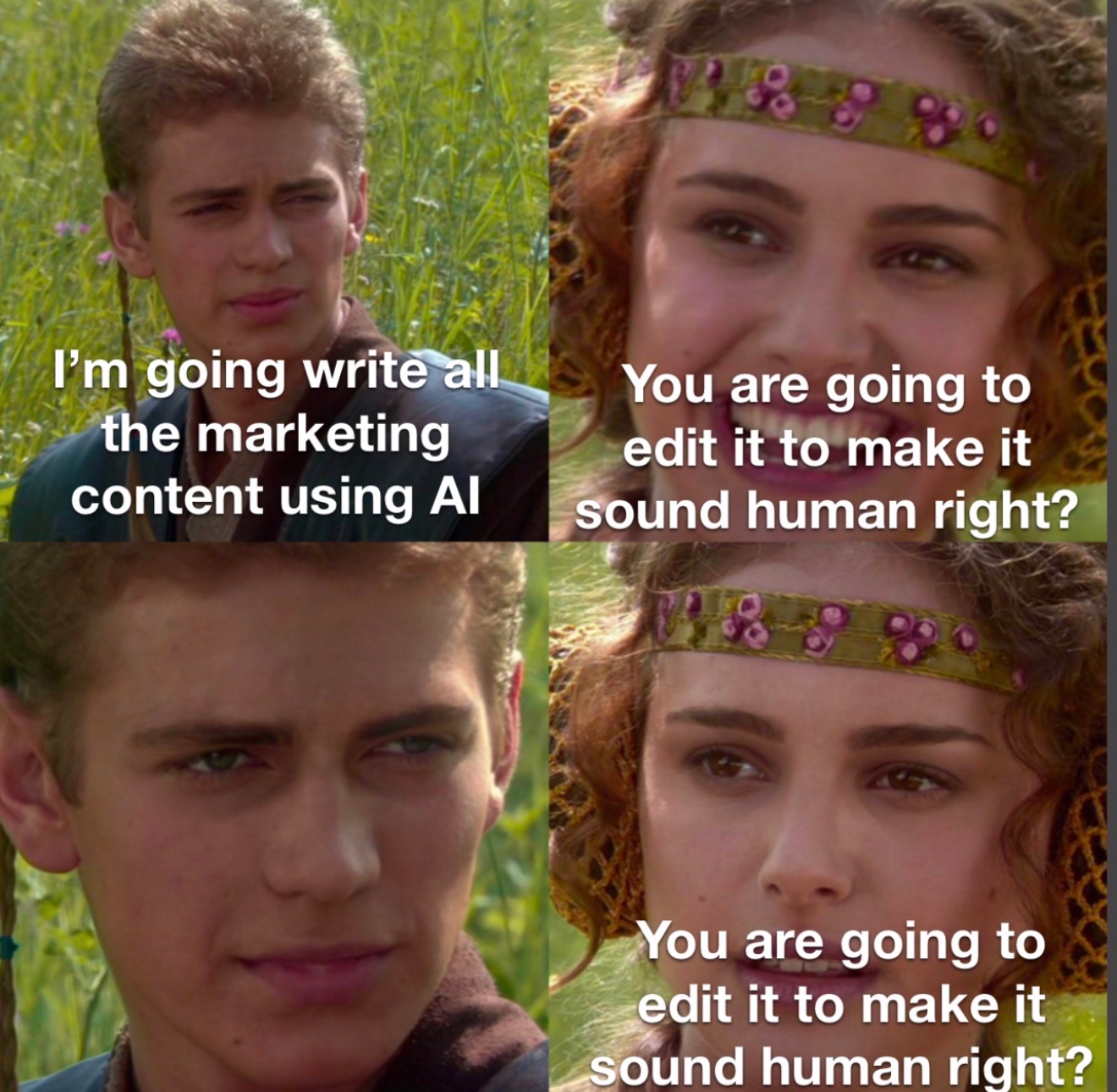 🎙 TUNE IN Podcast to listen to this week: Why Marketing Needs to OWN Marketing Research What you will learn: 🎙: Why your most confident assumption about your customer is probably wrong JUST FOR FUN 🤩: Brand of the week: Tour De France *from Cvent CONNECT (look for my session) Of all of the sporting events today, I'm most excited for the England v. Mexico World Cup game. I'm on that side of TikTok and going to be INTENSE. Your friend, | ||||||||||||
|