{beacon}
 | ||||||||||||
| | ||||||||||||
Hi Marketing Bestie, First, I want to kick this off and say that was not a red card in the USA game last night. Second, I'll admit I was never really been a soccer fan growing up. BUT I am loving the World Cup. All the games and the content surrounding it is amazing. Was this email forwarded to you? Sponsored by Chatbeat I want to make sure you didn't miss the AEO/GEO resource I flagged last week. ⛳️ There’s still time to get ahead of AI Visibility. Get Your AI Visibility Certification SPARKNOTES FROM THE POD 5 WAYS TO TURN RESEARCH INTO DECISIONSMolly Strawn-Carreño is Director of Brand Growth at AYTM. She's spent years talking to researchers and marketers about why their data isn't moving the needle. And she's noticed a pattern. They run research. Collect data. Then... nothing happens. The data sits in a PowerPoint. Gets filed away. Never gets actioned. Or worse. Marketers run research out of curiosity instead of answering a specific business question. So they end up with answers to questions they don't need answered. Molly's approach is straightforward. Run research with a specific question. Centralize the data. Connect it to sales. Track the full customer lifecycle. Then use it to make actual decisions. Listen to the full episode here where Molly breaks down why your gut instinct is wrong, how to make research actually actionable, and why marketing and sales need to stop working in separate worlds. 1️⃣. Your Gut Instinct Is Wrong More Often Than You Think. Test It.Molly's Take: "Marketers tend to especially experienced marketers, especially CMOs, people who've been in their industry or in their company for a very long time, they tend to know just at a gut instinct what works and what doesn't. But the thing that I think is very interesting about humans is who would have guessed that, you know, a worldwide pandemic hits and people hoard toilet paper or buy bags of beans. Like there's just nothing that can actively predict what humans are gonna do. So that experience is important, but it's also important to test those things to ensure that as your customer changes, as your company changes, as the times change, as everything changes around us, that you have an understanding of that person." You've been doing this for 10 years. You know what works. You've seen what converts. You know what messaging resonates. You understand your customer. Then a pandemic hits and people buy toilet paper and beans in bulk. Completely unpredictable. Your experience matters. It's valuable. But it's also incomplete. Because humans do unpredictable things. Your customers change. Markets shift. What worked three years ago doesn't work today. Molly's point: Don't assume your gut is always right. Test it. Validate it. Because the moment you stop testing is the moment you start getting left behind. Takeaway: Pick 1 assumption you're confident about. The 1 you'd stake your quarterly bonus on. Test it. Run a small research study or experiment. See if it actually holds up. You'll either validate the assumption (good to know) or discover something your gut missed (invaluable). Do this quarterly. Keep your instincts sharp by proving them right and catching where they're wrong. 2️⃣. "Customer Obsessed" Means Understanding Their Lives, Not Just Your Product.Molly's Take: "It means that you have an understanding of not just the like not just the way that your company helps them, but what their daily lives look like, what problems they encounter, what things that they find challenging in their lives and the reason that they do things. I think there are things that when we put on our marketer hat, we sort of take a disconnect ourselves a little bit from the choices that we make as a human being. And it's important to maintain both of those things." "We're customer obsessed" is a phrase you hear everywhere. Every CMO says it. Every marketing deck includes it. But it doesn't mean anything without research backing it up. Molly's definition: You understand their daily life. Their actual problems. Their motivations. Not just how your product fits into their workflow. She gives an example. A mom shopping in the grocery store bought organic strawberries but not organic broccoli. Doesn't make rational sense on the surface. But when you ask her why, she explains: The organic strawberries are for her kids. She cares about what goes into their bodies. The broccoli is for her husband who's already set in his ways and won't eat the strawberries anyway. The kids won't eat the broccoli. That's not irrational. That's calculated decision-making based on her actual family dynamics. And that insight changes how you market to her completely. Takeaway: Do 1 qualitative research session this month. Talk to 5-10 customers. Ask about their daily life. What problems do they face? What do they worry about? Why do they make certain choices? What frustrates them? Take detailed notes. Look for patterns that don't make surface-level sense. Those surprising insights are where the marketing gold is. You'll find messaging angles and customer pain points you never would've discovered by looking at data alone. 3️⃣. Your Research Data Is Useless If It's Siloed. Centralize It.Molly's Take: "There were so many disparate systems of research that was occurring. Marketing was doing a brand tracker, this product team was doing a package test, this other team was doing like a message test over here, and it was gathering all this data and information that didn't talk to each other. They were siloed together. So if only there was a way to put all of that data together for it to be more of a usable warehouse for everybody, this company would be unstoppable." Your marketing team ran research. Product team ran research. Sales ran research. Customer success ran research. All separate. All siloed. All sitting in different folders, spreadsheets, and tools. And you're missing the full picture because none of it talks to each other. 1 team learned that customers care about price. Another learned they care about speed. Another learned they care about support. Another learned they want personalization. But you'll never connect those dots if the research lives in four different places. Molly calls this "if only my company knew what they already knew." They have all the data. But it's scattered. Unusable. Disconnected. Takeaway: Audit where your research lives right now. Brand tracker in 1 tool. Customer survey in another. Win/loss analysis in a spreadsheet. Sales call recordings in Gong. Support tickets in Zendesk. Customer interviews in a folder. Pick 1 central location (Notion, Airtable, Google Drive, whatever). Start moving all research findings there. Make it searchable and queryable. When you need an answer to "what does our customer actually care about," you can search across all sources instead of hoping someone remembers the study from last year. 4️⃣. Ask 1 Question Per Research Study. Not Ten.Molly's Take: "If you're saying my goal at the end of this is to decide blue package or red package. That's your question. It can be very, very easy to have project scope and bloat on this project. And suddenly what was a red or blue package is now, well what's this font? but what's this? but what's the timeline? what's this? When that's the question that you needed answered, and that can sometimes obscure your actionability. You need to be very poignant about what you're trying to answer. Get that answer, okay, definitively in this package desk. We simulated a shelf. We had people go in and in a shopping, a virtual shopping environment. This the the red package is the winner. Red package is the winner. Okay, we're gonna go with the red package. We're gonna take that one to market. Answer that question and don't try to answer anything else." You start with one research question. "Should we use blue or red packaging?" Clear. Simple. Actionable. Then curiosity kicks in. "But also what about the font? And the size? And the tagline? And the imagery? And the call-to-action? And should we test price sensitivity while we're at it?" Now you've got 10 questions. The study gets bloated. The scope expands. You collect data on all of them. And at the end, you have conflicting signals. You can't make a clear decision. So the data sits there. Molly's approach: Answer one question definitively. The red package wins. Ship it. Move on. Don't try to answer everything in one study. Takeaway: Before any research study, write down ONE question you need answered. Just 1. Then force yourself not to add more. If new questions come up, write them down for a future study. But this study has 1 job. Answer that question clearly. Design the research to answer only that question. Then act on it decisively. Y ou'll move faster and get more value from one clear answer than you will from 10 unclear ones. And you'll actually use the data instead of filing it away because you're uncertain what it means. 5️⃣. Marketing Owns The Entire Lifecycle, Not Just Lead Generation.Molly's Take: "Marketers a lot of times I find can sit in this ivory tower and that their goal is lead conversion. Once the lead has converted or once the customer has purchased something, that that's the end. They they don't care about the downstream effects. But a good marketer should know the entire life cycle because if you're sending over all these people who interacted with our ads and they're all wanting demos and they're all wanting to come over and try out our software, fantastic, but is sales getting on those calls and realizing that 80% of them are not actually our target or 80% of them are flabbergasted because they can't afford our pricing, that's then not a success for a marketer. That means that a marketer is cluttering up the sales team's time and is not actually doing a good job. Marketers at the top of the funnel should have an understanding of what success is measured at throughout the whole life cycle to be more effective at the top." You generated 1,000 leads last quarter. Your CMO high-fives you. ROI looks great. Win. Then sales realizes 80% aren't qualified. 70% can't afford your product. 50% bought from a competitor instead. And your sales team is furious because you wasted their time with garbage leads. That's not a win. That's friction you created. Molly's point: You don't get to stop caring once someone becomes a lead. You need to know: Are these leads actually converting to customers? What's the win rate? What's the churn rate? Are your campaigns actually moving the revenue needle or just inflating top-of-funnel metrics? Because if you're generating leads that look good at the top but are bad at the bottom, you're not doing your job. You're making your entire company less efficient. Takeaway: Track your campaigns all the way through the customer lifecycle. Don't just measure lead generation. Measure: Lead to customer conversion rate by campaign. Customer win rate by campaign. Customer LTV by campaign. Customer churn rate by campaign. Meet with your sales team monthly. Ask: Which campaigns are sending us our best customers? Which are sending duds? Look at your call recordings. Read the feedback. Use that data to optimize. You'll quickly realize some campaigns that look amazing at the top are actually costing the company money downstream. Once you see that, you'll stop obsessing over lead volume and start obsessing over lead quality. And your entire company will be better for it. IN A MEME 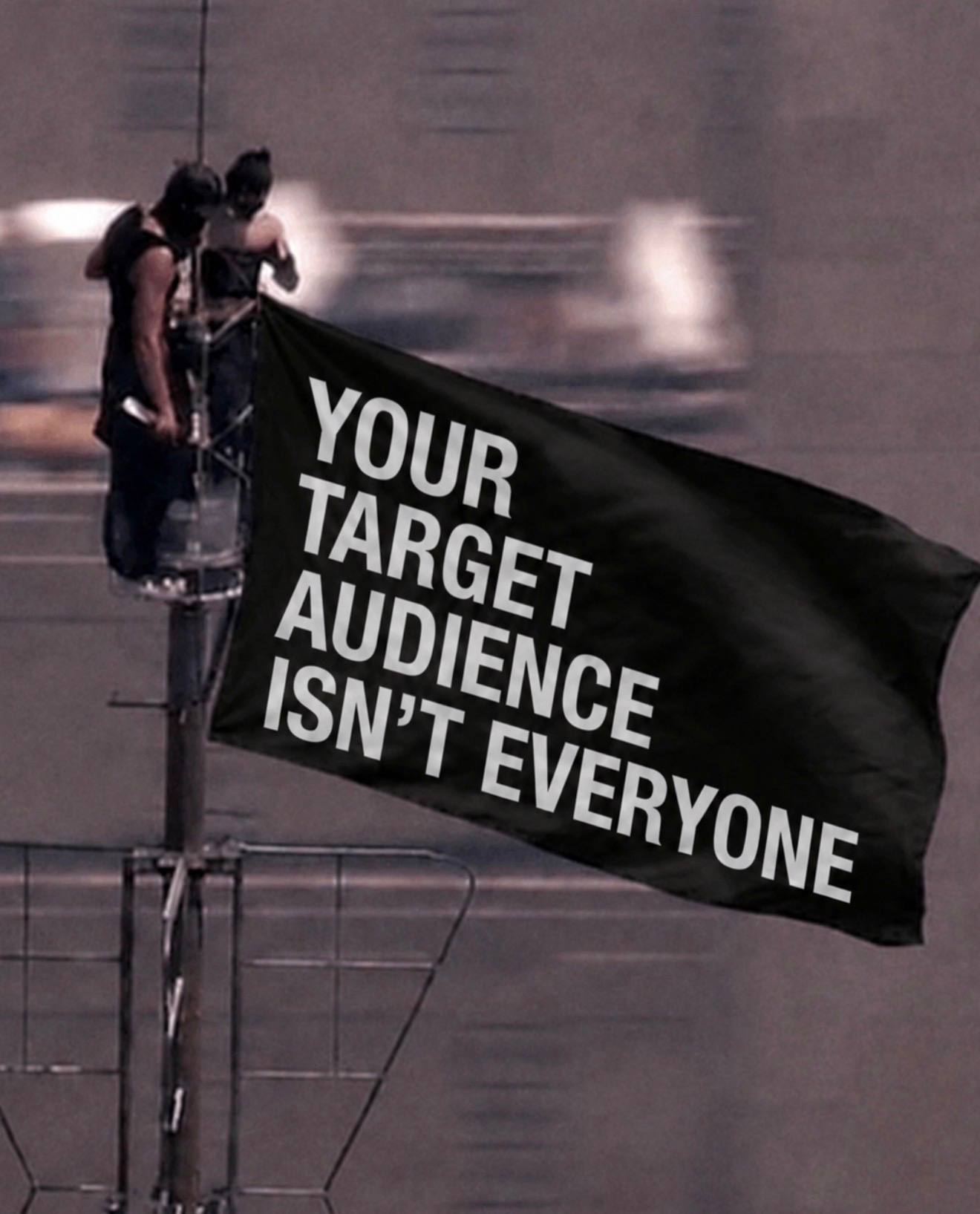 I was born in South Africa so that loss hurt in the World Cup. Who is your team? Your friend, Daniel | ||||||||||||
|