| |||||||||
| | |||||||||
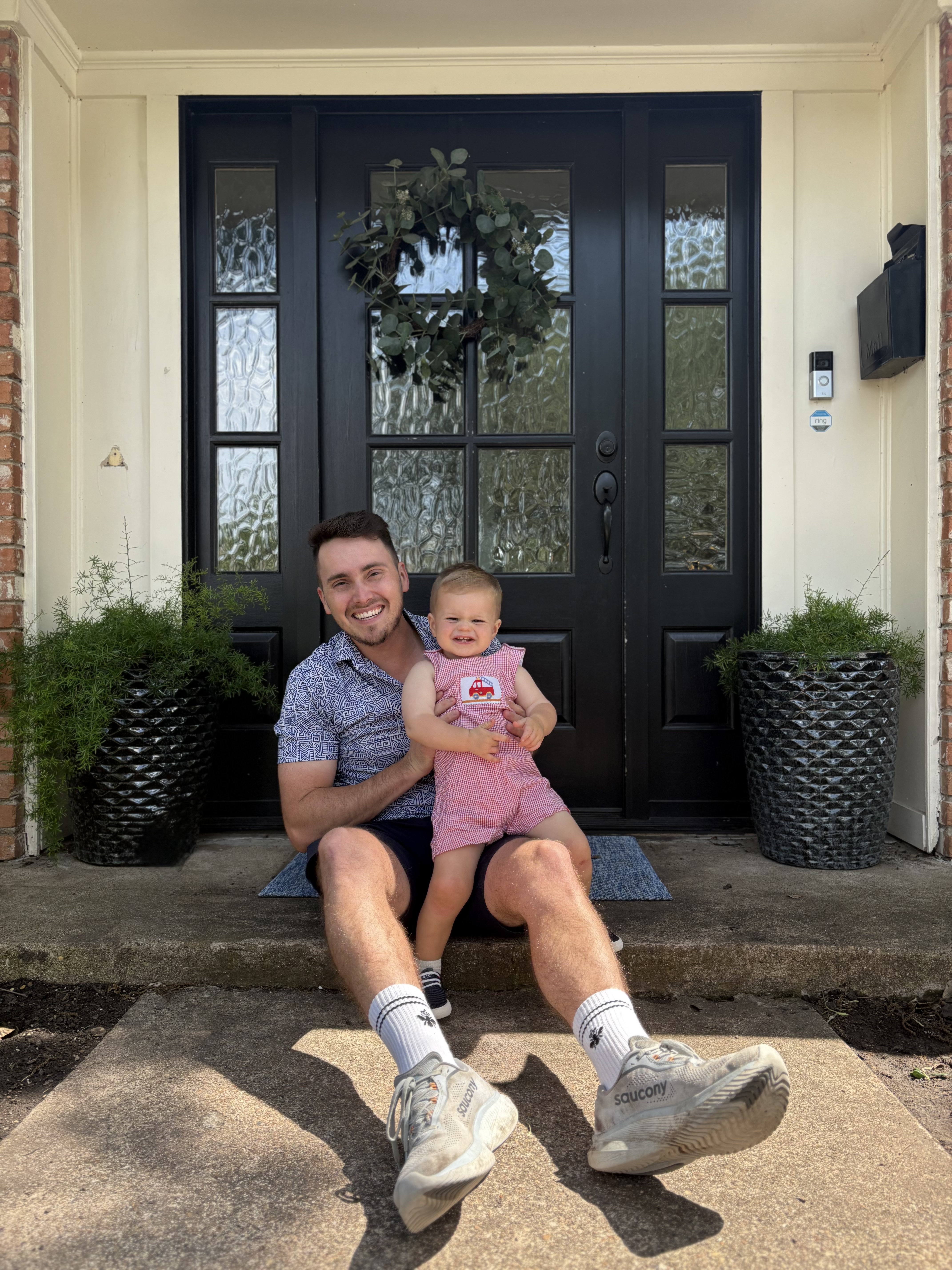
 Happy Tuesday, Hospitalogists, Today, we’re covering two topics Hospitalogists recently weighed in on: whether their organization is fully committed to, dabbling in, or quietly waiting out VBC, and what true site-neutral care would actually require. Really enjoying the folks who are taking the time to share their wisdom in the community. It’s awesome to see. Most importantly, I have a major golf update for you guys below in the Miscellaneous Maddenings. A bit tougher to get out on the course with a toddler running around these days!! Enjoy! Was this email forwarded to you? Sponsored by Navvis Payment models like TEAM redefine how health systems are measured and rewarded. To succeed in them, health systems will need to align clinical operations, physician engagement, and care coordination in a sustainable way, and ensure processes, data, and optimal care delivery span the entire episode. Navvis, a performance enablement partner, works with health systems to build that capability and enable sustainable clinical and financial performance across fee-for-service and value-based care. Partnering with Navvis is an opportunity to not only maximize performance in both traditional and new payment models, but strengthen broader capabilities across the enterprise, from quality improvement and payer strategy, to post-acute performance and operational transformation. Discover what IDC MarketScape says about Navvis, and see what they can do for you. ASK HOSPITALOGY Where Does Your Organization Sit on VBC Right Now?Where does your org actually sit on value-based care right now - fully committed, dabbling, or quietly waiting it out? And what's the real reason? THE DIFFICULT TRANSITION TAKE Jason Hager - Strategic Consultant at Hager Partners In my experience, most organizations are held back by the difficulty of navigating the transition between models. It's not necessarily that they don’t believe in VBC. FFS is still funding the system. VBC asks for upfront investment, new workflows, and patience for returns that may come later. This is a hard shift, but it’s starting to take shape in pockets. The encouraging part to me is that we’re beginning to see what actually works, especially at the primary care layer. As this operating model gets clearer, I think we’ll see more organizations move from dabbling to more committed pretty quickly. THE FULLY COMMITTED TAKE Keith Pinter - CEO at AristaMD At AristaMD, we are fully committed to value-based care (VBC), driven largely by our focus on and decade-long experience with primary care providers serving seniors—the highest-cost and most complex patient population. Across most segments of healthcare, fee-for-service (FFS) incentives remain misaligned with cost reduction, create friction between providers, payors, and patients, (as well as forcing PCPs to operate on increasingly unsustainable margins). Primary care providers, particularly those caring for seniors, are uniquely positioned to influence outcomes. These patients tend to have deeper, more trusted relationships with their PCPs compared to younger populations, making PCPs a highly effective lever for improving health outcomes and lowering total cost of care. VBC models—whether through Medicare Advantage or ACO structures—better align incentives around long-term outcomes rather than episodic procedures. They also shift documentation toward meaningful clinical impact, rather than the administrative burden and coding intensity required in FFS. With CMS continuing to push long-term initiatives like LEAD and the emergence of technology-enabled alternatives to high-cost specialist referrals ACCESS, we are at the early stages of meaningful momentum in this transition (and may actually get closer to achieving CMS' objective of a majority of seniors in either MA or an ACO by 2030). From the PCP perspective—our core customer base—we are seeing a notable shift. After more than a decade of delivering peer-to-peer eConsults, there is now a growing emphasis on avoiding unnecessary specialist referrals. We know that effective chronic disease management often requires upfront investment, with the true financial and clinical returns materializing years later—the classic “J-curve” of risk (and that's before seeing the looming impact of Jevons paradox play out within AI enablement) To support this, we are partnering with leading primary care organizations to deliver evidence-based, specialist-led referral analysis, along with practical alternatives to defaulting to in-person specialty visits. Too often, patients face wait times of weeks to months for specialist care that, in at least 30% of cases, proves unnecessary. While still early, we are already seeing a 4x cash-on-cash return in specialty care cost management. Rather than forcing specialists operating in FFS into a VBC construct, we believe the more effective approach is to empower PCPs at the front lines. By enabling better referral decisions, we can ensure patients receive the right level of specialty care when needed, while freeing specialists to focus on high-value procedural work—without the burden of unnecessary consults and diagnostic workups that currently comprise over 40% of new patient visits. The result is a more efficient system: better outcomes for patients, more effective care delivery for providers, and a more sustainable healthcare ecosystem overall. THE EYES OPEN TAKE Anonymous Genuinely committed, with eyes open. We're in ACO REACH and running a direct-to-employer program that's actually gaining traction. What I'd tell you off the record is that the commitment only holds because our CEO came from a payer background and we have board-level patience for a long transition. Most of my counterparts at similarly-sized systems are in a different situation — they're one bad quarter away from a board conversation that re-prioritizes volume. VBC requires institutional will that outlasts earnings pressure. That's rarer than anyone admits. THE FRUSTRATED TAKE Anonymous I'm the medical director for a health plan that is committed to VBC. But I'm frustrated that providers keep treating this like a philosophical debate. The actuarial case for shifting risk to providers who actually control utilization is not complicated. What's complicated is that most provider organizations don't have the data infrastructure, care management bandwidth, or coding discipline to succeed in a two-sided risk model — and then they blame the model when it doesn't work. We've had to walk back full capitation arrangements with 3 large groups in the last 18 months because they weren't actually ready. The gap between "VBC-aligned" and "VBC-capable" is enormous, and not enough people are talking about it honestly. Hospitalogy members can join this discussion here. Not a member yet? Apply to join here. What Would True Site-Neutral Care Actually Require?What would true site-neutral care actually require - not in theory, but operationally? THE SERVICE REDUCTIONS AND LAYOFFS TAKE Nathan Kaufman - Managing Director at KSA/Matterhorn Site neutral would be a disaster for the NFPs ... current operating margins are about 4-5% without site neutral. The average Medicare margin for NFPs is minus 13% - the cost of site neutral would fall to the bottom line. The only way to address this reduction in payments is service reductions and layoffs. About 30-40% of hospitals are operating at a loss. This could push them over the edge. THE UNDERLYING REDESIGN TAKE Jason Hager - Strategic Consultant at Hager Partners Nathan’s point is the real constraint. If you apply site neutrality on top of the current cost structure, it will result in margin compression, service cuts, or both. What is easy to miss is that site neutrality is more an operating model change than a pricing change. It assumes you’ve already stripped out hospital-level overhead from services that don’t require it and standardized how care is delivered across settings. This is what hasn’t been done yet, at least not consistently. So we’re debating a reimbursement model without the underlying redesign that would make it viable, which is the real work. Hospitalogy members can join this discussion here. Not a member yet? Apply to join here. Sponsored by Innovaccer The shift from AI that assists to AI that executes is already underway, and the operational implications are significant. Context 2026 – Healthcare Autonomy Conference (June 23–24) is where CMOs, CFOs, CIOs, ACO executives, and payer leaders are working through what that actually means in practice. This fully virtual event isn't a keynote-and-cocktails conference. The live Agentic AI Workshops tackle real operational challenges in real time, unscripted, across five tracks: The AI-Enabled Physician Group, Revenue Cycle Autonomy, Population Health AI, Health System AI Strategy & Governance, and Payer Intelligence & Risk Adjustment AI. Find where agentic AI fits into your org's strategy before everyone else. ON YOUR RADAR

*This resource is brought to you by one of my brand partners who help make this newsletter possible! MISCELLANEOUS MADDENINGS Hospitalogy legion, I come back from Pine Dunes Golf Club out in Frankston, Texas as…a winner. The weather was grueling. And the rain was torrential. But the ball striking…was pure. I went 4-0 across all my matches over the weekend to take home the victory for my team, capping off the Sunday individual match play with a 2026 low 76, dropping my handicap to sub 5. My shot of the day on that round was a 200 yard 5 iron to 10 feet. I missed the putt but escaped the hole with a tap in Par. Without the blowup hole on #8, I was nearly scratch on the day and took the match 5&4.  Across the other days, we went -8 in the 2-man shamble on Day 1, I shot an 82 in the morning round on Day 2 AM, then shot a 59!! from the forward tees for the beer round 2-man scramble that afternoon. What a day, what a life. Waddaplaya. PS - if you’re in Texas and haven’t played Pine Dunes, I highly recommend it. One of the courses away from the noise of the city out there. Thanks for the read! Let me know what you thought by replying to this email. — Blake | |||||||||
|
{beacon}
Workweek Newsletter