| |||||||||
| | |||||||||
 Happy Thursday, Hospitalogists. I’m sharing several interesting reports I recently read as well as a highlight of Abridge’s keynote from today. If you’ve read anything interesting lately that I should consider reading and possibly covering, please let me know. Enjoy! Was this email forwarded to you? Sponsored by SmarterDx Most health systems assume they've captured all the available revenue they can, especially after investing in point solutions. But what if your health system could uncover an additional $3.5M annually per 10K DRG discharges… even after your current tech has taken a pass? This isn’t theoretical upside or pre-implementation projections. These are realized results from 85+ real health systems - and many have other technology upstream. That’s a 5:1 ROI starting Day 1. Curious how much your organization is leaving on the table? Click here to get your personalized ROI estimate in a few seconds. BLAKE'S BREAKDOWN Abridge’s Keynote and Big Move into Clinical Intelligence2026 is becoming the year of the clinical intelligence layer Today Abridge hosted a keynote and announced the launch of its official foray into an enterprise wide system of intelligence. Early on, Abridge spent its first chapter winning the ambient documentation category — two straight years of Best in KLAS, deployment across 300+ health systems, and 100M+ conversations captured annually across systems serving 250M+ patients. This week in NYC, the company made clear that the scribe was always the wedge, not the destination. Abridge's keynote shifted the paradigm, unveiling its clinician intelligence platform spanning before, during, and after the visit, along with announcing new deployments, partnerships, and platform adjacencies across the patient visit nucleus:
Zoom out and we’re seeing the healthcare AI convergence thesis play out. Abridge raised roughly $830M across two rounds in 12 months at a $5.3B valuation, and it isn't alone in chasing the intelligence layer above the EHR. What started as AI scribing has manifested into a race for the intelligence that routes documentation, reimbursement, prior auth, and evidence through increasingly automated workflows. Whether one company owns that layer or several share it remains open. In 2026, ambient AI stopped being the product and became the front door for grander, enterprise-wide AI ambition. PHYSICIAN COMPENSATION MGMA’s Latest Physician Compensation NumbersMGMA dropped an informative report on physician comp trends, prevalence of various comp models, year over year changes, and more. Definitely worth the
 Source: MGMA
MEDICARE ADVANTAGE REPORT Health Systems: MA Is Now a Capital Allocation Decision Not a Growth StrategyMA participation, as currently structured for most systems, is a margin destroyer dressed up as a market strategy. A&M's MA Pulse Survey of 30 health system senior executives found 60% seeing declining MA yields, 74% reporting rising denial rates, and 52% dealing with both delayed payments and higher-than-expected utilization eroding their risk-based arrangements. 100% expect moderate to significant financial pressure from MA trends in 2026.  Source: A&M's MA Pulse Survey What’s interesting about A&M (hate that acronym by the way, gag me) is that this MA dynamic is a portfolio and capital allocation problem, not a payor relations problem. Systems still running the "participate with everyone, manage it better" playbook are implicitly subsidizing payor margins while burning staffing capacity on denial management and prior auth appeals that generate zero clinical value. As for the response, denial-reduction infrastructure (70%), reduced participation in VBC and risk-sharing arrangements (67%), and coding accuracy investments (60%) lead the pack. But look closer and the data gets kind of existential:
67% pulling back from risk while 57% lean in. That's bifurcation playing out in real time: half the market retreating to fee-for-service defensibility while the other half concentrates its bets with the payors it actually trusts. This article covering Scripps Health’s Brett Tande and his/their decision to walk away from a chunk of MA contracts feels like a great addendum to the A&M report.  Source: A&M's MA Pulse Survey A&M lays out a 4-pillar blueprint (intentional portfolio design, VBC with transparent alignment, automated revenue cycle modernization, and redeploying operational capacity), but the report's simplest provocation sits in the middle of it: evaluate every single MA contract on total return. Reimbursement adequacy, authorization burden, denial risk, payment timeliness, utilization profile, required operating capacity. Any contract that doesn't clear the bar gets renegotiated or exited. In other words, treat your payor book the way a portfolio manager treats positions, and cut the losers without sentimentality.  Source: A&M's MA Pulse Survey Discipline beats scale in this environment. Highly selective systems, deeply aligned with one or two payors, or operating inside vertically integrated models, are the ones stabilizing margins. Everyone else is still playing a game with rules that changed 3 years ago. Sponsored by Lumeris As AI becomes more embedded in healthcare operations, health system leaders must evaluate AI solutions with the same rigor they apply to other major clinical, operational, and financial investments. AI-ENABLED UPCODING RESEARCH BCBSA: AI May Be Inflating Hospital BillsNew analysis from Blue Health Intelligence puts the spotlight on concerns about AI-enabled upcoding.  Source: Blue Health Intelligence BHI pulled de-identified claims data from tens of thousands of maternity admissions and found a troubling pattern at hospitals with high AI coding adoption. Diagnoses of acute posthemorrhagic anemia spiked sharply (3%-15%), but the treatment that would typically accompany that diagnosis, blood transfusions, increased only 0.7%-0.9%. The increase in that single diagnosis alone added $22M to maternity admission costs in one year across the analyzed hospitals. Additional takeaways:
For health system and revenue cycle leaders, the full report is worth reading, both for what it signals about payor scrutiny and for what it means for the audit and compliance environment that's likely coming as AI coding tool use grows. ON YOUR RADAR
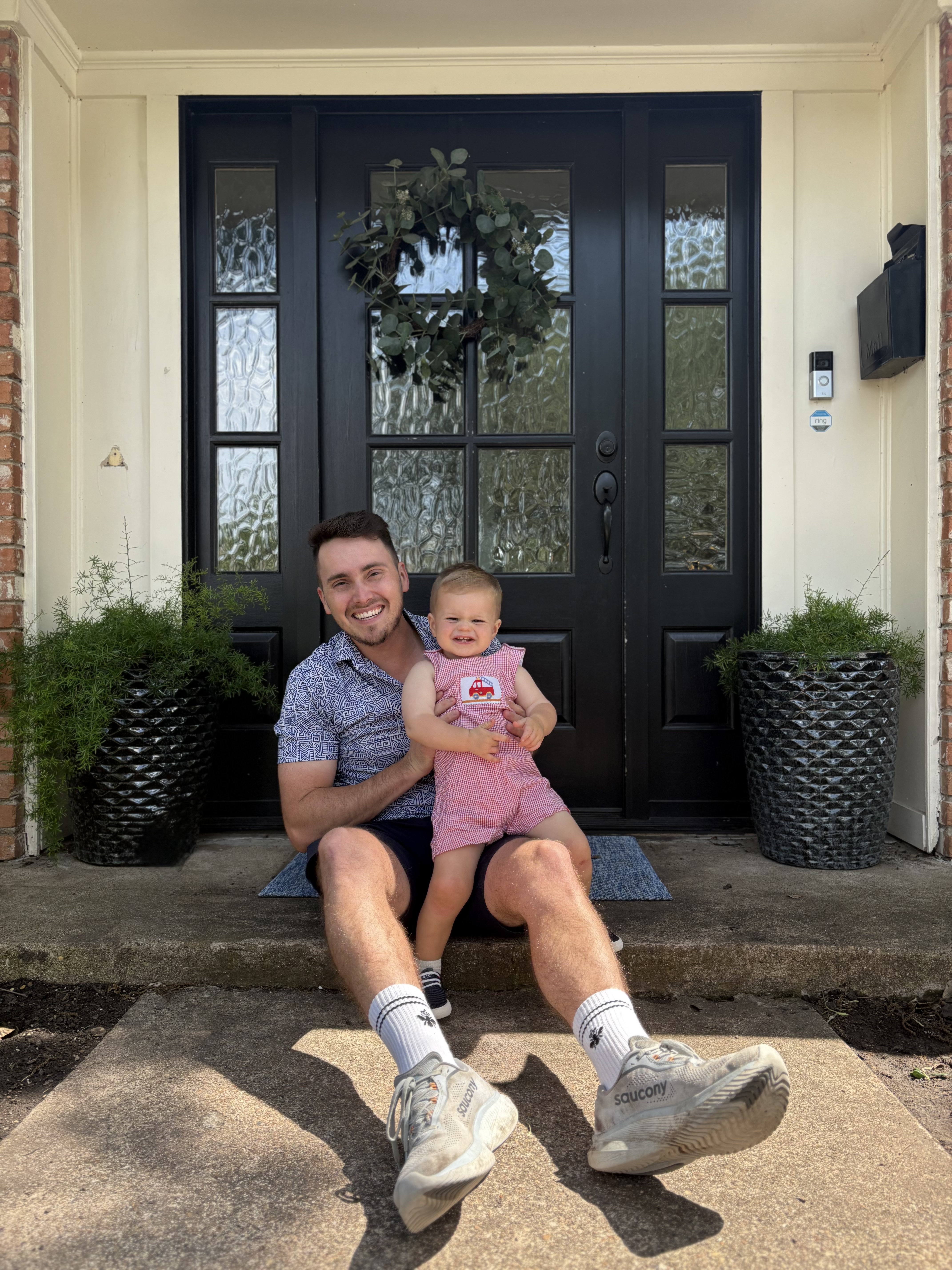
*This resource is brought to you by one of my brand partners who help make this newsletter possible!  MISCELLANEOUS MADDENINGS This weekend I’ll be out in Frankston, Texas playing Pine Dunes, an absolute hidden gem of a course for the annual guys’ golf trip. Money, and more importantly, pride is on the line as 20+ dudes tee up across 4 rounds in match play, Ryder cup style format (no alt shot though - that format is lame). For my fellow golfers, hit ‘em straight this weekend and I’ll report back with the W on Tuesday. PS - I’d like to give a special shout to my wife who makes this trip possible by graciously watching our son the entire weekend Thanks for the read! Let me know what you thought by replying back to this email. — Blake | |||||||||
|
{beacon}
Workweek Newsletter