| |||||||||||
Hey Marketing Bestie, I played tennis this morning and now my back and hip are killing me. I can't sit at my desk for more than 15 minutes without wincing. I need your help. What are your go-to remedies for a bad lower back? Hit reply and tell me. Please and Thank You!. Was this email forwarded to you? SPARKNOTES FROM THE POD 5 WAYS TO BUILD A FANBASEKimberly Veale started in sports PR with the Seattle Storm WNBA team over a decade ago. Different era. Different league. Way smaller budgets. She wore multiple hats. Communications. Player relations. Learned the inner workings of the WNBA when nobody was paying attention to women's basketball. Then she went to Golden State. Worked for the Warriors. One of the best-run sports organizations in the world. Learned how elite teams operate. Then came the opportunity: Launch the Valkyries. Introduce the WNBA to the Bay Area from scratch. Build a fanbase before playing a single game. She did it for a year and a half. Sold out games. Built a waiting list. Created a lifestyle brand. Now she's doing it AGAIN. SVP of Marketing and Communications at Portland Fire. The WNBA team that left Portland in 2002. Now back after a 24-year gap. And she's crushing it. Top 5 in the league for full season tickets sold. Leading all teams in 2026 membership. Before playing a single game. Her approach: Don't sell basketball. Sell a lifestyle brand that happens to play basketball. Listen to the full episode here where Kimberly breaks down why merch sales predict ticket sales, why social followers are a vanity metric, and how she got Carrie Brownstein and Fred Armisen to announce the schedule. 1️⃣. Merch Sales Are Your Leading Indicator.Kimberly's Take: "An overwhelming number of women's sports fans do buy engage with the retail products before they're buying tickets or kind of in conjunction there. So again, thinking through when you're rolling out your retail strategy, there's different audiences. Like who's actually buying a WNBA jersey versus lifestyle pieces versus kind of player name and number product." Kimberly had a hypothesis at the Valkyries. Merch comes before tickets. Then Cornerstone Research confirmed it. Women's sports fans buy merch FIRST. Then tickets. Not the other way around. Why? Because merch is low commitment. $35 for a hat. $75 for a hoodie. Way easier than $500 for season tickets. But it signals INTENT. If someone's buying your merch, they're invested. They're repping your brand in public. They're telling people about you. That's a warmer lead than someone who downloaded a white paper or signed up for your email list. Portland Fire tracked this. Merch buyers converted to ticket buyers at WAY higher rates than email subscribers. So they built their retail strategy FIRST. Before ticket sales. Before games. Before the roster was even announced. Different products for different audiences. Jerseys for diehards. Lifestyle pieces for casual fans. Player name and number for superfans. Each one a stepping stone to ticket sales. Takeaway: Find your version of merch. The low-commitment purchase that signals intent before the big buy. Could be a $29 template, a $99 workshop, a paid diagnostic, a strategy guide. Price it under $100. Tag everyone who buys it in your CRM. Segment them separately from email subscribers. These buyers convert 5-10X higher to your core offering because they've already pulled out their wallet once. Build a nurture sequence just for them with early access, exclusive pricing, or VIP support. Track conversion rate. You'll see the difference immediately. 2️⃣. Position Your Brand As A Lifestyle. Not A Product.Kimberly's Take: "Part of the WNBA's uniqueness and ethos is the lifestyle brand that it is, the athletes and the DNA of the WNBA athlete and what they represent in culture, in community, and how WNBA teams can find success, marketing, the team kind of year round and adding value to the fans lives through kind of that lifestyle brand as culture drivers." The WNBA isn't selling basketball. It's selling a lifestyle. The athletes. The culture. What they represent in the community. How they show up off the court. Portland Fire and the Valkyries both leaned into this. Basketball-adjacent content. Culture. Creators. Community. Because basketball purists are a small audience. But lifestyle brand fans? Way bigger. People who care about what the team represents. People who want to be part of the culture. People who wear the merch because it says something about THEM. That's how you market year-round. Not just during games. Add value to people's lives 365 days a year. Not just on game day. This applies to every brand. You're not selling a product. You're selling an identity. A belief system. A way of showing up in the world. Takeaway: Audit your content strategy. What percentage is product-focused vs lifestyle-focused? If it's 90% product features, you're limiting your audience. Create content around: What your customers believe. How they see the world. What they care about beyond your product. Who they aspire to be. Make your brand part of their identity, not just their toolkit. Track engagement on lifestyle content vs product content. See what wins. Then double down on it. 3️⃣. Tap Into Local Culture For Viral Moments.Kimberly's Take: "Carrie's a huge Portland Fire fan, and that was definitely something that we was on our radar very early... the question was asked, is Fred available? Can we get Fred involved? And the two of them share such an enthusiasm for this city and representing this city." Portland Fire's schedule release: Carrie Brownstein and Fred Armisen from Portlandia announcing it. Perfect. Because Portlandia IS Portland. Everyone knows it. Everyone loves it. And both actors are actual fans. The video went viral. Comments flooded in asking if Portlandia was coming back. The energy was REAL. Because it was locally authentic. Not forced. Not a national celebrity play. LOCAL. Kimberly's team debated it. Is this too expected? Should we do something else? Then they realized: It's SO expected that we HAVE to do it. And it worked because it was TRUE to Portland. True to the culture. True to the team's return. Compare that to brands forcing celebrity partnerships that have zero connection to their audience. Or trying to go viral with trends that don't fit their brand. Local wins. Authentic wins. True to your market wins. Takeaway: Map your local cultural touchpoints. Who are the creators, artists, actors, musicians, or influencers in your city who ACTUALLY care about your category? Reach out. Build relationships. Don't pitch them a campaign. Build a real connection first. Then when you have a moment (product launch, event, announcement), ask if they want to be part of it. Local cultural moments beat national celebrity plays every time. They're more authentic. More shareable. More effective. And way cheaper. 4️⃣. Customize Partnerships.Kimberly's Take: "The rinse and repeat playbook, I think, is a dangerous trap in terms of really finding the sweet spot to maximize the partnership and to maximize the audience... bringing a partner into the mix and what they're hoping to get out of it and who they're hoping to engage with." Kimberly sees it all the time. Brands want to partner with sports teams. They come in with a template. Logo on the court. Halftime activation. Social posts. Done. Rinse and repeat. But that's lazy. And it doesn't work. Every brand has different goals. Different audiences. Different activation opportunities. Some want to reach season ticket holders. Some want to reach casual fans. Some want content. Some want experiences. The rinse and repeat playbook ignores that. And it wastes money. Kimberly's approach: Customize every partnership. Figure out what the brand wants. Who they're trying to reach. Then build something unique. Not a template. A STRATEGY. This applies to every partnership you do. Agency partnerships. Influencer partnerships. Co-marketing partnerships. Stop running the same playbook. Customize it. Takeaway: Stop using templates for partnerships. Every brand has different goals, audiences, and assets. Before you pitch the same "logo placement + social posts + email blast" package: Ask what they're actually trying to accomplish. Ask who they're trying to reach (specific segment, not "brand awareness"). Figure out what you have that solves their actual problem. Then build something custom. One partner might need access to your audience. Another needs content. Another needs credibility by association. Another needs data. Match your assets to their goals. Track results separately for each one. Learn what actually drives value. Customization gets you better partners, bigger budgets, and longer relationships. 5️⃣. Social Followers Are A Vanity Metric.Kimberly's Take: "Social followership is a vanity metric." Kimberly's marketing hill to die on: Follower count doesn't matter. Why? Because we're in the interest graph era now. Not the social graph era. People follow INTERESTS. Not people. Not brands. You see clip accounts with 5,000 followers getting more views than verified accounts with 500,000 followers. You see niche content outperforming branded content 10X. Because the algorithm doesn't care about your follower count. It cares about ENGAGEMENT. Relevance. Interest. Someone who followed you 10 years ago might not care about your content anymore. But they're still in your follower count. Inflating the vanity metric. Meanwhile, someone who's never followed you sees your content because the algorithm knows they're interested in basketball. Or women's sports. Or Portland. That's the interest graph. Your job: Create content people are interested in. Not content for your followers. Takeaway: Followers matter for social proof. But they don't predict performance anymore. A brand with 100K followers can get less reach than a clip account with 5K because the algorithm prioritizes INTEREST over followership. Start tracking what actually matters:
Run this test: Create one post for your followers (brand update, company news). Create one post for your interest audience (what they actually care about, even if it's not about you). Compare reach and engagement. IN A MEME 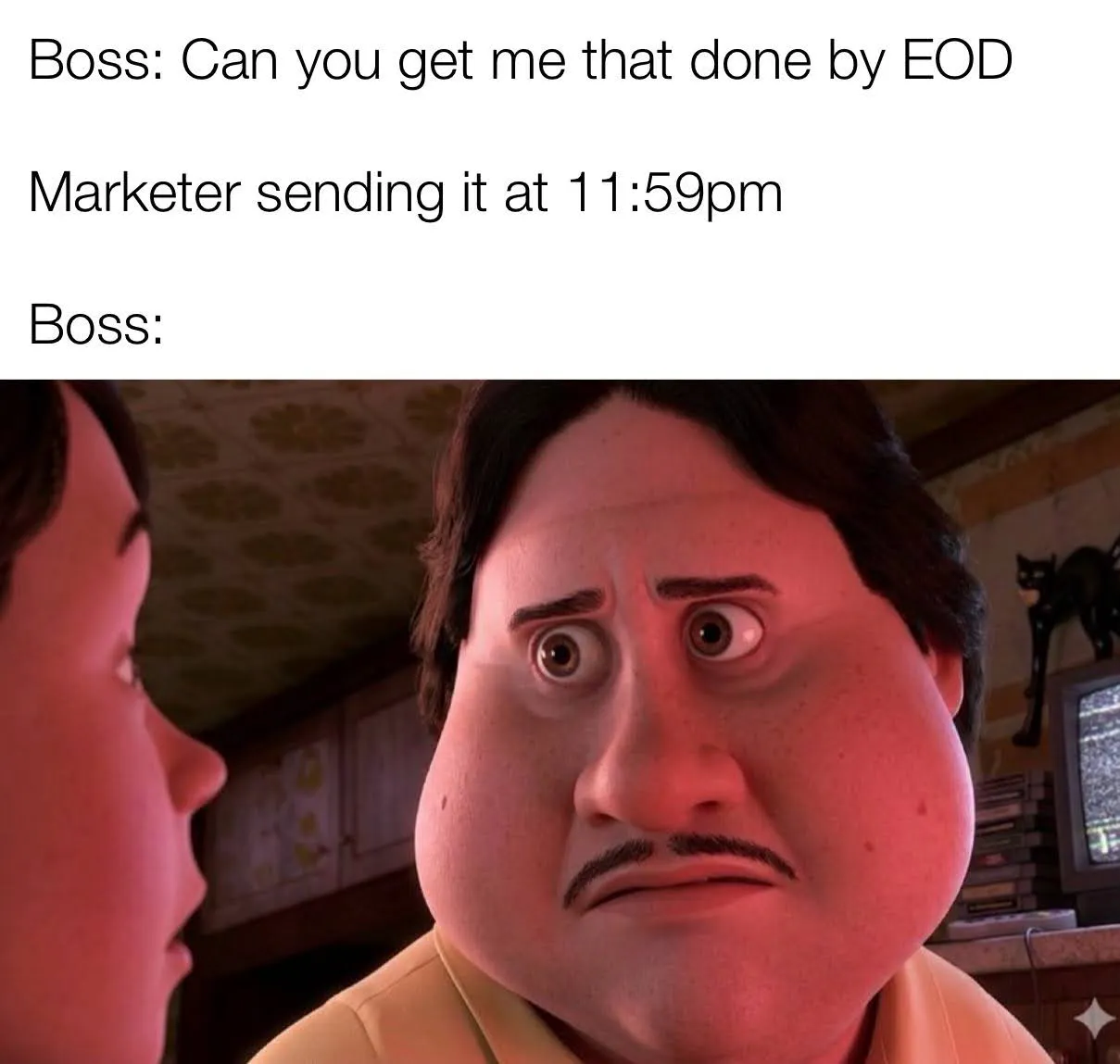 Well, I am going to go hobble to get a snack and ibuprofen. I heard if pain is below the neck it’s ibuprofen and above is tylenol. Is that right? Your friend, Daniel | |||||||||||
|