📣 Alex White, Regional Director, HR @ Washington Duke Inn & Golf Club:
This one’s tough - and I’ll be honest, lack of HR isn’t really the root issue here.
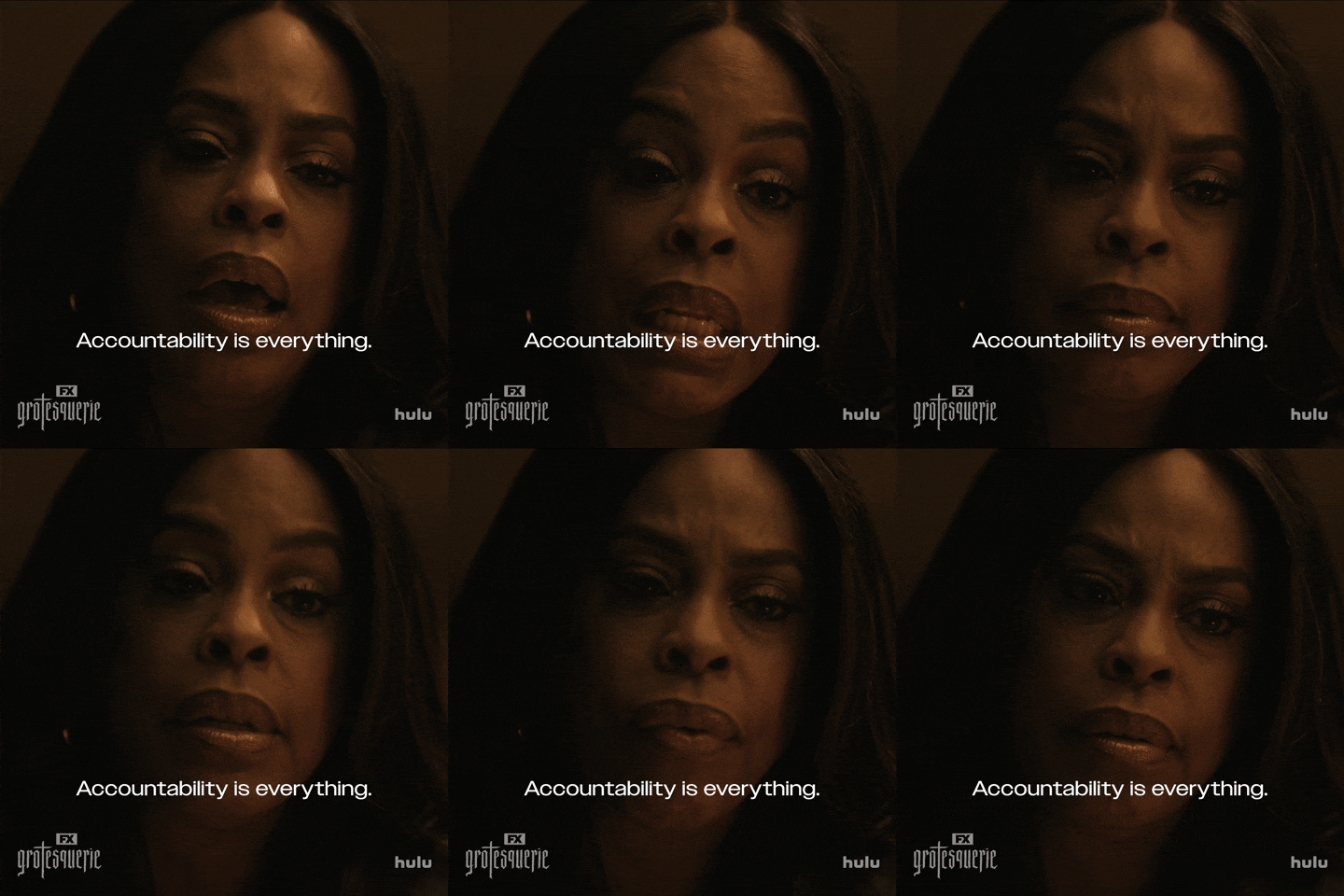
You can operate without a formal HR department, but you can’t operate without accountability.
If they won’t bring in HR, there are still a few levers:
Bring in a fractional HR consultant or external advisor
Put basic policies in place (code of conduct, reporting channels)
Invest in some level of leadership training
Document everything - patterns matter
Organizations don’t need HR to care about their people - but they do need someone willing to step up and own the environment they’re creating. If that’s not happening, progress will be limited no matter what tools you bring in.
Here’s the real talk…if classism, microbullying, and passive-aggressive behavior have been ignored for two years, that’s a leadership choice - not a resource issue.
So yes...there’s hope. But only if someone at the top is willing to take accountability and do something different.
If not, you’re trying to fix a system that doesn’t actually want to be fixed.
📣 Jessica Simmons, VP, HRB @ PICD:
There's hope, but only if someone addresses the real issue. Culture is shaped from the top down. When issues linger for years, it signals what leadership is tolerating. Even if you brought in HR, progress would stall unless the CEO and senior leaders are willing to acknowledge the problem, model better behavior, and consistently reinforce expectations. HR can support structure and accountability, but it can't override leadership signals.
In the absence of HR, someone needs to raise this directly with the CEO. The issue would need to be tied to business impact such as, productivity loss, team friction, and retention risk. If the CEO and leadership are open, you can introduce simple guardrails like clear behavior expectations and escalation paths. If they're not open, the culture is unlikely to change in a meaningful way and will continue to function as it has been allowed to.
📣 Mandy Kutschied, HR Consultant @ Cup of Culture Consulting, LLC:
💯 to what @Alex White stated! This isn't fundamentally an "HR or no HR" issue, it's an accountability and leadership issue. Honestly, I’ve seen organizations with full HR teams still struggle with exactly what you’re describing so bringing in HR alone won’t fix it, but the right kind of support can absolutely help.
I'm a little bias working as an HR Consultant, but I do think a strong option is a fractional HR person or firm. For organizations that won’t (or can’t) hire a full-time HR leader, this can be a really practical middle ground.
It brings in:
-Objective perspective (which matters a lot in environments with entrenched dynamics)
-Clear systems — code of conduct, reporting pathways, manager expectations
-Leadership coaching + accountability structures tied to business outcomes
But even then, it only works if leadership is willing to engage and be part of the change. *You can’t outsource culture repair!!* And I know I'm preaching to the choir here, but culture isn’t a vibe it’s an operating system.
It’s the combination of:
- Beliefs (what you say you value)
- Behaviors (what’s modeled, rewarded, ignored, or tolerated)
- Systems (how decisions get made, how feedback is handled, what happens when something goes wrong)
When classism, microbullying, or passive-aggressive behavior go unaddressed for years, that is the culture.
Which also means… it’s fixable, but not quickly or passively. And like others have said, that only works if leadership is willing to engage and be part of that change. So yes, there’s hope. But it’s less about “adding HR” and more about whether the organization is actually ready to operate differently.
Safe Space members can join this discussion here. Not a member yet? Apply to join here.