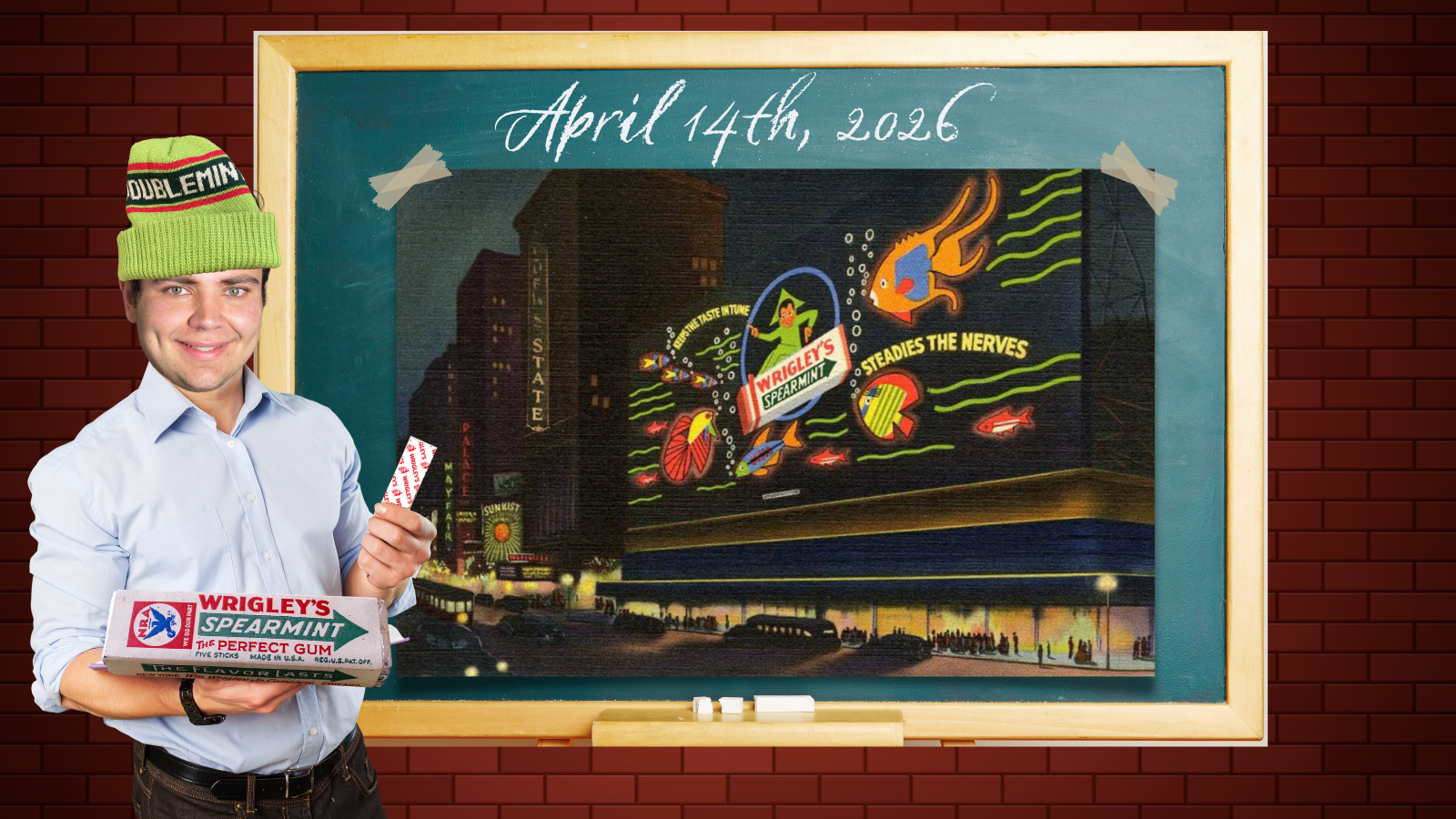
Hey Marketing Bestie, Us marketers sure can learn a lot from our Marketing fore-fathers and fore-mothers. Consider this a parade for the greatest marketing campaigns in memory.
Welcome to Marketing Classics 411, a new kind of ancient history. In place of hieroglyphs, expect to decipher the campaigns of yesteryear. Professor Millennial teaches every Tuesday (remotely), via electronic mail.
Class is now in session. |
Was this email forwarded to you? |
|
|
How Wrigley’s Turned A Freebie Into A $23B Empire |
They say the best things in life are free. In Marketing, though, freebies are often an afterthought.
A nice-to-have incentive, not an essential, meant to entice consumers to buy the better, more valuable item they’re paired with.
But what happens when an incentive outshines a hero product? Today’s lesson is about a brand that listened to the market and pivoted…not once, but TWICE! Over 130 years later, it’s 1 of the biggest consumer brands in the U.S.
The world leader in a category it almost accidentally stumbled into - then built strategically, with the power of Marketing. A 5¢ business…worth BILLIONS.
This is the story of… Wrigley’s chewing gum.
|
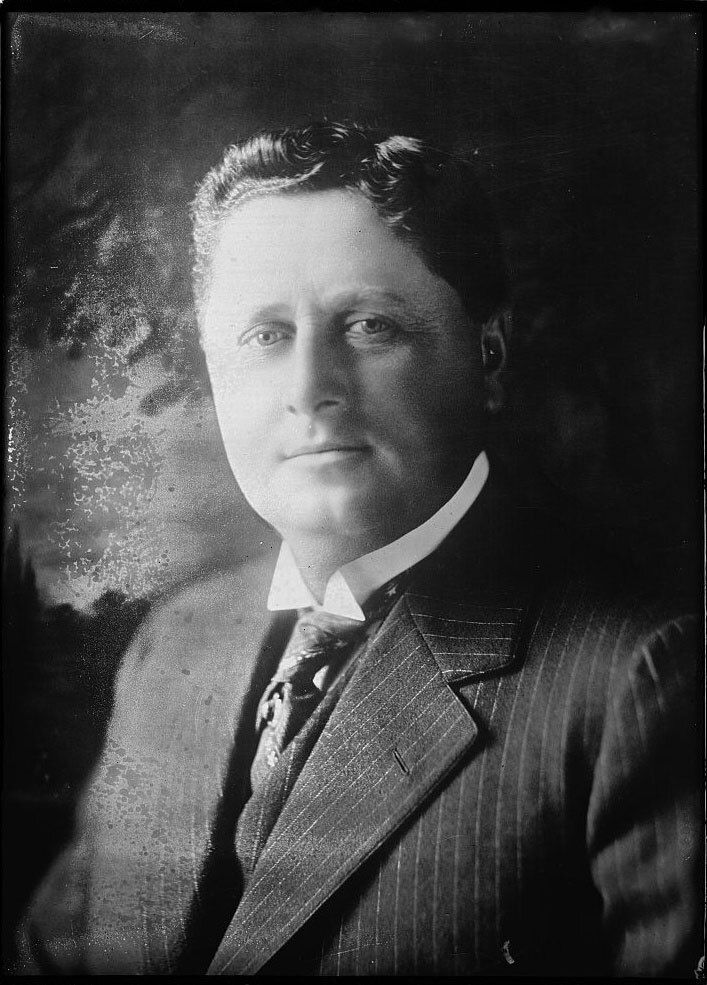
William Wrigley, Jr. was born in Philadelphia in 1861. He was a mischievous kid. A prankster expelled from school multiple times. A tween runaway.
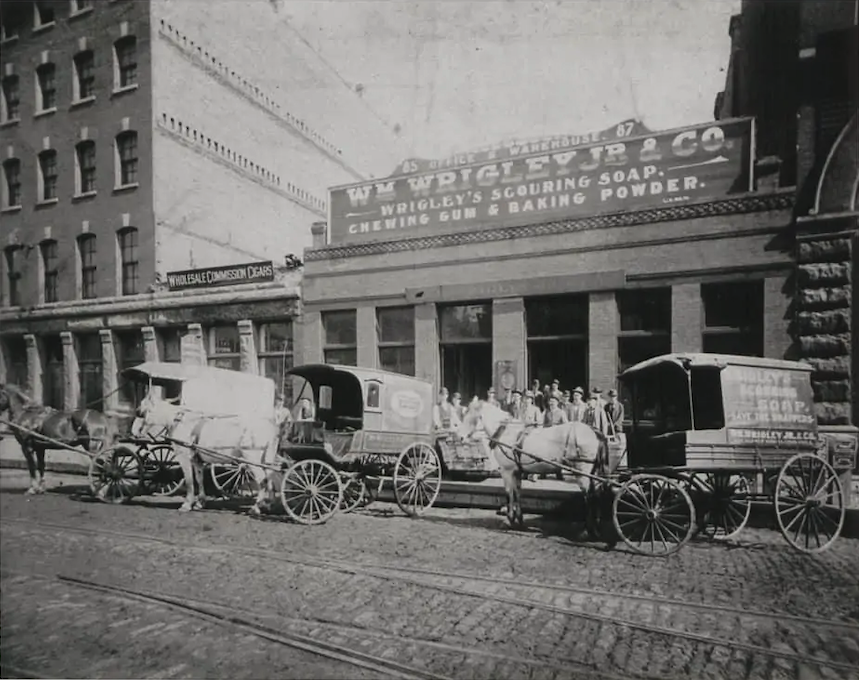
A child prodigy…in sales. At 13, Wrigley joined the family soap business, Wrigley Manufacturing Company, as a traveling salesman. In 1891, he moved to Chicago with:
💵: $32 in his pocket 🧼: Lots of soap 🫰: $5K on loan from his uncle 🫧: Dreams of starting his own business |
Don’t call William Wrigley, Jr. a nepo baby. You haven’t read the whole email yet.
(via Tedium) |
The industry was crowded. He needed an angle.
To entice merchants to stock his father’s soap, Wrigley bundled every box with a premium incentive: a free can of baking powder. Why baking powder?
Maybe it’s because both products could be used in the same kitchen.
Or Wrigley just got a good wholesale deal from the manufacturer. Either way, his customers wanted the baking powder more than the soap, so Wrigley pivoted. Now that he was a full-time baking powder man, he needed a new freebie.
Not soap. Something smaller, but still premium. He decided on packs of chewing gum made by Zeno Manufacturing Co. Why chewing gum?
It was a novel product that felt like a treat. Often marketed as a digestive aid, so it was sorta adjacent to baking powder. 🤷♂️ Maybe it was a stretch…but he decided to try. |
You can probably guess what happened next. The free chewing gum was more popular than the baking powder!
Wrigley’s 1st sales instincts had been wrong, but he listened and changed course.
Sometimes the best demand research is learning what customers actually want from you for free. Then, turning it into something they’ll pay for.
When your incentive beats your product, it just might be your new north star. |
Wrigley decided to focus on gum, partnering with Zeno Manufacturing to make his own brand. (The companies later merged.) Juicy Fruit and Wrigley’s Spearmint debuted in 1893.
They weren’t the only chewing gums on the market.
But their flavors were a lot more palatable than spruce tree resin and licorice to the average palate, LOL. Spearmint was a sweeter, milder alternative to peppermint. And “Fruity” appealed to all ages.
But now we get to my REAL point:
Wrigley’s biggest advantage over his gumpetitors wasn’t just the products. It was his willingness to MARKET them. |
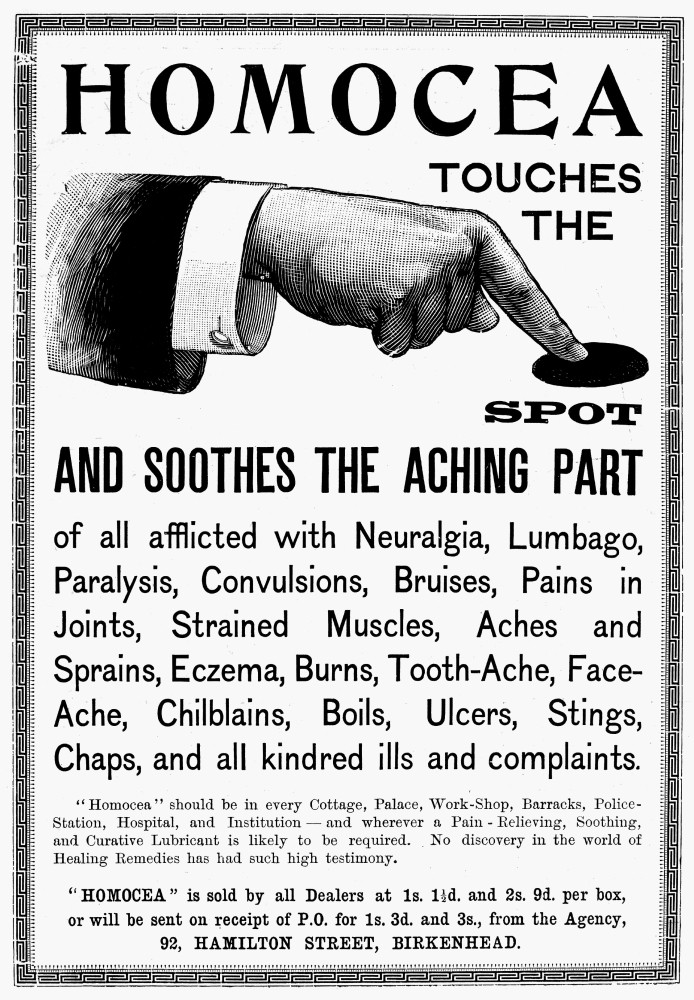
When Wrigley’s bubbled up on the gum scene, print advertising was dominated by patent medicine companies.
These original over-the-counter drugs often made outrageous cure-all claims with no scientific proof.
|
Finally, something to fix my face-ache and chilblains! (via Posterazzi) |
Advertising was stigmatized. Most reputable brands steered clear, believing good products would sell themselves. (Sound familiar?) Not Wrigley’s.
In 1907, Wrigley mortgaged everything he owned to spend $284K on advertising. (Equivalent to almost $10M today!)
|
Sales of Wrigley’s Spearmint hit $1M the next year. (Which would be around $36M now. Anyone have a time machine?)
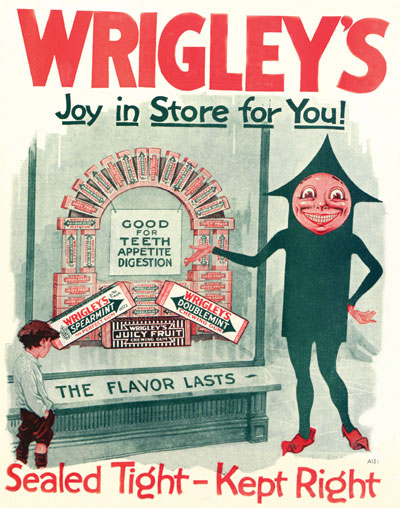
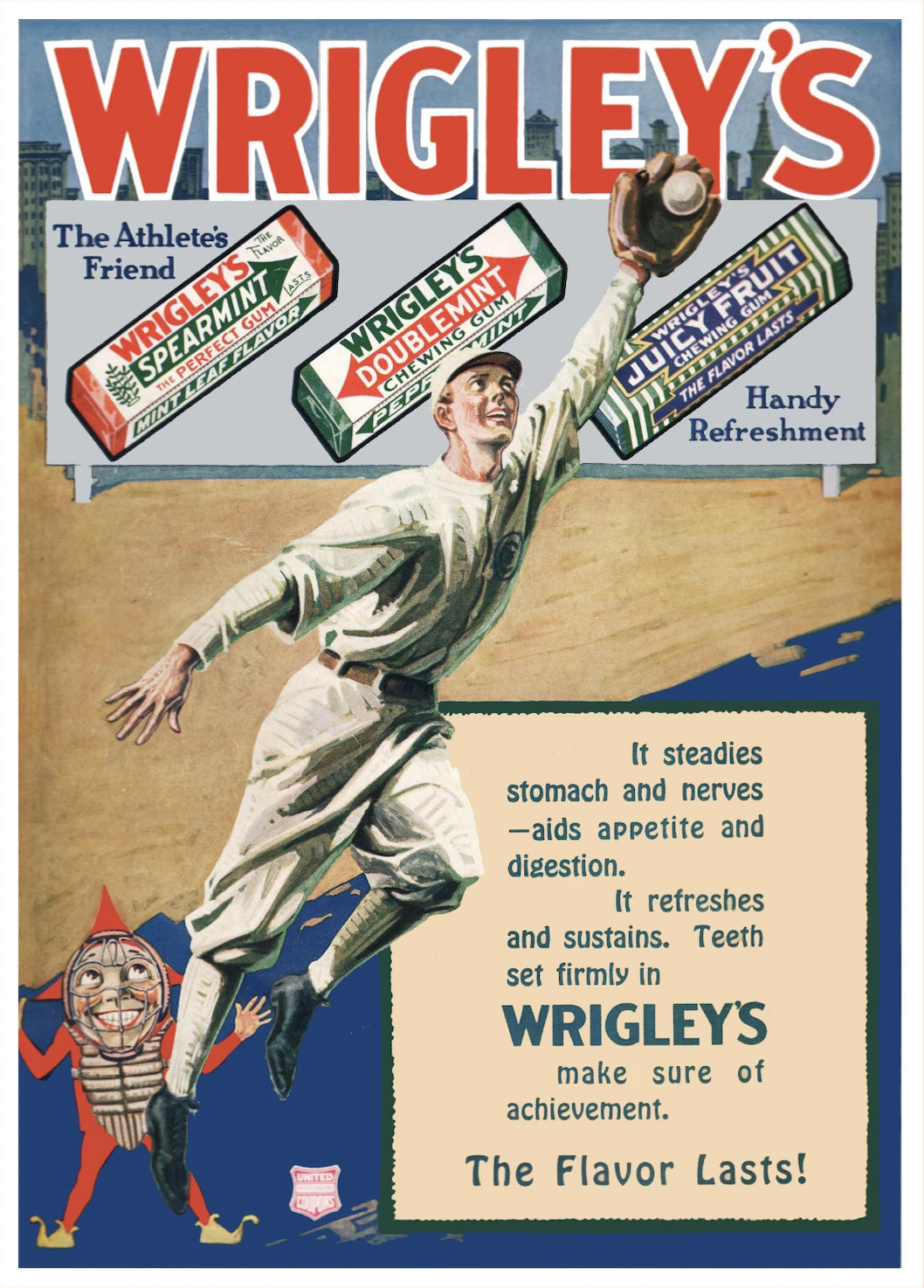
The brand’s philosophy is still relevant: “Tell ‘em quick, and tell ‘em often.” Advertising was treated like infrastructure: always on. In every season. Whether or not business was good. Wrigley’s ads had style: 🎨: Bold graphics and colors. 🖋: Memorable copy.
💨: Clear value props, like fresh breath. 🪧: Smart placements.
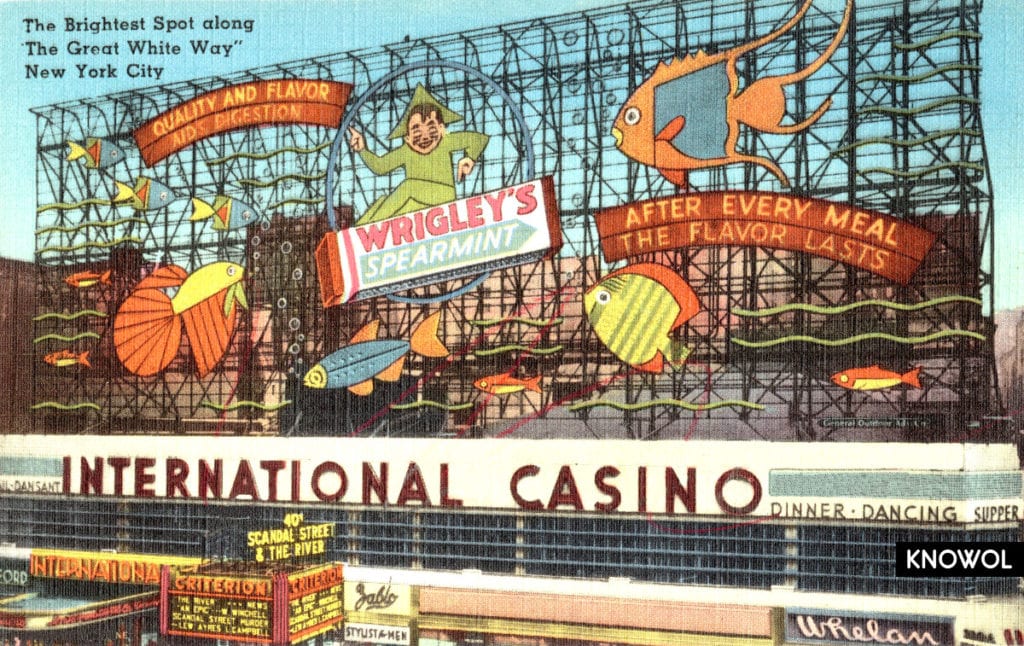
The brand was an outdoor advertising pioneer, with painted billboards in train stations and later, Times Square’s largest electric billboard.
|
1936: $1M, 70 miles of insulated wire. (via Knowol) |
Wrigley’s recognized the power of point of sale and had its gum placed near retail cash registers, so it became an impulse purchase.
In 1915, a year after Doublemint Gum launched, the brand embarked on its most ambitious marketing stunt yet.
|
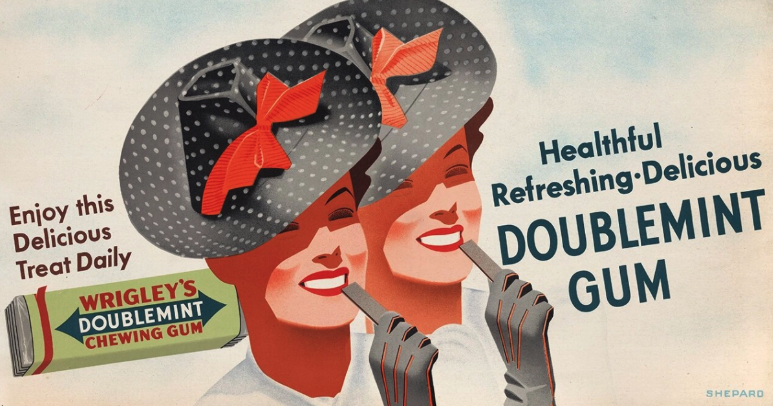
Double your marketing budget, double your fun… (via History Oasis) |
In the 1st-EVER national direct mailing campaign, Wrigley’s mailed 4 free sticks of gum to every address in every U.S. phone directory.
The samples reached 1.5M homes! Wrigley’s did it again in 1919, reaching 7M homes! In his lifetime, William Wrigley spent over $100M on advertising.
When he died in 1932, the company was valued at $61M. It would pay off someday. |
|
|
Wrigley didn't run a focus group or hire consultants. He offered freebies, watched the response, and gave consumers what they actually wanted.
You can do the same thing - without completely pivoting your business. Here’s your homework:
1️⃣. Jot down everything your brand’s giving away for free: samples, free tools, content, trial tiers, referral bonuses, etc.
2️⃣. Dig into the numbers to answer 1 question: Is any freebie getting more engagement than the thing you're actually trying to sell?
If a free resource is outperforming a paid product in shares, signups, or WOM, it could be a signal. Think about how you could level up your freebie through repositioning, a new hero product, or a more effective campaign.
3️⃣. Now brainstorm 3-5 new freebies. Start with freebies synonymous with your brand, perhaps elevating one you already offer. Then brainstorm freebies that have nothing overtly to do with your product, but could resonate with your target audience, market, category, or industry trends. You might get surprised, just like Wrigley. |
|
|
Wrigley’s embraced the high-volume, low-cost business model. For over 50 years, it sold single packs of gum for just 5¢. The accessible price, plus all the Marketing and sampling strategy, made Wrigley’s a beloved brand that thrived even during economic downturns and through wartime. Wrigley’s quickly grew into a global corporation, with factories in Canada, Australia, and England.
But the heart of the company was in Chicago, and Wrigley’s didn’t want anyone to forget it. In the early 1920s, there were no office buildings north of the Chicago River. The Magnificent Mile wouldn’t exist until the 1940s.
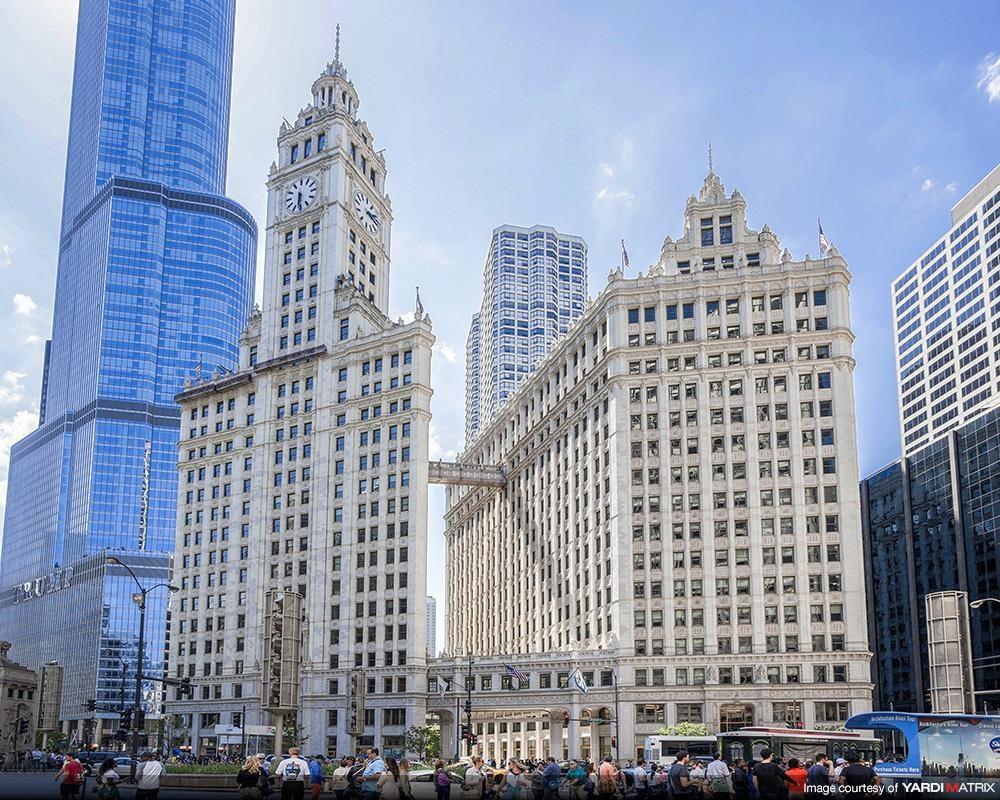
When the Wrigley Building opened in 1921, it was Chicago’s tallest skyscraper. Almost equally impressive: the city’s 1st air conditioned office building.
It became a national landmark, even before the 2nd tower was finished in 1924! |
Wrigley’s sold its headquarters in 2011, on the condition that the Wrigley name remains. (via ICAA) |
Some call it “the Woolworth Building of the Midwest.” The castle made of chewing gum.
Meanwhile, Wrigley became the majority owner of the Chicago Cubs in 1921.
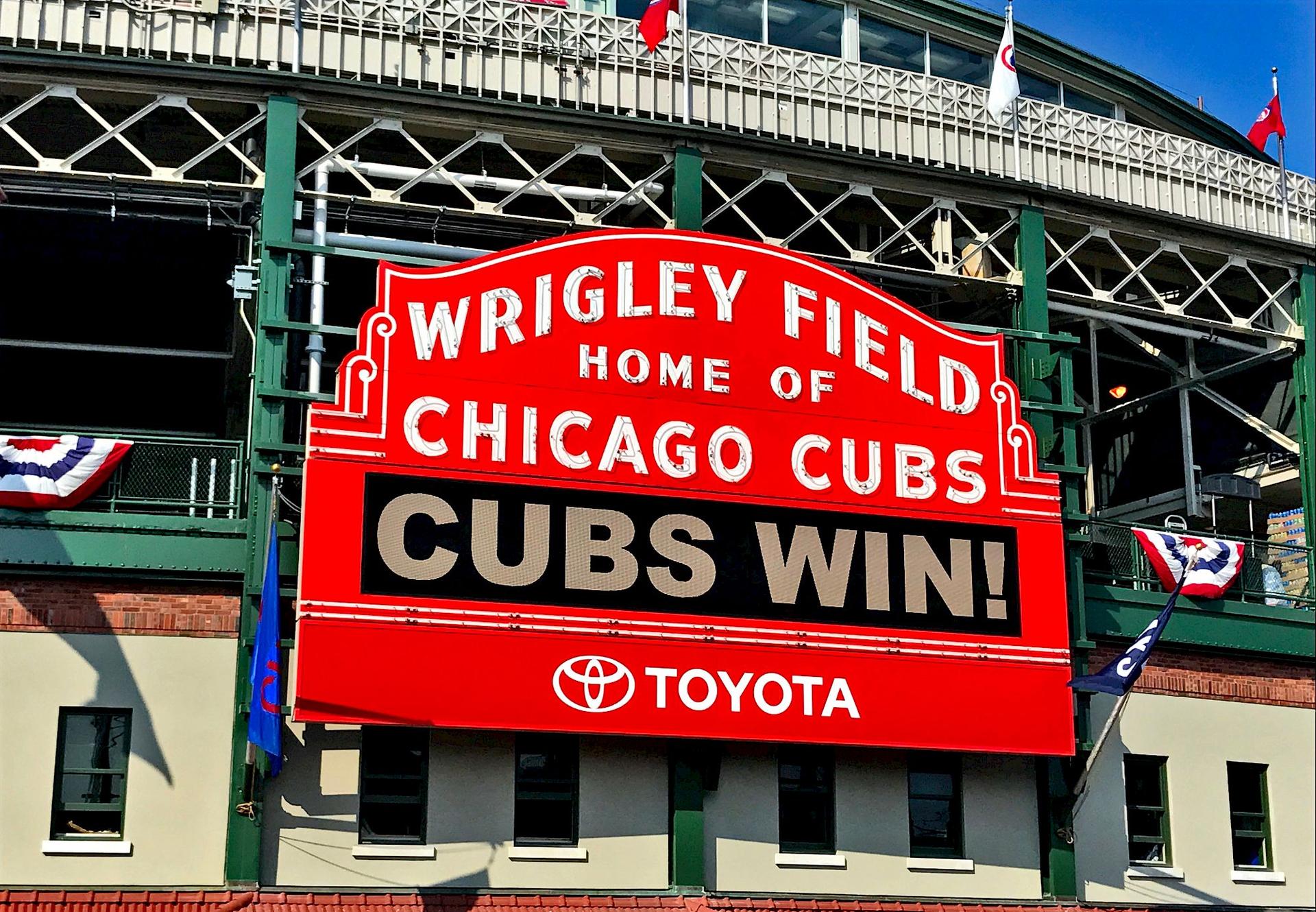
The team’s ballpark was renamed Wrigley Field.
|
Some baseball fans joked that the Cubs were William Wrigley’s worst business decision. (Sorry, Cubbies!)
But Wrigley genuinely loved the game and the team, even though it never won a World Series during his ownership.
He invested in the fan experience, introducing box seats and promotions like Ladies Day.
He also worked baseball into its ads, and chewing gum into its baseball. |
“And… play ball!” (via eBay) |
The brand was playing the long game, putting the Wrigley name on America’s pastime. |
If you name 5 gum brands, they’re 98% likely to be Wrigley’s. And honestly, trying to write about what makes the brand so remarkable almost feels like I’m biting off more than I can chew.
Because Wrigley’s pioneered so many kinds of Marketing that it’s basically the Forrest Gump of consumer brand history. -
It popularized spearmint and cinnamon flavors, changing the gum and candy industry, as well as oral care.
- In 1974, a 10-pack of Juicy Fruit became the 1st product scanned with a UPC barcode. (It’s now in the Smithsonian.)
- A decade later, Wrigley’s was the 1st gum company to use aspartame, starting the sugar-free gum revolution.
-
In 2007, Extra, Orbit, and Eclipse were the 1st gums to receive the American Dental Association’s Seal of Acceptance, officially linking gum to oral health. (Yep, all Wrigley brands.)
-
In 2008, Mars Inc. acquired Wrigley’s for $23B.
None of this would’ve been possible if William Wrigley Jr. hadn’t listened to consumers who wanted his freebies more than his hero products… And pivoted…TWICE!
Maybe your brand hasn’t discovered its #1 bestselling product yet, either.
With a little incentive, maybe your customers could give you a hint. 🌱
|
|
|
MARKETING CHEAT SHEET (WHAT TO LEARN FROM THIS STORY): |
1️⃣. Free samples = demand research.
Wrigley didn't set out to sell chewing gum. It was a freebie he paired with baking powder, which had originally been a freebie he paired with his father’s soap. When the freebie outperformed the product TWICE, Wrigley followed the signal. Before you dismiss what your audience engages with for free, ask whether that's what they actually want to buy.
2️⃣. When you find the thing that works, advertise it like you mean it.
Wrigley’s pivot was ALL-IN. He bet on gum with a serious advertising budget no other brand could stomach. The product-market fit signal isn't enough on its own. You have to amplify what works if you want it to scale.
3️⃣. Names travel farther than features.
Ads and free samples made Wrigley’s a household name. Putting the same name on landmark architecture (the Wrigley Building) and the Chicago Cubs ballpark (Wrigley Field) made it an American icon. |
|
|
Ahh, the bell has rung. Please be sure to do the reading (follow The Marketing Millennials on LinkedIn and me, Professor Millennial, on X). Off you go, passing period is only 11 minutes and there’s already a line at the vending machine that sells Doublemint gum.
Until next time,
Professor Millennial |
|
|
{if !profile.vars.marketingland_user_fitness && profile.vars.marketingland_user_fitness != false}Join 7,390 other marketing leaders in Marketingland |
|
|
{/if}{if profile.vars.marketingland_user_fitness == true}{/if}Get your brand in front of 130,100+ marketing leaders. |
Workweek Media Inc.
1023 Springdale Road, STE 9E
Austin, TX 78721
Want to ruin my day? Unsubscribe. |
|
|
|