Hi Marketing Bestie, I have a HOT TAKE. Okay, maybe lukewarm, but I'm saying it anyway.
Mint doesn't belong in desserts. It's for toothpaste and gum. That's it.
Mint chocolate chip ice cream? No thanks. Andes mints? Pass. Peppermint bark? Why are we doing this to ourselves?
What's your side on this?
| Was this email forwarded to you? |
|
|
5 WAYS TO FIX YOUR BROKEN MARKETING MEASUREMENT |
James Connelly started his first agency in 2008. Called it Fetch. It was a mobile agency. The only problem: The iPhone had JUST launched and nobody was actually changing how they marketed yet. Brands wanted to TALK about mobile advertising. But they weren't actually DOING it.
The lesson: Trends happen fast. Marketers move slow.James figured out who moved fast: App companies. Startups. People who needed 100,000 customers yesterday. He got really good at app store marketing, took the business global, worked with Apple, Expedia, Supercell, then sold to Dentsu. Now he runs Charlie Oscar. And he's solving a different problem: Your marketing measurement is completely broken.How does he know without even looking at your data. He just looks at your media mix. If it looks like it did 3 years ago (all Google branded search, all bottom-funnel), your measurement is lying to you. Here's his marketing hill to die on: Billions of dollars are wasted every year because of last-click attribution. If you measured a soccer team with last-click, you'd have 11 strikers on the pitch. It would be a disaster.
Listen to the full episode here where James breaks down why your Google branded search is hiding your real growth problem, the soccer (Football) analogy that explains last-click attribution perfectly, and why timing is everything when it comes to AI and LLMs. |
1️⃣. You Can Tell Measurement Is Broken Just By Looking At The Media Mix. |
James's Take: "We can actually tell if their measurement is broken without auditing any of the data. We can just look at the media mix because if the media plan looks very similar to what a media plan would look like two, three years ago and you're spending a lot on the dominant search platforms on brand terms... I can immediately tell you've got a measurement problem."
Here's the tell: If your media plan is all bottom-funnel (Google branded search, retargeting, demand capture), your measurement is broken.
Your reporting is telling you that bottom-funnel drives all your success. But that's not how it works.
Branded search means someone found you SOMEWHERE ELSE first. They didn't randomly type your company name into Google. Something else created that demand.
Could be word of mouth. Could be a podcast. Could be organic social. Could be TV. Could be a billboard.
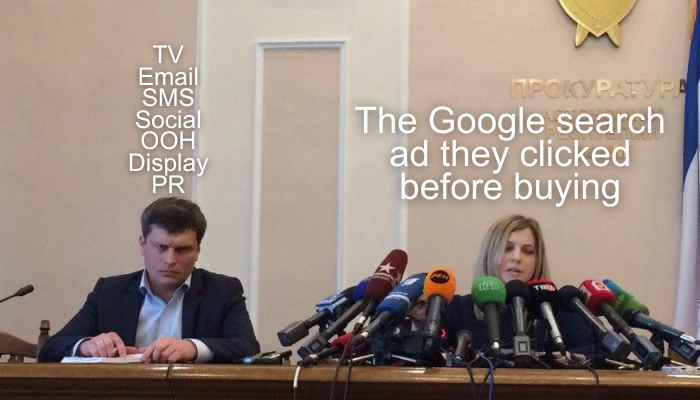
But your last-click attribution gives Google all the credit. Because that's where they clicked.
So you keep pouring money into Google. Because the dashboard says it's working. Meanwhile, you're starving the channels that actually CREATE demand.
James uses a tool called Compass (basically MMM - marketing mix modeling) to find where the REAL incremental opportunity is. Not just media mix. The entire MARKETING mix.
If most of your budget is pointed at demand capture, you've got a problem. You need to move money into mid and upper funnel to create MORE interest in your brand.
That could be creative marketing. TikTok. TV. Brand campaigns. Anything that makes people aware you exist.
Takeaway: Pull up your media plan right now. What percentage is bottom-funnel (branded search, retargeting, demand capture) vs mid/upper funnel (awareness, consideration, interest)?
If it's 80%+ bottom-funnel, your measurement is broken. You're only tracking the LAST click, not what actually created the demand. Start moving 20-30% of budget to mid-funnel channels. Track it with MMM or incrementality testing, not last-click. |
2️⃣. Last-Click Attribution Is Like Having 11 Strikers On A Soccer Team. |
James's Take: "If we took last click measurement and applied it to football, you'd have 11 strikers on the pitch. It'd be a disaster... Last click basically says user clicks on this advert, sale happens. So because they clicked on the advert, the sale happened."
This is James's marketing hill to die on. And it's brilliant.
In soccer, the striker scores the goal. Gets all the glory. But you still need wingers, midfielders, defenders. They create the opportunity for the striker to score.
If you measured soccer with last-click, you'd say "the striker did everything" and put 11 strikers on the field. No defense. No midfield. Just strikers.
Terrible strategy. You'd lose MOST games.
That's what last-click attribution does to your marketing. It gives ALL the credit to the last touchpoint before conversion.
Someone sees your TV ad. Hears about you on a podcast. Follows you on Instagram. Reads three blog posts. THEN Googles your brand name and clicks an ad.
Last-click gives Google and Meta 100% of the credit. TV, podcast, social, OOH, and blog gets ZERO.
So your dashboard tells you to spend MORE on Google branded search. Because it "works." Meanwhile, TV is getting cut because you can't "prove" it works.
But if you cut TV, branded search volume goes DOWN. Because fewer people know you exist.
Billions of dollars wasted every year because of this.
Takeaway: Stop using last-click as your single source of truth. It's lying to you. Use marketing mix modeling (MMM) or incrementality testing to understand what's ACTUALLY driving results.
Track "forward indicators of demand" (FIODs) - things like branded search volume, direct traffic, social mentions - to see what's creating awareness. And align your CFO/CEO on ONE source of truth that isn't just "what Google Ads says." |
3️⃣. Align Business And Marketing On One Source Of Truth. |
James's Take: "The challenge you is where business and marketing... are not aligned on what success looks like. And five years ago, it was really difficult to prove to your board like exactly how effective your marketing spend was other than what the click based tracking was telling you."
5 years ago, marketers KNEW click-based tracking wasn't the full picture. But they couldn't prove it.
So they kept showing Google dashboards to the CFO. Because that's what the CFO believed. Easy to understand. Click 👉 Sale.
The sophisticated marketers had a "feeling" it wasn't right. But feelings don't get budget approved.
Now we have better tools. MMM. Incrementality testing. Triangulation between multiple data sources.
James spends a LOT of time with CFOs getting them to align on one source of truth. Not Google Ads. Not Meta Ads. Not last-click anything.
A SOURCE that links marketing input to actual business outcomes (sales, revenue, customers). Then you can see: We need to move money from HERE to THERE.
But here's the key: You need FIODs. Forward Indicators of Demand. Leading indicators you can track BEFORE sales happen.
Things like branded search volume, direct traffic, social mentions, time on site, engagement rates.
These tell you if your upper-funnel work is creating demand. Before it shows up in sales.
Then when you shift budget to brand campaigns or TV or podcasts, you can show the CFO: "Look, branded search is up 40%. Direct traffic up 25%. Sales will follow."
That gets buy-in. That gets budget.
Takeaway: Stop fighting with your CFO over what "works." Get alignment on ONE source of truth first. Use MMM or incrementality testing (not last-click). Define Forward Indicators of Demand (FIODs) for your business - leading metrics that predict future sales.
Track those alongside sales. Build a story that connects upper-funnel investment ➡️ FIODs increasing ➡️ sales increasing. Present that to leadership. Get them bought in BEFORE you shift budget. |
4️⃣. Don't Be Too Early Or Too Late On Trends. |
James's Take: "Timing is everything, right. So if we launched our first business fetch two years earlier or two years later, it may not have been as successful... you don't want to miss the boat, you don't want be too late because you're going to be disrupted and left behind, but you can definitely be too early."
James launched Fetch right when the iPhone launched. Perfect timing. Apps were about to explode. He got in early enough to build expertise before everyone else figured it out.
But he's seen thousands of businesses launch AI companies over the last 3 years. Then one new model from OpenAI or Anthropic completely wipes them out.
That's TOO early.
Right now with AI and LLMs: User behavior is growing FAST. People are searching on ChatGPT, Claude, Perplexity. But it's largely incremental.
Meaning: They're not searching LESS on Google. They're just searching MORE total.
Google search traffic is going UP. Not down.
So if you're a plumber marketing to plumbers, and you shift ALL your budget to LLM optimization right now, you're too early. Your customers aren't there yet.
But if you're a B2B SaaS company marketing to marketers, you should absolutely be experimenting. Because that audience is already using LLMs daily.
The rule: Look at YOUR customer behavior. Not what marketers on LinkedIn are doing. Not what's trendy.
Where are YOUR customers actually spending time. Then be a bit early, bang on time, or a little late. That whole window is fine.
Just don't be 2 YEARS too early or too late.
Takeaway: Stop panicking about being "left behind" on AI/LLMs. Check where YOUR customers actually are first. If they're not using ChatGPT yet, don't blow your budget optimizing for it. But DO allocate 5-10% of budget to experimentation.
Test AEO/GEO tactics. See if traffic comes. Track user behavior shifts. When you see YOUR audience moving, then shift budget. Not before. Timing beats being first |
5️⃣. Keep Testing With A Curious Mind. |
James's Take: "You always got to have that curious mind testing mindset, curious mind, experimental mindset, and to just keep putting a small amount of testing, working capital to see if there's an uptake and not blow your budget on it, but have working capital doing that."
James saw the iPhone killing ringtones and mobile content in 2008. He could've ignored it. Kept selling ringtones.
Instead, he bet on the new thing. Started a mobile agency. Figured out app marketing before anyone else.
That curiosity and willingness to test made his career.
But he DIDN'T blow his whole budget on it. He allocated testing capital. Experimented. Validated. THEN went all-in.
That's the move right now with AI, LLMs, new channels, new tactics.
Don't ignore them. But don't bet the farm either.
Allocate 5-10% of your budget to experimentation. Try new things. See what works. Measure it properly (not with last-click).
A lot of companies do one of 2 extremes: They either ignore new trends entirely (and get left behind), OR they chase every shiny object (and waste money).
The smart move: Constant small experiments. Learn fast. Double down on what works.
This applies to everything. New ad platforms. New content formats. New measurement tools. New AI tools.
Always be testing. But with discipline.
Takeaway: Allocate 5-10% of your marketing budget to pure experimentation. New channels. New tactics. New tools. Run small tests (not huge launches). Measure properly. If something shows signal, allocate more budget.
If it doesn't, kill it fast. Repeat every quarter. This keeps you ahead of trends without blowing your budget on hype. And it builds the muscle of testing and learning, which is the most valuable skill in marketing. |
|
|
If you have something mint I should try to change my mind. Reply and let me know Your friend,
Daniel |
|
|
{if !profile.vars.marketingland_user_fitness && profile.vars.marketingland_user_fitness != false}Join 7,390 other marketing leaders in Marketingland
|
|
|
{/if}{if profile.vars.marketingland_user_fitness == true}{/if}Get your brand in front of 126,654 marketing leaders. |
Workweek Media Inc.
1023 Springdale Road, STE 9E
Austin, TX 78721
Want to ruin my day? Unsubscribe. |
|
|
|