{if ftt_dorm_120 == true}Quick favor: Our records indicate that you aren’t opening this email. But records can be wrong. Please click here if you’d like to remain subscribed to Fintech Takes. |
|
|
{/if}
Happy Wednesday, Fintech Listeners! Well, another D.C. trip is now in the books! Thank you to the wonderful folks at the Urban Institute for their hospitality. Many interesting conversations about AI, financial nihilism, and the future of consumer fintech were had. I’ll be sharing more notes from the event in Friday’s newsletter. And I’ll be back in D.C. next week for the FDX Global Summit. I’m looking forward to many nerdy open banking conversations.
Also, in a few months, I am VERY EXCITED to be participating in the inaugural Fintech Frontier Summit, hosted by my friends at EJF Ventures. The focus of the summit is to help community and regional banks harness the full potential of fintech (beyond BaaS). It’ll feature a small group of bankers and early-stage fintech founders, and it will be held on a beautiful ranch in northern Montana, which … well … you have to see it to believe it.
If you’re interested, you can apply to attend here. If you do apply, drop me a note, and I’ll put in a good word for you! — Alex | Was this email forwarded to you? |
|
|
3 BIG IDEAS FROM THE PODCAST |
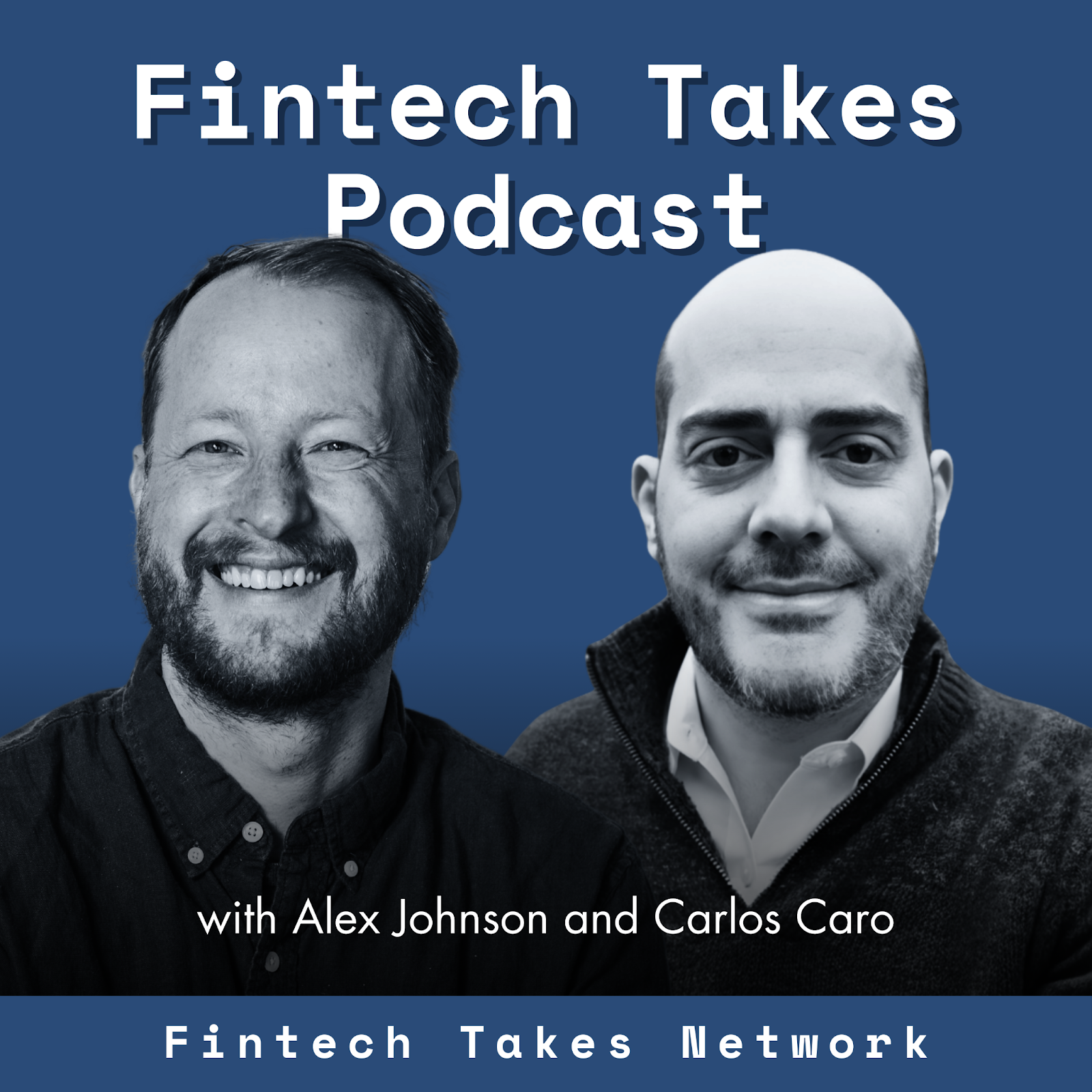
This week’s episode of the Fintech Takes podcast is a continuation of my recent conversation with Carlos Caro (author of the Free Toaster newsletter and host of the Free Toaster podcast) about MrBeast's acquisition of Step and what it might mean for the fintech ecosystem.
Instead of sticking with MrBeast, this episode looks backward. Wayback, by internet standards.
I’ve said it before, and I’ll say it again: there are no new ideas in financial services. If you think you’ve found a new idea, you haven’t done enough research yet. Celebrity fintech, especially celebrity fintech aimed at underserved consumers, is no exception.
So, Carlos and I traveled back in time to explore three 2010s-era products that failed in ways worth understanding for the present: The Kardashian Kard, Justin Bieber's prepaid card, and The Approved Card from Suze Orman. |
And read below for my three big ideas... |
#1: Before Fintech Could Afford Free |
The Kardashian Kard, Justin Bieber’s prepaid card, and Suze Orman’s Approved Card shared two things: celebrity distribution aimed at consumers who traditional finance hadn’t served well, and bank partners who needed the economics to work on day one.
The Kardashian Kard’s fees are an especially good illustration of that second attribute: $7.95 per month whether you used the card or not, $1 to check your balance at an ATM, $1.50 to talk to customer service, $2 for automatic bill pay, $1 to reload the card, $1 if your transaction is declined, $6 to close the card, and $10 to replace it. It's easy to look at that fee structure and conclude that someone was being predatory, but those fees were the inevitable symptom of a system where no one was willing to absorb any losses.
This was 2010. The CARD Act had just passed in 2009, reining in the most egregious credit card practices. Prepaid was excluded from that regulation, which is partly why it became the vehicle of choice for early fintech innovations (prepaid walked so that BaaS, as we know it today, could run).
But more importantly, venture capital wasn’t really flowing into consumer fintech the way it would in the late 2010s and early 2020s. This was before Chime. If you wanted to launch a prepaid card or neobank, your bank partner would insist that the unit economics on all parts of the program made sense on day one. And when you’re focused on serving unbanked and underbanked consumers, the math usually pencils out only one way.
Chime didn't solve this challenge through product innovation (though I’m a fan of many of its innovations). Instead, it raised venture capital to subsidize adoption with the hope that interchange volume would make the business viable at scale (the jury is still out on this strategy). The celebrity prepaid experiments of the early 2010s had no such runway. That's the context in which all three of these products lived and died. |
|
|
#2: Brand Alignment Is Foundational |
You have to nail brand alignment, which is harder than it looks.
The Kardashians had none. Their show ran from 2007 to 2021, peaking at roughly 3.5 to 4 million viewers per episode around 2010. They built a brand around aspiration, luxury, and conspicuous consumption. A reloadable prepaid card for underserved consumers sits about as far from that brand identity as it's possible to get. The card signed up 250 customers in the weeks before it started attracting negative publicity, and (soon after) the attention of the Connecticut Attorney General. Soon after, the family publicly turned on their own product.
Bieber's brand alignment was on point, at least in the beginning. He was 18, hadn't grown up with money, and his teenage followers lacked easy access to traditional banking products. The value proposition, a parent-managed prepaid card for that demographic, was real. He was years early to the teen banking category that Greenlight and Step now occupy.
But Bieber's behavior in the tabloids made him a difficult ambassador for parents to trust. (Plus, soon after, American Express launched Bluebird with no monthly fee and free ATM access, and Walmart launched its money card with a waivable $3 monthly fee, which raised the competitive floor.)
Out of the three products, Suze Orman’s card was the most future-leaning. She partnered with TransUnion to study whether anonymized debit transaction data could help influence credit scores (Suze was talking about cash flow underwriting WAY before it was cool!). However, her personal brand was too specifically aligned with being a trustworthy financial advisor, which meant that any fee-bearing product she attached her name to would be held to an impossibly high standard. That high standard (combined with some PR missteps) sank the Approved Card.
Serving underbanked and subprime consumers profitably requires pricing that, from the outside, almost always looks exploitative (even if it’s not). The higher the bar your brand sets around trust, the more exposed you are when the product's economic viability requires fees that undercut that trust. |
#3: To Make Money in Financial Services or Not? That Is the Question. |
Many of the ways that financial services companies generate revenue are unpopular with consumers, especially in the segments that celebrities are often trying to reach. In the early 2010s, without VC subsidization, unpopular and predatory-looking fees were very difficult to avoid for these celebrity-backed products. MrBeast has entered a very different financial services environment. Step is a venture-backed product. BaaS infrastructure has matured. “Zero-fee” products are a viable wedge (in fact, they’re table stakes). His distribution (470 million YouTube subscribers, with videos averaging 100 million views) operates at a scale that makes the Kardashians' show look modest by comparison. But the 2010s-era celebrity fintech experiments raise this question: do you want to make money on financial services, or do you want to use financial services to build brand equity? The Kardashians, Bieber, and Orman all tried to do both and failed. Locked into fee structures their bank partners required from day one, all three ended up with products that looked exploitative under scrutiny, regardless of intent. The brand equity didn't survive the economics.
MrBeast's other businesses don't carry this tension. With burgers and chocolate, you can (if you have a good product) make money and remain completely aligned with your brand. In financial services, that’s more difficult.
Recent fintech history points toward a path: treat Step as a brand asset first and a revenue line second. Break even, build trust, and let the halo compound across Beast Industries. The 2010s celebrities who were forced to prioritize revenue from day one paid for it with their reputations. Whether MrBeast has the runway and the willingness to absorb that tradeoff is the real question. |
|
|
One reason interchange is such a popular business model in fintech is that it’s a cost that’s invisible to consumers. They pay it (in the form of higher prices), but they don’t see it. Most other sources of revenue in financial services are much more visible, and that visibility often creates friction with consumers, consumer advocates, and regulators. |
|
|
Derek Thompson chats with C. Thi Nguyen, the author of a book (The Score: How to Stop Playing Somebody Else's Game) that I really enjoyed. |
I don’t listen to Dwarkesh’s podcast super frequently, but I’m glad I tuned in for this episode. As a history nerd, it was a very rewarding listen! |
Credit outcomes sit downstream of credit data, and today that data's fragmented and patched together by ~14 separate data integrations. The solution is to put consumers in control, and make data sharing easier than most providers do today (all while delivering the highest-fidelity data possible). Here's where it starts.
*this rec is brought to you by one of our fantastic brand partners |
|
|
Thanks for the read! Let me know what you thought by replying back to this email.
— Alex |
|
|
{if !profile.vars.fintech_takes_user_fitness && profile.vars.fintech_takes_user_fitness != false}Join 2,444 other finance and fintech leaders in the Fintech Takes Network
|
|
|
{/if}{if profile.vars.fintech_takes_user_fitness == true}The conversation doesn't have to stop here
Keep learning and connecting in the Fintech Takes Network
EVENTS | FEED | LIBRARY | DIRECTORY
|
|
|
{/if}Get your brand in front of 61,000+ fintech and banking executives. |
Workweek Media Inc.
1023 Springdale Road, STE 9E
Austin, TX 78721
Want to ruin my day? Unsubscribe. |
|
|
|