{if profile.vars.event_registration_completed != 'new_member_meetup' && profile.vars.safe_space_subscription_status == 'active' && (time("now") > profile.vars.onboarding_complete_time) && (time("now") < profile.vars.onboarding_complete_time + 604800)}
It looks like you're new to Safe Space. If you haven't yet, make sure to sign up for our New Member Meetup. It’s the best way to find your people, say hello, and get the support you need right from the start.
|
|
|
{/if}
Hi ya, Happy Friday to my fav emotionally resilient group of people! What falls every winter but never gets hurt? ❄️ Snow! ❄️
Sorry (but not really), I just had to blindside you with a corny joke while most of us mentally prepare for an icy weekend.
And now that I’ve almost certainly put a little smile on your face, we can move on to Q&A!
First up: how do you tell the difference between being burned out in HR versus being done with HR? Especially when you love people, risk mitigation, and doing things right, but the job is slowly draining you.
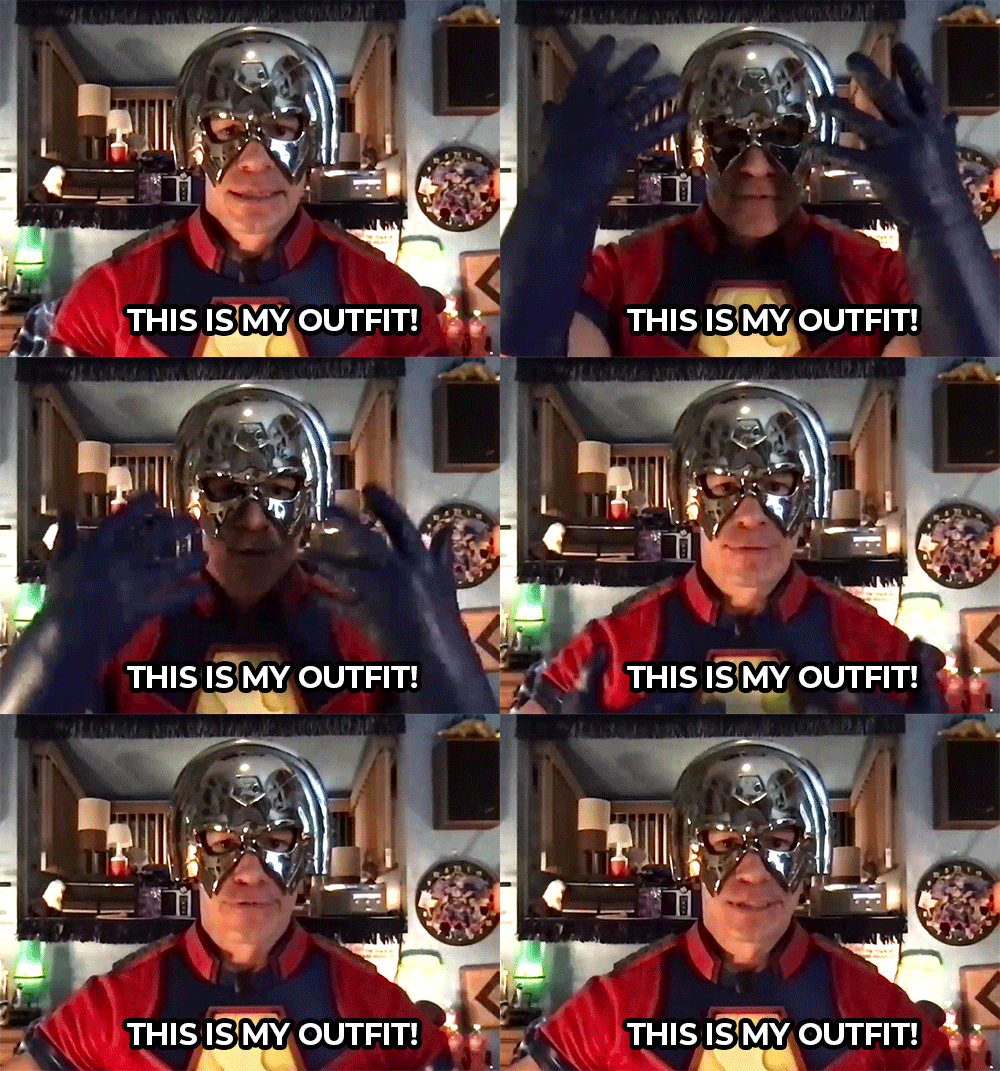
And then we’re shifting gears to dress and appearance policies. Are these policies actually doing what leaders think they’re doing, or just making unnecessary friction?
Grab something warm, and let’s talk about it! Also, submit questions if you have any!
| |
|
{if profile.vars.safe_space_user_fitness == true}
✨ Don't forget: You can always vent, celebrate a win, or find support in Safe Space | |
|
{/if}{if !profile.vars.safe_space_user_fitness && profile.vars.safe_space_user_fitness != false}
✨ Don't forget: You can always vent, celebrate a win, or find support in Safe Space |
|
|
{/if}{if profile.vars.safe_space_user_fitness == false}
Was this email forwarded to you? |
|
|
{/if}
✍🏾 How do you determine if a career in HR is for you or if you are dealing with burnout?
Context: I have been working as an HR Generalist for about five years now in various industries and for the first time ever, I am experiencing extreme burnout due to lack of general structure and rapid increase of work volume in employee relation cases. I primarily support a virtual call center environment of a head count of approximately 1800 members. It’s leading to consideration of wondering if a career change should be explored or if should take a break.
I love people and risk mitigating, but I am experiencing a level of discouragement throughout the process where partners either do not take recommendations, or issues lead to something that leads to major exposure and discouragement on employee morale.
In simple human terms, I feel like I am more of a machine than an HR partner with purpose. |
|
|
📣 Christine McCallum-Randalls, Director of People @ Test Double:
I'm sorry you are experiencing this. It's a difficult position to be in and unfortunately, an all too common one. Many companies take advantage of HR in this way.
Since you were able to say why you feel the way you do, it seems like deep down you think the problem is burnout at this company. People can only take so much of being ignored, especially when ignoring your advice only leads to bigger issues time and time again. I've been there and changing jobs is what helped me.
It's possible there are ways you could change your approach so that you are no longer ignored. Or perhaps it's time to find a new company that appreciates you. Do you have anyone at work that you can talk to like your supervisor, who can help you with strategies to help you get your solutions across so that they are implemented? Or, if you are so bold - and I mean bold - can you ask people what you could do better in the future to get your point across before things blow up next time?
📣 Cassandra Babilya, Creator @ Make Work Suck Less: When you said you feel more like a machine than an HR partner, I felt that. So first, I want to say that you deserve to be more than a cog.
I hear the drain in your post - the overwork, the devaluing of your expertise by leadership, and the sneaky little voice that says you're not doing enough. These are all systemic problems and if you can afford a break (a real one, not like a spa day) I highly recommend you take it. In the meantime, if an immediate job change isn't in the cards for you right now, let's do a bit of "diagnosis" on the burnout. Here are some questions to consider: -
There are many flavors of HR. Would a role with less emphasis on ER be more fulfilling? Have you put some feelers out to your network to see who needs a true HRBP?
- If the call center ain't it, would supporting a different industry or employee population feel more energizing or inspiring?
-
Is it primarily a leadership issue... i.e., if there was a leadership change (or change of heart) tomorrow, would it fix most of what you're feeling? And do you have the energy to continue fighting that battle?
- What can you do now to detach work outcomes from your emotional bandwidth?
-
If you weren't in HR, what would you be doing instead? What answer comes to mind that instantly makes your jaw un-clench?
Rooting for your next move - whether that's staying in HR and sculpting out a niche for yourself or finding something else entirely. 📣 Sondra Norris, Founder @ Strategic Culture Partners: This sounds rough. Supporting 1800 people and then failure to act in different ways is discouraging and probably personally depleting. I remember a span of 5 years when all HR did was lay people off. Every January and every October in cycles. It was incredibly disheartening to have a job dominated with that dynamic.
I also remember being in a similar situation, constantly hearing about all the problems and it really affected my own mindset. My boss coached me well one day when he said, "Your job is to hear the problems and figure out what they really mean. Remember that you love problem-solving." Your question is a big one "Is HR for me, or am I facing burnout?" and it probably feels really heavy - a clear indicator that the current situation is far less than ideal.
So, go back to what IS ideal and get yourself some perspective. - Beyond "I love people and risk mitigating," why are you in HR? In your 5 years, what have you learned about what you thought HR was and what it is?
-
What skills and competencies do you love to use? Most are completely transferable to other professions - but you might have to "start at the bottom" to learn the technical specifics of a new field.
-
Remember that in everything, we have very little control over outcomes - or at least there are a lot of variables that can affect our desired outcomes ... and so we have to find the joy and the satisfaction in GETTING to the outcomes, with all the challenges that path can have.
-
How long has this period been going on? What do you know about the business strategy that gives you hope that it's not going to last forever?
- Your partners are also in this field of discouragement which is contributing to their less-than-willing reception to recommendations. Everyone probably has the "why bother" mindset to some degree.
There are what can feel like an untenable number of variables to consider: the job market, the predictability of where you are, what is reasonable and unreasonable. All the more reason to step back, get some perspective, ease the hard feelings with clarity - even if it's only about you, what you want, and where you're going.
Safe Space members can join this discussion here. Not a member yet? Apply to join here.
|
|
|
✍🏾 Have we reached a point of clarity on the effectiveness of Appearance/Dress Policies?
Context: Ive experienced many discussions where it seemed dress/appearance policies in the hands of some leaders, detracted with the culture objectives of authenticity, fresh ideas and belonging.
|
|
|
📣 Lia Seth, Director of People @ Cylinder Health:
If you have any diversity on your team, you know that the same policy can be interpreted differently by different people. There are so many definitions of what is "professional," so if you use that word in your policy, spell out exactly what you mean! I published this note in our handbook: "We recognize that 'professional' can be a loaded word that carriers historical bias. We embrace diversity and do NOT define 'professional' by specific attire, appearances, or cultures."
📣 Katelyn Olsen, Director of Human Resources @ ECHO, Leahy Center for Lake Champlain:
You know how a lot of people have a quasi-boring topic that immediately sends them into white hot rage? This one is mine.
Policies should have a clear business or safety purpose. Appearance/dress policies are no different, so if an organization has a business or safety reason why someone can't wear a hoodie or jeans or open toed shoes, that might make sense. But policies that are based solely on vibes/control/preference/"professionalism" aren't strong policies. If what someone wears to work becomes an issue for a specific reason, you will almost certainly have another policy to use to address it.
I typically write my policies to say something like "Employees are expected to come to work in clean clothing that allows them to perform their duties comfortably and safely." If there's any interaction with the public, I add "Because we interact with the public, we ask you to exercise good judgement around the words and images that will be visible on your clothing. If you have questions, please ask!" 📣 Mandie Pendola, People and Culture generalist @ Metrie:
Personally, I’m not a fan of strict, “count-the-stitches-on-your-jeans” dress codes, but I absolutely believe some level of guidance needs to exist. As someone with anxiety, I need to know what’s considered appropriate, especially when starting somewhere new. No one wants their first week to include the intrusive thought: “Am I dressed like a professional adult… or like I wandered in from Walmart?” I think the most effective dress policies strike a balance: -
Clarity without micromanagement. Just tell me the big stuff! What’s okay, what’s not, and what’s going to get me side-eyed in a meeting.
- Respectful messaging. Anything with slogans that could be offensive or disrespectful should be off-limits. If your shirt can start a debate, maybe save it for the weekend.
-
Safety first. Every workplace is different. For example, I walk through the warehouse to leave the building, so closed-toed shoes aren’t a “dress code," they’re self-preservation.
-
Comfort = better work. I firmly believe people do their best work when they feel comfortable. If you’re cranking out projects at your desk all day, being comfortable shouldn’t count against you.
-
Context matters. Meeting with a client? Presenting to leadership? Maybe save the sweatshirt for later. I try to trust people to dress up when the situation calls for it.
While some more old-school thinkers may see comfort as unprofessional, I think most of us know how to adapt. Give employees guidelines, trust them to use good judgment, and focus more on their work than what they’re wearing.
A dress code doesn’t need to be rigid, it just needs to give people enough direction to feel confident, respected, and safe… without making them feel like they’re getting ready for school picture day.
Safe Space members can join this discussion here. Not a member yet? Apply to join here.
|
|
|
🎧 Who else is watching Industry? It’s one of my current fav shows, so I brought back Dave Garcia to break down parts that are uncomfortable, familiar, and weirdly educational to HR. Check it out on Spotify or Apple Podcasts!
💰 Pay Transparency matters (but it's also difficult). That's why I created this course. Join the Safe Space community to access it, plus everything else you need to stay ahead of the curve.
🧠 Given up on fixing performance because it feels too big? I sit down with Sarah Azadi at Workleap and we discuss why performance systems fail, why managers matter most, and how AI should support (not replace) human judgment. There will be so many juicy tactics shared to revive your performance management process. Don't miss this (on demand January 28th)!*
*This one is brought to you by one of my amazing brand partners
|
|
|
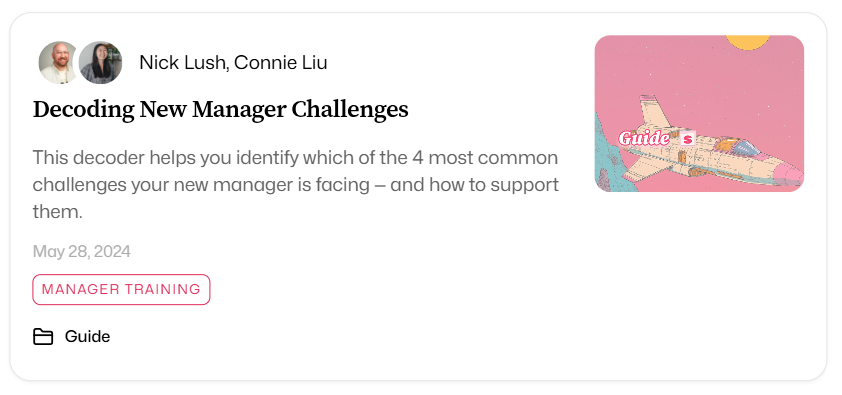
Each week I feature a resource I love from the Safe Space library that I believe would be relatable to this week's newsletter topic.
This week, we’re looking at new manager challenges. Check it out HERE ⬇️
|
|
|
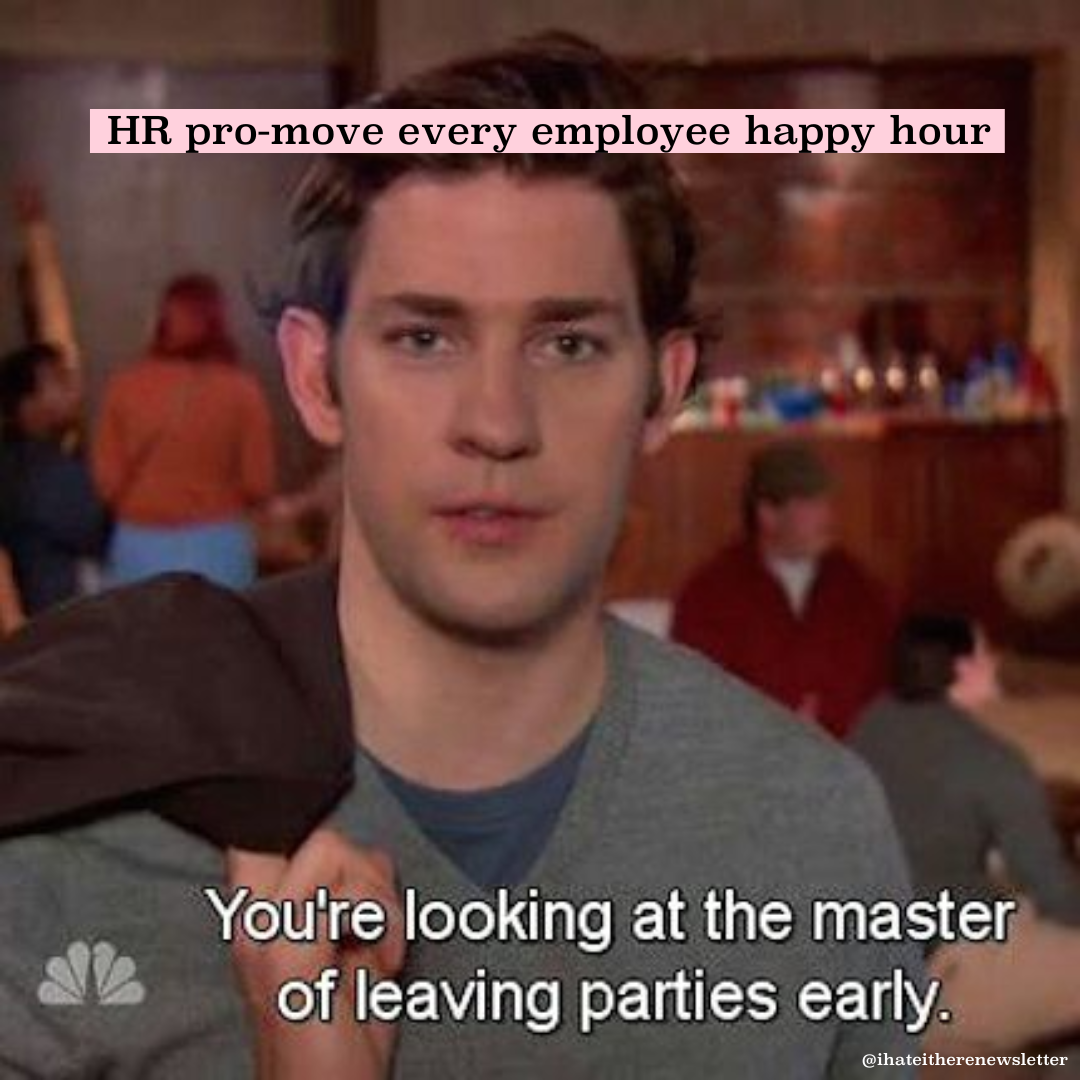
👀 is this you sneaking out of the event? |
If I'm not required to be there, I'm def not staying the whole time... What's your take? Stay till the end of depart in the night? |
|
|
That's all for this week! I hope you enjoyed! If you have any thoughts, please let me know. I'm allll ears. Reminder: Today is FRIDAY. 🙏 |
|
|
{if !profile.vars.safe_space_user_fitness && profile.vars.safe_space_user_fitness != false}Join 9,787 other HR and People leaders in Safe Space |
|
|
{/if}{if profile.vars.safe_space_user_fitness == true}
The conversation doesn't have to stop here
Keep learning and connecting in Safe Space |
|
|
{/if}Get your brand in front of 164,600+ HR and people operations leaders. |
Workweek Media Inc.
1023 Springdale Road, STE 9E
Austin, TX 78721
Want to ruin my day? Unsubscribe. |
|
|
|