{if profile.vars.board_room_user_fitness == true && (time("now") > profile.vars.user_fitness_reviewed_time + 7200) && (time("now") < profile.vars.user_fitness_reviewed_time + 1209600) && (!profile.vars.onboarding_complete_time)} {/if}{if hosp_dorm_120 == true}
Quick favor: Our records indicate that you aren’t opening this email. But records can be wrong. Please click here if you’d like to remain subscribed to Hospitalogy. | |
|
{/if}Fellow Hospitalogists,
Can you feel it in the air?
It’s 2026. A new year. A fresh start. You’ve made it your goal to get better at your job and learn more about this insane industry. Then suddenly, you come across a news article that Utah is about to allow AI to prescribe medication and you’re wondering what that’s all about. It leads you down a rabbit hole where you read more and more information on healthcare, and innovation, and AI, and strategy, and everything in between.
And then inevitably…where does that research bring you?
Back to me. |
Welcome to healthcare in 2026. |
Was this email forwarded to you? |
|
|
The big stories from the week |
Utah Partners with Doctronic to Enable AI prescribing - with a limited scope |
A headline about allowing AI certain permissions within prescribing is always a way to start with a bang entering a new year.
This week, the Utah Office of Artificial Intelligence Policy began a pilot with Doctronic to allow patients to refill prescriptions through the platform.
While some sensationalists may call this encroachment into uncharted territory, AI is not actually prescribing here. The program simply allows automated prescription renewals for a limited number of non-controlled substance drugs, and with strict parameters including physician oversight.
Really it’s just automating a process that is largely electronic and automated already. AI eliminates a few of those steps and makes it more consumer forward. What AI is NOT doing…is issuing new prescriptions. |
ChatGPT’s Big Healthcare Entrance |
OpenAI wants to own everything involving consumers and AI, and healthcare is no exception. In fact, healthcare probably presents the biggest opportunity. To that end, OpenAI unveiled ChatGPT Health, which seems to be, as I understand it, a dedicated portal/wrapper within ChatGPT separate from other conversations (to distinguish health-specific convos, which also potentially helps with liability but I digress) for healthcare and health and wellness conversations.
ChatGPT is creating a health super app.
ChatGPT wants to be your one-stop shop for all of your disparate health information (stop me if you’ve heard that before - Apple - ahem). While ChatGPT doesn’t intend to replace medical care or treatments, it DOES want to help you track your data over time and enable consumers to understand what’s happening over time rather than just at one point during your annual physical. But don’t worry. OpenAI won’t share your data. They have that completely under control.
Initial integrating companies into this functionality include Function (pun intended), Apple Health, MyFitnessPal, WeightWatchers, certain medical records, AllTrails, Instacart, Peloton, and b.well. Individuals can also upload files directly into this newer, more secure portal, but be honest - you were doing this already with regular ChatGPT, weren’t you? |
AI and the Great De-Skilling Effect |
Using AI leads to less critical thinking and more…slop. A recent WSJ article (thanks for sharing, Herd) noted a Lancet study which found that after 3 months of AI-assisted colonoscopies, GI docs regressed in their ability to find growths - a ‘de-skilling’ effect. I’ve personally found this to be true as well. Whenever I ask AI to summarize something for me, it’s better for my time and for sharing the research, but I don’t digest the content nor think through it nearly as well. And I dread to think of how the next generation is consuming content and learning things via AI natively. Maybe their brain is different from mine. I hope so.
What’s interesting about this finding is that the argument should be made that ALL procedures that can leverage AI should be using AI - and perhaps it will someday be malpractice NOT to use it. But then the obvious question becomes…how do you prevent de-skilling, reduction in critical thinking, and an over-reliance on technology (especially in a crucial profession like healthcare) that sometimes confidently states a completely incorrect datapoint as fact?
|
The Hospitalogy State of Health Systems Report: Healthcare is Entering its Autonomous Era in 2026 |
In case you scrolled past the first section announcing my first Hospitalogy report, I wanted to let you guys know that I have been absolutely cranking over the past month-plus: conducting interviews, talking with hospital and health system leaders, researching, and pulling nonprofit and for-profit financial statements.
And here it is. A huge personal feat for me, something I’ve wanted to add to the Hospitalogy ecosystem for a while, and something I’m proud to share with you guys. The Hospitalogy State of Health Systems. I cover a ton of ground in the report, and it will be immensely valuable to any hospital or hospital adjacent strategy and finance team. Topics covered include: - 2025 and emerging 2026 macro themes;
-
The new health system paradigm shift to automation;
- Analyzing Ascension’s new health system transformation playbook post-AmSurg announcement;
- Understanding the new era of AI-driven consumerism;
-
The unsustainable trajectory of physician employment;
- Specialty drugs as everyone’s main growth vector;
- Nonprofit and for-profit financial and operating benchmarks; and
-
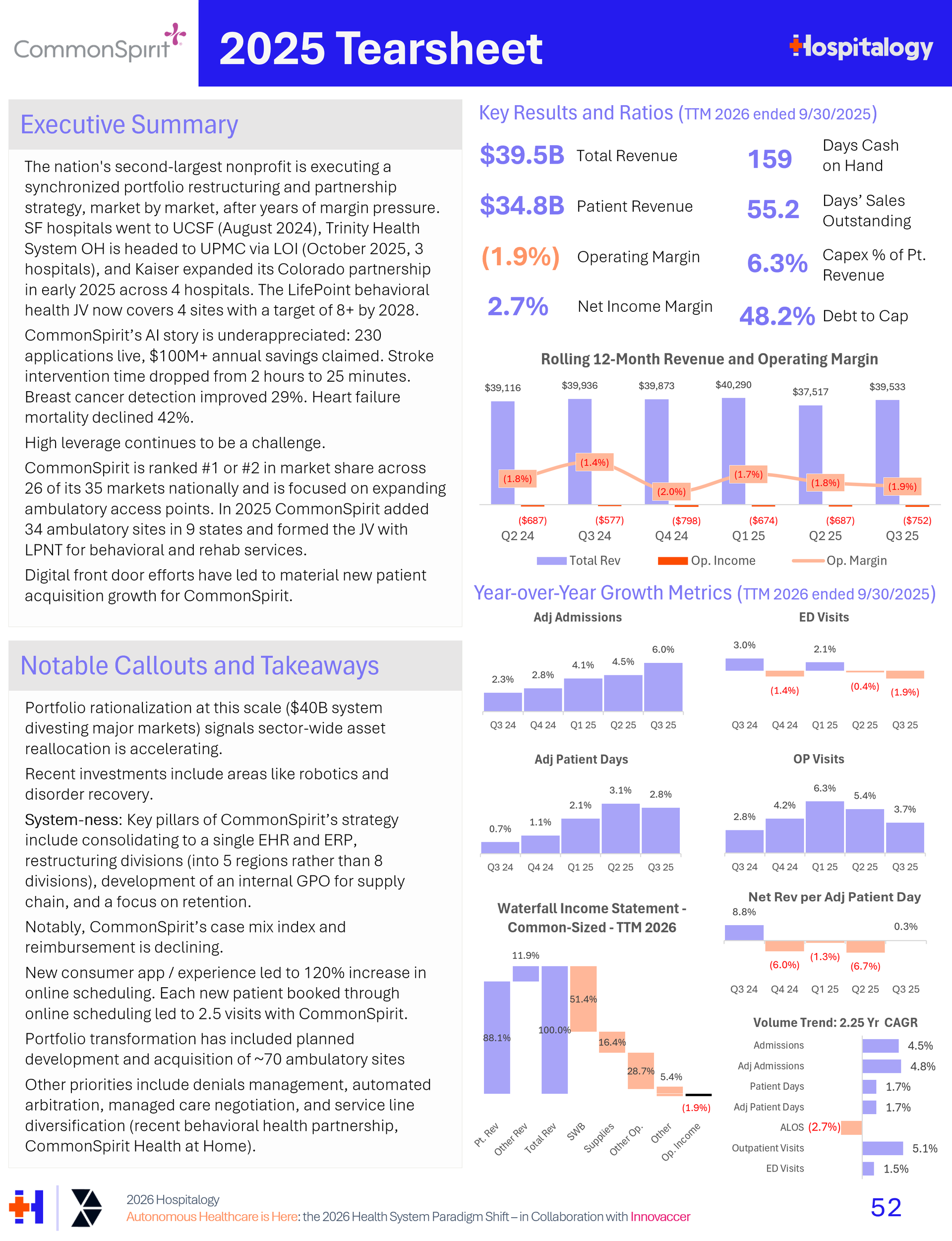
Tear sheets (like CommonSpirit’s below) with executive summaries and pertinent data on major, select health systems
And plenty more. I hope you’ll support me by downloading it. It’s actually kind of insane that it’s free, to be honest. Special thanks to Innovaccer for their work with me on this one!
|
By the way, I’ll be sharing the data behind this report in my community. If you’re interested in the excel files, I’ll be uploading that exclusively to plus Hospitalogy members. Apply here! Final note - JPM always brings a flood of announcements, and the conference is next week. Be on the lookout for plenty of interesting developments coming our way! |
|
|
THE WEEKLY EXECUTIVE SUMMARY |
Notable moves, policies, and strategies from around healthcare. |
Bain & Co released its annual Global Healthcare Private Equity Report, noting strong global healthcare deal activity and, interestingly, a note on transitioning PE-backed physician group investments into ‘scaled, integrated platforms.’ Specific callouts to unlocking value? Specialty drugs, value-based care, and ancillary expansion. Go ahead and put an exclamation point next to specialty drugs. They’re popping up everywhere.
Altaris completed the previously announced acquisition of Providence’s Tegria.
In healthcare staffing land, where nothing is happening and labor is low on the strategic priority totem pole (generally speaking), IntelyCare announced its intent to acquire CareRev. I imagine we will continue to see consolidation among players with synergistic platforms in the staffing space.
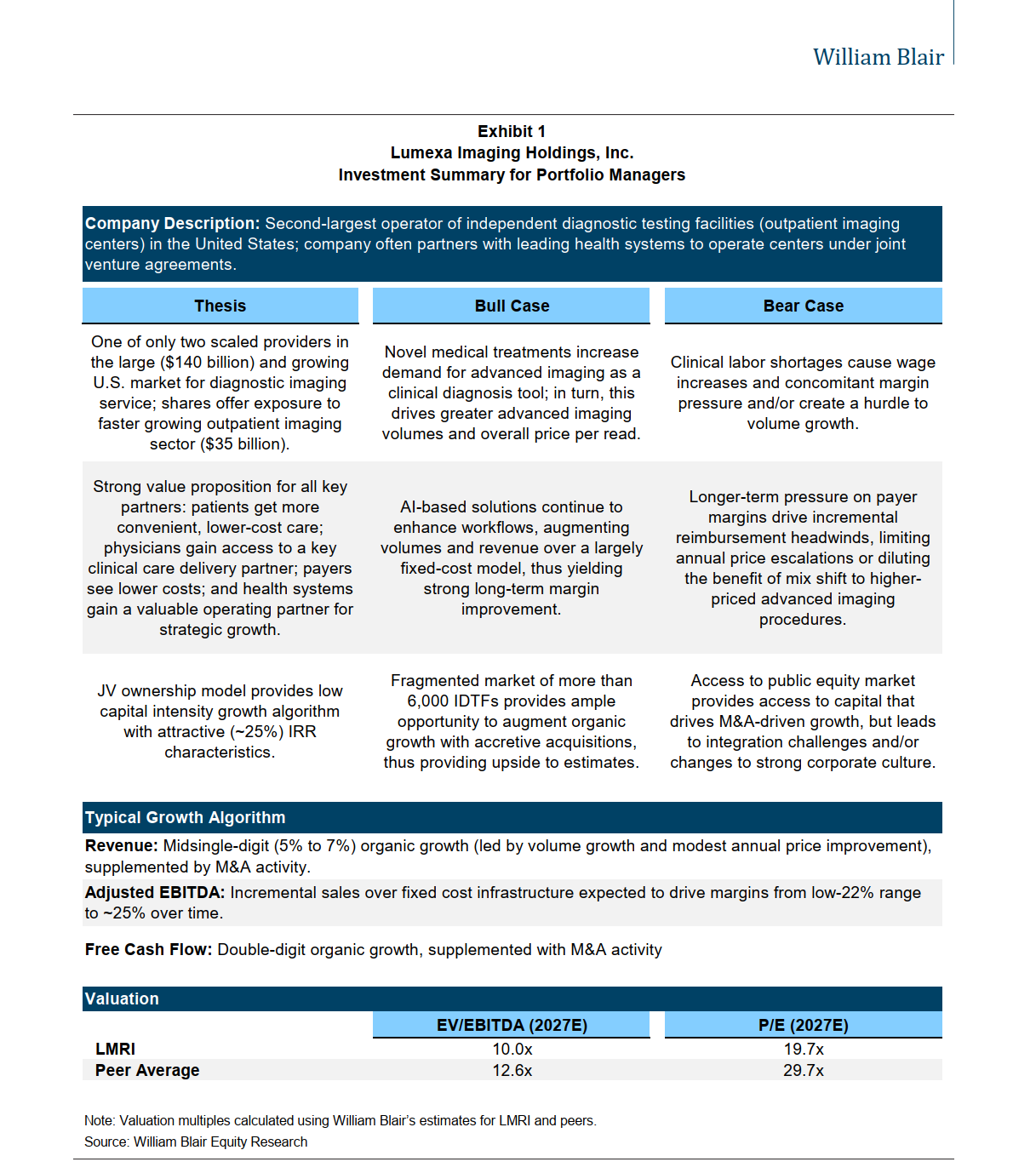
Coverage has been initiated on Lumexa (who provided an update on its de-novo growth in 2025 today) - I’m noting William Blair and JP Morgan as initiating coverage at outperform and overweight, respectively with the following investment thesis below. |
-
From JP Morgan: “We believe that LMRI possesses an intriguing growth story supported by favorable demand and positioning among patients and payers given the advantages to hospital-based settings for cost, convenience, and specialization as a patient-centric "focused factory" within diagnostic imaging. We believe the company's go-forward strategy to scale operations through de novo builds layered with strategic M&A is a compelling growth opportunity given potential upside, particularly under the company's differentiated JV-structured partnerships with existing health systems that should facilitate more favorable market density additions and new entry due to benefits across reimbursement and referrals. We also believe LMRI's existing scale, embedded earnings from ramping de novos, and focus on advanced modalities should support organic growth efforts in the near-term, with potential downstream benefits to operating leverage from AI/automation. With the broader market for outpatient diagnostic imaging growing in the ~MSD%, we consider growth expectations for LMRI to be reasonable and afford mgmt latitude for upside from continued expansion as the company de-leverages.”
In late December, CMS unveiled funding allocations for all 50 states. As a reminder, $10B in funding will be allocated over 5 years, from 2026 to 2030. -
50% of those funds will be distributed equally.
- 50% will be allocated based on state proposed policies, level of rural health funding and need, and more.
-
Here is a state by state breakdown of proposed use of funds
HHS revealed the new food pyramid with a focus on ‘eating real food’ along with a fancy webpage on the state of our health in America. The new food pyramid emphasizes protein and whole foods and targets for consumption for each. I found it exceptionally hard to scroll through the whole thing personally. A step in the right direction, but so much to solve for beyond basic guidelines remain. It’s also a tumultuous time for providers as guidelines and vaccine schedules shift and medical professionals deal with other external pressures like ICE raids in hospitals.
|
Will Congress extend ACA subsidies or not? The House is expected to pass a bill extending subsidies by 3 years, though it won’t pass the Senate. Maybe ever. At this point, most folks are probably just going to go the uninsured route, which as I and others have noted, creates an interesting (but alarming) market opportunity for cash pay.
Prenuvo is facing a high profile malpractice lawsuit over a radiologist missing obvious signs of a stroke in a 37 year old patient after conducting one of Prenuvo’s MRIs. Seems like a case of a bad apple radiologist that Prenuvo is paying the price for and is deemed liable for.
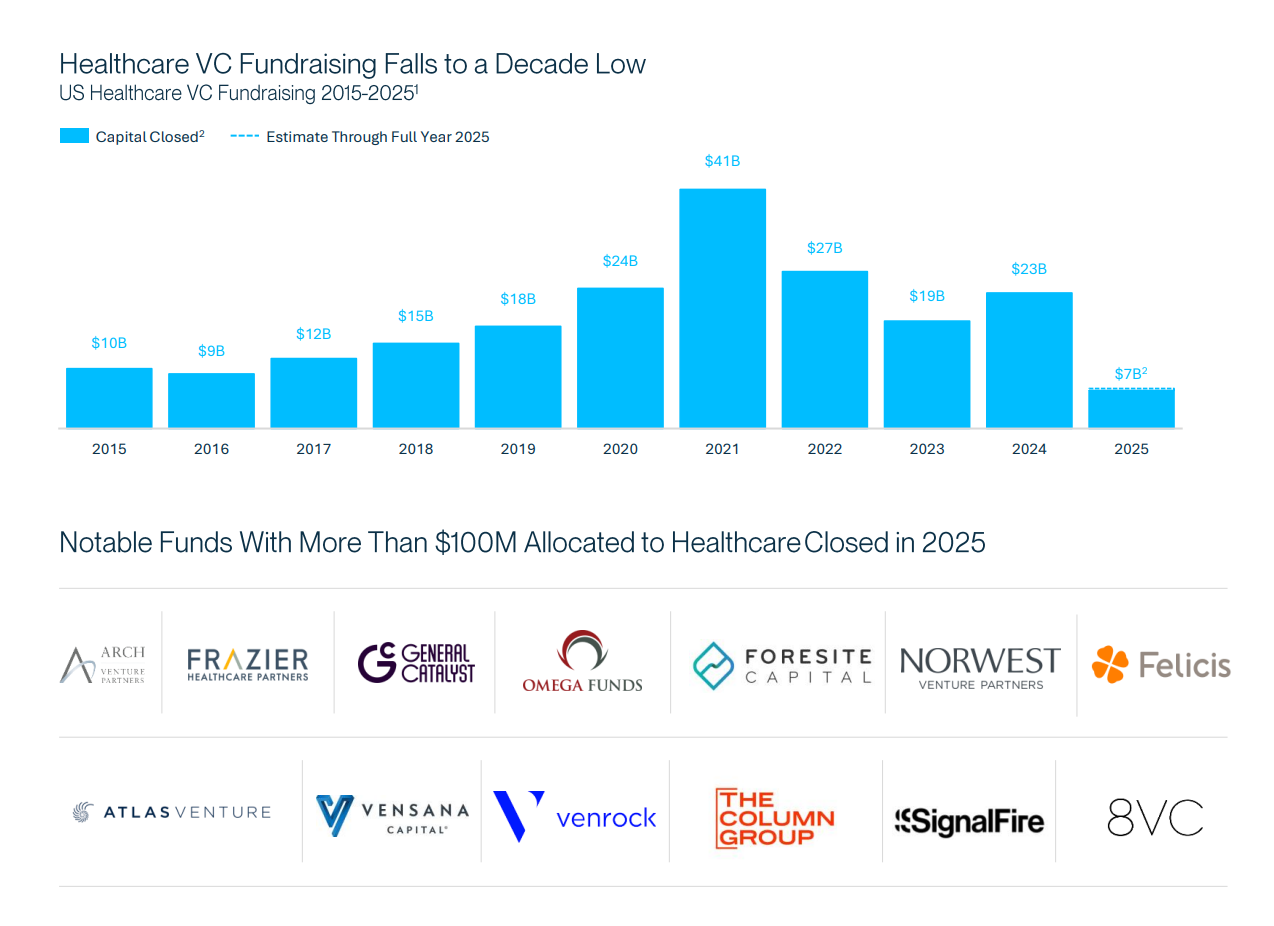
Silicon Valley Bank released their 2025 year in review report on fundraising and capital activity by healthcare sector. SVB found that AI-related investments drove 50% of fundraising in 2025. |
|
|
HOSPITALOGY TOP READS & RESOURCES |
My favorite healthcare essays from the week
|
I wish I had been in this room. This conversation between Optum’s Patrick Conway and Mark Cuban was a heated debate on PBMs, drug pricing, the structure of insurance, employer relations, and more. Conway seemed to belittle and patronize Cuban a bit, calling Cost Plus Drugs a ‘niche solution.’ -
“When you look at our client base on new clients, we had a net promoter score of 100,” Dr. Conway said…Mr. Cuban was quick to challenge those claims, at one point asking Dr. Conway to name one of Optum Rx’s biggest customers “so I can call them and see if they love you guys.” “Feel free to call any of our customers,” Dr. Conway responded.
-
“I appreciate all you’ve done,” [Cuban] said. “Between [UnitedHealthcare] and what you guys do, you’re not going to not help people — I get that. But there’s a reason why having 15 straight years of increased earnings, then having that streak stop, and then the CEO gets fired or leaves, that there are incentives that seem to be misaligned with offering the best price for patient care. It appears to me, anyways, that it’s very obvious.”
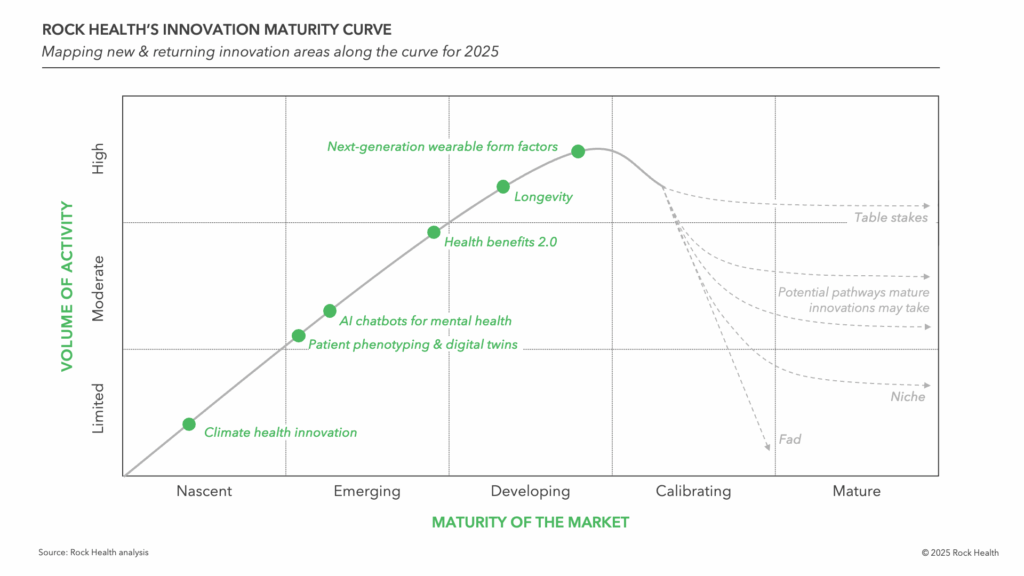
Rock Health shared their state of health tech innovation report near the end of 2025 and it’s always a worthwhile investment of your time. This year Rock Health noted several sectors and technologies and their opinion of where those sit on the innovation maturity curve. |
Goldman Sach’s 2026 global M&A outlook expects M&A to elevate this year (go figure, from a banker), but I do think this is directionally correct given relatively stable cost of capital, and healthcare will continue consolidation trends. Town Hall Ventures’ 2026 predictions include thoughts on ChatGPT, Medicaid, and emerging value-based care sub-capitated programs. |
|
|
The Madden’s are down for the count this week as we think baby Madden has the flu or some sort of virus. It is amazing how quickly things change after a couple of sleepless nights especially when you have to have higher brain functioning like writing, creativity, and conversations with great people for podcasts. Caffeine has gotten us through much of the week. I hope your new year is off to a much better start! I appreciate each and every one of you.
|
|
|
Thanks for the read! Let me know what you thought by replying back to this email.
— Blake |
| |
{if profile.vars.board_room_user_fitness == true}The conversation doesn't have to stop here
Keep learning and connecting in the Hospitalogy Network
EVENTS | FEED | LIBRARY | DIRECTORY
|
|
|
{/if}{if !profile.vars.board_room_user_fitness && profile.vars.board_room_user_fitness != false}I'm building a community of leaders in strategy, finance, and ops
at hospitals and health systems to help us connect, learn, and grow together. |
|
|
{/if}
Get your brand in front of 50,600+ executives and healthcare decision-makers. |
Workweek Media Inc.
1023 Springdale Road, STE 9E
Austin, TX 78721
Want to ruin my day? Unsubscribe. |
|
|
|