It looks like you're new to Safe Space. If you haven't yet, make sure to sign up for our New Member Meetup. It’s the best way to find your people, say hello, and get the support you need right from the start.
Cozy? Slightly feral? Still dissociating between leftovers and existential dread?
No judgment for any of these!
This is my final Friday newsletter of 2025, which feels absolutely wild considering all the “what the hell is happening” energy we survived this year.
Thank you for showing up, reading, venting, and trusting this space!
You mean the world to me <333333
If 2026 decides to be even messier, I’m holding onto the belief that HR is stronger when we stop pretending we’re fine and actually lean on each other.
We’ve got each other, receipts, and a group chat energy that refuses to die. 🥰
Alright, Q&A time! We’re digging into:
How to support a transgender employee during their transition without turning it into a performative circus or a legal nightmare, esp when coworkers are involved
What to do when leadership delays decisions, then conveniently blames you for employee disappointment around pay
So let’s get this party started, and submit questions if you have them!
{if profile.vars.safe_space_user_fitness == true}
✨ Don't forget: You can always vent, celebrate a win, or find support in Safe Space
✍🏾 What are some best practices and don't do's while a transgender employee is transitioning? Specifically, guidance on how to address/message with their co-workers.
Context: ~1,000 employees, 40+ states, employee-owned, federal contractor
📣 Dana Calder, SVP, People @ Spreedly:
I would start with the employee who is transitioning in terms of asking what they would want shared, how much detail and by whom. I would confirm pronouns, name, and timing. For communication approach, I would chat with the employee on if they want this to be in partnership with their leader, team, and department. Would they want the updates to happen organically? Would they want to share as they see fit?
And on the operations side, we would handle payroll records, benefits, Slack name and email. Most importantly, is handling this with their leadership here and honoring mutual respect and dignity. It is their story to tell and my role is to help facilitate that.
This is not only my approach at work but also with my transgender child.
I agree with starting by having a conversation with the employee about expectations and timing, documenting the process, and handling operational changes cleanly. Where I differ is how far HR should go beyond that.
Inside the workplace, transitioning isn’t a social initiative. It intersects with medical privacy, benefits, payroll, and anti-discrimination law. That means HR has to apply the same confidentiality and consistency we use for other medical situations, even while recognizing that transition can be more visible.
Employee preferences should guide what, if anything, is communicated, but HR still has an obligation to avoid unnecessary disclosure and unequal treatment. I’m cautious about announcements or standalone training tied to one employee’s situation, since we don’t do that for other medical events such as open heart surgery or IVF. It risks not only singling this employee out, but also creating a standard where other employees may feel they aren’t given the same level of attention, or worse, discouraging employees from sharing necessary medical information if they believe it will be processed or discussed company-wide.
If education is needed, it belongs in existing harassment and management training focused on expected workplace behavior, not on an individual's situation. Providing a neutral FAQ or talking points for managers only could be helpful to address questions in a consistent, legally sound way while still protecting confidentiality.
Allyship outside of work is personal and expressive. It need to be to serve it's purpose in society. But, allyship in HR has to be procedural, consistent, and fair across all employees for HR to serve its purpose within the company.
Agreed with all of this and would also say this is a great time to do an SOP. specifically on this so your steps are not lost for future situations.
Safe Space members can join this discussion here. Not a member yet? Apply to join here.
✍🏾 My boss said my opportunity was in analysis and decision-making because I didn’t secure the necessary partnerships before discussing a performance raise, which led the associate to expect more than she received. How should I handle a situation where a leader delays their input, then blames me for the associate questioning why an exceptional rating didn’t result in a higher raise?
Context: over 30,000 employees, over 200 stores in over 40 states, Fortune 500, Call Center
I've had success by reframing it as seeking their advice. Something like, "I thought I had been clear about needing that information and when I needed it. But I understand now that I wasn't. In the future, what can I do in order to make myself more clear when I have an urgent need?" Then I thank them in an email and reiterate the advice they gave.
Sometimes the answer helped me realize what I could do to improve. Other times, it's made them realize what they need to do to improve. Either way, the written record of the advice creates a nice paper trail so that they'll remember to give me what I need if I communicate as they requested.
📣 Anonymous @ N/A:
This is one of those situations that feels unfair because… it kind of is.
You can own the learning around tighter stakeholder alignment, and it’s reasonable to expect leaders to give timely input when comp decisions are on the line. Going forward, I’d document decision checkpoints in writing (who needs to weigh in, by when, and what’s approved vs. tentative) and be very explicit with associates about what’s final versus still under discussion.
In the short term, I’d circle back with your leader calmly, name the gap (“I didn’t have your input at the time. How do you want me to handle this next time?”), and align on a clear process so you’re not left holding the bag again.
Safe Space members can join this discussion here. Not a member yet? Apply to join here.
{ad_content_secondary}
🚨 ON YOUR RADAR
🎧 Bad jobs literally rewire your nervous system. Chris Hagood and I talk about how toxic cultures follow you long after you leave, and how to unlearn survival mode when chaos used to be your baseline. Check it out on Spotify or Apple Podcasts!
💰 Pay Transparency matters (but it's also difficult). That's why I created this course. Join the Safe Space community to access it, plus everything else you need to stay ahead of the curve.
🔁 What if offboarding didn’t feel awkward? Rival's customizable offboarding template gives you a simple, 6-step workflow to handle exits cleanly, without chaos or cringe! Now, you can make sure people leave on good terms (even when it’s just a seasonal goodbye or a New Year career move).*
*This one is brought to you by one of my amazing brand partners
📝 RESOURCE OF THE WEEK
Each week I feature a resource I love from the Safe Space library that I believe would be relatable to this week's newsletter topic.
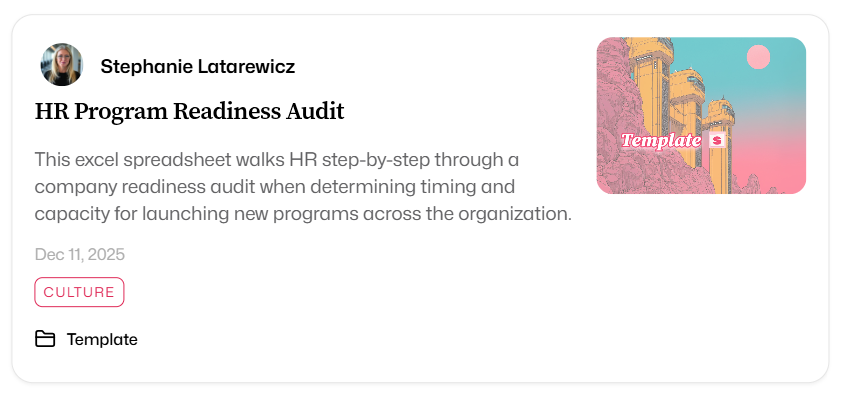
This week, we’ve got a company readiness audit. Check it out HERE ⬇️
FRIDAY FUN
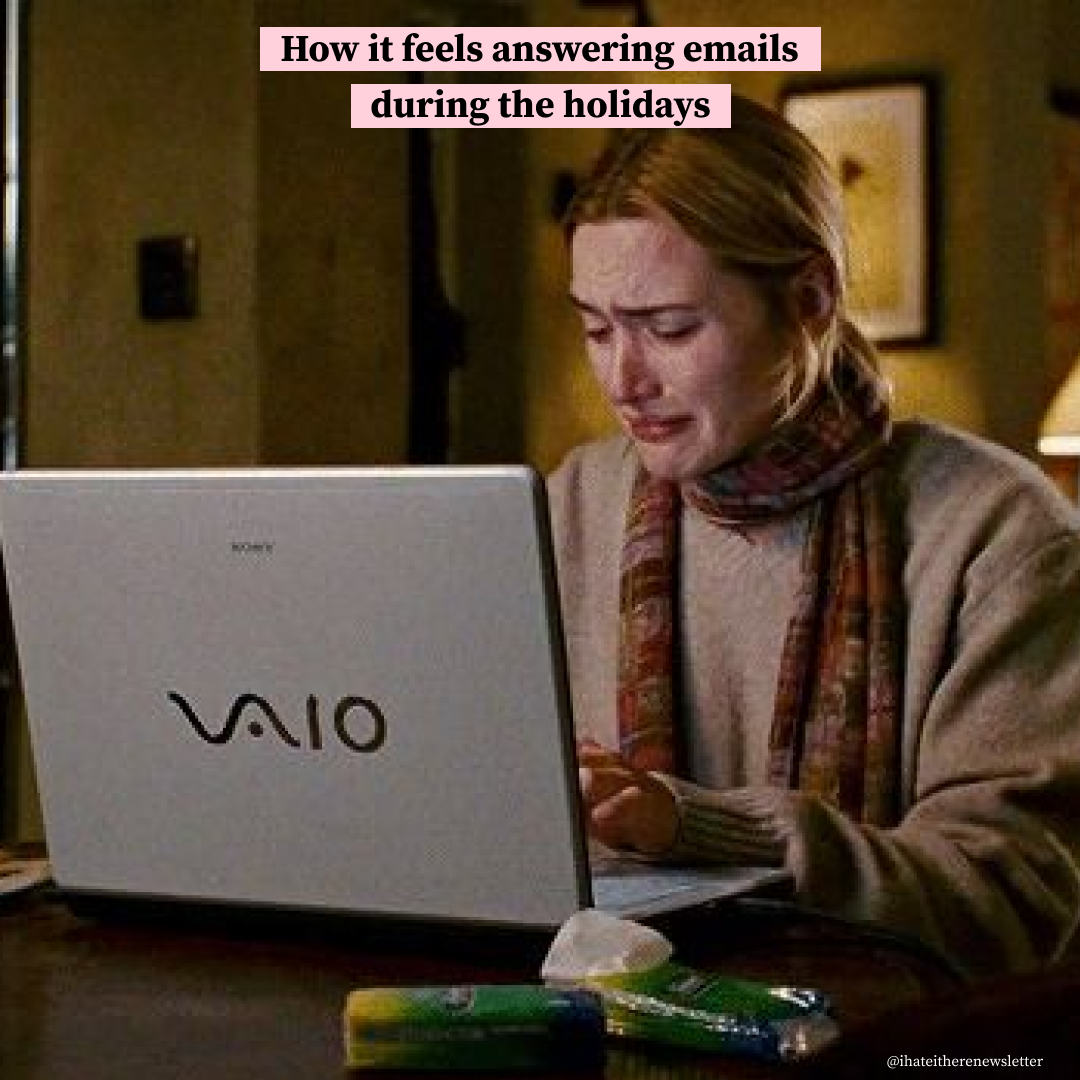
✍🏽 i don't want this and neither do you
Let's circle back in 2026 or never idk.
JK!!
I know everyone doesn't get to step away from work during this time but I do wish people would relax a bit during these times and respect that people are OOO and don't want to answer your email.
That's all for this week! I hope you enjoyed! If you have any thoughts, please let me know. I'm allll ears.
Reminder: Today is FRIDAY. 🙏
{if profile.vars.rh_reflink_13}
Sharing Is Caring!
Have friends who'd love I Hate It Here? Share with them via the link below and earn awesome rewards!
PS: You have referred {{profile.vars.rh_totref_13}} people so far