{if ftt_dorm_120 == true}
Quick favor: Our records indicate that you aren’t opening this email. But records can be wrong. Please click here if you’d like to remain subscribed to Fintech Takes. |
|
|
{/if}Happy Wednesday, Fintech Listeners!
I’ve got an excellent podcast to share with you today. That’s it. That’s the pitch. Ready? — Alex |
Was this email forwarded to you? |
|
|
3 BIG IDEAS FROM THE PODCAST |
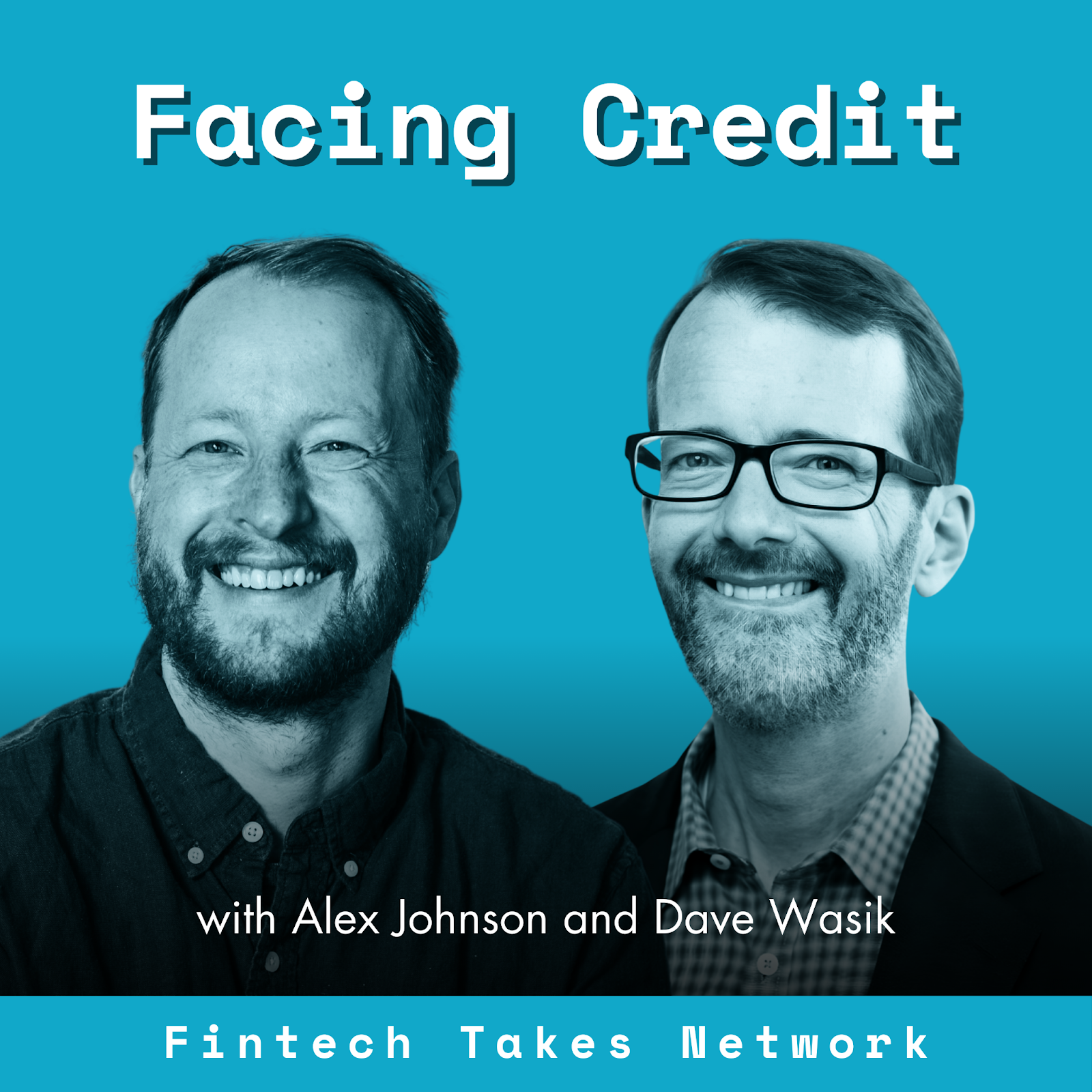
On this week’s episode of Facing Credit, I sat down with the delightful Dave Wasik (Partner at Second Order Solutions) to take stock of the consumer credit environment heading into 2026. We talk about everything, from credit cards and BNPL to subprime auto and student loans, plus the thing at the top of Dave’s worry board (listen and read on; all will be revealed!)
Essentially, the data says consumer credit is doing fine. Delinquencies are elevated, but not alarming, and none of the typical warning lights are flashing red. However, risk is shifting, and some of the rules that once held steady are starting to break along unexpected lines. Among the threads we pulled on: - What makes credit cards so stable?
- What’s going on in subprime auto?
- How concerned should we be about private credit?
|
And read below for my three big ideas... |
#1: Credit Cards: Old Reliable |
Resilience in credit cards comes from two places: consumers are still prioritizing their cards, and banks have a limited appetite to chase risk.
Delinquencies are up (and above pre-pandemic levels), but the line is holding steady. Usage is strong, and issuers report solid repayment. And as Dave put it, if all you saw were the monthly credit reports, you might think it was a great time to step on the gas. Consumers are prioritizing credit cards because they’re still required for lots of use cases (see renting a car or booking a hotel, for example) and because consumers like them.
In fact, the credit card is the most flexible, general-purpose liquidity solution that most consumers already have. Many see their credit card issuer as their primary bank (at least when it comes to spending). In the hierarchy of financial obligations (i.e., the order in which a consumer would choose to repay debts), the credit card tends to rank out very well.
But that’s only half the story. The other reason credit cards look stable is that they are offered by a small number of highly regulated institutions and managed by battle-tested credit risk teams. The top 10 issuers (Chase, Citi, Capital One, AmEx, etc.) control more than 80% of outstanding balances. They know what it looks like when losses spiral. And they know how to talk a CEO out of a dumb idea in a risky quarter.
Dave calls them steady hands.
But the market is changing. Bilt has become a major player. Robinhood and Coinbase are launching credit cards. And infrastructure providers like Cardless, Imprint, and Marqeta are trying to entice more brands to join them. However, none of these companies have managed large credit card portfolios through a full credit cycle. We can expect these new players to act less like steady hands and more like novice swordsmen, stepping into a category where incumbents already know each other’s steps.
So what?
Credit cards have always looked like a safe asset class. But their performance has depended less on the borrowers (though that’s still very important) and more on the issuers’ discipline and judgement. That discipline isn’t guaranteed; that judgment isn’t universal.
As the mix of players changes, so does the risk. It’s hard to grow a credit card business rapidly and do it in a disciplined way without the institutional ‘scar tissue’ that comes from living through a recession.
In this industry, stability isn’t only a feature of the product; it’s a function of who’s in charge. |
|
|
I absolutely love Dave’s framing on the state of the credit card market as benefiting from the “steady hands” of long-time issuers like JPMC and AmEx. And it’s an interesting contrast (as you will hear in this episode) to certain fintech lending categories like EWA and BNPL, which are structurally safer products in less steady hands. |
|
|
#2: Auto Loans: How Worried Should We Be? |
Auto lending isn’t the most alarming part of the consumer credit landscape right now (Dave puts it somewhere in the middle of his Family Feud board of things he worries about), but auto delinquencies are up more than pre-pandemic levels (and within auto lending, subprime auto lending has risen even more).
Some of that is due to macro conditions. Once the price for used cars went through the roof during the pandemic, buyers were left with few choices. Lenders stretched terms to make the monthly payment pencil out (that’s how seven-year auto loans became so common), even though it increased the risk for whoever ended up holding the paper. And some of it is due to the structural challenges in a market where direct lending volume (going to a bank or non-bank lender to get a loan) is dwarfed by indirect lending (getting a loan through a car dealership). As Dave and I discuss, in indirect auto lending, the dealerships have the power. And the dealerships’ main incentive is to move metal. These challenges pose some interesting follow-up questions, including a personal favorite of mine: where in the repayment hierarchy do auto loans sit these days? During the Great Recession, auto loans famously held up because, as the adage goes, “you can sleep in your car, but can’t drive your house to work.”
But now? With remote work and ride-sharing via Uber and Lyft, that logic may be breaking down.
For some consumers, especially higher earners, the car may be optional. For others (lower-income and gig workers in particular), the car is still essential.
Auto loan performance may no longer track neatly with income, delinquency risk, or macro conditions. It may hinge on whether your borrower needs the car (or could take the train). And if the meaning of car ownership is shifting, the repayment hierarchy might shift with it. That wouldn’t just affect auto lending. It would reach into the core of how lenders interpret behavior across every consumer lending product category. |
#3: The Biggest Credit Risk May Be the One No One Can Measure |
Private credit is growing fast. Estimates put the total market at $2 trillion. But it’s at the top of Dave’s worry board for one reason: there’s no real visibility into the risk. Unlike regulated bank lending, there are no required reserves, no standardized loss recognition rules, and no unified supervisory framework.
That might be manageable if private credit stuck to funding one-off corporate loans, but it’s spreading into asset-based finance: fintech-originated credit card portfolios, consumer installment loans, and embedded finance programs funded by private warehouses … many of them highly leveraged, interconnected, and unregulated. The catch with the usual, “how’s the consumer doing?” gauge is that we’re increasingly looking at the wrong slice of the market. As more BNPL and other personal loans get financed privately, performance data can overlook that set of borrowers.
And the shift is getting pretty enormous. KBW estimates that private credit deals made this year for fintech consumer lenders could support about $140 billion in lending globally, over the next few years (up from less than $10 billion in 2024).
In other words, a channel that was basically a side plot last year is now large enough to meaningfully shape how much credit gets created, and where it sits in the system. And when a side plot suddenly takes center stage, the risks scale faster. What’s concerning is we don’t have a shared system for recognizing when risk starts to pile up.
The banking sector has scars, regulations, and circuit breakers to slow things down. Private credit doesn’t.
In banking, there are rules (or, at least, well-respected norms) for when to mark losses and update valuations. In private credit, that timing is completely up to the lender, if it happens at all.
And as the risk shifts further outside the perimeter, so does the likelihood that when something breaks, it breaks everywhere.
The risk isn’t just hidden; it’s unacknowledged. There’s no data to either corroborate or refute what Dave’s saying, which is, well, kind of the point. And in a market this vast, that’s a problem. |
|
|
DIDMCA is suddenly a hot topic, thanks to the Tenth Circuit Court of Appeals! Kiah and Andrew Grant (fintech lawyer and great three-point shooter) break down the history and legal basis of exporting interest rates across state lines. |
I’m very intrigued with the solar lending market right now. |
|
|
Thanks for the read! Let me know what you thought by replying back to this email.
— Alex |
| |
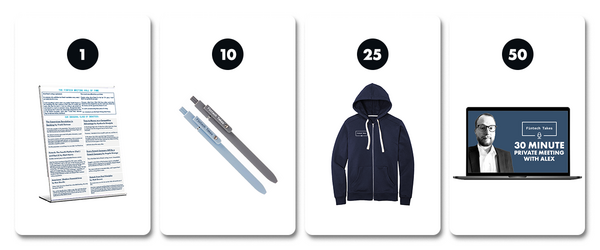
{if profile.vars.rh_reflink_11}  | Share with Fintech Takes, get cool stuff! | Have friends who'd love Fintech Takes too? Click the link below to share with your friends and get awesome rewards when they subscribe! | |
|
PS: You have referred {{profile.vars.rh_totref_11}} people so far | | Share Fintech Takes! | |
|
{/if} |
|
|
{if !profile.vars.fintech_takes_user_fitness && profile.vars.fintech_takes_user_fitness != false}Join 2,444 other finance and fintech leaders in the Fintech Takes Network
|
|
|
{/if}{if profile.vars.fintech_takes_user_fitness == true}The conversation doesn't have to stop here
Keep learning and connecting in the Fintech Takes Network
EVENTS | FEED | LIBRARY | DIRECTORY
|
|
|
{/if}Get your brand in front of 55,000+ fintech and banking executives. |
Workweek Media Inc.
1023 Springdale Road, STE 9E
Austin, TX 78721
Want to ruin my day? Unsubscribe. |
|
|
|