👠 Keep it moving.
Superfans want to feel valued by the brands they support.
Brands want superfans who are safe, cool, and aligned with their values, voice, identity, etc.
These are equally valid and important desires. But, this is a “same storm, different boats” situation.
When things go sideways with a superfan, brands have more to lose.
Responding is more likely to fan the flames than extinguish the negativity.
The brand has to be the bigger person, so to speak.
If your brand doesn’t have something nice to say, good news…
😶 Shutting up is free.
Let’s say you’re working with an influencer who’s no longer on-brand.
Might I suggest a slow fade??
Don’t disinvite them from an event or rescind an opportunity they’ve accepted.
Downgrade them, carefully. Take their name off the list for the next 1.
There’s no need to explain before or justify after.
And please, please, please AVOID putting anything in writing.
Receipts you give can and will be used against you in the court of social media.
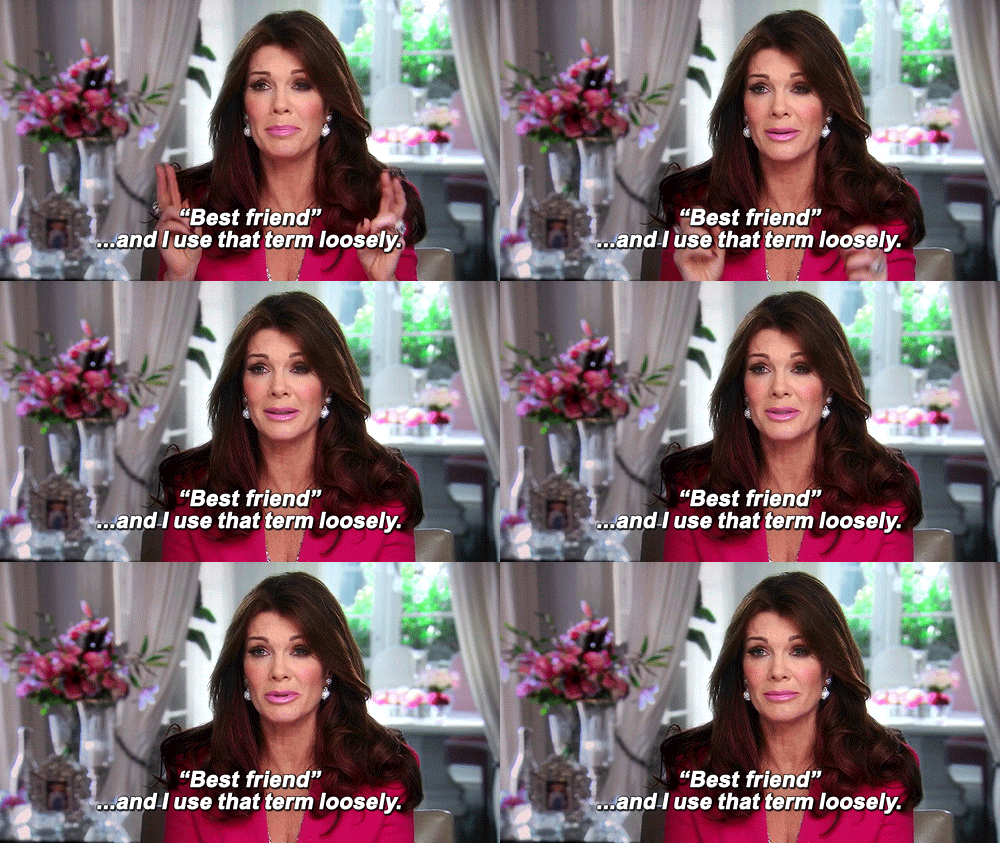
In the immortal words of Our Lady Dorinda Medley of Real Housewives, “Say it, forget it. Write it, regret it.”
🆘 If you absolutely must say/write something, stick to the script. (And if you don’t have a script, you need one ASAP.)
98% of the time, the best thing to do is NOTHING.
Start nothing. Respond to nothing.
The 2%, when there’s a genuine risk or misinformation, calls for the most private and least confrontational response possible. Ideally, NOT in writing.
Brands need clear internal procedures for handling creators and superfans.
This information needs to be accessible to EVERYONE on the team who interacts with them.
Every response from someone at your brand is official in the eyes of the world.
It only takes 1 misstep to get cancelled, memed, or end up a blind item.
You’re smarter than that.