{if ftt_dorm_120 == true}Quick favor: Our records indicate that you aren’t opening this email. But records can be wrong. Please click here if you’d like to remain subscribed to Fintech Takes. |
|
|
{/if}{if membership_newsletter_optin == 'true'}
It looks like you’re a Fintech Takes Network member but haven’t been receiving the newsletter. We’ve added you to make sure you get the full experience (and if you’d rather not get it, you can always update your preferences at the bottom of this email). |
|
|
{/if}Happy Monday, Fintech Takers!
I hope you had a lovely weekend! Mine was … interesting. Somehow, the pressure in the front left tires of both of my vehicles is low, which is a weird enough coincidence that it half-jokingly makes me believe that there is foul play involved.
And, in fact, suspected foul play is a bit of a theme in today’s newsletter. Read on for the details … - Alex |
Was this email forwarded to you? |
|
|
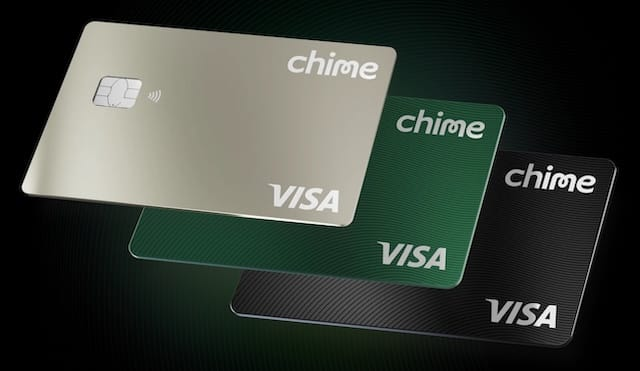
Chime rolled out a secured credit card that offers rewards:
Chime has grown into the largest U.S. digital bank without offering a financial product beloved by Americans: a credit card with rewards. Today it announced one that provides 1.5% cash-back rewards on several categories of spending including groceries, restaurants and gas. The company says it can change those categories every few months.
It’s a secured card, meaning customers must keep money in their Chime account, and the amount they maintain becomes their spending limit. Secured cards are considered a way for those with thin or weak credit histories who wouldn’t qualify for typical credit cards to improve their credit scores. |
This is an upgrade of Chime’s original secured card — the Chime Credit Builder Card. Like the prior card, this new product has no annual fee, APR, or minimum security deposit.
Unlike the prior card, the new Chime Card’s credit limit is set dynamically, based on the money in your linked Chime deposit account and your current balance. This is a significant improvement over the manual funding experience required by the old product and brings Chime’s offering into competitive parity on this front with Current’s Build Card.
Also unlike the prior card, the new Chime Card offers rewards!
1.5% cash back in rotating quarterly spend categories such as restaurants, groceries, gas, and utilities. That puts it beyond the realm of secured credit builder cards like Current’s Build Card (which offers a more limited form of rewards) and into the realm of traditional secured credit cards offered by issuers like Capital One and Discover.
Those more traditional secured credit cards do not require customers’ direct deposit, which the Chime Card does in order to earn rewards. And those traditional secured credit cards allow customers to revolve a balance, whereas the Chime Card requires payment in full at the end of every month.
The implications of that second design choice (to allow or not allow revolving debt) are fascinating. On the one hand, Chime’s choice protects its members’ financial health (and credit scores) by not allowing them to take on revolving credit card debt (which is always one of the most expensive forms of borrowing … the interest rates on the Discover and Capital One cards are currently 27% and 29% respectively). However, that interest income also subsidizes more generous rewards. Discover’s card offers 2% cash back on gas and groceries (on up to $1,000 per quarter in spending), plus 1% unlimited cash back on all other purchases. Capital One’s card gives 1.5% unlimited cash back on every purchase.
This is the tension of being Chime. This is why the company’s stock price slid despite reporting earnings that beat Wall Street analysts’ expectations.
Do you offer a more compelling and profitable product, if it’s also more dangerous for your members? Do you stick to your guns and continue to require a direct deposit to access all of your premium products and features? Or do you weaken those standards to juice growth numbers (which is something the company has been experimenting with)? Shit, even the different design options of the physical card reflect this strategic uncertainty. The card comes in green or black, or, for a $50 fee, titanium. |
#2: LLMs Will Always be Golden Retrievers |
A new paper from researchers at OpenAI and a professor at Georgia Tech argues that large language models (LLMs) will always hallucinate:
OpenAI, the creator of ChatGPT, acknowledged in its own research that large language models will always produce hallucinations due to fundamental mathematical constraints that cannot be solved through better engineering, marking a significant admission from one of the AI industry’s leading companies. “Like students facing hard exam questions, large language models sometimes guess when uncertain, producing plausible yet incorrect statements instead of admitting uncertainty,” the researchers wrote in the paper. “Such ‘hallucinations’ persist even in state-of-the-art systems and undermine trust.” |
Students facing hard exam questions is one analogy you could use to describe LLMs.
(Editor’s Note — I remember a high school teacher walking me through the math of why it’s always better to guess for SAT questions that you don’t know the answers to, rather than leave them blank. Say what you will about Mrs. Thompson, but she made damn sure we understood that!) Another example I’ve used before is an intern — smart, coachable, and hardworking, but prone to making frustratingly simple mistakes, even when they should know better.
A new analogy that occurs to me, after reading this article, is a Golden Retriever. Fun, affirming, and non-threatening, but also so eager to please that it will always try to do the thing it thinks that you want.
This, as the AI researchers point out, is a flaw that is exacerbated (much as annoying dog behaviors are) by bad training:
Beyond proving hallucinations were inevitable, the OpenAI research revealed that industry evaluation methods actively encouraged the problem. Analysis of popular benchmarks, including GPQA, MMLU-Pro, and SWE-bench, found nine out of 10 major evaluations used binary grading that penalized “I don’t know” responses while rewarding incorrect but confident answers. “We argue that language models hallucinate because the training and evaluation procedures reward guessing over acknowledging uncertainty,” the researchers wrote.
However, this research would seem to confirm my belief that even with better training and evaluation methods, a certain amount of inconsistency and inscrutability are inherent to the way these models work:
This isn’t to say that GPT-5 (and other frontier models) aren’t smart or capable. Of course they are. It’s just that they’re also inconsistent and difficult to explain. And that lack of consistency and explainability isn’t a bug that will be ironed out in GPT-6 or GPT-7. They are inherent to the way LLMs work, and likely always will be. If that is true, it will always make LLMs a poor fit as a technology for enabling automation within financial services. That, for better and worse, is a job for Siberian Huskies/ML models; inflexible, difficult to train, but highly reliable. |
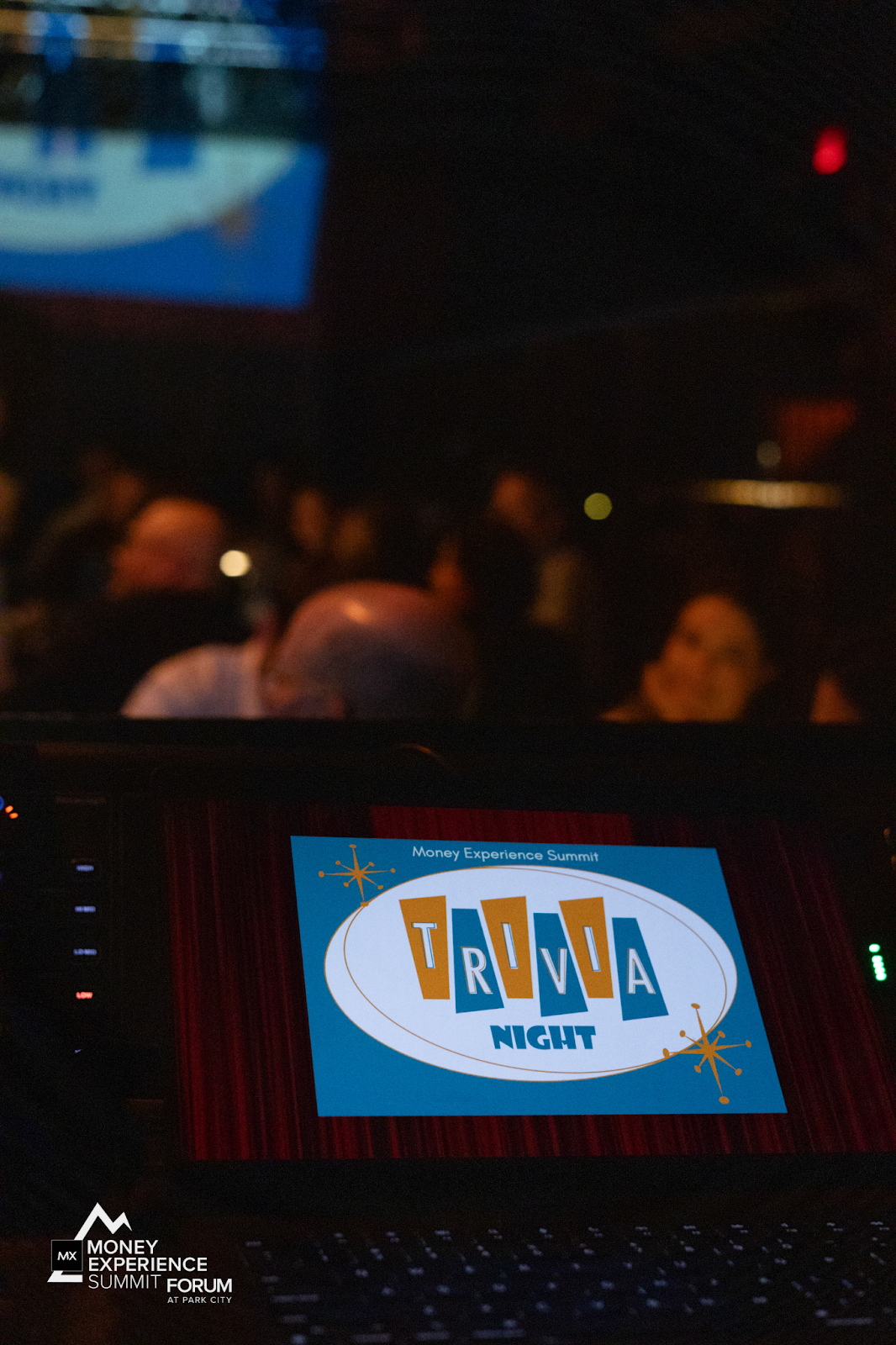
Last week, I had the distinct pleasure of co-hosting Trivia Night at the MX Money Experience Summit with my brother Nate.
It was a ton of fun, although I did hear some disturbing rumors about possible cheating, which I clearly warned all the participants against. Next year, Nate and I may need to be more strict!
Regardless, I thought it would be fun for those of you who missed the Summit this year to have the chance to play, so without further ado, I have listed the first 30 trivia questions below.
(The fourth and final category was music, which doesn’t translate well in a newsletter.)
If you want to play (and you pinky promise not to cheat!), hit reply to this email with your answers, and I’ll let you know how you scored! |
Round One (Animals): 1. Weighing up to 2,000 pounds, what is the largest mammal in North America? 2. The unicorn is the national animal of which country? 3. Punxsutawney Phil, seer of seers, prognosticator of prognosticators, is the most famous of what kind of animal? 4. What are the only two mammals that lay eggs? 5. What are the largest and smallest mammals on Earth? 6. What is the fastest animal in the world, and was the first animal to be classified as endangered? 7. Which bird, made into an important symbol in a Samuel Taylor Coleridge poem, has the largest wingspan of any bird? 8. Match the animal - Owls
- Flamingos
-
Butterflies
- Lemurs
with the name for a group of that animal. -
- A conspiracy of …
- A flamboyance of …
- A parliament of …
- A kaleidoscope of …
9. How many legs, including the claws, does a lobster have?
10. Drawing the inspiration for its name from the ancient Egyptian civilization that revered cats, what is the name of the cat breed that doesn’t have fur? Round Two (Financial Services):
1. What does FDIC stand for?
2. What is the only U.S. state that doesn’t have a money transmission license? 3. What is the numerical range of the FICO score?
4. Which banking regulatory agency is the oldest? - The FDIC
-
The CFPB
- The OCC
- The Federal Reserve
5. What is the name of the financial metric that is used to predict bank failures by comparing a bank’s bad loans to its capital and reserves? 6. Which section of the Dodd-Frank Act gives consumers the right to share their financial data (AKA Open Banking)? 7. What well-known Wall Street bank was given the nickname “Vampire Squid” in 2009 because of its pernicious influence? 8. What year was the New York Stock Exchange founded? 9. Who was the founder and first CEO of Visa? 10. Max Levchin, Peter Thiel, and Elon Musk founded which fintech company? Round Three (Geography): 1. What is the longest (above-water) mountain range in the world? - The Andes
- The Rockies
- The Alps
- The Himalayas
2. What country has the most islands in the world? 3. What is the smallest country in the world? 4. From which country did the U.S. purchase Florida from? 5. What U.S. state borders the most other U.S. states? (Hint: There are two. Bonus points if you can get both.) 6. Which country produces the most tea? - China
-
India
- Sri Lanka
- Kenya
7. What is the name of the geyser in Yellowstone National Park that is known for erupting roughly every 90 minutes? 8. Which continent covers all four hemispheres?
9. What is the largest desert in the world? (As defined by a region that receives less than 10 inches of precipitation a year.) 10. What is the only U.S. state that can be typed in using only one row of a standard “QWERTY” keyboard? |
|
|
2 READING RECOMMENDATIONS |
I know the Center for Responsible Lending isn’t beloved in the fintech community (and I sympathize with many of the reasons why), but this longitudinal research study from the CRL on D2C EWA is useful data, and we should all wrestle with it and learn from it. |
Bank accounting is weird and funny and interesting, and I’m very glad that Kiah is here to explain it all to us. |
No shortcuts: BaaS is in the middle of a flight to quality, and picking the wrong bank partner is existential risk. See what it means.
*This read is brought to you by one of our amazing brand partners. |
There are a TON of interesting questions being asked in the Fintech Takes Network. I’ll share one question, sourced from the Network, each week. However, if you’d like to join the conversation, please apply to join the Fintech Takes Network.
Is generative AI making romance scams worse and/or more prevalent? And if so, any ideas on how to counter it? If you have any thoughts on this question, reply to this email or DM me in the Fintech Takes Network! |
|
|
FINTECH TAKES: BUILDERS SUMMIT |
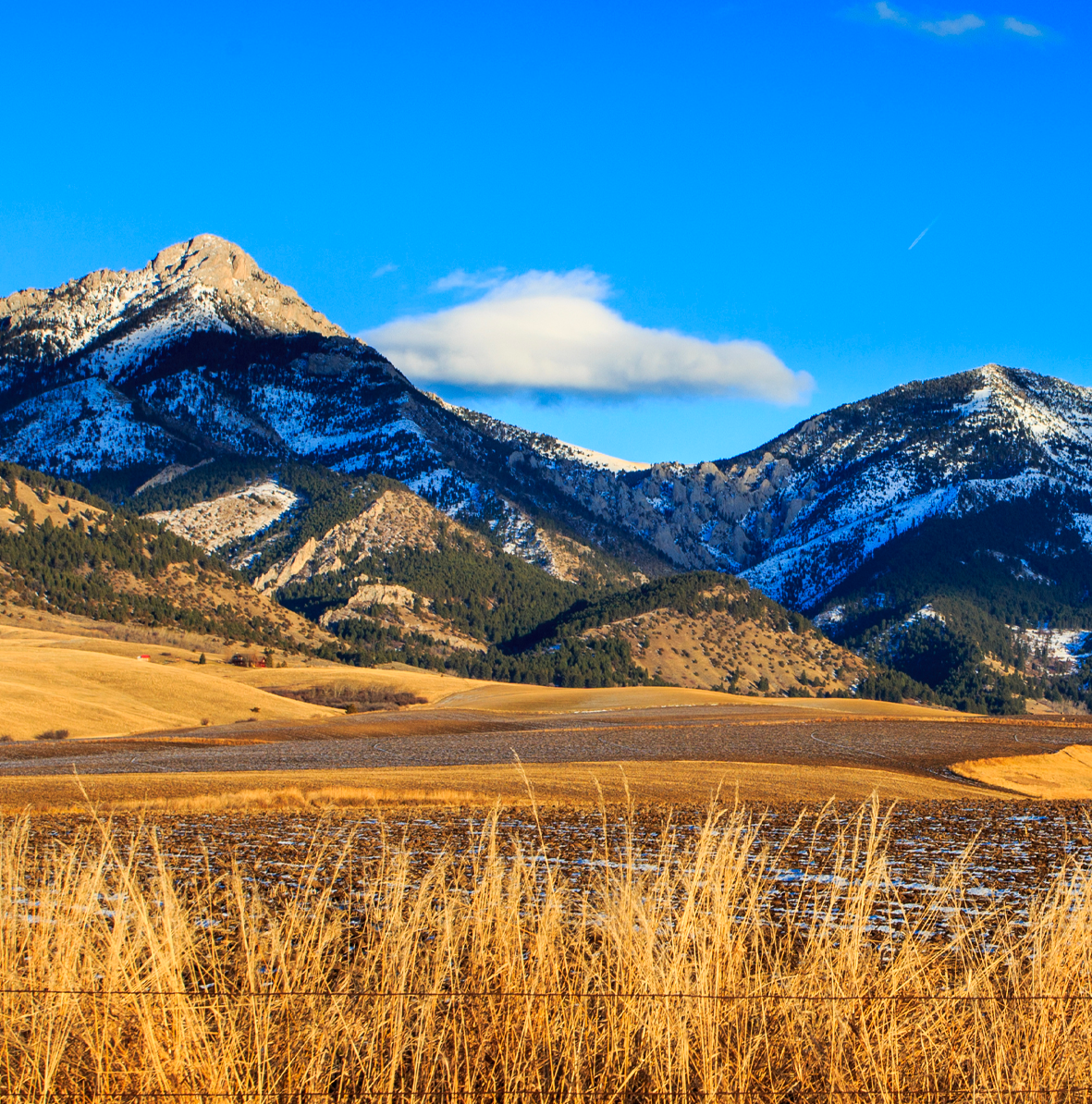
As you may know, Fintech Takes is hosting our first-ever in-person event on November 12th and 13th in the mountains outside Bozeman, Montana.
The Fintech Takes: Builders Summit is the industry event that I’ve always wanted, but have never quite been able to find. We are bringing together experienced founders and operators from banking and fintech — the folks who are actually building products in our industry — and giving them the content and networking opportunities they need to find (and understand) the next big problem they are going to tackle.
If that sounds like something you’d be interested in participating in, apply to attend or hit reply to this email to get more information on sponsorship opportunities. We still have room, but it is going fast! |
|
|
Thanks for the read! Let me know what you thought by replying back to this email. — Alex |
|
|
{if profile.vars.rh_reflink_11}  | Share with Fintech Takes, get cool stuff! | Have friends who'd love Fintech Takes too? Click the link below to share with your friends and get awesome rewards when they subscribe! | |
|
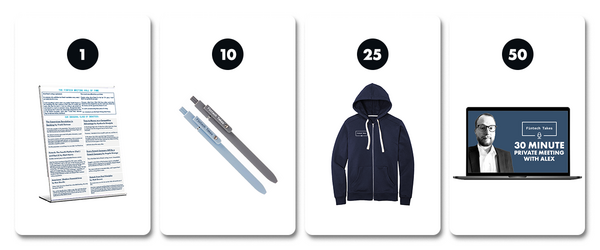
PS: You have referred {{profile.vars.rh_totref_11}} people so far | | Share Fintech Takes! | |
|
{/if} |
|
|
Get your brand in front of 56,000+ fintech and banking executives. |
Workweek Media Inc.
1023 Springdale Road, STE 9E
Austin, TX 78721
Want to ruin my day? Unsubscribe. |
|
|
|