{if profile.vars.marketingland_user_fitness == true && (time("now") > profile.vars.user_fitness_reviewed_time + 7200) && (time("now") < profile.vars.user_fitness_reviewed_time + 1209600) && (!profile.vars.onboarding_complete_time)}{/if}
Hey Marketing Bestie,
Welcome to Marketing Classics 411, a new kind of ancient history. In place of hieroglyphs, expect to decipher the campaigns of yesteryear. Professor Millennial teaches every Tuesday (remotely), via electronic mail. Class is now in session. 🛍️ | Was this email forwarded to you? |
|
|
How Shopify Went From A One Man Snowboarding Store To A $142 BILLION Giant |
We take a lot of the modern internet for granted.
Like being able to buy something online without faxing a form or mailing a check.
Now, a teenager can launch a store from their bedroom and be taking credit cards by dinner.
But that jump didn’t happen overnight.
In fact, it’s a story 20 years in the making. A story of friction, innovation, and a few bold bets that redefined how we buy and sell online.
This… is the story of Shopify. |
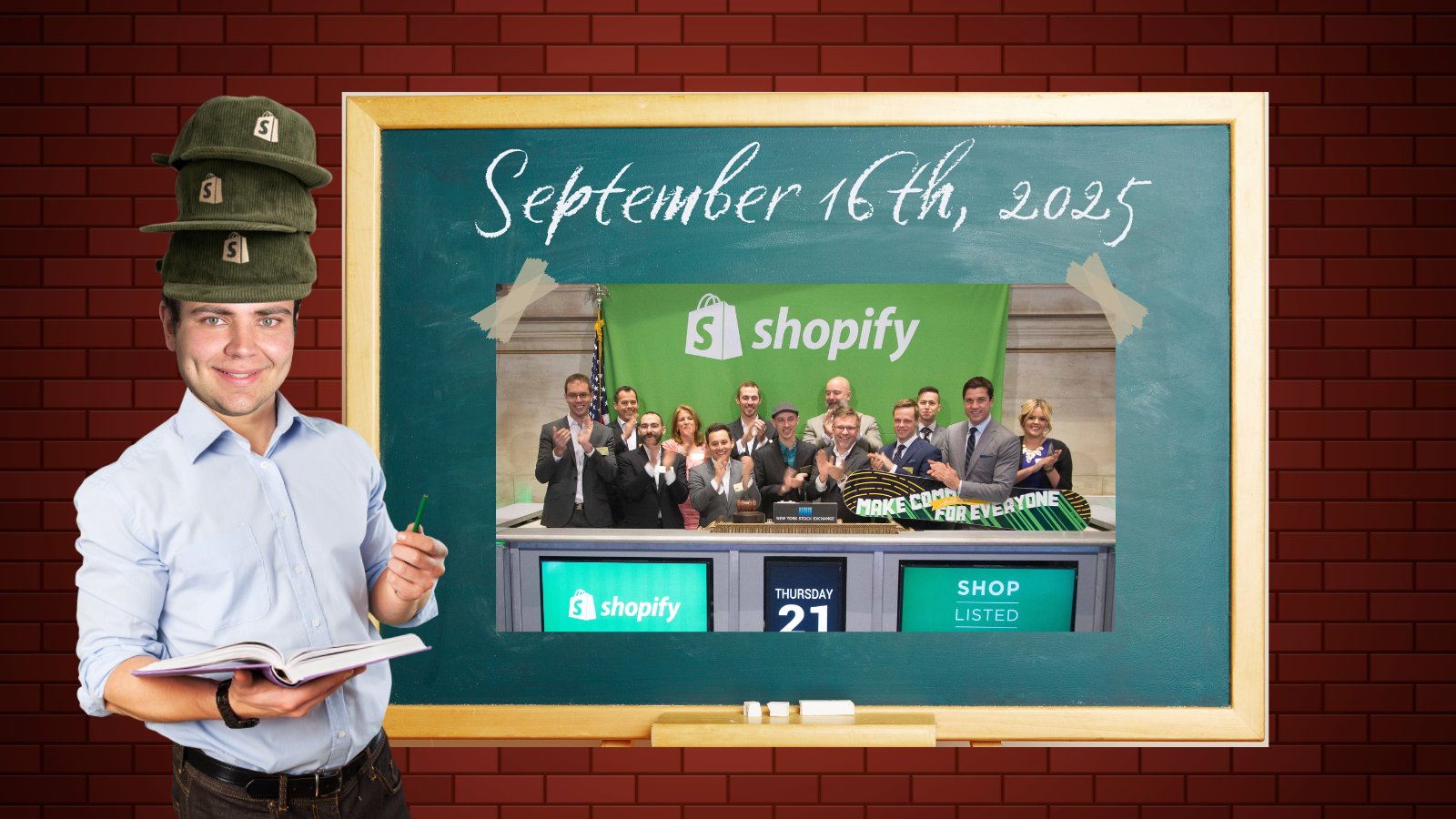
<INSERT CHEESY “MARKETERS WEAR A LOT OF HATS JOKE” HERE> |
The year is 2004, and Tobias Lütke just wants to shred pow.
(Snowboarding for all you jerries that don’t know the lingo).
But there’s a problem: selling snowboards ANYTHING online is a nightmare in 2004.
Ecommerce tools are clunky, payment processing is a mess, and everything feels built for enterprise, not indie shops.
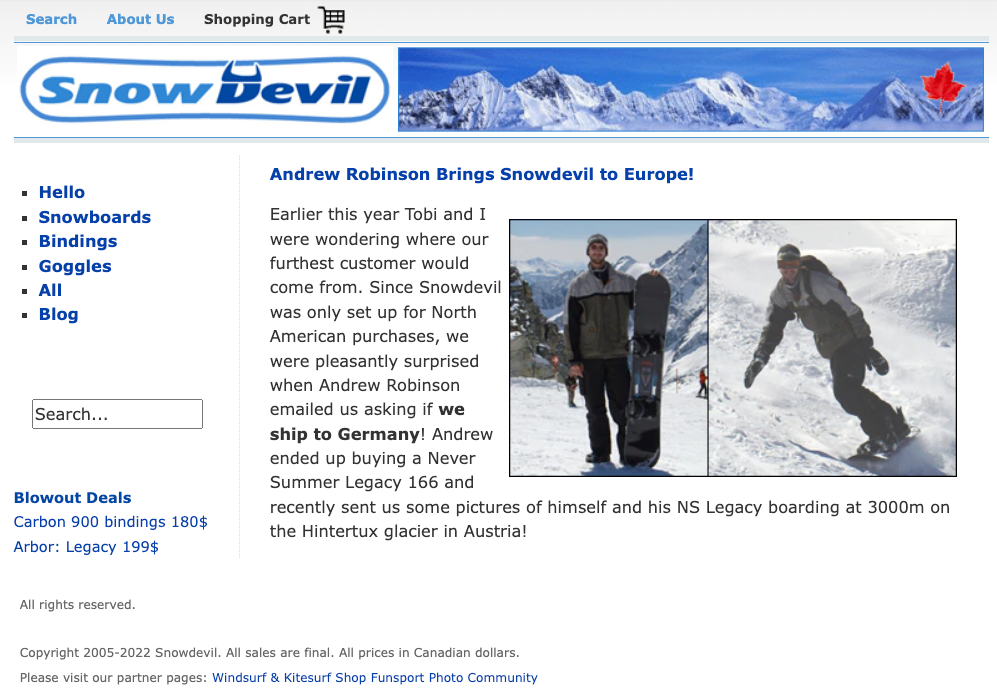
So, Tobias took his frustrated entrepreneurship dream and his coding experience and made history (even if he didn't know it yet): he builds his own custom site. |
2 months later, Snowdevil was live and shipping snowboards around the world. |
PUT IT IN PRACTICE
The best Marketers are the best consumers.
They know what good feels like because they’ve bought it, unboxed it, clicked it, and loved it. They know the pain.
Tobias could only build a great solution because he was the customer.
He felt the friction firsthand and knew exactly what needed fixing.
Here’s your homework: Buy something from a small online store this week. Make sure it's a product or subject you care about, and know a lot about.
Go through the full experience.
Site, checkout, emails, packaging.
EVERYTHING.
What worked?
What didn’t?
What would you improve if it were your brand?
Great Marketing starts by being a picky customer.
|
|
Now the thing about Tobias is that he was a dev through and through.
When he built his site, he open sourced the code and let anyone use it to build their own store as well. This was a BIG deal.
For the first time, indie entrepreneurs could spin up a store, sell their products, and run a business without begging a developer or licensing clunky enterprise software. And people took notice.
FAST.
Within months, hundreds of people were asking Tobias for the software behind Snowdevil.
They didn’t want snowboards, they wanted the storefront. Turns out, the real product wasn’t the gear.
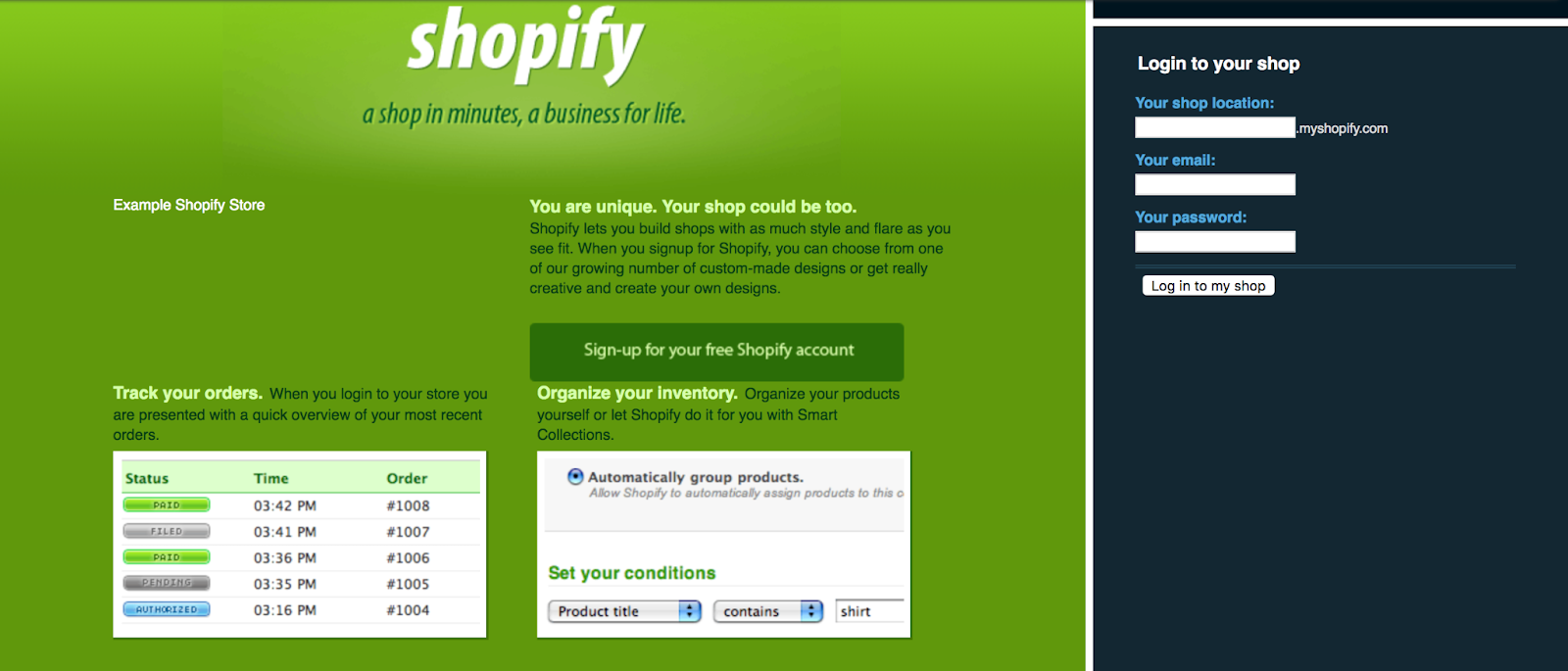
It was the code powering the store. So in 2006, after two good snowboarding seasons, Tobias and his co-founders launched Shopify, officially turning a side project into a platform.
This thing was incredibly bare bones.
Orders were processed through RSS feeds and all payments had to go through PayPal.
But it worked, and that’s what people wanted. |
The snowball began rolling downhill.
In 2007, Shopify was doing about $8,000 in monthly recurring revenue.
By 2008, that number jumped to $60,000. How’d they make the leap? By leaning into something most people hate: transaction fees. How'd they get people on board? Instead of charging high monthly rates, Shopify made it cheap to get started—and took a small cut of each sale.
If you didn’t sell, you didn’t pay much.
But if you did? Shopify won WITH you. It was a bet on their merchants’ success.
And it worked.
Soon, Shopify was being looked at by serious businesses.
Case in point: a scrappy electric car startup named Tesla used Shopify to run its merch store.
Yes, THAT Tesla. Shopify wasn’t just powering small businesses anymore, it was quietly becoming the business platform.
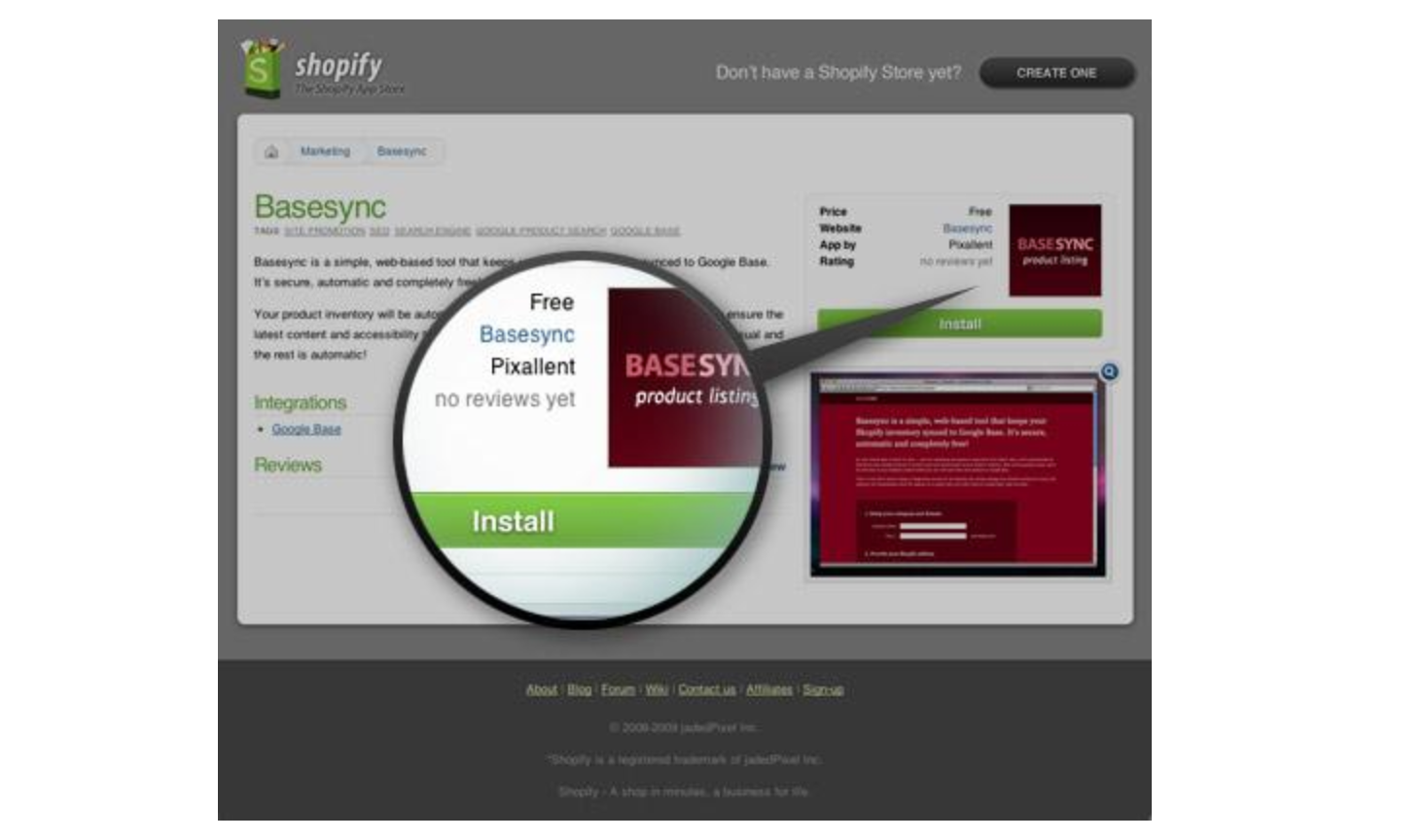
So they began laying the foundation. In 2009, they launched the Shopify App Store, letting developers build plugins, themes, and tools to extend the platform.
Those dev roots turned Shopify from a product into an ecosystem. And that changed everything. With the App Store, Shopify didn’t have to build everything themselves.
They let the market do it.
Need subscriptions? There’s an app for that.
Want loyalty programs, upsells, custom emails? App, app, app. |
This move did two things: - It supercharged the product overnight.
- It created a new economy where devs, designers, and agencies could build real businesses on top of Shopify.
Shopify wasn’t just enabling a few merchants anymore.
It was enabling an entire generation of digital entrepreneurs.
And they were right on time.
By the early 2010s, something BIG was brewing.
Social media was exploding.
Facebook ads were dirt cheap.
And millennials were done with the mall. The Direct-to-Consumer (DTC) boom had begun. |
If you remember this ad, how are you currently managing your back pain? Can’t figure out my routine. (via Time) |
Founders didn’t want to sell through big-box retailers, where they didn't hold on to control (if they could even get shelf space).
They wanted to build brands online, on their terms.
And they needed a platform that could move fast, scale fast, and look good doing it.
Shopify was in the perfect position to launch a generation of DTC giants. Allbirds. Gymshark. Glossier.
Because it was fast. Flexible. And scaled like hell. And unlike the old guard, it actually understood what modern brands needed.
Today, Shopify is a behemoth with over $1 trillion in total sales and millions of merchants ranging from bedroom startups to Fortune 500s. But it all started with one guy just trying to sell snowboards online.
(Go chase that side hustle.) |
|
|
❌ Myth: testing new paid channels is risky. ❌ Myth: You can’t measure ROI on streaming.
✅ Fact: AI + guaranteed outcomes is the combo to unlock both. And the VP of Marketing at tvScientific is going to show us how. (Thanks, Emily!)
Come hang out with us on September 30th at 1pm and find out how AI-Driven TV is the growth lever you’re missing in Q4.
Save your spot and I’ll see you there.
|
MARKETING CHEAT SHEET (WHAT TO LEARN FROM THIS STORY): |
1️⃣. Scratch your own itch: Tobias wasn’t chasing a market trend. He was just trying to sell snowboards. But by solving his own pain, he built something others desperately needed and then handed them the keys.
2️⃣. Align incentives, lest they align you: Instead of gouging customers with high upfront fees, Shopify made it easy to start and only took a cut when merchants made money. That sent a clear message: we win when you win. It’s not just good pricing. It’s psychological fuel.
3️⃣. Ecosystems > products: The App Store changed everything. Shopify didn’t try to do it all. Instead, it handed the mic to developers, agencies, and entrepreneurs. That move turned Shopify from a tool… into a tidal wave. Communities scale faster than features. Never forget it. |
|
|
Ahh, the bell has rung. Please be sure to do the reading (follow The Marketing Millennials on LinkedIn and me, Professor Millennial, on X). Off you go, passing period is only 11 minutes and there’s already a line at the vending machine that sells TMM branded snowboards.
Until next time,
Professor Millennial |
|
|
{if profile.vars.rh_reflink_10}  | Share with friends, get cool stuff! | Have friends who'd love TMM too? Send them your unique referral code using the link below and earn awesome rewards when they subscribe! | |
|
PS: You have referred {{profile.vars.rh_totref_10}} people so far | | Share The Marketing Millennials! | |
|
{/if} |
|
|
Get your brand in front of 112,345 marketing leaders. |
Workweek Media Inc.
1023 Springdale Road, STE 9E
Austin, TX 78721
Want to ruin my day? Unsubscribe. |
|
|
|