{if profile.vars.marketingland_user_fitness == true && (time("now") > profile.vars.user_fitness_reviewed_time + 7200) && (time("now") < profile.vars.user_fitness_reviewed_time + 1209600) && (!profile.vars.onboarding_complete_time)}{/if}
Hey Marketing Bestie,
Welcome to Marketing Classics 411, a new kind of ancient history. In place of hieroglyphs, expect to decipher the campaigns of yesteryear. Professor Millennial teaches every Tuesday (remotely), via electronic mail. Class is now in session. 🧑🌾 | Was this email forwarded to you? |
|
|
How FarmVille Went From Belle of the Ball to a Case Study in Platform Risk |
Do you remember signing up for your Facebook account?
I do.
Hanging in my childhood home in San Diego listening to Ocean Avenue by Yellowcard (IYKYK).
The internet still felt like a novelty.
Poking friends. Leaving wall posts.
And then…BOOM!
Someone sends you… a cow?
FarmVille wasn’t just a game.
It was the 1st game to master social virality at massive scale using Facebook’s graph.
Not because it was a masterpiece of game design.
But because it mastered something even more powerful: distribution.
Here’s the story…
|
GREEN ACRES IS THE PLACE TO BE, FAAAARM LIVIN’ IS THE LIFE FOR ME! |
The year is 2007. Facebook is transitioning from a college directory to the center of the social internet. Everyone is on it, your friends, your mom, your boss, your middle school crush.
And most importantly… Zuck is still wearing hoodies and flip flops. |
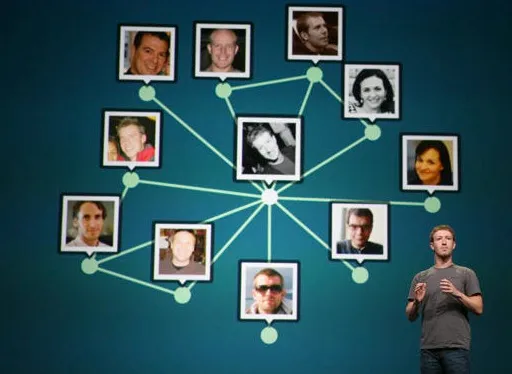
Facebook’s greatest unlock was something called “the social graph.”
Imagine it as a living map of human connection of who you know, who they know, and what you all like, click, and share. For the first time in internet history, apps could plug directly into it. |
And Mark was going to leverage that to win.
Not Mark Zuckerberg.
Mark Pincus. Where Zuck was a product visionary, Pincus was a street fighter. He understood one truth most Silicon Valley founders still ignored: Distribution beats product. So when Facebook opened the gates to their social graph, Pincus saw an opportunity
He didn’t care about building prestige games.
Instead he cared about building sticky, viral loops. Where would he start?
Poker.
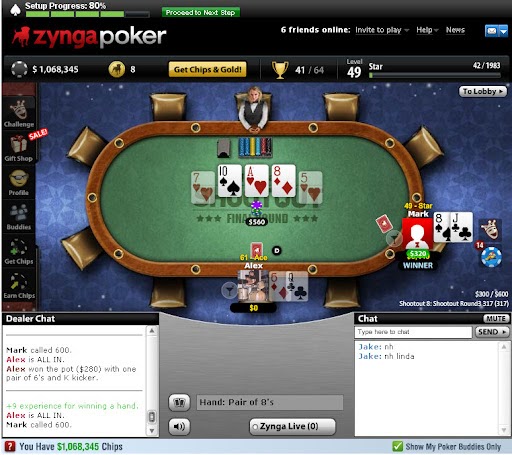
Zynga Poker was the company’s first game on Facebook, and it was a massive success. It wasn’t innovative in terms of gameplay, but it nailed the platform’s potential.
Players could join tables with friends, send chips, and invite others with a single click. It was casual, social, and deeply addictive.
That was the playbook: simple mechanics, rapid engagement, and relentless growth through the social graph. |
How I first learned to play poker 😢 (via Mark Hamzy) |
But Poker was just the beginning.
Pincus wanted a game that could reach everyone, not just gamers or card players.
Something so approachable your mom could play it. Something comforting, colorful, and impossible to ignore.
The idea came from a hit game in China called Happy Farm, a light farming simulator where players tended crops, raised animals, and visited their friends’ farms. Zynga saw it, cloned it, and optimized it for Facebook’s viral infrastructure.
In June 2009, they launched FarmVille.
Within 6 weeks, FarmVille had over 10 million daily players.
By year’s end, over 80 million people were playing every month. And all of it, every single player, was pulled in through Facebook’s social graph. |
You KNOW my farm was poppin. (via IMDb) |
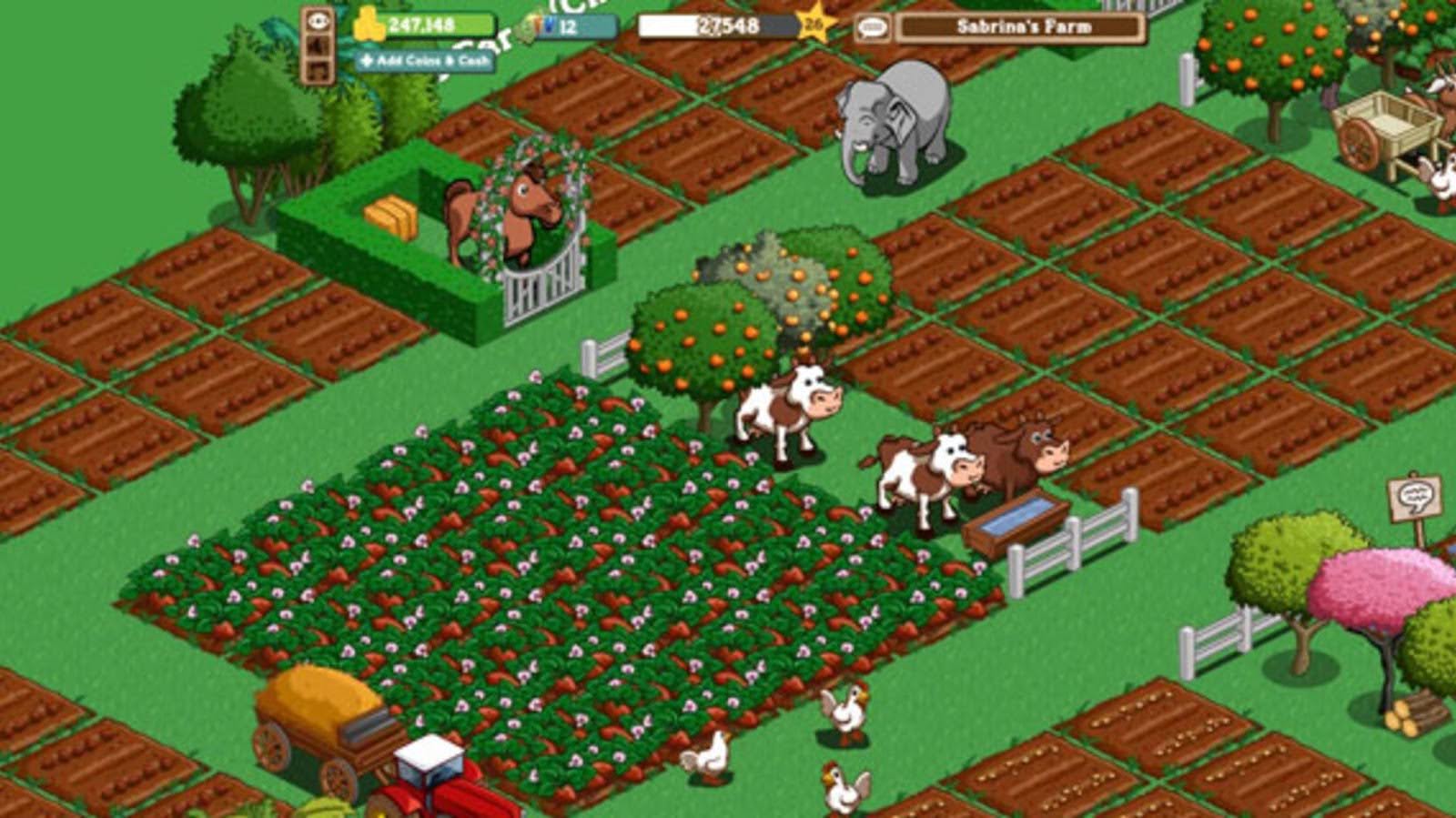
Now you may forget the gameplay mechanics of FarmVille, so let me give a quick refresher.
You started with a small plot of land. You planted crops like strawberries, wheat, eggplants and waited for them to grow. When they were ready, you harvested them for coins and experience points. With enough resources, you could expand your farm, buy decorations, raise animals, and unlock new features. It was repetitive, it was basic and it was oddly satisfying. But here’s the genius: EVERYTHING in the game nudged you to involve your friends. Need more energy? Ask a friend. Want a new building? Invite your neighbors. Found a wandering cow? Share it on your feed so others could claim one too.
FarmVille didn’t just reward gameplay. It rewarded sharing. Every in-game action was an opportunity to post on someone’s timeline, tag a friend, or pull another person into the loop. This type of built-in distribution became Zynga’s signature and it powered all of their follow-up games.
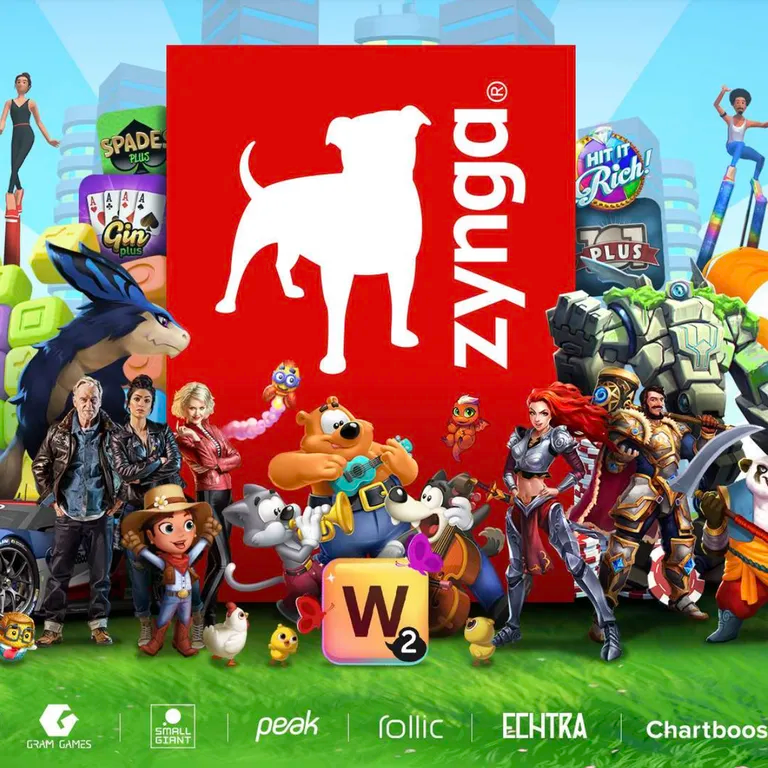
CityVille, FrontierVille, Mafia Wars, Café World, each one took what worked in FarmVille and doubled down on it. Simple mechanics, bright visuals, and most importantly, viral growth fueled by Facebook’s social infrastructure. |
Whatta lineup (via Axios) |
But at some point, the gravy train comes to a stop.
Facebook began tightening the News Feed algorithm around 2010–2011. Posts that came from games, apps, and publishers were gradually suppressed to prioritize content from “friends and family.” This was BAD. That shift dramatically curtailed what had previously been free, viral distribution. Once automatic game notifications and feed stories began disappearing, Zynga’s growth engine started sputtering. |
PUT IT IN PRACTICE
First party or no party.
Zynga’s rise was built on borrowed distribution.
The moment Facebook changed the rules, everything collapsed.
If you don’t own the relationship, you don’t own the outcome.
Zynga had users but Facebook had access.
And when access dried up, so did growth.
Here’s your homework: Audit your customer touchpoints.
Where are you relying on third parties, platforms, algorithms, marketplaces for growth or retention?
Now ask: If they pulled the plug tomorrow, what would I be left with?
Then make a plan to fix it.
|
|
Zynga had built its empire on Facebook’s rails. But as those rails started to vanish, the company faced a choice: adapt or fade.
The next frontier was already emerging…mobile. Smartphones were exploding in popularity, and the App Store was becoming the new mall. Games like Angry Birds and Temple Run were dominating the charts, and they didn’t rely on Facebook at all. They lived in your pocket, not your newsfeed.
Zynga saw the shift, but struggled to keep up. Its DNA was tied to web-based, social-first games. Rebuilding for mobile meant redesigning gameplay loops, rethinking monetization, and giving up the frictionless virality they had mastered.
Worse, they were now competing with studios that were born mobile with nimble teams building native-first experiences from the ground up.
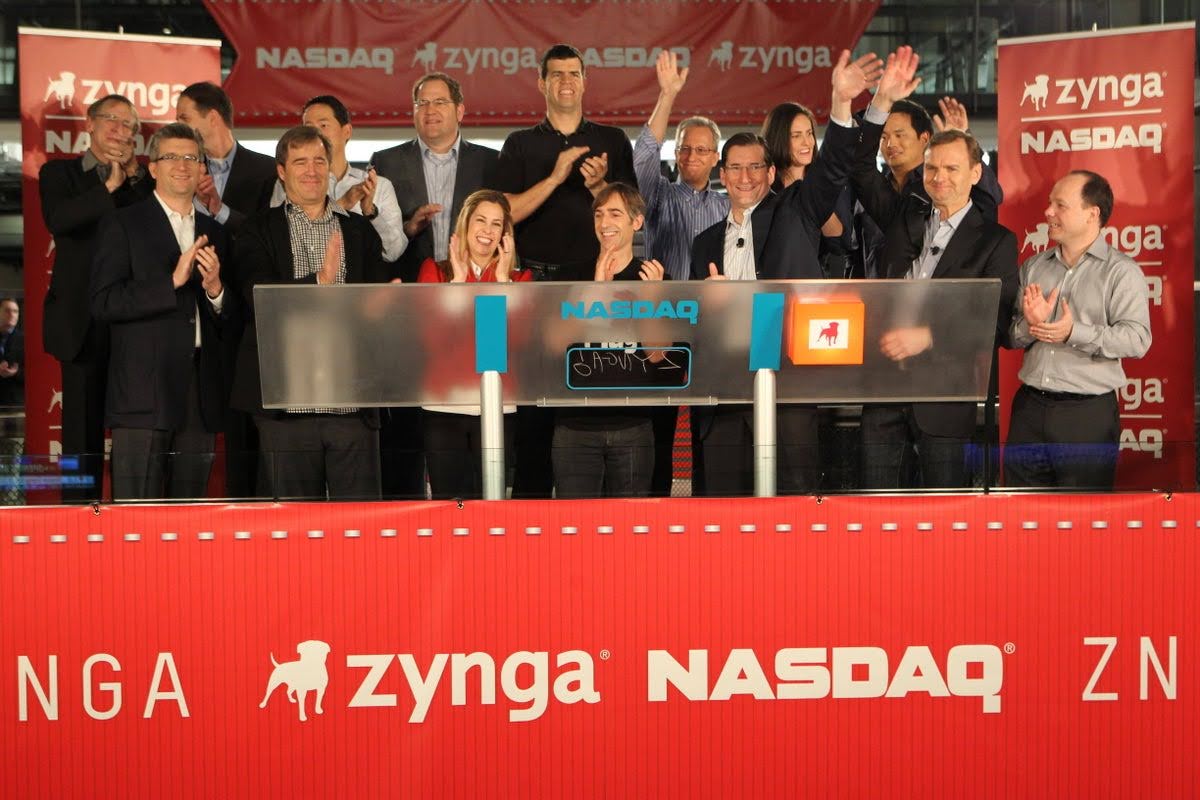
Zynga’s first mobile titles flopped. Its core user base aged out. And the cost of acquiring new users, without Facebook’s free distribution, skyrocketed. The company went public in 2011 at a $7 billion valuation. |
The branding was fire tho (via CNET) |
But within a year, it had lost more than 75% of its value.
Today, Zynga is no longer the Facebook-dependent behemoth it once was. But it didn’t disappear either. After years of missteps, layoffs, and soul-searching, the company found its footing through acquisitions. It bought Words With Friends. Then Merge Dragons. Then Empires & Puzzles.
Instead of trying to recreate FarmVille's virality, Zynga leaned into proven mobile hits and mastered paid acquisition.
It rebuilt itself as a modern mobile gaming powerhouse that was quietly profitable, data-driven, and diversified. In 2022, Take-Two Interactive (the makers of Grand Theft Auto) acquired Zynga for $12.7 billion. A second act…earned the hard way. |
On Sept 30th, we're talking about the AI-driven growth channel you might be overlooking in Q4.
A lot of Marketers won't touch TV with a 10-ft pole. But now, with AI targeting and outcome-based pricing, it's a growth lever you can't afford to miss this year.
On September 30th at 1pm, I'm going to find out how to get guaranteed ROI on CTV, with the VP of Marketing at tvScientific, Emily Robinson. Come hang out with us! Bring your questions!! |
|
|
MARKETING CHEAT SHEET (WHAT TO LEARN FROM THIS STORY): |
1️⃣. Built-In Distribution > Product Quality: FarmVille exploded because every moment in the game nudged players to bring in someone else. Need energy? Ask a friend. Find a cow? Share it to your feed. Growth was baked into the experience, not bolted on. That’s the play. Look at your product or campaign and find the moment of value, then make sharing that moment feel effortless and rewarding. If users can spread it without thinking, you’ve built a true growth loop.
2️⃣. Don’t Only Build on Rented Land: Zynga scaled fast by riding Facebook’s social graph, but once the algorithm changed, their growth collapsed. They didn’t own the customer relationship, which meant they had no control when access disappeared. That’s the risk with relying too heavily on third-party platforms. Start by auditing every place your growth depends on someone else’s algorithm. Then move key moments like onboarding, engagement, and retention into owned channels where you set the rules.
3️⃣. Test Small Before You Blitz: Before FarmVille, Zynga tested the playbook with Zynga Poker. It was simple, social, and proved their viral loop worked inside Facebook’s ecosystem. That small win gave them the blueprint to launch FarmVille at scale. Start by testing your growth mechanics in a smaller, focused environment. If it works in 1 niche, 1 product line, or 1 community, then you know it’s ready to scale.
|
|
|
Ahh, the bell has rung. Please be sure to do the reading (follow The Marketing Millennials on LinkedIn and me, Professor Millennial, on X).
Until next time,
Professor Millennial |
|
|
{if profile.vars.rh_reflink_10}  | Share with friends, get cool stuff! | Have friends who'd love TMM too? Send them your unique referral code using the link below and earn awesome rewards when they subscribe! | |
|
PS: You have referred {{profile.vars.rh_totref_10}} people so far | | Share The Marketing Millennials! | |
|
{/if} |
|
|
Get your brand in front of 112,345 marketing leaders. |
Workweek Media Inc.
1023 Springdale Road, STE 9E
Austin, TX 78721
Want to ruin my day? Unsubscribe. |
|
|
|