{if profile.vars.marketingland_user_fitness == true && (time("now") > profile.vars.user_fitness_reviewed_time + 7200) && (time("now") < profile.vars.user_fitness_reviewed_time + 1209600) && (!profile.vars.onboarding_complete_time)}{/if}
Hey Marketing Bestie, You know what peak happiness was as a millennial kid? Watching a Disney Channel Original Movie. And now the theme song is stuck in my head... “Let’s watch a Disney Channel movie.” Here’s my personal top 8, ranked: 8. Double Teamed
7. Jump In!
6. High School Musical
5. Halloweentown
4. Cadet Kelly
3. Luck of the Irish
2. Johnny Tsunami
1. Brink
What's your favorite Disney Channel Movie?
| Was this email forwarded to you? |
|
|
5 Steps To Build A Better Brand With Matt Kerbel | Imagine Airbnb…but for cars. You don’t even have to imagine it. It’s here. It’s called Turo. And the brand is built with help from Matt Kerbel, Global Head of Brand Strategy. Matt’s tagline for the company is all about skipping that looooooong rental car counter and alllll the paperwork and heading straight to the vehicle. 24/7 support, multiple destinations, and opportunities to become a host? Turo is OTW.
Branding isn’t as easy as it seems, though. Is everyone on the same page? Do you have the right ICP, or does it need to be adjusted? How about paid and organic messaging?
Here are Matt’s 5 steps to build better branding, in his own lightly-edited words. ⤵️
|
1️⃣. Want a Better Brand? Start by Listening. |
Matt’s Take: “The most important thing is to start with the fundamentals, which is like understanding the prospective customer. The secret weapon—don’t tell anybody—is talk to humans.”
Building a successful brand begins with focusing on your customer. Look and think beyond basic demographics. What are their pain points? In Turo’s case, it’s the rental car counter at airports. They’re annoying. They’re not very helpful. They take too long.
What are their desires? In Turo’s case, they want a frictionless way to get where they’re going. They don’t want the trouble of traditional car rentals.
What do they dream of? In Turo’s case, some customers may want a specific rental car, like a dream car, to drive. They have the opportunity to bridge that gap.
The key is empathy: you see customer issues and you have the chance to do something about it. Takeaway: Before you write a single line of copy, go talk to 10 customers.
Check support tickets. Scroll Reddit threads. Read the reviews.
Look for emotional patterns. What frustrates them? What excites them? What are they hoping someone will finally fix? |
2️⃣. You Don’t Need a Trend Report. You Need to Listen. |
Matt’s Take: “There’s so much that can be learned by just asking questions and listening.”
We all know research is valuable. But how do you even start?
Matt stresses that talking to customers (not just surveying them) is a strategic advantage. It’s also great to check out where they’re talking, what they’re talking about, and how they’re dealing with their problem. Think: - Talk to customer support teams to understand recurring complaints or praise. - Dive into forums, Reddit threads, and reviews to hear unfiltered, emotional language. - Use social listening tools to spot trends, pain points, and community sentiment.
Conduct direct interviews or video calls with real customers to hear their tone and see their body language.
Takeaway: Schedule a few low-pressure chats with customers. Let them talk. Write down the exact phrases they use. Highlight the 1's that feel raw or honest. Use that language in your next ad, landing page, or campaign. |
3️⃣. Want to Win Big? Start Small. |
Matt’s Take: “We launched a single-market test... and Philadelphia became our fastest growing U.S. market. We created kind of a version of Philly... as if we didn’t actually do any marketing there... and then of course we blitzed the market.”
One of the smartest ways to build a strong brand is to start small, measure impact, and scale what works.
Rather than pouring budget into a national campaign without proof, Turo took a strategic bet: they selected a market that was dense, underperforming, but cost-effective.
They worked with their data science team to create a “counterfactual” model to compare against the real-world impact. That market? Philly. And Philly did a good job. Over time, they tracked both leading indicators like brand awareness and consideration, and lagging indicators like bookings and revenue. The results were clear: the brand investment paid off and that gave the team the data and confidence to go national.
Takeaway: Pick 1 market or audience segment that gives you signal fast.
Run a real brand test. Measure both leading and lagging indicators.
If it works, scale it with confidence and proof in hand.
|
4️⃣. If You Want the Budget, Show the Data. |
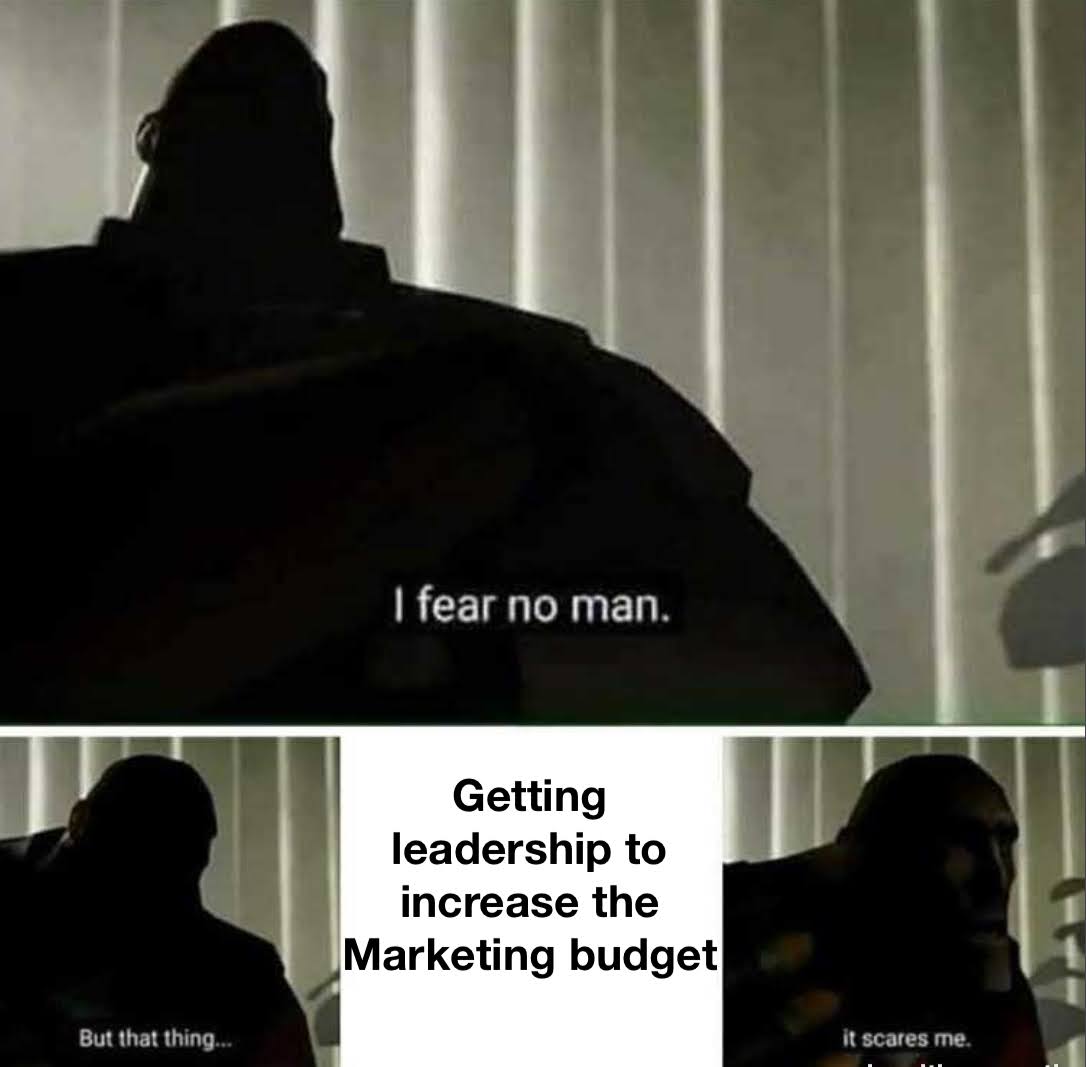
Matt’s Take: “We saw the leading indicators... and they said, okay, we’re with you.” Not everyone understands Marketing and branding.
The best brand ideas won’t go far without support from leadership. And to earn that support, you need to speak their language: results.
Matt describes how Turo’s marketing team built internal confidence by being clear upfront about expected timelines.
They knew brand campaigns don’t deliver immediate conversions, especially for a low-frequency, high-dollar purchase like car rentals.
Instead, they worked with leadership to align expectations: first we’ll see awareness and consideration go up, then bookings will follow.
They shared insights regularly with execs and showed how brand marketing was directly influencing long-term business growth.
The result? Leadership bought in and the team earned the green light to scale their campaign across more markets and even move into national broadcast and airline placements.
Takeaway: When presenting a brand campaign idea, start by aligning on time horizon.
Tell your leadership team what success will look like early, middle, and late.
Track both soft signals and hard outcomes. And never assume people “just get” brand. Connect it directly to business growth.
|
5️⃣. Brand Is Measurable. Stop Pretending It’s Not. |
Matt’s Take: “If you don't think brand is measurable, then try harder. There’s a myth out there that brand cannot be measured... too many brand marketers are being like, ‘Trust me, I’m a doctor.’”
A strong brand isn’t built once and done. It’s something you keep improving over time. Matt argues that marketers must shed the outdated belief that brand performance is too vague or abstract to measure. In his view, the most effective brand builders are those who treat it like a growth engine: trackable, testable, and always evolving.
Once campaigns launched, they closely monitored upper-funnel metrics (like awareness, favorability, and intent) and then mapped how those shifted over time into lower-funnel actions like bookings and revenue.
The Turo team used feedback loops and test results to improve creative, refine targeting, and optimize their media mix. Every data point became an input for smarter brand decisions.
Want to know who’s actually using the product? Check the data.
Want to know which cities are doing better than others? Check the data. Takeaway: Build a brand dashboard the same way you would for performance.
Track awareness, favorability, and intent alongside bookings and revenue.
Then use those insights to adjust creative, shift budget, and double down on what moves the needle.
|
|
|
Now, I have the Disney channel movie theme song stuck in my head. HELP. lol.
Your friend, Daniel |
|
|
{if profile.vars.rh_reflink_10}  | Share with friends, get cool stuff! | Have friends who'd love TMM too? Send them your unique referral code using the link below and earn awesome rewards when they subscribe! | |
|
PS: You have referred {{profile.vars.rh_totref_10}} people so far | | Share The Marketing Millennials! | |
|
{/if} |
|
|
Get your brand in front of 112,004 marketing leaders. |
Workweek Media Inc.
1023 Springdale Road, STE 9E
Austin, TX 78721
Want to ruin my day? Unsubscribe. |
|
|
|