Good morning Wolf Pack,
Hope everyone had a great weekend. Today's deep dive is a fun read on the lovable franchise, Dippin' Dots. I wrote about them once last year, but since that time, the brand was acquired for a massive sum. Read on for the full rollercoaster story... |
Was this email forwarded to you? |
|
|
Every home needs a hero. And few heroes are as treasured as our nation’s first responders.
Driven by its mission-based service approach, Home Clean Heroes is a fast-growing residential cleaning franchise committed to giving back to those who give so much for us.
With low upfront costs, recurring revenue, and a strong brand identity, it’s quickly become one of the most reputable home cleaning franchises.
If you’re interested in learning more about Home Clean Heroes and partnering with a franchise committed to making a difference, download their free franchise guide!
|
|
|
Dippin’ Dots: From Bankruptcy to $222 Million Acquisition
|
In 2011, Dippin' Dots, aka the "ice cream of the future", went bankrupt. After being swooped up for relative pennies on the dollar at just $12 million, they were acquired last year for a whopping $222,000,000. The crazy part? Most of the company's value wasn't from selling ice cream. Here's the wild story…
Dippin’ Dots Origins In 1987, Curt Jones was working as a microbiologist in Kentucky. He had invented a flash-freezing process that prolonged the nutritional value of cattle feed (yup - food for cows).
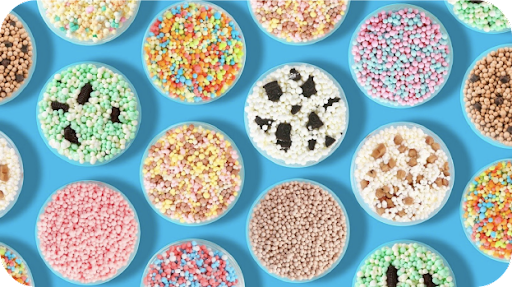
Curt, a self-proclaimed geek and ice cream enthusiast, decided to test the same tech on some home-made ice cream. The result? Ultra cold pellets of ice cream that melt in your mouth. AKA…Dippin' Dots
Initially, Jones struggled to turn his invention into a real business. He opened a full-service ice cream shop that only sold Dippin’ Dots in Kentucky, but it wasn’t exactly an instant hit.
Between educating the consumer on the product, and the fact it required expensive refrigeration to keep it frozen at a colder than usual temperature for ice cream, he was losing money, fast.
Luckily, he'd find success by distributing Dippin' Dots to malls, theme parks, and sports stadiums, where customers' limited options allowed him to charge more money. It also helped him expose the innovative product to more eyeballs. |
This growth strategy led to 350 outlets and $20 million in annual revenue by the year 2000. Then things started going downhill… Trouble Begins Brewing
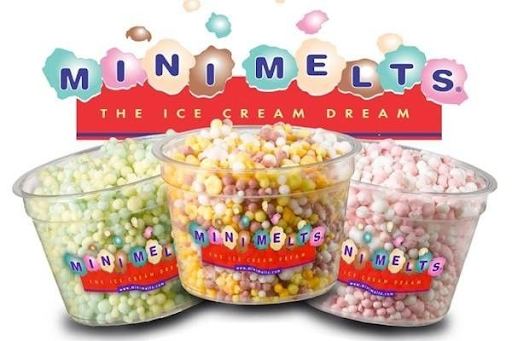
Back in 1996, Jones had sued his knock-off competitor “Mini Melts” for infringing on his patent for the Dippin' Dots creation process. Note that a valid patent gives you exclusive rights for 20 years to make and sell your product, without any competition being able to do so. Jones thought he had a clear victory against Mini Melts, but he made a crucial mistake.. |
When you invent a product and start selling it, you have 1 year to file a patent. Jones opened the 1st Dippin' Dots in July 1987, but didn’t file his patent until March 1989. This mistake cost him the lawsuit, and in 2007, he ended up having to pay Mini Melts $10 million, as they had filed a counter-lawsuit as a response.
To make matters worse, a year later, the Great Recession hit, and all of a sudden far fewer people were going to venues where you could find Dippin’ Dots. Sales would drop from $46M in 2007, to $30M in 2010. The recession combined with the lawsuit led to Dippin’ Dots being $11 million in debt, forcing them into bankruptcy. |
Enter - Scott Fischer
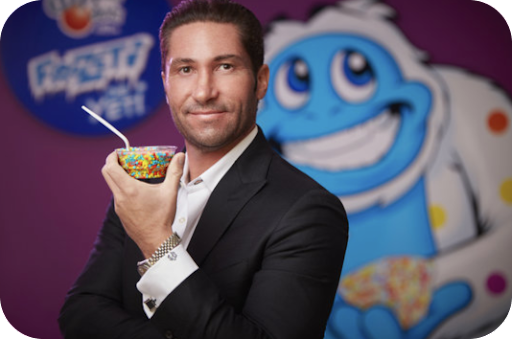
Dippin' Dots was auctioned in a "363 Sale", a proceeding that lets potential acquirers cherry-pick what they want to buy. Fischer saw this as an opportunity: “I was able to pick the diamonds from the rough, free & clear of any liability.” The next era of Dippin’ Dots began.. |
Fischer, revitalized Dippin' Dots in 3 key areas: - Product Expansion
-
Acquisition & franchising
- Licensing Dippin' Dots tech**
**This third area proved to be more lucrative than anyone imagined…
Fischer began licensing the flash-freezing tech in 2018 under an entity called “Dippin' Dots Cryogenics, L.L.C. Early customers were pharmaceutical companies using the Dippin’ Dots flash freezing process (the very same one Curt Jones invented back in 1987) to increase the shelf life of their pill products.
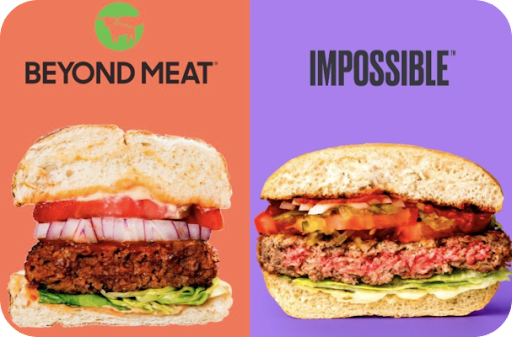
While this revenue was welcomed, there was a "rising tide lifts all boats" scenario at play, and Dippin' Dots was about to catch the wave of a lifetime Alternative Meat Plant based meat companies were taking off. Startups such as Beyond Meat and Impossible Foods had quickly grown into multi-billion dollar valuations, and had products that were available at nearly every grocery store nationwide, as well as all the major food chains.
See, these companies needed their laboratory meat to taste like real meat, and Dippin' Dots had a solution… |
The plant based meat giants feed their ingredients through Dippin Dots’ flash freezing process - and out comes small pellets that simulate the consistency of natural fat. If you've had a plant based burger, bacon, or sausage, it probably had Dippin' Dots in them. The impact it had on the business is undoubted.
Between April 2019 - April 2020 alone, revenue grew by 348%, while ice cream declined by 85%. “With that one we’ve been doing really well. It’s increased our net substantially and is surpassing Dippin’ Dots ice cream right now”. Licensing continued to outpace ice cream sales, as well as sales from Dippin' Dots franchised locations.
Then, in May 2022, J&J Snack Foods announced they acquired Dippin' Dots for $222 million. An 18.5x return for Scott Fischer. |
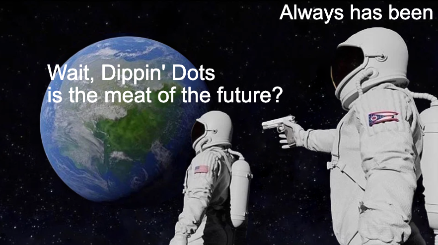
So as it turns out, Dippin' Dots was never the ice cream of the future.
It was the meat of the future. P.S. The original founder, Curt Jones, is still involved with Dippin' Dots as a franchisee. He also started a new company, "40 Below Joe", that flash-freezes coffee and cream, providing a new way to get caffeinated. Hopefully he has a patent on this one! P.P.S. The story, in a meme: |
|
|
Former Smashburger President to Lead BurgerFi as CEO |
The new CEO of BurgerFi International calls himself a “foodie at heart,” and says the chef-driven focus of BurgerFi and Anthony’s Coal Fired Pizza & Wings is part of what attracted him to the company.
“I wouldn’t come to a brand unless they really cared about food quality, fresh-cooked food,” says Carl Bachmann, who in a move announced May 30 is leaving his post as president of Smashburger to take the chief executive position at BurgerFi International. Bachmann will join the company July 10 and replaces Ian Baines, who is retiring in June but will stay on as an outside consultant for 12 months. |
Papa Johns franchisee becomes mogul in his own franchise |
Nadeem Bajwa's is a Pakistani immigrant who came to the United States in 1991 for grad school. While in college, Bajwa started his career as a pizza delivery driver for a Papa Johns franchise and moved his way up to owning his own store in Canfield, Ohio. Bajwa now owns 192 Papa Johns stores, making him a mogul within his own franchise system. His goal? To own 500 Papa Johns units, and it's a goal he takes seriously. |
|
|
That’s it for this edition of The Wolf Report. Feel free to reply with any questions or feedback. Thanks and see you next week! — The Wolf |
|
| Get your brand in front of 39,700+ entrepreneurs, investors, and business owners. |
The Platform for Franchise Entrepreneurs Krokit gives you all the tools you need to launch, operate, and expand your franchise empire.
Try it out. |
Workweek Media Inc.
1023 Springdale Road, STE 9E
Austin, TX 78721
Want to ruin my day? Unsubscribe. |
|
|
|