Leading Edge Capital, 8 investment criteria, Y Combinator, and so much more!
{beacon}
Hey everyone!
Thank you to so many of you all for the great feedback on Newsletter #1.
Also, I am excited to share that next week I will be sharing a Crossover exclusive investment opportunity for a venture raising a $10M+ Series A. Stay tuned because it is going to be sweet.
“The CEO that calls you right back is probably the one you do not want to talk to. It is the person that you call or email every two days for 3 weeks that gets back to you. Those are the CEOs that you really want to back.”
- Mitchell Green
Meet Mitchell Green. Green is the Founder of Leading Edge Capital (LEC), one of the most successful crossover funds in the investing industry.
Leading Edge Capital currently has $3B AUM, and in 2020 closed a $950M fund from 500 investors.
75% of the current fund is dedicated to private equities while up to 25% can be invested in the public markets. The public companies that they do invest in are sub-$10B market cap companies.
Here’s a list of Green’s greatest private investments:
Alibaba – $350M
Ant Group – $160M
Spotify – $150M
Beast.
What would you pay to have just a 10-minute conversation with Green to discuss his investing process?
Well, today, you can pick Green’s brain for free! On a recent episode of the StrictlyVC Download podcast, Green shared the 8 key investing criteria LEC operates by:
8 Criteria
Here are Green's 8 criteria that he shared on the pod:
Are you $10M+ in revenue?
Are you growing 50%+ YoY?
Do you have 70% gross margins?
Are you capital efficient? Are your revenues today greater than the amount of money that you burned since inception?
Do you have 90% gross retention?
Do you have a diversified customer base? Do you have any customers with over 10% of sales?
Do you have recurring revenue?
Are you profitable at EBITDA line?
Leading Edge’s goal is not for companies to meet all of the criteria, but rather between 5-7. Green also shared that the ones that are most important pillars are 1 & 5.
Takeaway's
Investors:
Off the bat, there is one main issue. Not all of us have the access to the deal flow that Green & co. do. If we checked just a couple of these boxes we would be happy campers.
I do think it is a great move to work on a checklist of similar criteria for you and your own investment standards. Here are a few ideas to add to your list:
Do I have connections/expertise in this field to leverage this investment?
Will the founders protect my interest during future funding rounds?
Do the founders have prior startup/business building experience?
A personalized checklist of seemingly simple questions can have significant positive ramifications in your due diligence process.
Founders:
If you are a founder, listen closely to what the best investors in the world are looking for. Even if you are in earlier stages and spending day and night trying to build a brand/company, keeping criteria like these in the back of your mind is critical.
At the end of the day, making money is integral to the success of your business, and consistently checking in on creating a scalable, profitable model is paramount.
Also, I totally disagree with Mitchell's quote that I kicked the newsletter off with. If someone wants to invest in your venture, get back to them within a couple of days. Trust me.
-Alan
CHART OF THE DAY
An Early Surprise
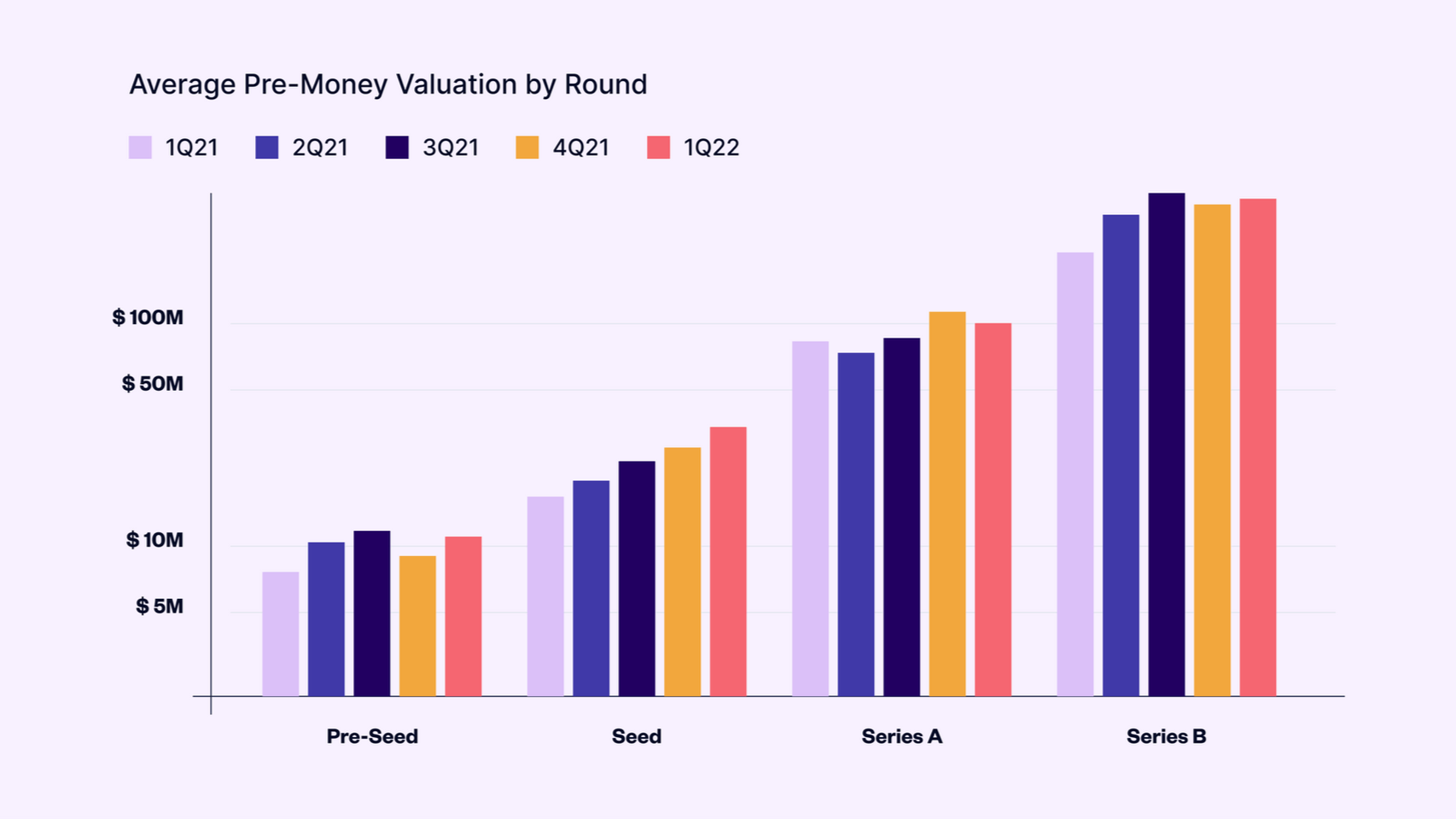
We have all heard of the significant drops in late stage VC valuations, but according to a study by AngelList, early stage companies are in a different boat
AngelList shared that 83% of startups that changed their share price in 1Q22 saw that price increase
Interestingly, 1Q22 was also the most active quarter ever on AngelList regarding the number of fundraisers and exits
Also, Web3 received the most deal volume and capital deployed in Q1
IN THE NEWS
Y Combinator just wrote a letter to their portfolio company founders, and things do not look good. Read Manish Singh’s article on it here.
TL;DR: YC is predicting a major economic downturn and is warning their portfolio company founders that they need to prepare for the worst.
3 Key Points Shared By YC:
To weather a possible serious economic downturn, companies should aim to become “default alive.”
Many startups will not plan for tough times well and “You can often pick up significant market share in an economic downturn by just staying alive.”
If you started a company in past 5 years, you were likely raising money in an abnormal environment.
Key Quote:
“Understand that the poor public market performance of tech companies significantly impacts VC investing. VCs will have a much harder time raising money and their LPs will expect more investment discipline.
As a result, during economic downturns even the top tier VC funds with a lot of money slow down their deployment of capital (lesser funds often stop investing or die). This causes less competition between funds for deals which results in lower valuations, lower round sizes, and many fewer deals completed.”
GOLDEN NUGGETS
This video of MIL 2B Kolton Wong showing respect to SD P Joe Musgrove after breaking up his no-hitter is everything.
Really enjoyed this video of Broadcom CEO Hok Tan breaking down the importance of free cash flow, share buybacks, and acquisitions
The MLB is on fire today! Love this story of Yankees INF DJ LeMahieu giving back to his high school during tough times.
I think the rumors of Netflix acquiring Roku are incredibly fascinating. I just can’t get over the fact my Dad shared this idea with me over the weekend.
MEME OF THE DAY
Thanks for the read! Let me know what you thought by replying back to this email.
— Alan
Loving this newsletter?
Get in front of 200 public and private investors by clicking below: